
Frogwares spent twenty-odd years being the Sherlock Holmes people, and in March 2024 they announced the sequel to their 2019 cult detective game would be a third-person survival horror title. A genre transplant is the riskiest operation in this industry and has a nasty survival rate. They’re self-publishing this one too, so no repeat of the Nacon legal fight that got the first game pulled from storefronts. The studio bet its own money on this. That’s the context for everything below.
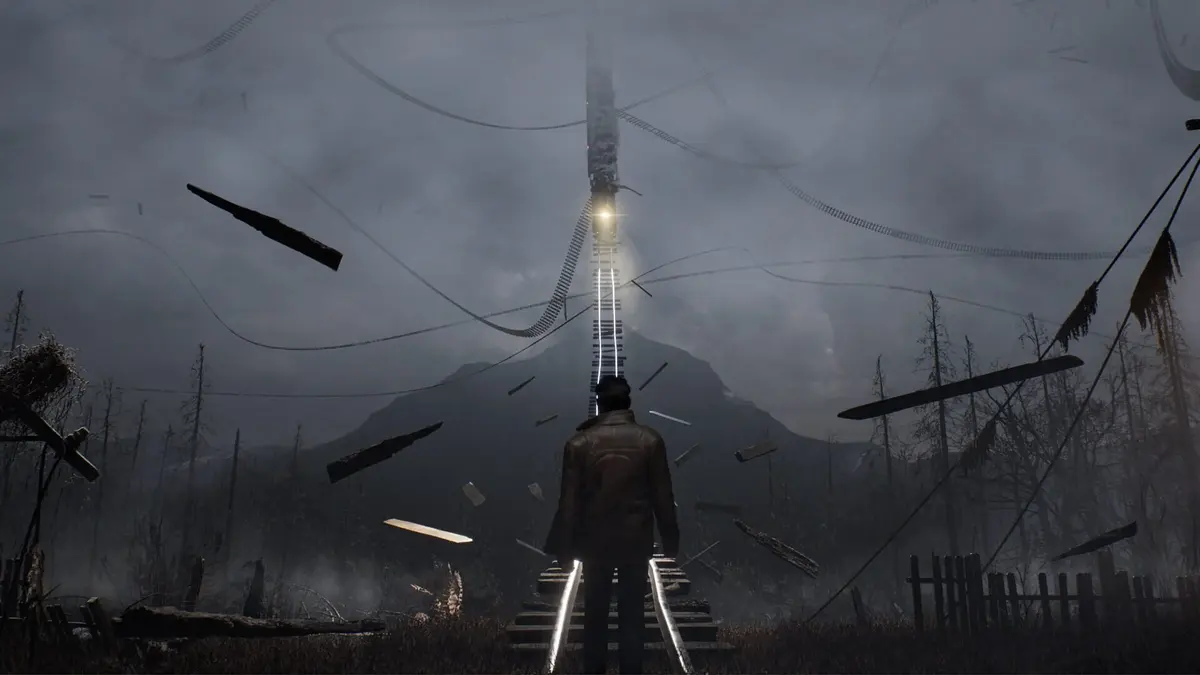
It’s 1929 and Arkham is under water — not coastal flooding, just a city in the middle of nowhere filling up for no reason anybody can explain, which is frightening before a single monster shows up. Loudspeakers tell people to leave and nobody says where to go, only anywhere but here. The boat dock sits lower than the boat tied to it. Out of that water comes the Slither: parasitic worms that bore into the dead and drive them around like stolen cars.
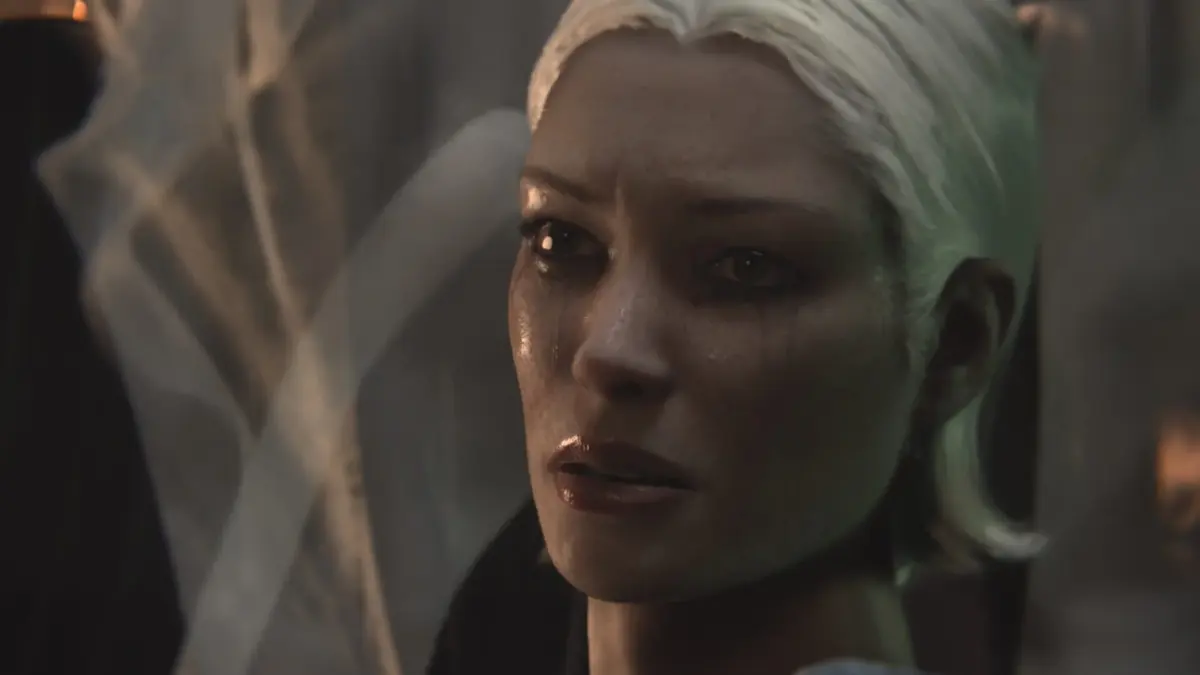
You’re Calvin Rafferty, son of Irish immigrants, a self-made occultist who hunts cursed objects for a living and somehow convinced Faye Bennett — born into high society, expected to decorate a house and stay quiet — that this was a reasonable life. One night the two of them tried to reach Lovecraft’s Dreamlands. It went catastrophically wrong and Faye never woke up. Calvin’s response to his partner lying comatose is to go hunting an Eldritch ritual in a drowning city everyone else is abandoning, and that stubbornness is the engine of the game. Nobody in a Cthulhu story is innocent, these two included. They’re intelligent rather than wise, and the game knows the difference.
Table of Contents (4)
Yes, Killing the Open World Was the Right Call
Here’s my side of the argument people are having about this game: dropping the open-world detective structure was correct, and it isn’t close. The first game’s investigation was buried in procedurally generated, opaque exploration that took real hard-headedness to enjoy. What’s here instead is safe room to safe room, resource-lean, shortcut-driven. Each chapter is a self-contained location you comb at your own pace, with a point of no return that locks it behind you forever, and a map that flags whether you’ve cleared a room. It moves.
You boat between docks in the flooded streets, get out, solve the location, get back. Chapter one ends in a haunted hotel with a flapper-era hangover on the walls. Chapter two is the abandoned hospital, the scariest thing here, partly because it has its own unkillable stalker in the Mr. X and Nemesis tradition. Chapter three is the Arkham Fish Market, which goes exactly the way anything named after a fish market goes in a Lovecraft story. You get a look at Miskatonic University. At one point you use skinned human faces to open security doors, and yes, that’s Cthulhu.
Where I break with the pivot’s defenders is what replaced the detective work. The clue board — find written notes, link them with red strands, correct groups pay out progression points — is fine and optional and never gates the story. But it isn’t hard, and half the time the payoff is a safe combination rather than lore that changes what you think happened. The puzzle difficulty toggle, breezy or brainy, only stops the game highlighting which clues belong together: the gap between easy and very easy. One late optional puzzle actually made me work. One. For a studio with this much detective pedigree, that’s the disappointment — not the cut, but the failure to build the sharper, smaller version this structure was crying out for.
The Combat Is About Not Wasting Bullets
You start with a basic pistol and pick up a Tommy gun, a shotgun, a rifle and a grenade launcher, each with two findable upgrades placed with real authorial care — see a long rifle on a desk and the journal page beside it will tell you why it’s there. Your inventory starts cruelly small and grows only through exploration, so every new gun is a negotiation: the machine gun costs you shells, healing items, the key to a door you don’t want to open.
On normal there is never enough ammunition to kill everything, and that’s where the game lives. Enemies have weak points, weapon preferences and free ways to die. The jumpy little horrors leap at you, and dodge on the right frame and they crash, stun on the floor and die to one stomp for zero ammo. Shamblers eat several rounds from good weapons, but shoot the knees and they go down for a stomp. Melee is technically available and functionally a decision to spend healing items instead of bullets. Calvin has a sprint, a dodge and no crouch — no stealth posture at all, which for a 2026 survival horror is strange, and the honest answer to most encounters is to run. Not sneak. Run, past the fish-footed crowd, to a safe room.
Those safe rooms are marked by a specific door and hold the manual save, your stash and the talent table. Progression runs on dream essence spent on talents, one major and three minor equipped at once, plus an amulet with rune slots. The runes get strange in the higher tiers — one pays extra damage for keeping your flashlight off, rewarding you for shooting things you can’t see — and there are four tiers you can’t fully unlock in one run.
Two things drag. Corpse-stomping is meant to stop the Slither worms reanimating bodies behind you, but the game is inconsistent about which worms are live threats and which are set dressing, so you never know whether the stomp mattered. And boss arenas have infinitely respawning ammo caches, hand-waved by an in-game note about their bizarre physical properties, so you can’t soft-lock. It prevents a disaster and quietly removes the tension from exactly the fights that should have the most of it. The bosses were the weakest part of my time here, which is admittedly also very Resident Evil.
Arkham Looks Better Than Its Own Cutscenes
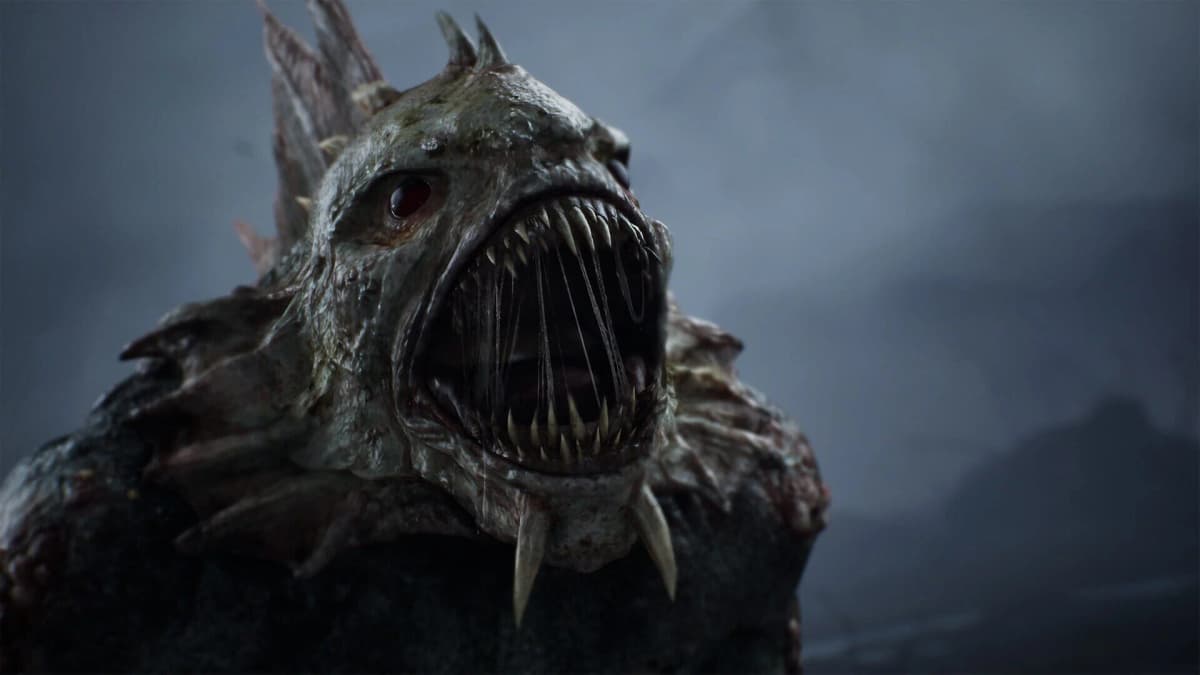
The texture work and the density of junk in every corner is the best thing here. Dilapidated hotel rooms and hospital wards feel lived in and then wrecked, and the enemy design earns the horror badge outright — Slither puppets, Deep Ones surging out of black water, shadows that bend space, mermaids that go precisely where you know they’re going. Oddly, the in-game rendering often looks better than the pre-rendered cutscenes, which take a visible step down. Facial animation isn’t a strength; the voice work carries it, and both leads hold up.
Sound is a blanket hush rather than discrete effects, but the creature audio is excellent and the 3D placement does real work — hearing something slither past a doorway makes you stop and listen. The main menu music has Blade Runner 2049 in its DNA; the in-game score is ambient wallpaper. There’s no sanity mechanic, which for a Cthulhu game is a genuine miss. There are reality-bending set pieces, but I was never once made to doubt what Calvin was seeing, and that’s the one Lovecraft lever they left untouched.
The dialogue gets corny, partly from swinging at 1929 diction and partly from selling the intimacy between Calvin and Faye. The ending is bittersweet and lands better than the road to it, and there are stretches where what you’re doing turns out to be pointless — which in Eldritch horror is arguably the point. The one structural complaint is the hospital: a double and sometimes triple key system, multiple slow-you-down carry items, the same corridors again. It’s the only location that wore out its welcome.
Length, Price and What It Runs On
It’s a shade under twenty hours to clean the whole thing out, achievements included, and one collectible exists only in New Game Plus, so a second run is compulsory for completionists. That mode is called Ex Oblivion and it’s better than it needs to be: bank Eldritch points by completing challenges, spend them on rewards that carry into the next run — cosmetics, but also the grenade launcher at hour zero, where it one-shots nearly everything, or unlimited machine gun ammo. Weapon upgrades don’t come with it, so an early rifle stays an unupgraded rifle until the very end.
It launches 18 August 2026 on PlayStation 5, Xbox Series X|S and PC via Steam, Epic and GOG. Standard is $49.99, deluxe $54.99, and the $59.99 premium buys a day of early access plus a roughly two-hour extra haunted-house mission — a practice I’d rather see the back of. On PC it sat between 60 and 85fps without upscaling, with some stutter; TSR and DLSS with frame generation are in, FSR is not, and there’s no HDR at launch, which on a game built out of darkness and light is a real loss. Both are promised as free post-launch support. Skip it on Steam Deck: everything on the lowest setting still dips into the teens and twenties and the unit gets uncomfortably hot. On a Steam Machine it’s smooth at 1080p. The Arkham Fish Market crashed on me repeatedly — the one unstable stretch in the game, and the moment those manual saves stop being a genre affectation.
The Sinking City 2
It’s a 7 because Frogwares built a genuinely good survival horror game on top of a detective layer they never bothered to rebuild. Arkham under water is one of the best horror settings of the year, the ammo scarcity makes every encounter a decision, and Ex Oblivion is a New Game Plus worth returning for. But the clue board is busywork with red string on it, the boss arenas hand you infinite ammo, there’s no sanity mechanic in a Cthulhu game, and the hospital wears out long before you’re allowed to leave it.
- Arkham under water is a superb horror setting
- Ammo scarcity turns every fight into a decision
- Enemy design and creature audio are excellent
- Ex Oblivion New Game Plus is worth a second run
- Weapon upgrades placed with real authorial care
- Clue board is easier than the old detective work
- Boss arenas respawn ammo and kill the tension
- No sanity mechanic, no crouch, no stealth
- The hospital chapter wears out its welcome
- No HDR or FSR at launch; Fish Market crashes
Buy it for the city and the bullet math. Don’t buy it expecting the detective game — that part of Frogwares is still in the drawer, and the sooner they take it back out and fit it to this structure, the sooner they have something better than a very good Resident Evil tribute in a fedora.
FinalBoss // Gear
Level up your setup
01Top-rated gaming headsetson Amazon→02High-refresh gaming monitorson Amazon→03Gaming chairson Amazon→04Discounted game keyson Kinguin→Affiliate links · As an Amazon Associate, FinalBoss earns from qualifying purchases.
Want to Level Up Your Gaming?
Get access to exclusive strategies, hidden tips, and pro-level insights that we don't share publicly.
Ultimate Reviews Strategy Guide + Weekly Pro Tips