
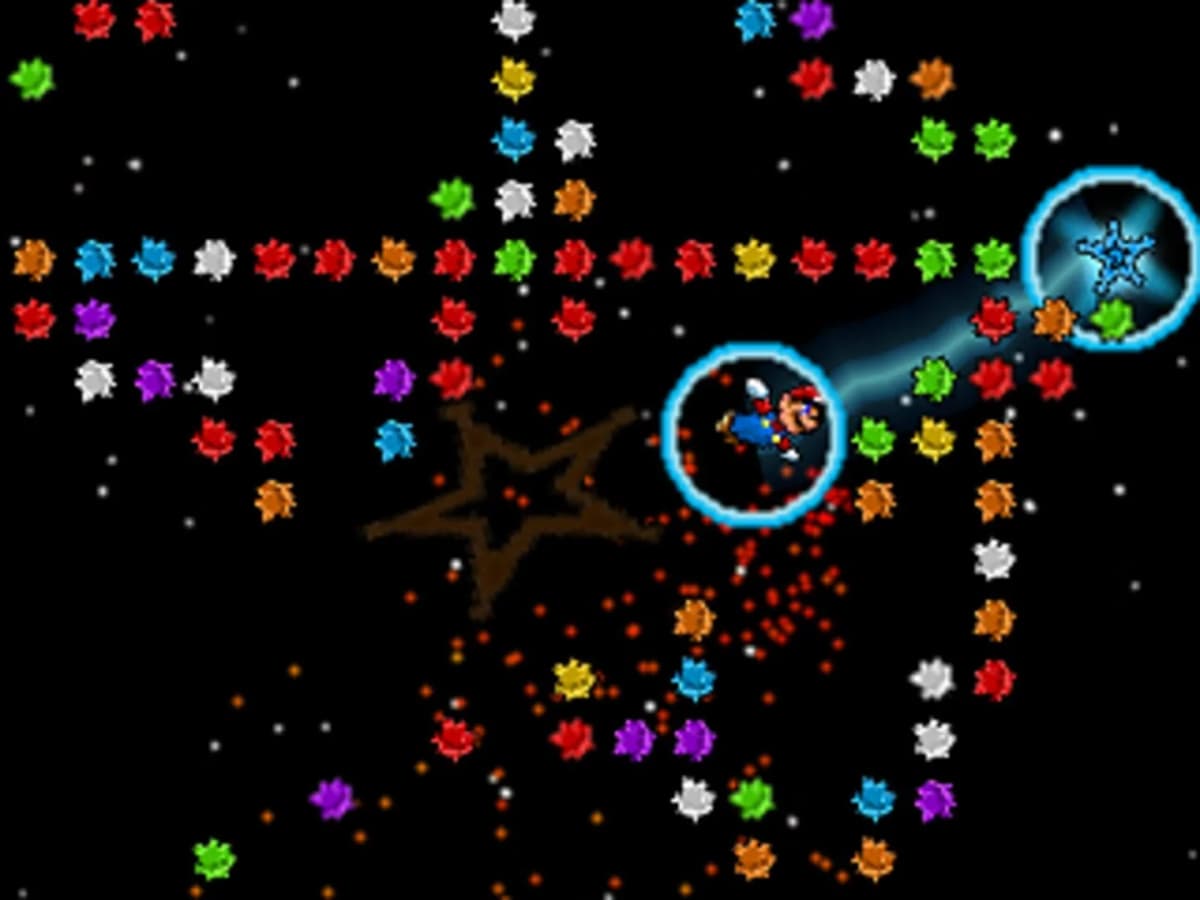
If you wanted a case study in what happens when “content strategy” steamrolls storytelling, The Super Mario Galaxy Movie just handed it to you in IMAX.
On paper, this should have been the moment Nintendo’s movie push truly leveled up: Galaxy is one of the most beloved Mario games ever, with a built-in emotional core and wild visual ideas. Instead, we’re looking at a sequel that’s pulling low-40s on Rotten Tomatoes, mid-30s on Metacritic, and a critical chorus calling it beautiful, busy, and basically hollow.
The story isn’t “critics hate fun.” It’s that this film makes one priority painfully clear: references first, universe-building second, characters and story somewhere off the edge of the map.
Table of Contents (7)
Key takeaways
- Critics largely pan The Super Mario Galaxy Movie for shallow story and fanservice overload, even while praising its visuals and score.
- The sequel leans hard into Easter eggs, cameos, and Nintendo universe teases, at the cost of a coherent emotional throughline.
- Galaxy, the game, actually had heart and atmosphere – the movie dodges that ambition in favor of safe, noisy spectacle.
- This is the first real warning sign for Nintendo’s budding cinematic universe: the merch plan is clearer than the creative vision.
Critics didn’t turn on Mario – they turned on the strategy
The first Super Mario Bros. Movie in 2023 was critic-proof. It was light, brisk, and unapologetically built like a theme park ride, but it did its job: introduce Illumination’s version of Mario, hit the nostalgia buttons, move a mountain of tickets and toys. Reviews were middling, audiences loved it, Nintendo cashed the checks.
Galaxy was supposed to be the sequel that earns the long game. You’ve already sold people on this take on Mario. Now you can afford to slow down, dig into character arcs, maybe borrow some of the bittersweet tone that made the Galaxy games and Rosalina’s storybook stick in players’ heads.
Instead, what early reviews across the spectrum agree on is that Illumination and Nintendo went the other way: bigger cast, more planets, more cameos, more references to everything from Odyssey to other Nintendo IP – and a story that feels like connective tissue between set pieces. One PC-focused outlet straight-up framed it as “churn,” and even the kinder reviews land on the same note: fun in bursts, forgettable once the credits roll.
When you see critics largely pan The Super Mario Galaxy Movie for shallow story and fanservice overload, this is what they’re actually reacting to. Not that it’s colorful. Not that it’s kid-friendly. That the creative bar has been set at “good enough to keep the brand machine humming.”
Fanservice isn’t the villain – the product roadmap is
Let’s be honest: nobody walks into something called The Super Mario Galaxy Movie expecting A24. Fanservice is part of the ticket price. The problem isn’t that this film is packed with Easter eggs; it’s how they’re being used.
Critics across gaming and mainstream outlets all describe roughly the same experience: an aggressively paced highlight reel of Nintendo nods. Classic Galaxy planets reimagined, deep-cut music cues, blink-and-you-miss-it cameos, even hints at other franchises muscling their way in to tee up some future Nintendo cinematic universe.
You can feel the roadmap: introduce Rosalina, debut Yoshi properly, give Bowser Jr. more to do, seed hints of Star Fox or other IP in the margins, make sure Peach and Mario get enough screen time for future spinoff potential. Every character is a bullet point in a pitch deck.
Fanservice works when it deepens a moment you already care about. Here it often feels like a substitute for those moments. Several reviews call out rushed character introductions (Yoshi being a big one), weirdly handled arcs (Rosalina’s, especially), and an emotional center that never quite forms because the movie is already sprinting to the next reference gag.
If I had Illumination’s PR in front of me, the question is simple: “How many pages of actual character beats got cut to make room for cameos and shared-universe setup?” Because from the outside, it feels like a conscious trade.
Galaxy the game had soul. The film is scared of it.
This is the part that stings if you care about Galaxy as more than “the one where Mario goes to space.” The 2007 Wii original wasn’t just inventive level design. It flirted with melancholy. It let you sit in the Comet Observatory’s quiet. Rosalina’s storybook gave the game a strange, almost lonely vibe underneath the usual Mario cheer.
By all accounts, the movie doesn’t want any of that smoke. Reviewers say Brian Tyler’s score slaps, the action sequences are well-staged, and some sequences get surprisingly close to capturing Galaxy’s sense of scale. But the second things threaten to slow down long enough for real feeling, the film bolts for the next gag, the next planet, the next IP check-in.
Rosalina, played here by Brie Larson, is the easiest barometer. Multiple reviews flag that she’s either underused or oddly written – present as an icon, not a person. That tracks with a movie more interested in her as a brand pillar than as the quietly tragic center of Galaxy’s universe.
And this is where the “it’s for kids” defense falls apart. Kids locked onto Galaxy’s mood just fine. They can handle quiet beats and unresolved feelings. The decision to sand all that down isn’t about accessibility. It’s about risk. Emotion is harder to A/B test than a slapstick set piece.
Nintendo’s cinematic universe just hit its first warning sign
From a business perspective, Galaxy will probably still open big. Families know the brand, the first movie was a monster hit, and word-of-mouth for “colorful Mario in space” carries a long way. The more interesting metric will be what happens in weeks two and three — and how wide the gap grows between audience and critic scores.
If this thing legs out like the original did, Nintendo and Illumination get a very clear message: the current formula is “good enough.” More references, more chaotic crossovers, more IP mash-ups. The next stop on that train is a Smash Bros.-style ensemble that plays like a 90-minute cutscene of announcements.
If, instead, you see a sharp drop-off and a more muted audience reaction — lots of “my kids liked it, I barely remember it” — that’s where course-correction might actually happen. Because the ceiling here is higher. The Galaxy games proved Mario can support weirder tones, stranger worlds, and stories that actually resonate.
Right now, though, The Super Mario Galaxy Movie looks like the classic second-album problem: success led to scale, scale led to caution, and caution led to something glossy, noisy, and safe. It’s a victory for the Nintendo brand machine, and a loss for anyone hoping the films would eventually be as bold as the games they’re strip-mining.
What to watch next
- Box office legs: Opening weekend will be big; the real signal is how fast it drops and whether families come back for repeat viewings.
- Audience vs critic split: A massive gap tells Nintendo they can ignore reviews. A narrower one suggests fatigue with the fanservice-first approach.
- Announcements at the next Direct or film slate reveal: If the messaging leans even harder on crossovers and universe-building without mentioning writers or directors, expect more of the same.
- The next adaptation choice: A Zelda or Metroid movie made in this mold would be a much bigger problem than doing it to Mario, who’s built to be lighter.
TL;DR
The Super Mario Galaxy Movie is a visually stunning, reference-stuffed sequel that critics are largely dumping on for its shallow, scattershot story. It proves Nintendo and Illumination are prioritizing IP expansion and fanservice over the emotional weirdness that made the Galaxy games special. Worth a watch if you just want loud, colorful Mario in space — but as a sign of where Nintendo’s movie universe is headed, it’s a flashing yellow light, not a green one.
FinalBoss // Gear
Level up your setup
01Best-selling Switch 2 gameson Amazon→02Switch 2 accessorieson Amazon→038BitDo controllerson Amazon→04Discounted game keyson Kinguin→Affiliate links · As an Amazon Associate, FinalBoss earns from qualifying purchases.
Want to Level Up Your Gaming?
Get access to exclusive strategies, hidden tips, and pro-level insights that we don't share publicly.
Ultimate Gaming Strategy Guide + Weekly Pro Tips