
Table of Contents (12)
The Witcher 3 Remastered changes how the game looks and how it controls
CD Projekt Red is treating this as a second major overhaul after the 2022 next-gen update: PC gets a native DirectX 12 renderer, full path tracing, new upscaling technology, and HDR work, while every version receives changes aimed at the parts of a replay that have aged less gracefully — combat targeting, Geralt’s movement inertia, Roach handling, loot interaction, and skill planning.
That is what makes this remaster more interesting than the usual before-and-after screenshot parade. The 2022 patch already improved the game’s image quality and added some useful quality-of-life work, but it did not fundamentally reframe how the whole thing felt over a long playthrough. The 2026 version goes after both halves of the experience at once. It is trying to make Novigrad and Skellige look more modern, yes, but it is also trying to make a second or third run feel less like you are wrestling with a beloved 2015 classic and more like you are playing a large RPG that understands modern camera behavior, cleaner traversal, and less fussy build planning.
The headline feature is full path tracing on PC, but the most meaningful change for returning players may be the adaptive combat camera and revised targeting. The original 2015 combat had plenty of style, yet its camera could lose the enemy that mattered and its lock-on behavior could become messy when a group crossed paths. A sharper visual presentation is welcome. More reliable spacing, target selection, and animation transitions can change every encounter across a 100-hour replay.
Release, platforms, and core changes
| Category | The Witcher 3: Wild Hunt – Remastered |
|---|---|
| Launch date | September 29, 2026 |
| Upgrade price | Free for existing owners on supported platforms |
| Platforms | PC, PlayStation 5, PlayStation 5 Pro, Xbox Series X|S, Xbox Play Anywhere, and Nintendo Switch 2 |
| PC rendering | Native DirectX 12 with rendering parallelization; DirectX 11 support is removed |
| PC lighting features | Full path tracing, improved ray tracing, ray-traced hair, global lighting rework, GTAO, new shading model, and subsurface scattering |
| PC upscalers | NVIDIA DLSS 4.5 with Ray Reconstruction, AMD FSR 4, and Intel XeSS 2.0 |
| Gameplay systems | Combat, camera, targeting, movement, traversal, Roach handling, monster behavior, skill tree, looting, photo mode, accessibility, and mods |
| Replay extras | Transmogrification, immersive meditation, expanded photo mode, cross-platform mod support, refreshed motion blur, and quest-tracking UI improvements |
The short version is simple: this is not a paid remake, and it is not a tiny compatibility patch either. If you already own The Witcher 3: Wild Hunt on a supported platform, the decision is less about price and more about expectations. PC remains the place for the fullest visual overhaul. Console and Switch 2 players still get a meaningful package of rendering, interface, and gameplay changes, but not the same top-end lighting stack.
PC path tracing is a real lighting rebuild, not a checkbox effect
Path tracing replaces the selective ray-traced effects used by the 2022 update with a dedicated PC lighting mode that simulates light across the entire scene. Instead of reserving ray tracing for a few reflections, shadows, or elements of global illumination, path tracing calculates multiple bounces of light. Torchlight can color nearby stone, daylight can spill through a window and soften across a room, and materials can affect how that bounced light reads.
That distinction matters because the 2022 next-gen update was still a hybrid solution. On PC, that version layered ray-traced global illumination, ambient occlusion, reflections, and shadows on top of a more traditional rendering base. It looked better than the 2015 original, especially in moody interiors and rainy city streets, but it was still choosing specific places to apply the heavy stuff. The remaster’s PC path-traced mode is broader in scope. It is meant to replace that selective approach with a fuller lighting model, where bounce light, indirect color, shadows, and the overall relationship between bright and dark areas are solved together rather than stitched from separate tricks.
That matters most in the places where the 2015 game’s baked lighting showed its age: candlelit interiors, forests with broken sunlight filtering through leaves, wet streets at night, and rooms where warm firelight meets cold daylight. The remaster also brings denser foliage, upgraded textures, GTAO contact shading, improved subsurface scattering for skin and translucent materials, and a new tone mapper. Together, those changes should do more for atmosphere than a simple resolution bump ever could.
GTAO, or ground-truth ambient occlusion, is one of those features that sounds like menu filler until you notice what it does. It strengthens contact shadows in corners, under armor pieces, around props, and where geometry meets the ground. The result is not flashy in isolation, but it helps scenes keep their shape even before you start talking about path-traced bounce light. Pair that with the new shading model and better subsurface scattering, and faces, foliage, skin, and cloth should stop looking like they belong to slightly different games depending on the time of day.
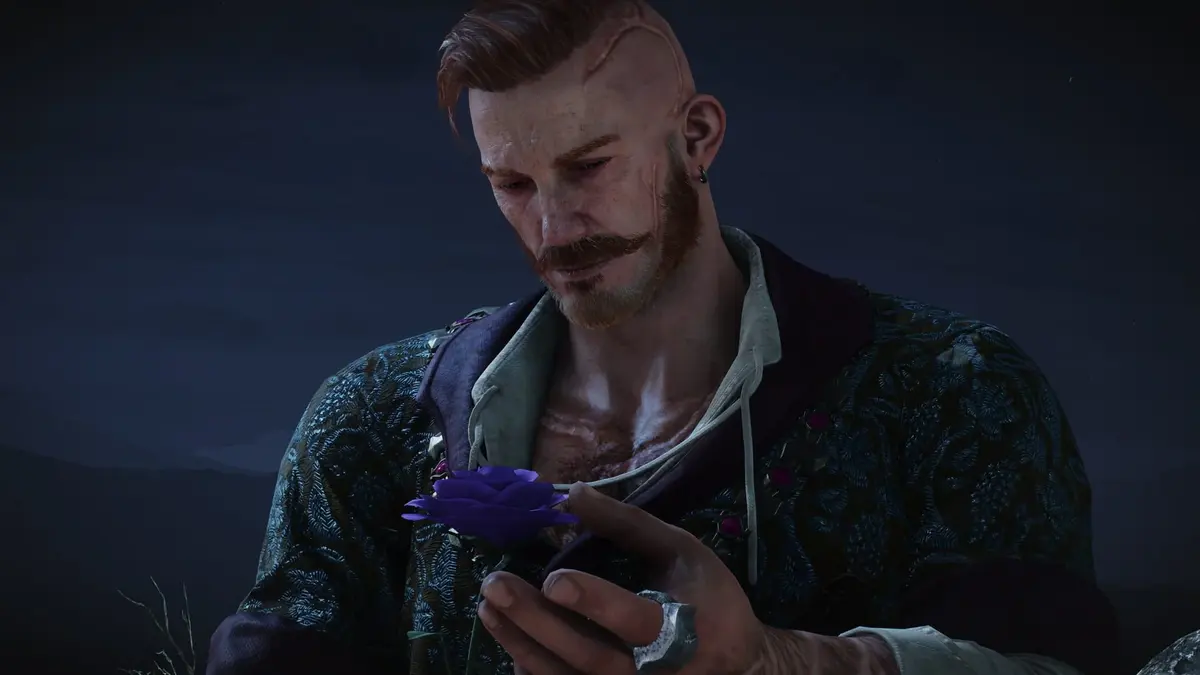
Ray-traced hair is another specific upgrade. Hair is a difficult rendering problem because thousands of thin strands need to receive and cast light convincingly. Geralt’s hair, beards, and character hair should sit more naturally in strongly lit scenes rather than reading as a separate rasterized layer. It is a smaller upgrade than global illumination, but it is exactly the kind of detail that becomes visible during close conversations and photo-mode shots.
The move to native DirectX 12 on PC is part of this story, not a footnote. CDPR is also using rendering parallelization, which means the remaster is built to spread more of its rendering work across modern CPU threads. That does not guarantee easy performance, and CDPR has not published benchmark targets here, but it explains why the PC version is being treated as a deeper renderer rebuild instead of a simple settings refresh bolted onto the old pipeline.
The hardware cost will be serious. Full path tracing is substantially heavier than conventional ray tracing, and CDPR has not published target frame rates or path-tracing system requirements. DLSS 4.5 with Ray Reconstruction, FSR 4, and XeSS 2.0 are therefore central tools rather than decorative settings-menu badges. Most PC players using the path-traced mode will be balancing internal render resolution, upscaling quality, and ray-tracing presets instead of chasing native-resolution rendering.
DLSS Ray Reconstruction deserves particular attention on compatible NVIDIA hardware. It uses AI reconstruction to clean up noisy ray-traced samples, which can improve fine detail around reflections, foliage, hair, and indirect light. In practical terms, that is the sort of setting interaction that matters most when a game shifts from limited ray tracing to full path tracing. Cleaner reconstructed lighting can do a lot to preserve scene stability when you are moving through dense towns, turning quickly in combat, or framing a dark cave with a bright opening behind it.
FSR 4 and XeSS 2.0 give AMD and Intel GPU owners modern alternatives, although image quality and performance behavior will depend on the final implementation and the chosen preset. The important point is less brand loyalty and more workload. A renderer this ambitious lives or dies on reconstruction quality, noise control, and how gracefully it holds up when you are not rendering at brute-force native resolution.
HDR players should care too, because the refreshed tone mapper and improved HDR handling can change how highlights roll off and how shadow detail survives in difficult scenes. The Witcher 3 has always loved contrast: moonlit swamps, torchlit basements, sunlit snowfields, neon tavern warmth against cold rain. Better HDR does not invent new art, but it can stop those extremes from flattening into clipped glare or muddy darkness on capable displays.
How the remaster’s graphics stack compares
| Feature | 2015 original release | 2022 next-gen update | 2026 Remastered |
|---|---|---|---|
| PC graphics API | DirectX 11 | DirectX 11 and DirectX 12 hybrid support | Native DirectX 12 with parallelized rendering |
| Lighting | Raster rendering, baked global illumination, SSAO | Hybrid rendering with ray-traced global illumination, ambient occlusion, reflections, and shadows on PC | Global lighting rework, GTAO, improved ray tracing, and a full PC path-tracing mode |
| Upscaling | No DLSS, FSR, or XeSS support | Earlier DLSS, FSR, and XeSS implementations | DLSS 4.5, FSR 4, XeSS 2.0, plus DLSS Ray Reconstruction |
| Hair rendering | Rasterized hair and HairWorks support | HairWorks with limited ray-tracing interaction | Ray-traced hair on PC |
| HDR and tone mapping | SDR presentation | HDR support | Improved HDR and a refreshed tone mapper |
| Foliage and materials | Original foliage density and texture set | Selective next-gen visual improvements | Denser foliage, revised shading, upgraded textures, and material improvements |
The comparison also helps cut through a common remaster problem: marketing language makes every feature sound equivalent. It is not. A new texture pass and a new lighting model do different jobs. A native DX12 pipeline is not the same kind of change as a better HDR curve. And path tracing is not merely “more ray tracing.” It changes the logic of how scenes are lit, which is why it has a chance to make old spaces feel newly authored instead of newly sharpened.
PC gets the full lighting stack; consoles get the broader cleanup
Console players still get improved ray tracing, global lighting, textures, and quality-of-life work, but full path tracing is PC-only. That is the key line to keep in mind before trailers and comparison clips start blurring everything together. If you want the remaster’s most complete rendering feature set, PC is the target platform.
What is confirmed for the shared console side is still substantial: visual upgrades, better lighting work, improved textures and materials, gameplay revisions, accessibility additions, UI cleanup, photo mode expansion, and the rest of the replay-focused systems work. PlayStation 5 Pro support is included. Xbox Play Anywhere support is included. Nintendo Switch 2 versions also have exclusive features planned, though their exact form remains undisclosed.
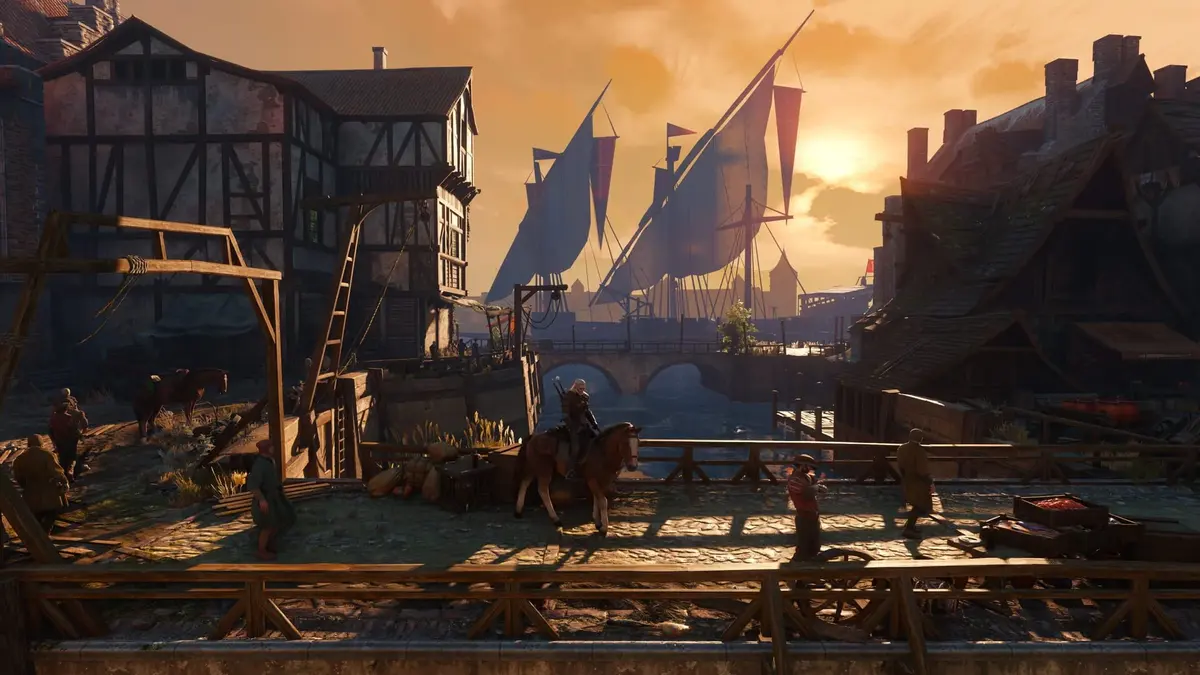
What has not been detailed is just as important. CDPR has not published the precise final split of rendering modes across PlayStation 5, Xbox Series X|S, PlayStation 5 Pro, and Switch 2, and it has not suggested console parity with PC path tracing. So the safest expectation is not “everything everywhere.” It is a clear tiered structure: PC gets native DX12, full path tracing, ray-traced hair, the newest upscaling stack, and the heaviest lighting overhaul; consoles get the more broadly shared visual and gameplay improvements without that same top-end PC lighting mode.
That split is consistent with how The Witcher 3 has evolved before. The 2022 update already treated PC as the home of the fullest ray-tracing stack, while consoles got a narrower RT feature set plus the wider asset and quality-of-life refresh. The remaster pushes that divide further rather than erasing it. So if you are replaying mainly for better combat feel, looting, camera work, and cleaner presentation, console versions still have a lot to offer. If you are replaying to see every alley, cave, and storm under the most advanced lighting model available, the PC version is the obvious showcase.
HDR players should also keep expectations practical. The revised HDR handling and tone mapper require an HDR-capable display and a correctly configured console or PC signal chain. SDR displays still benefit from the broader lighting and material work, but they cannot show the higher dynamic range behind the HDR upgrades.
Combat changes target the old game’s roughest edges
CD Projekt Red describes the revised combat as smoother and more precise, and the details point to several connected systems rather than a cosmetic animation pass. Geralt has reworked combat animations, smoother gap-closing when he moves into range, revised animation blending, new execution finishers, and enhanced monster behaviors. An Aard-based finisher has already been shown, and the remaster adds more brutal conditional executions tied to factors such as stagger states, low enemy health, and sign use.
This is also where it helps to separate the 2026 remaster from the 2022 patch. The earlier update already improved some moment-to-moment feel through a revised camera, faster Sign access, and quicker interaction flow. Useful changes, absolutely. But the foundations still felt like old Witcher 3. The remaster goes further by reworking the relationship between camera framing, targeting, movement into range, monster reactions, and how finishers punctuate a fight. That does not turn the game into a character-action spectacle. It does mean the older friction points are finally being treated as systems problems instead of nostalgia taxes.
The important part is the relationship between animation and input. In the original game, an attack could feel committed before the camera or target logic had fully caught up with the encounter. Better blending and gap-closing can make sword range easier to read. Updated monster reactions should make that spacing feel less arbitrary. Long-time players should still expect a brief adjustment period, because familiar dodge distances, enemy tracking, and camera framing will not map one-to-one from the 2015 or 2022 versions.
In replay terms, this is the difference between admiring a prettier Griffin contract and actually enjoying the fiftieth group encounter on the road to it. If your memory of old Witcher 3 combat includes swings clipping the wrong target, camera corrections during mob fights, or Geralt feeling half a step behind your intention, these are the areas the remaster is explicitly trying to tighten.
The adaptive camera and new targeting system matter more than new finishers
The remaster’s adaptive combat camera changes framing based on how many enemies are nearby and where they are positioned. The goal is straightforward: keep Geralt and the threats around him visible without the player constantly dragging the camera back into a usable angle. The default combat distance and angle have also been revised to make movement and attack animations more readable.
Targeting receives a deeper rework. The new system is designed to select enemies more reliably when several foes crowd together, move across Geralt’s path, or shift during an attack animation. That has practical value for signs as well as swords. A predictable target makes Aard, Igni, and other aimed actions feel deliberate instead of dependent on whether the soft lock picks the right body in a mob.
This is the part of the remaster that is easiest to underrate from a trailer and easiest to appreciate in a replay. Think about the kinds of fights The Witcher 3 loves to throw at you: a few human enemies with shields and archers layered behind them, a pack of monsters that keeps circling, or a messy roadside ambush where one target is clearly the priority but bodies keep crossing. A camera that reframes intelligently and a targeting system that stops hopping to the least useful enemy can improve every one of those fights without changing the underlying combat fantasy at all.
It also changes how build choices feel in action. A Sign-heavy player benefits when targeted casts are easier to trust. A sword build benefits when gap-closing lands Geralt where the fight expects him to be. A hybrid build benefits when the camera is less likely to hide the threat you wanted to stagger before diving back in. New finishers are fun, but cleaner information and better target confidence are what make the entire combat loop feel more modern.
Exact camera toggles, legacy-camera options, and targeting customization have not been published. Players who strongly preferred a specific 2015 camera setting should wait for the final menu details before assuming the original behavior can be fully restored.
Movement and Roach handling should reduce exploration friction
Geralt’s traversal is being modernized with smoother climbing and movement transitions, along with less of the familiar overshoot in tight spaces. That may sound minor beside path tracing, yet anyone returning to Velen or Novigrad remembers how often the original movement system made a doorway, ladder, or short ledge feel more awkward than the quest behind it.
This is another area where replay value matters more than bullet-point glamour. A giant RPG is made of repeated acts: turning in a contract, checking a room for loot, cutting through a village, climbing a ruin, hopping off Roach, squeezing through a doorway, starting another fight. If the remaster shaves even a little of the old drag off those transitions, it improves dozens of hours rather than a few hero moments.
Roach also receives reworked handling: more responsive turning, clearer speed control, and fewer collision oddities. The horse’s original pathfinding could turn a simple ride into a brief negotiation with a fence, a bridge, or a low stone wall. Better mount response will not alter the game’s quest structure, but it removes friction from the long stretches between contracts and story missions.
The skill tree overhaul resets build advice
The remaster completely rebuilds the ability system around three main branches. CDPR’s goal is more flexible build crafting, with new perks, new abilities, reworked existing skills, and revised synergies that fit the updated combat flow. Melee-focused, Sign-heavy, and hybrid approaches should have clearer routes through the tree than the older setup.
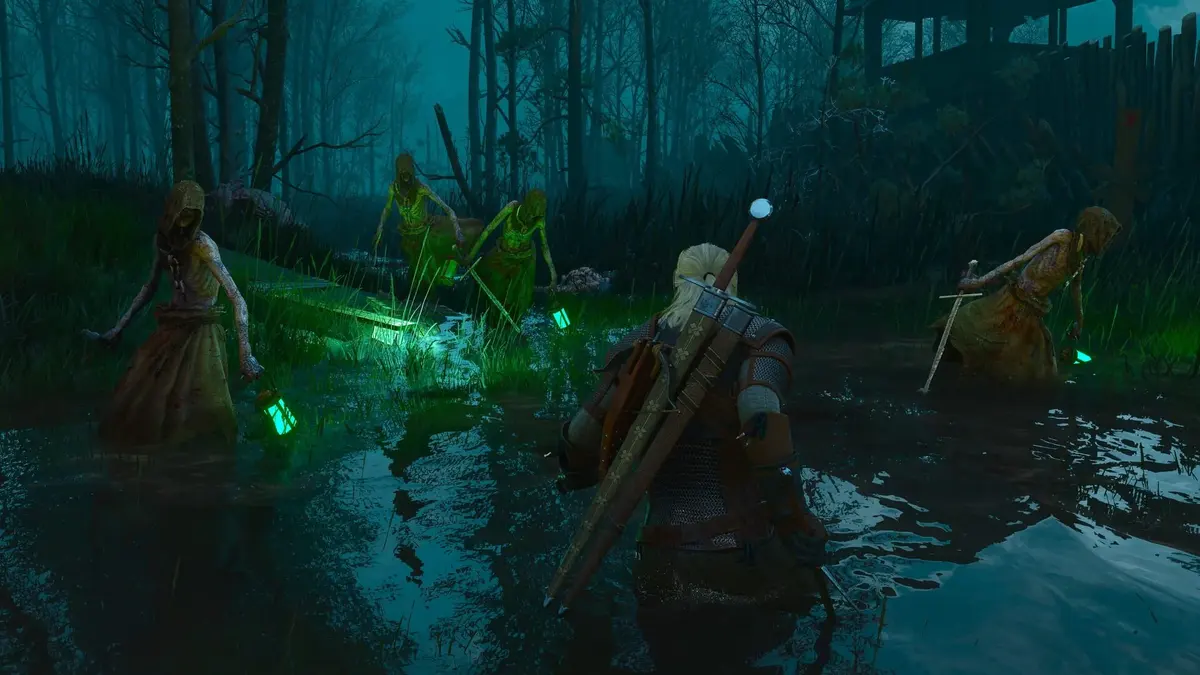
That matters because combat revisions and skill revisions amplify each other. If targeting is more reliable, Sign perks become easier to value in real play rather than on paper. If gap-closing and animation blending are improved, aggressive melee perks can feel better because you spend less time fighting spacing errors. If monster behaviors are adjusted around the smoother combat rhythm, defensive or control-oriented abilities may create more obvious openings instead of being drowned out by camera noise and target confusion.
A practical replay example: a sword-first player may now want to build around staying on top of enemies and cashing in on cleaner finisher opportunities, because the camera and animation work should make that playstyle read more clearly. A Sign-first player may find crowd control and directional casting more rewarding if the new targeting behaves the way CDPR says it will. A hybrid player could benefit the most of all if the three-branch structure truly makes experimentation less awkward, because the old version often asked you to commit around system friction rather than around play fantasy.
That makes existing endgame build guides poor foundations for a remastered playthrough. Any guide based on the previous node layout, old perk combinations, or long-settled assumptions about what feels awkward to use may age badly the moment this update lands. Returning players should avoid committing to a pre-launch build plan until node names, numerical bonuses, branch caps, and respec costs are available.
The useful promise here is build identity. A combat revision has more value when a player can build around it: a melee setup that leans into spacing and finishers, a Sign build that benefits from clearer targeting, or a hybrid approach that does not punish experimentation as heavily as the older system could. If CDPR lands that part, the skill tree may quietly become one of the remaster’s biggest replay hooks.
Quality-of-life changes are built for a replay, not just screenshots
The remaster includes a looting rework and quest-tracking UI improvements, two systems that can save more time across a full campaign than a flashy feature list suggests. CDPR has not detailed the exact looting filters, pickup-radius rules, or interface controls, but the focus is clearly on reducing the repeated menu and pickup friction that accumulates across dozens of hours.
That fits the broader direction of the past few years. The 2022 update already pushed interaction flow in a more convenient direction. The remaster extends that thinking into a wider cleanup pass, which is exactly what a replay of a massive open-world RPG needs. Nobody stops a second run because the sunsets are ugly. People stop because the small annoyances pile up faster than the wonder.
Transmogrification is also included, allowing Geralt’s armor and weapons to use a preferred appearance without giving up stronger stats. That is a welcome fit for a game with distinctive Witcher gear sets and a long upgrade curve. Immersive meditation adds another layer of atmosphere to rest and preparation, while refreshed motion blur gives players more control over how fast movement reads on modern displays.
An expanded photo mode makes obvious sense beside the lighting upgrade, particularly for PC players using path tracing. The remaster also expands mod support, including cross-platform mod support, although the platform-specific catalog, certification rules, and console restrictions have not been published. Accessibility improvements are confirmed, but detailed settings for UI scaling, subtitles, color options, and other aids remain to be outlined.
Those last two areas matter more than they may look on the bullet list. Cross-platform mod support can help keep the remaster alive well beyond launch, especially if players want visual tweaks, interface adjustments, or replay-focused convenience mods without rebuilding their whole install from scratch. Accessibility changes and UI cleanup can have an equally large effect for players returning after years away, because readability and reduced menu friction decide whether a hundred-hour RPG feels inviting or exhausting.
Who benefits most from the upgrade
Existing owners have little reason to ignore a free upgrade this broad. PC players with DirectX 12-capable hardware and enough GPU headroom for ray tracing have the largest visual upside, particularly on an HDR display. Full path tracing will be the showcase setting, while the new upscalers and Ray Reconstruction will determine how practical it is in real configurations.
The other obvious winners are players who always loved The Witcher 3 in theory more than in the hand. If you admired the quests, worldbuilding, and side content but found the camera, traversal, or combat precision slightly too old-school to make a full replay tempting, this remaster is speaking directly to you. Its most valuable changes are not merely prettier rocks. They are the fixes aimed at the moments between the big narrative highs.
Console players gain the more universal improvements: reworked combat presentation, adaptive camera behavior, updated targeting, movement and Roach changes, the redesigned skill tree, looting improvements, photo mode, and transmog. These systems may be the stronger reason to replay for anyone who already enjoyed the 2022 visual upgrade but still bounced off the game’s older feel in motion.
Legacy PC users are the clearest group left behind. The remaster drops DirectX 11, so a system restricted to DX11 cannot run the new build. Players who only want the original combat timings and established mod ecosystem should also check the final compatibility and legacy-version options before migrating a long-running install.
The last major unknowns before September 29
CD Projekt Red still needs to publish exact PC requirements, recommended hardware for path tracing, final console rendering modes, detailed accessibility options, and the full three-branch skill-tree layout. Those details will decide how ambitious the remaster feels on ordinary hardware rather than in idealized footage.
Even with those unknowns, the shape of the upgrade is clear. The Witcher 3: Wild Hunt – Remastered is not betting everything on one showpiece graphics toggle. It is pairing a serious PC rendering overhaul with changes to combat readability, target selection, traversal, loot flow, and build planning — the exact parts of a replay that determine whether you keep going after White Orchard or drift away again.
The 2027 Songs of the Past DLC gives players another reason to keep a remastered save ready, but the September upgrade stands on its own as the more important reset: it modernizes the systems players touch every few seconds, not only the scenery they stop to admire.
FinalBoss // Gear
Level up your setup
01Top-rated gaming headsetson Amazon→02High-refresh gaming monitorson Amazon→03Gaming chairson Amazon→04Discounted game keyson Kinguin→
Affiliate links · As an Amazon Associate, FinalBoss earns from qualifying purchases.