

Start with the rebuild, not the nostalgia. Refund the points you are actually changing, inspect the tree currently shown in your game, then rebuild one route at a time. If the remastered overhaul has already returned your skill points, begin from that empty tree. If it has not, clear the ordinary skill tree first, then spend only after you have traced the path to the abilities that define your build.
That order matters because an old The Witcher 3: Wild Hunt build does not translate cleanly line by line. The remastered-era layout is built around three-rank skills and route planning, so the smart move is to preserve what your build was for rather than what every old point used to do.
Table of Contents (9)
How the Witcher 3 Remastered skill tree works now
The core change is structural. Instead of treating a broad category as the gate to everything deeper in that branch, the remastered skill-tree overhaul pushes you to follow the path that actually leads to the skill you want. Skills are also handled as three-rank investments, so unlocking something is only the first step, not the finished purchase.
This makes point placement more deliberate. An early node can matter twice: it improves the skill you bought, and it advances the route toward a later payoff. That is why returning players get punished for spending from memory. A point in a useful-looking skill can still be the wrong point if it does nothing to open your intended path.
- Three-rank structure: a skill is something you can build into, not simply unlock once and forget.
- Path-based progression: later abilities depend on the route leading to them, not on broad branch totals alone.
- Connected planning: a build is defined by its unlock chain as much as its final abilities.
- Rebalanced effects and synergies: old names, rank values, and “max this first” habits are not safe instructions by themselves.
The practical trap is simple: spending as if the category itself is the key. In the remastered layout, broad spending can leave you with several decent upgrades and still lock you out of the actual skill your build is supposed to revolve around.
Refund – inspect – rebuild: the clean way to start over
This is the part returning players usually need most. Do the rebuild in a fixed order and the tree makes far more sense.
- Confirm what you are resetting. Ordinary skill points and Blood and Wine mutations are not the same system. If you only want to redo combat, Signs, alchemy, or general skills, treat that as a standard skill-tree rebuild. If your mutation setup is the problem, handle that separately.
- Refund the ordinary skill tree first. If your remastered update has already emptied your allocation, you can skip straight to the next step. If not, the standard respec item is a Potion of Clearance, which refunds invested points in the regular skill tree and is commonly priced at 1,000 crowns.
- Inspect before spending. Count the points you actually have back, read the current skill descriptions, and look at the visible connections in the active interface. Do not assume an old 2015 or 2022 skill name still has the same effect, rank behavior, or role in a build.
- Choose one endpoint. Pick the skill or small cluster of skills that gives your build its identity, whether that means fast melee pressure, heavy attacks, Signs, alchemy, survivability, or a hybrid leaning toward one side.
- Buy only the route that opens that endpoint. Spend into the required path first. If the tree asks you to take earlier nodes before the defining ability appears, that spending is not filler; it is the access cost of the build.
- Stop and evaluate rank depth. Once the route exists, decide whether the build needs one key skill pushed deeper through its ranks or several complementary skills opened at lower investment first.
- Equip and test before using the rest. Slot the skills you bought, line up mutagens with matching colors where that system applies, then take the build into combat. Spend your leftover points only after you know the route functions the way you intended.
- Reset mutations separately if needed. If the rebuild also involves Blood and Wine mutations, use the reset tied to that system rather than assuming the ordinary skill-tree refund covers both. The mutation reset item is Potion of Restoration, also commonly listed at 1,000 crowns.
The key detail in that sequence is the pause between refund and spending. That pause is where most wasted points disappear.

Plan backward from the skill that defines the build
The efficient way to use the Witcher 3 Remastered skill tree is to choose a destination before allocating anything meaningful. Find the current skill or small group of skills that gives the build its identity, then trace every visible requirement back toward the start of the path. Those earlier nodes are your real core budget.
- Define the build’s role. Start with the playstyle: fast melee pressure, heavy attacks and stagger, sign-focused combat, alchemy and toxicity, critical-hit damage, survivability, or a hybrid.
- Find the current equivalents. Use the current descriptions in your game to identify skills that serve that role. A familiar name can now do a different job, while a renamed skill can fill the function your older build relied on.
- Trace the prerequisite chain. Follow the route from the desired endpoint through each earlier node it asks of you.
- Reserve points for access. Do not burn the budget for the main route on side options before the defining ability is even available.
- Choose rank depth after the route works. Decide whether the build gets more value from pushing one key skill deeper or from opening several complementary tools first.
This is the fix for the classic returning-player mistake: ending a respec with a pile of individually useful skills and no functioning version of the build you were trying to recreate.
How to translate a 2015 or 2022 build into the new layout
Bring the old build’s purpose into the remastered tree, not its exact shopping list. Older guides can still tell you what kind of character you were making. They are much less reliable when they start naming exact rank priorities, point counts, or old branch-access logic.
- Fast melee attacks: identify the current skills that support repeated quick-strike pressure, then map the route to the main melee payoff before buying durability support.
- Heavy attacks and stagger: look for the chain built around committed hits and impact, then finish that offensive route before padding it with defense.
- Sign-focused combat: identify the current skills that improve sign use and casting flow, then follow the shortest route to the sign ability that actually anchors the build.
- Alchemy and toxicity: find the current skills tied to preparations, potion use, and toxicity management, then secure that core before mixing in unrelated combat bonuses.
- Hybrid setup: choose one primary identity first, complete that path, then add the smallest useful second branch instead of splitting early points evenly.
Hybrid builds are where discipline matters most. Two half-finished routes can eat a large share of your points before either reaches the ability that makes the build feel complete. One finished path plus a small secondary branch usually plays better than two stalled ideas.
Three ranks change the depth-versus-coverage decision
In the remastered structure, “I unlocked it” and “I invested in it properly” are different statements. That changes rebuild order. You are not only deciding which skills belong in the build; you are deciding whether the next point is better spent deepening a core tool or widening the build’s toolkit.
- Prioritize rank depth when one current skill is clearly the engine of the build and later ranks improve the part of the playstyle you depend on most.
- Prioritize coverage when the build still lacks its baseline tools, such as damage, defense, or resource support.
- Prioritize access when the next defining ability is still locked and the route toward it is not complete.
That is why old “max this first” advice ages badly here. It only still works if the current description, rank scaling, and position in the route all still support the same result.
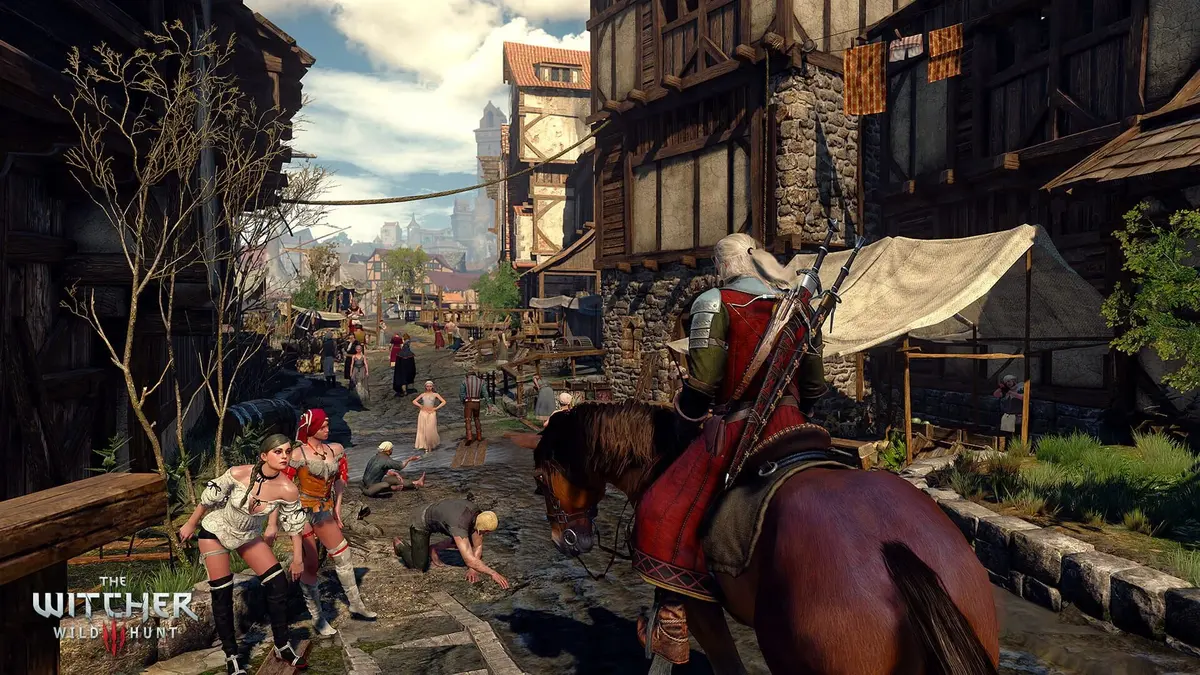
Does The Witcher 3 Remastered reset your skills?
What matters in practice is that older allocations are not the right shape for the remastered rebuild. Some returning players hit that as an automatic refund tied to the overhaul itself. If your points are already back, treat that as a free full rebuild and do not rush to recreate the old screen from memory.
If your build has not already been cleared, the ordinary way to respec the standard skill tree is still to use a Potion of Clearance. Either way, the rebuild logic is the same: inspect the current tree first, then rebuild the playstyle through the routes your version actually shows.
How the Witcher 3 Remastered respec works after the update
Do not collapse every reset into one rule. The ordinary skill tree and the mutation system are separate jobs.
- Standard skill-tree respec: Potion of Clearance refunds invested points in the regular skill categories and is commonly priced at 1,000 crowns.
- Mutation respec: Potion of Restoration handles Blood and Wine mutation investments rather than the ordinary skill tree, and it is also commonly listed at 1,000 crowns.
- Automatic refund cases: if your remastered version has already cleared the tree for you, skip the potion and go straight into the rebuild steps above.
During the rebuild, spend incrementally rather than dumping the full refund in one pass. Unlock the first required skill in the route, check what the next connection actually opens, and keep moving until the core path is complete. Spare points are more useful in your pocket than stranded in side branches you took too early.
Mistakes that make the reset feel worse than it is
- Copying an old allocation line by line. Older versions were built around different access rules, different rank structures, and in some cases different skill roles.
- Planning by category totals. Broad branch spending is not a substitute for reading the actual route to the skill you want.
- Taking every early skill to full rank immediately. Early ranks can be valuable, but full investment should follow the current description and the needs of the next unlock.
- Building synergies before the core route exists. Secondary bonuses matter a lot less when the build’s centerpiece is still locked.
- Assuming the ordinary respec covers mutations too. Standard skill points and Blood and Wine mutation investments are separate reset jobs.
- Ignoring active slots and mutagens. A rebuild is not finished when points are spent; the equipped layout still matters to how the build performs.
Practical rebuild takeaway
The best Witcher 3 Remastered rebuild is not the one that looks most like your old screen. It is the one that restores your build’s job under the current rules. Refund the right system, inspect the live tree, commit to one clear route, and only then decide where deeper ranks beat broader coverage. That approach carries the intent of an old build into the remastered skill tree without getting trapped by outdated branch logic or legacy point habits.
FinalBoss // Gear
Level up your setup
01Top-rated gaming headsetson Amazon→02High-refresh gaming monitorson Amazon→03Gaming chairson Amazon→04Discounted game keyson Kinguin→Affiliate links · As an Amazon Associate, FinalBoss earns from qualifying purchases.
Want to Level Up Your Gaming?
Get access to exclusive strategies, hidden tips, and pro-level insights that we don't share publicly.
Ultimate Guide Strategy Guide + Weekly Pro Tips