
The Witcher 3: Wild Hunt – Songs of the Past is best approached as post-main-story content: keep a strong late-game Geralt save, make separate manual saves before Dandelion’s family conversations, and prioritize the main quest A Bed of Thorns before getting lost in Letten’s optional exploration. The expansion’s central problem is Dandelion’s disappearance, but the route quickly becomes a de Lettenhove family mystery involving a cursed well, the forbidden Garden of Thorns, and a difficult curse-linked boss encounter.
Table of Contents (8)
Prepare the Right Witcher 3 Save Before Songs of the Past
Songs of the Past is a paid expansion for The Witcher 3: Wild Hunt, built for the updated remaster/Complete Edition baseline rather than as a standalone release. It is planned for 2027, with no exact release date or price announced. PC, PlayStation 5, and Xbox Series X|S are confirmed platforms; older-console availability has not been confirmed.
The expansion is framed as Geralt’s late-career final chapter, with Letten functioning as a separate, region-scale destination in the same broad vein as Toussaint. That makes an early-game or halfway-through-the-story save a poor fit. The exact level gate has not been announced, but the Garden of Thorns is designed around a developed, late-game character rather than a freshly unlocked Geralt.
- Finish the Wild Hunt main story before treating Letten as your next destination.
- Bring endgame-quality armor and steel/silver weapons rather than holding onto leveling gear.
- Keep your Sign and alchemy trees developed enough to adapt during a long investigation-and-combat quest.
- Stock healing, recovery, and combat consumables from recipes you already know; the new Letten monster weaknesses have not been fully revealed.
- Retain at least two manual saves: one before the Lettenhove manor investigation and another before progressing into the Garden of Thorns.
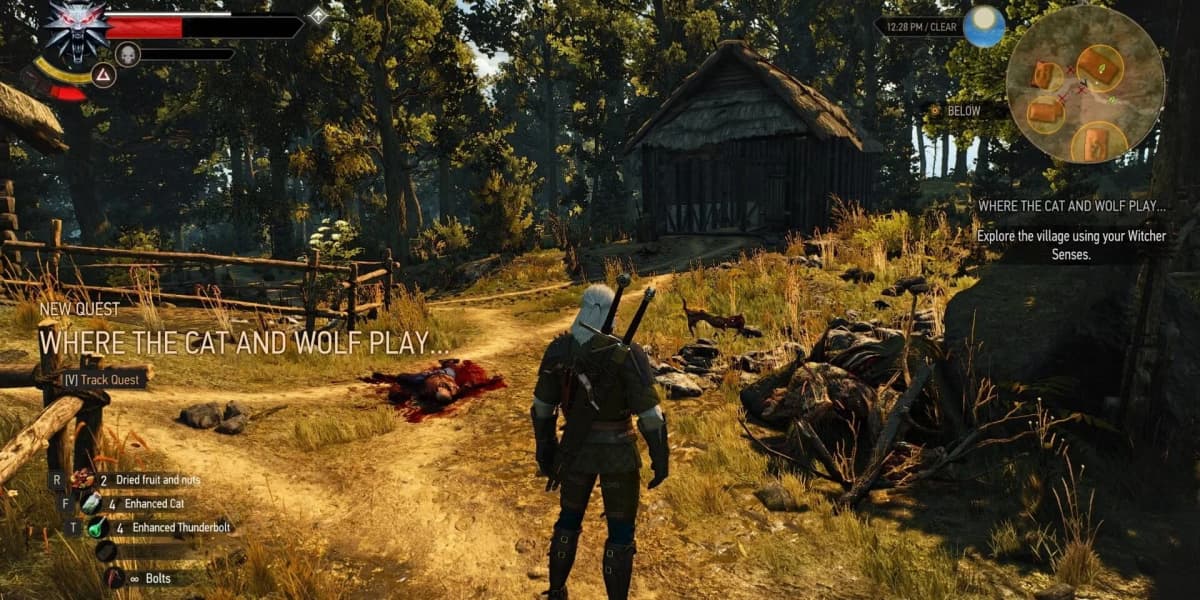
Where the Cat and Wolf Play… is useful preparation for the tone of this story, especially if you want another example of the game’s bleak witcher-school moral choices. It is not a mechanical entry requirement for Songs of the Past. Do not delay the expansion because that older quest remains incomplete.
Letten Is Dandelion’s Home, Not a Simple New Contract Hub
Letten is the hometown of Julian Alfred Pankratz, Viscount de Lettenhove — the bard Geralt knows as Dandelion. The rural Redanian region sits between Kovir and Kaedwen, reached geographically through the Buina and Nimnar river routes near the Gulf of Praxeda. Its mountain-ringed towns have largely avoided the continent’s worst wars, which gives the place a deceptively calm opening.
That calm is part of the setup. Letten has pastoral villages, old local customs, and Belleteyn celebrations, but its central plot is rooted in Dandelion’s aristocratic lineage. The de Lettenhove estate, surrounding settlements, and the Garden of Thorns form the important early exploration points. Letten also supports open-region play beyond the main story, including monster hunting, secondary quests, and contracts.
Prioritize A Bed of Thorns when you first arrive instead of trying to clear the map immediately. It introduces the relevant family members, establishes the curse, and carries Geralt toward the Garden — the location that anchors the expansion’s first major mystery. Side exploration makes more sense once the main route has given you the proper context for why the locals fear that part of the region.
How A Bed of Thorns Leads to the Garden of Thorns
The quest opens on the morning after Letten’s Belleteyn fertility and harvest festival. Geralt wakes clearheaded thanks to his mutations, while people around him are still suffering from too much Bragot, the local honey-and-beer drink. The investigation begins when Geralt finds Dandelion’s distinctive lute in the hands of a drunk local and realizes its owner has vanished.
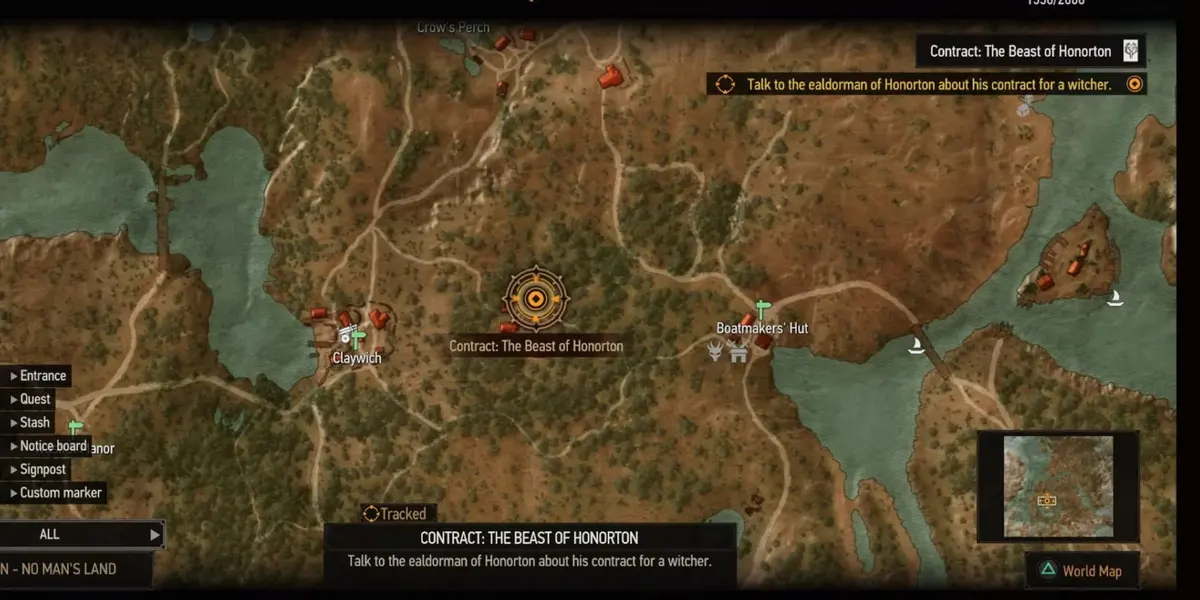
The important route through the quest follows a clear narrative sequence, even though exact dialogue branches and puzzle solutions are still under wraps.
- Follow the missing-lute lead. Dandelion’s unique instrument is the immediate sign that his absence is serious, not another one of his usual disappearances.
- Go to the de Lettenhove estate. Geralt’s investigation shifts from festival gossip to Dandelion’s family history.
- Speak carefully with Dandelion’s relatives. His stern grandmother, cousin Lilla, and brother Gustav each expose a different part of the family’s buried conflict.
- Connect Geralt’s nightmare to the family legend. The story points toward Count Humbert de Lettenhove, an inherited curse, and a cursed well tied to the Garden of Thorns.
- Enter the Garden after the investigation turns personal. This is where the domestic manor mystery becomes a hostile, folk-horror dungeon sequence.
The main trap is assuming the manor scenes are only flavor dialogue. A Bed of Thorns uses a branching investigation structure: dialogue decisions and the order in which Geralt presses the family for answers shape how secrets are uncovered before the Garden sequence. The full consequence map is not public, so the practical move is to preserve a manor save before committing to a major line of questioning.
Handle Lilla’s Route and the Family Choices Carefully
Lilla is more than a guide into the de Lettenhove scandal. She accompanies Geralt into the Garden of Thorns and has relationship-sensitive dialogue throughout A Bed of Thorns. She is also a potential romance option, so choices that sound casual during the investigation may carry more weight than standard one-scene dialogue.
Keep romance decisions separate from first-pass mystery decisions. A clean manual save before the estate conversations lets you pursue the investigation with one consistent role-playing approach, then revisit Lilla’s more personal dialogue without overwriting the route you prefer. How her romance interacts with Geralt’s established relationships with Yennefer or Triss has not been detailed, so avoid treating any choice as harmless if you are protecting a specific end-state for Geralt.
- Use one save for a strictly professional Geralt who focuses on Dandelion and the curse.
- Use a second save if you intend to explore Lilla’s relationship route.
- Do not rush through references to the Garden of Thorns; local hostility toward the place is a core clue, not background color.
- Read family-history dialogue closely before moving from the estate toward the Garden, since Count Humbert’s legacy is central to the cursed-well plot.
Garden of Thorns: What Changes Once You Enter
The Garden of Thorns is a taboo woodland tied to the generational de Lettenhove curse. It is built as a tighter, dungeon-like area rather than another open stretch of Letten: dense woods, invasive thorn growth, limited visibility, environmental clues, and the cursed well at the center of the mystery.
Expect the route to separate Geralt and Lilla at points. Brambles and thorns block paths, divide the pair, and turn the Garden’s exploration into combat-heavy segments. Keep your healing resources available for the Garden rather than spending everything while wandering Letten’s early rural areas; the quest deliberately raises pressure after its slower manor investigation.
The well is the key destination. It links Geralt’s dream imagery, Dandelion’s family history, and the curse surrounding Count Humbert. Specific ritual steps and puzzle solutions have not been revealed, so avoid committing to a build around a supposed mandatory Sign or item. Yrden and Quen remain sensible flexible tools for a curse-themed, close-quarters encounter, but neither has been confirmed as required.
Prepare for the Slumbering Knight Boss Fight
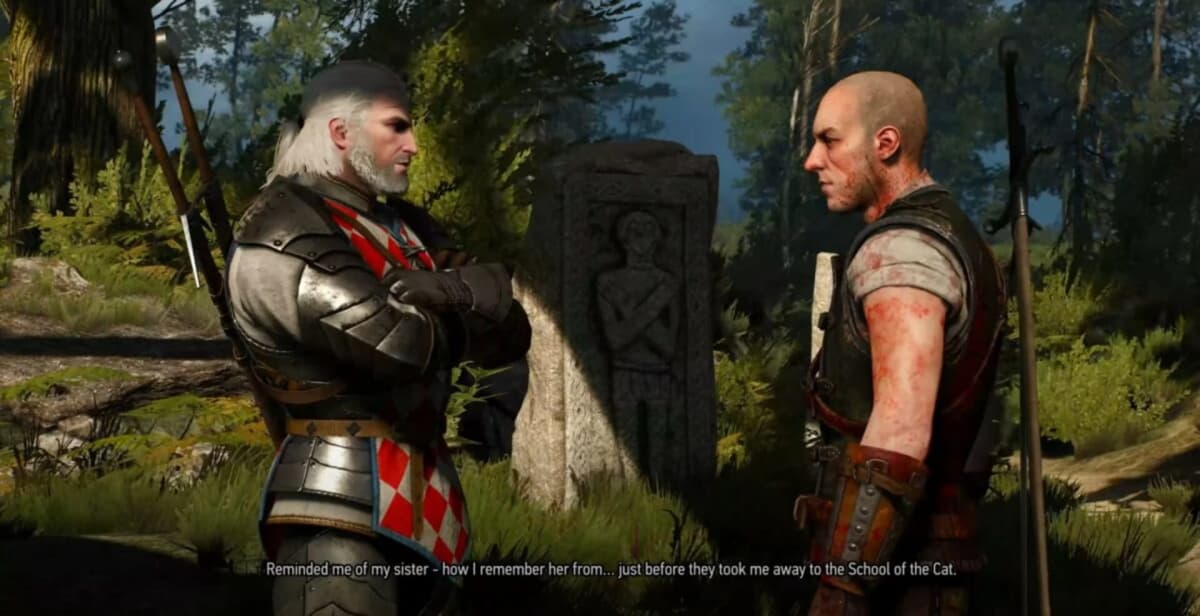
The Garden sequence includes a boss called the Slumbering Knight: a skeleton covered in roots that can defend itself and attack through root extensions. It is the major combat spike shown for A Bed of Thorns, arriving after the investigation and cursed-well progression rather than at the beginning of Letten.
Its exact phases, resistances, and damage values have not been published. Build around durability and flexibility instead of chasing a hypothetical single weakness. A late-game Geralt with reliable defense, strong monster-hunting weapons, developed Signs, and a broad alchemy toolkit is better positioned than a glass-cannon setup built around one unconfirmed counter.
- Bring late-game gear: Treat the encounter as content in the same difficulty neighborhood as Toussaint, not as an early Velen contract.
- Keep Quen ready if it fits your build: Root attacks and constrained Garden paths can make a defensive buffer more valuable than extra greed for damage.
- Keep Yrden available rather than mandatory: The curse and well theme make it a sensible option, but the fight’s exact interaction rules remain unknown.
- Carry varied consumables: New Letten monsters are part of the expansion, and their oil or potion weaknesses have not been fully listed.
- Save before the well sequence: The Garden combines story decisions, companion scenes, exploration, and a named boss, making it a natural point to preserve a clean retry save.
Learn the New Chain Combat Tool Before Relying on It
Songs of the Past adds the Chain, a new combat tool that changes Geralt’s spacing options. It can swing out to strike distant enemies and can be used to pull targets closer or hold them at range. That gives Geralt a more active answer to enemies that would normally control the fight through reach, size, or distance.
Practice its pull-versus-distance role against ordinary Letten enemies before treating it as a boss solution. The best use case is controlling the space around Geralt: pull in a vulnerable distant foe when you have a safe follow-up, or create separation when a larger adversary is pressuring you. Its exact controls, upgrades, and unlock timing have not been disclosed.
Preview material also mentions a silver-chain reward. Its final statistics and acquisition method are not known, so do not plan an entire build around it until the expansion confirms whether it is equipment, a quest reward with combat bonuses, or another form of monster-hunting upgrade.
What to Expect at Release
CD Projekt Red and Fool’s Theory are developing The Witcher 3: Wild Hunt – Songs of the Past as the game’s third major expansion. The 2026 remaster update provides its technical baseline, including broader visual, animation, targeting, and combat improvements; the minimap work alone required veteran knowledge and reverse engineering of old code remnants after parts of the original system’s construction knowledge had been lost.
The final quest list, exact access requirements, full boss roster, Chain controls, price, and 2027 launch date remain unannounced. The reliable preparation plan is straightforward: preserve a completed late-game save, enter Letten ready for a Toussaint-level challenge, prioritize A Bed of Thorns, and protect your preferred Dandelion-family and Lilla choice paths with manual saves before the Garden of Thorns.
FinalBoss // Gear
Level up your setup
01Top-rated gaming headsetson Amazon→02High-refresh gaming monitorson Amazon→03Gaming chairson Amazon→04Discounted game keyson Kinguin→
Affiliate links · As an Amazon Associate, FinalBoss earns from qualifying purchases.
Want to Level Up Your Gaming?
Get access to exclusive strategies, hidden tips, and pro-level insights that we don't share publicly.
Ultimate Guide Strategy Guide + Weekly Pro Tips