
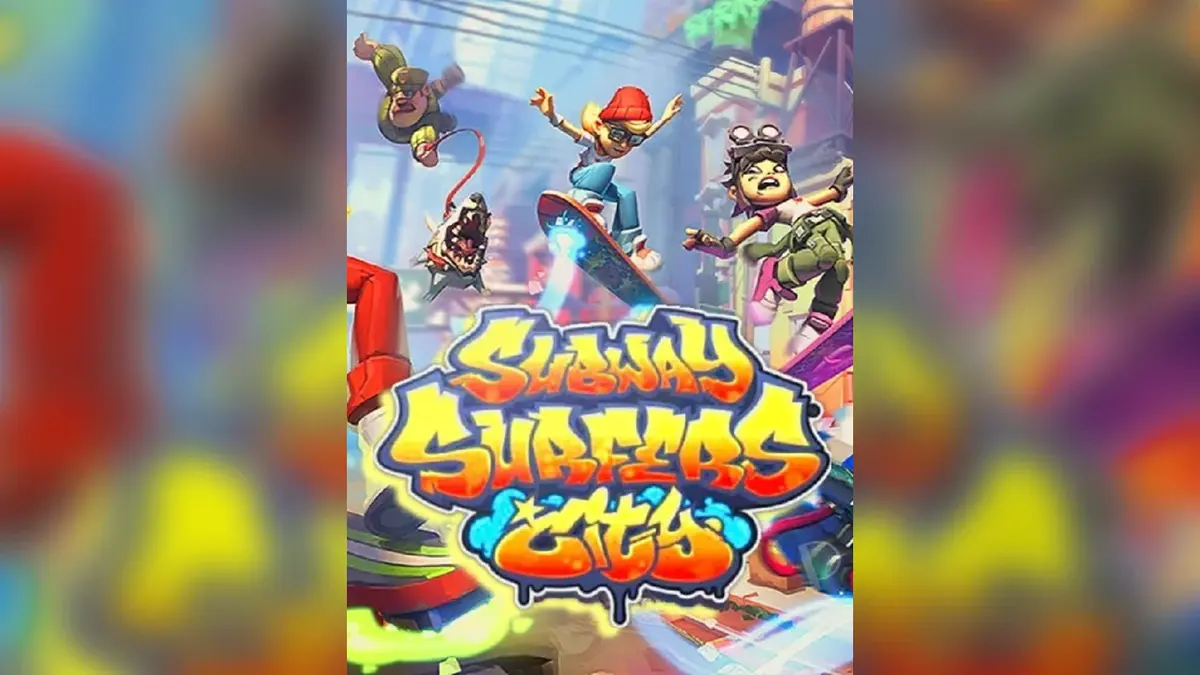
Updated 9 October 2026 for Subway Surfers City v2.6.1 (iOS, released 1 October 2026). The App Store listing also announces a new season starting 7 October and a Rey Romeo update with the SK8 of Spades board.
Table of Contents (24)
Quick Answer: Best Subway Surfers City Characters
For high scores, the best Subway Surfers City characters are Fresh, Yutani, Tasha and Wei: all four rank S tier for score in both of the current community tier lists we checked. For coins, Tricky and Miss Maia are S tier in both, and neither needs a Season Pass. Jake is a starter pick that both lists place below the top tiers. Where the lists disagree, this page says so instead of picking a side.
Subway Surfers City Tier List at a Glance
| Goal | S tier (both lists agree) | A tier (both lists agree) | Disputed or ranked by one list only |
|---|---|---|---|
| High score | Fresh, Yutani, Tasha, Wei | Ella, Jay | Spike (S or A), Zara and Ash (S on mobi.gg, not on PocketGamer), Miss Maia, Billy and Ninja One (A or B) |
| Coins | Tricky, Miss Maia | Ninja One, Ella, Billy | Yutani (S or B), Jaewoo and Wei (S on PocketGamer, B on mobi.gg), Lucy, Georgie and Harini (S on PocketGamer only) |
For score, both lists rank Jake, Jaewoo and Tricky low. For coins, both rank Fresh, Tasha, Spike and Jay low. Sources: mobi.gg tier list (updated 22 September 2026) and PocketGamer tier list (updated 8 October 2026).
How This Tier List Is Built
This page does not use our own run tests. It combines three sources:
- Perks: the text in Sybo’s official Subway Surfers City help center, which lists three perks for each surfer and one perk for each surfer’s signature board.
- Tier lists: the two newest published lists, from mobi.gg and PocketGamer. Both split surfers into a high-score list and a coin-farming list. A surfer counts as S tier here only if both lists put it in S for that goal.
- Player discussion: threads on r/SubwaySurfersCity, used to show where players agree or disagree, never as a source of numbers.
PocketGamer’s list also names Runa and Darko, Santi Grafito, Matilda, Alpha, Sprinkle, Count Corvin and Xoloko. None of them appear in Sybo’s City help center or on mobi.gg’s City list. PocketGamer’s own update note (version 3.7.0, adding Count Corvin and Xoloko) matches the original Subway Surfers app, whose App Store version is 3.70.0 and whose October 2026 update added those two characters. We therefore left those names out and kept only surfers that exist in Subway Surfers City. Neither list publishes test data, so this page quotes no score or coin averages.
Why Your Surfer Pick Matters in Subway Surfers City
Every surfer has three perks, and the perks decide what a run is good at. Fresh’s perks lean on board charge and Secret Stars. Tricky’s lean on coin doublers and coin sacks. Each surfer also has a signature board with its own perk. Players can mix boards, and the community tier lists test surfers with fixed boards: a February 2026 scoring list on r/SubwaySurfersCity used the Grandmaster and Home Runner boards, and its coin list used the Pouncer board.
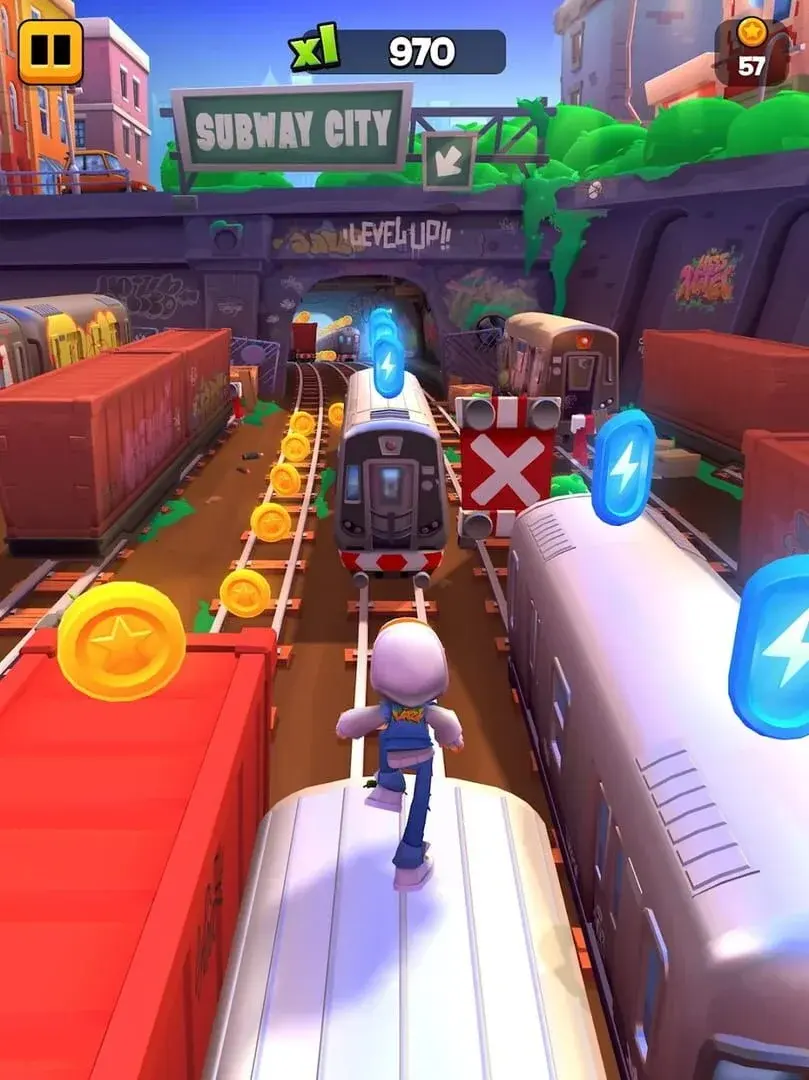
Two other rules shape the choice. First, the Crew Bonus: your best crew is built automatically from the surfers with the highest crew bonus, meeting crew members during a run adds score, and in City Tour and Trials each district has a featured crew of four linked surfers. Second, upgrades: PocketGamer says the third perk unlocks at surfer level 8 for Fresh, Yutani, Tasha, Tricky, Jaewoo and Lucy.
Unlocking works in several ways. Fresh and Tricky come through XP, and Miss Maia through Rookie missions, according to mobi.gg. Season Pass surfers come with the pass, which costs $4.99 on the US App Store. Sybo’s help center says a missed pass surfer can be bought in the shop or offers the next month, and with Surfer Credits the month after that.
What Changed Since March 2026
- 16 February (2.0.0): relaunch with faster gameplay, City Tour, a more vibrant look and track secrets.
- 22 April: season with Georgie and the Super Hooper board.
- 17 June (2.3.x): season featuring Wei.
- 28 July (2.4.1): season with Zara and the Pouncer board.
- August to September (2.5.x): season with Prince K and the Djinn’s Fortune board, plus stackable Crew Perks and custom crews.
- 1 October (2.6.1): season with Ash and the Home Runner board, and the Phantom Park district.
- 7 October: new season with Rey Romeo and the SK8 of Spades board. No official perk text for Rey Romeo was available when this page was updated.
1. Fresh – Best Free Pick for High Scores
Score: S in both lists. Coins: C on mobi.gg, B on PocketGamer. Sybo lists his perks as board charge over time, a bonus score multiplier while riding a board, and Secret Stars worth double. PocketGamer places the double Secret Stars perk at level 8. mobi.gg lists him as an XP unlock, so he needs no pass.
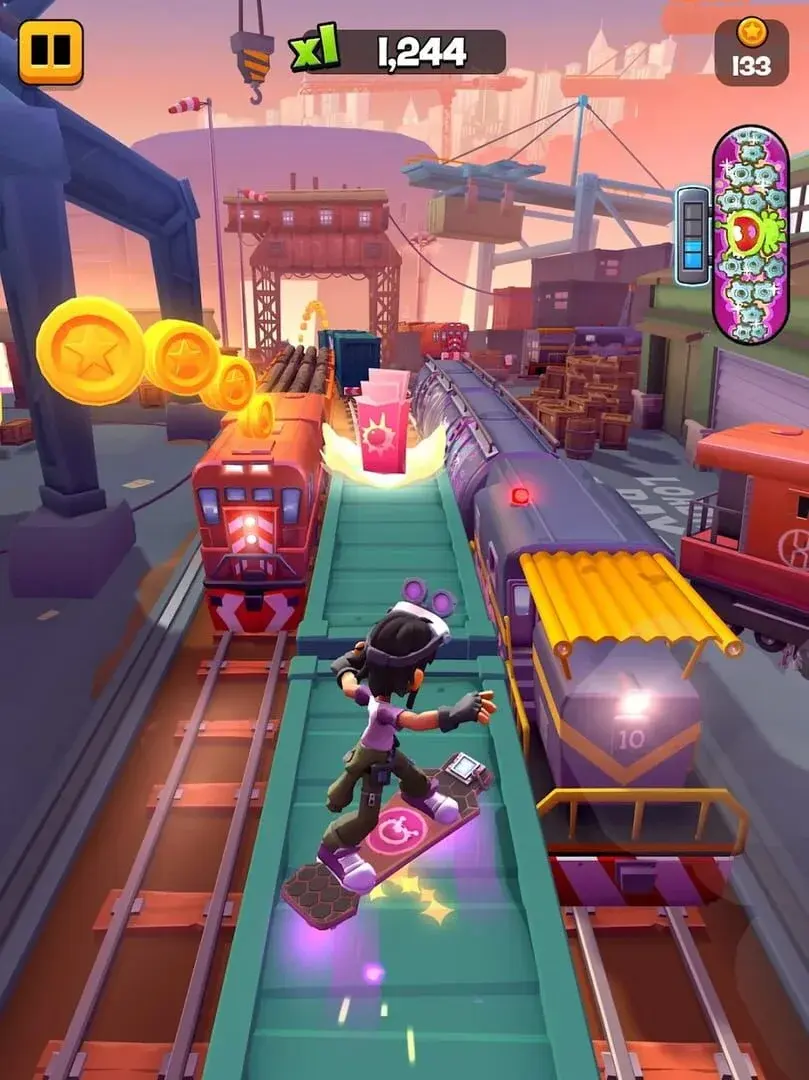
His signature board, The Grandmaster, gives bonus score when you activate it. Two of his three perks and his board all point at the same job: ride a board and score. Skip him for coin runs, since neither list ranks him above B there.
2. Yutani – Power-Up Engine for Score, Disputed for Coins
Score: S in both lists. Coins: S on mobi.gg, B on PocketGamer. Her perks are random power-ups while running, an extra board when running with power-ups active, and power-ups that last twice as long (level 8, per PocketGamer). Her board, Spaced Invader, gives a random power-up over time while you ride it. mobi.gg lists her unlock as the Season 1 Pass, the shop, or the Southline stage of City Tour.
Players rate her highly: a March thread titled “Can we all agree that Yutani is the goat?” drew 201 upvotes, and an October thread on free-to-play coin builds lists Yutani with the Pouncer board as one of three suggested setups.
3. Spike – Magnet Specialist for Score
Score: S on PocketGamer, A on mobi.gg. Coins: B in both. His perks are incremental score when picking up magnets (it peaks at 5 magnets), a magnet when stomping buried caches, and a 50% chance of another magnet when one expires. His board, Dog City, gives a chance of a magnet when you crash with it. mobi.gg lists him as a shop unlock or a City Tour reward at The Docks.
All three perks revolve around magnets, so he is a specialist for score runs rather than an all-rounder.
4. Tasha – Bubblegum Multiplier for Score
Score: S in both lists. Coins: C on mobi.gg, B on PocketGamer. Her perks are a bubblegum when you activate a board, an extra multiplier while a bubblegum is active, and a 50% chance of another bubblegum when one pops (that last perk at level 8, per PocketGamer). Her board, Sweet Street, gives bonus score when you pick up bubblegum while riding it, so the board and the perks use the same trigger. mobi.gg lists her as a Season Pass or Surfer Credits unlock.
5. Tricky – Best Free Coin Farmer
Coins: S in both lists. Score: B in both. Her perks are a coin doubler when you pick up 200 coins, a bubblegum at 300 coins, and a coin sack at 125 coins (the coin sack at level 8, per PocketGamer). Her board, Naughty & Nice, pays extra for collecting coin sacks while you ride. mobi.gg lists her as an XP unlock, and PocketGamer calls her the best free character for farming coins.
Players do not all agree she is the fastest. A reply in the February coin tier-list thread argued that Miss Maia collects coins faster at the same level.
6. Miss Maia – Free Coin Farmer That Also Scores
Coins: S in both lists. Score: A on PocketGamer, B on mobi.gg. Her perks are a coin doubler when you activate a board, a magnet when collecting coins, and bounces on tarps and bubbles that give coins and charges. Her board, Honeycomb, gives 3 coins while you ride it. mobi.gg lists her as a Rookie missions unlock, so she is free.
The top reply (19 upvotes) in the February scoring tier-list thread argued she belongs higher for score than the thread’s author had placed her. That fits PocketGamer’s A rating for score.
7. Jaewoo – Season Pass Surfer, Lists Disagree
Coins: S on PocketGamer, B on mobi.gg. Score: B on PocketGamer, C on mobi.gg. His perks are extra coins when a bubblegum pops, a chance of a bubblegum when picking up a magnet, and magnets that pull in power-ups, coin sacks and keys (PocketGamer puts the power-up and coin sack pull at level 8). His board, G-Tiger, gives a bubblegum when you collect coins while riding.
He unlocks through a Season Pass or Surfer Credits (mobi.gg). Because the two lists split on him, he is not a reason to buy a pass on his own.
8. Lucy – Magnet-Based Coin Farmer
Coins: S on PocketGamer; mobi.gg does not list her. Score: B on PocketGamer. Her perks are coins over time while a magnet is active, a chance of a magnet from a coin sack, and double the coins from the first perk (level 8, per PocketGamer). Her board, Cobweb, gives a coin sack when you pick up coins while riding. mobi.gg lists Cobweb as a Subway Pass reward.
A June thread on r/SubwaySurfersCity describes Cobweb as the usual coin-farming board, with Grandmaster for scoring. An October thread suggests Cobweb with Prince K for coins. With only one list ranking her, Lucy is a reasonable pick, not a confirmed top one.
9. Billy – All-Rounder With Coin Sacks
Coins: A in both lists. Score: A on PocketGamer, B on mobi.gg. His perks are more coins and board charges from buried caches, a board charge whenever you pick up a power-up, and a coin sack whenever you pick up a power-up. His board, Eye of the Viper, gives bonus score when you stomp buried caches while riding. mobi.gg lists him as a purchase unlock.
Players often pair him with the Pawesome board: a June thread calls Billy plus Pawesome suitable for both coins and points, and an October coin-build thread lists the same pair.
10. Jay – Crash-Based Score Surfer
Score: A in both lists. Coins: B in both. His perks are a power-up and bonus score when you crash with a board, extra board charges from buried caches, and a board that fills and drains faster. His board, Zephyr Cruiser, gives a chance of 3 board charges when you crash with it. mobi.gg lists him as a City Tour reward at Delorean Park.
His perks reward a different rhythm from other surfers. The author of the February tier-list threads describes a routine of activating the board and then crashing with it, which his perks pay out on.
11. Jake – The Starter You Replace Quickly
Score: B on PocketGamer, C on mobi.gg. Coins: A on PocketGamer, B on mobi.gg. Jake is the default surfer. His perks are a magnet when you activate a board, board charge from picking up coins, and starting runs with a board ready. His board, Trasher, gives bonus score when you collect magnets while riding it. PocketGamer’s beginner’s guide calls him the easiest early pick.
Both lists place him below the top tiers for score. Fresh and Tricky unlock through XP, so there is little reason to keep Jake as your main once you have them.
12. Wei – S Tier for Score, Disputed for Coins
Score: S in both lists. Coins: S on PocketGamer, B on mobi.gg. His perks are 3 coins and 3 board charges while running, a chance of a random power-up from that perk, and a bonus score multiplier of 0.5 each time you enter a different district (maximum 2). His board, Globetrotter, gives coins, board charges or a random power-up while you ride. mobi.gg lists him as a Season Pass or purchase unlock. He arrived in the 17 June 2026 season.
13. Ash – New Season Surfer, S Tier on mobi.gg
Score: S on mobi.gg; PocketGamer does not list him. Coins: B on mobi.gg. His perks are bonus score from stomping buried caches, a chance of a random power-up from stomping bouncy traps, and a score multiplier bonus of 0.1 for each buried cache stomped (maximum 2.0). His board, Home Runner, gives a bonus score of 250 while you ride it. He is the surfer of the season announced with the 1 October 2026 update (v2.6.1). With only one list ranking him, treat him as a promising pick, not a settled one.
14. Zara – Hurdle Specialist, S Tier on mobi.gg
Score: S on mobi.gg; PocketGamer does not list her. Coins: B on mobi.gg. Her perks are a bonus for jumping over or sliding under hurdles, a coin sack for the same actions, and a score multiplier bonus of 0.1 every 30 seconds (maximum 2). Her board, Pouncer, gives extra coins for clearing hurdles while you ride it. Her season arrived with the 28 July 2026 update (v2.4.1). The February coin tier-list thread used Pouncer as its standard test board.
The Rest of the Roster: Perks and Tiers
These surfers have official perk text and at least one tier rating. Ratings are shown as mobi.gg / PocketGamer, and “n/a” means that list does not rank the surfer.
| Surfer | Perks (Sybo help center) | Score | Coins |
|---|---|---|---|
| Ella | Coins when picking up power-ups; extra multiplier while one power-up is active; all power-ups when you pick up a Secret Star | A / A | A / A |
| Ninja One | Random power-up when you pick up board charges; board charges from coin sacks; a board charge when you pick up 5 board charges | B / A | A / A |
| Rosalita | Batteries over time while riding; coin sacks while riding; batteries last longer | B / A | C / A |
| Tagbot | A battery when collecting coins; board charges while riding with a battery; a battery grants a temporary shield | B / A | C / A |
| Georgie | More points from coins with an active bubblegum; board charges when a bubblegum bursts; a bubblegum when stomping buried caches | n/a / A | n/a / S |
| Prince K | A coin doubler when picking up coins; a chance of a random power-up from a coin; 5 extra coins from coin sacks | C / n/a | A / n/a |
| Noon | Board charges over time with any active power-up; 2 board charges for clearing hurdles; a random power-up when stomping buried caches | A / n/a | C / n/a |
| Harini | A chance of a coin doubler when stomping buried caches; a bonus multiplier with an active coin doubler; incremental score when popping bubbles (peaks at 15 bubbles) | n/a / B | n/a / S |
mobi.gg also ranks Lilah (score B, coins A), Jenny (B, B) and Monique (C, C), but we found no official perk text for them. In an 8 October thread about the Prince K season, one player suggested Prince K with the Cobweb board as a coin build. mobi.gg rates him A for coins and C for score.
15. Boards & Synergies – Grandmaster, Djinn’s Fortune, Cobweb, Honeycomb
Sybo’s help center says the game has 21 hoverboards. mobi.gg’s board page lists 16 of them and says a full board tier list is still in progress, with The Grandmaster, Spaced Invader and Dog City in its S tier. The perks below are Sybo’s own text:
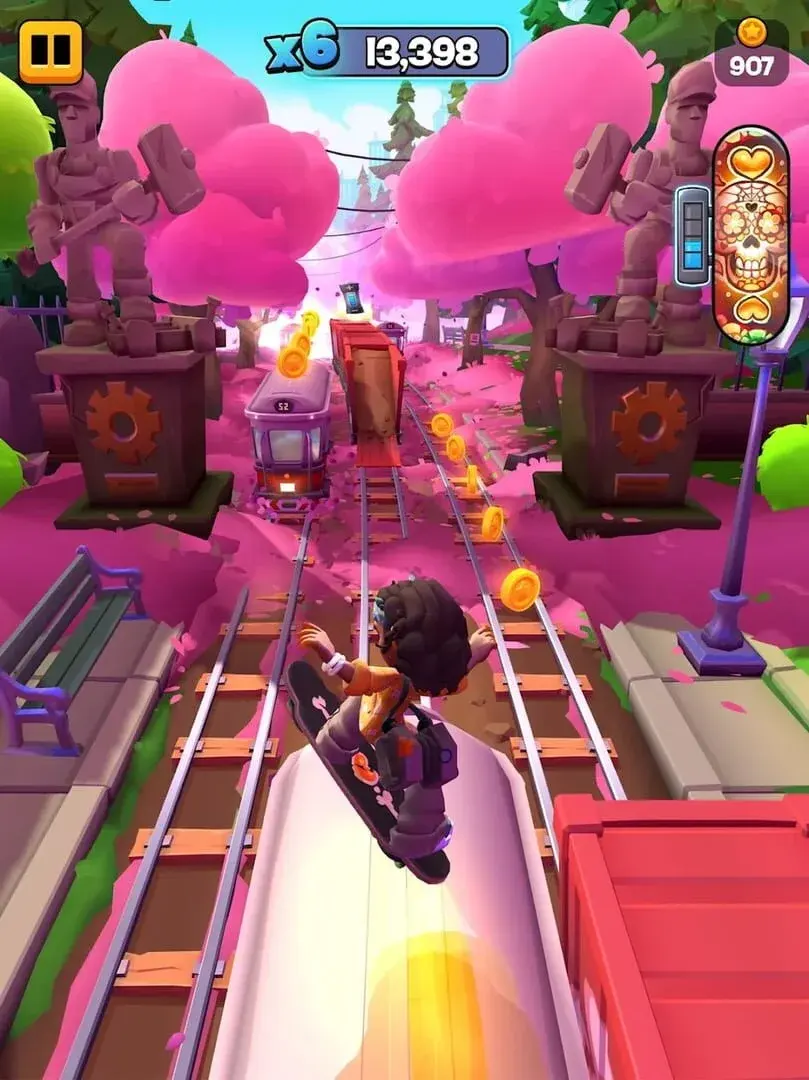
| Board | Signature surfer | Perk |
|---|---|---|
| The Grandmaster | Fresh | Activate it to get bonus score |
| Spaced Invader | Yutani | Random power-up over time while riding |
| Sweet Street | Tasha | Bonus score when picking up bubblegum while riding |
| Home Runner | Ash | Bonus score of 250 while riding |
| Naughty & Nice | Tricky | Coin sacks collected while riding give extra coins |
| Honeycomb | Miss Maia | 3 coins while riding |
| Cobweb | Lucy | A coin sack when picking up coins while riding |
| Pouncer | Zara | Extra coins for clearing hurdles while riding |
| Djinn’s Fortune | Prince K | A chance of a random power-up from coins while riding |
| Pawesome | Harini | A coin doubler while riding |
The simplest rule is to match the board’s trigger to the surfer’s perks. Fresh with the Grandmaster, Tasha with Sweet Street and Tricky with Naughty & Nice all share a trigger on paper. Players also name specific pairings in recent threads: Cobweb for coins and Grandmaster for score (June), Billy with Pawesome, and Yutani with Pouncer (October). A March thread reported a Cobweb bug that boosted Ninja One’s coin sacks. Treat any build that depends on a bug as temporary.
Putting It All Together
Start with what is free. Fresh and Tricky unlock through XP and Miss Maia through Rookie missions, which covers one score surfer and two coin surfers without a pass. Use Fresh for score runs, and Tricky or Miss Maia for coin runs. Add Yutani, Tasha or Wei when you can unlock them, and put your upgrade coins into the surfers you actually use. Players on r/SubwaySurfersCity also point out that all surfers are drawn at random in City Tour and Trials, and that a high global bonus makes score-specific builds matter less over time.
Before each session, pick one goal, score or coins, and equip the surfer and board that serve it.
Conclusion
The two newest tier lists agree on a short list: Fresh, Yutani, Tasha and Wei for score, and Tricky and Miss Maia for coins. Everything else depends on which list you trust, which board you own and how many Season Pass surfers you have unlocked. Check back after the next season, because a new season has started about every month in 2026.
Sources
- Sybo help center: Subway Surfers City surfer perks and Surfer and Board Credits
- App Store: Subway Surfers City (v2.6.1, 1 October 2026, with version history)
- mobi.gg: characters tier list, characters and unlocks, boards
- PocketGamer: Subway Surfers City tier list and beginner’s guide
- Player discussion: r/SubwaySurfersCity tier-list threads (February 2026), “Can we all agree that Yutani is the goat?” (March 2026), “Updated tier list for boards and surfers?” (June 2026) and coin-build threads (October 2026)
FinalBoss // Gear
Level up your setup
01Mobile gaming controllerson Amazon→02Top-rated gaming headsetson Amazon→038BitDo controllerson Amazon→Affiliate links · As an Amazon Associate, FinalBoss earns from qualifying purchases.
Want to Level Up Your Gaming?
Get access to exclusive strategies, hidden tips, and pro-level insights that we don't share publicly.
Ultimate Top Strategy Guide + Weekly Pro Tips