
Table of Contents (11)
Steam Next Fest turned my backlog guilt into a demo addiction
I went into this Steam Next Fest for one simple, unglamorous reason: my wallet is on life support. No new $60 releases, no deluxe editions, no “I’ll just try this roguelike for an hour” that somehow becomes 40. If I was going to feed the gaming brain-worm this month, it had to be free. Which, conveniently, is exactly what Next Fest is built for: a firehose of playable promises, most of which will vanish once the week’s over.
I’ve done a lot of these by now, and the pattern is always the same. There are a handful of standouts that feel like real games already, a ton of neat-but-janky prototypes, and a depressing number of demos that run like trash on anything that isn’t a top-end Windows rig. I play mostly on a MacBook and a Steam Deck. If your demo chokes on either, you’re already on my bad side.
This time, though, I was surprised. I ended up playing eight demos that mostly worked on my setup. Some charmed me enough that I’m basically counting the days until release. Others reminded me exactly why “it’s just a demo” is not a get-out-of-jail-free card for bad UX or sloppy performance. Between a music-driven match-3 war game, a creature-delivery RPG, a dosa-fueled robot goddess, a thrift store sim, and a record shop recommendation fantasy, there was a lot to love and a fair bit to side-eye.
Here’s what actually stuck with me once the novelty of “ooo, free demo” faded and my inner cynic kicked in.
Titanium Court – Match-3 tactics with teeth
Titanium Court is the one that shouldn’t work, but absolutely does. On paper, it sounds like the kind of pitch that usually comes with a Kickstarter video and a lot of hand-waving: match-3, early modern drama vibes, fairy court, tactical battles, pixel art that looks like someone spilled a chalk box on the floor.
In practice, it’s weirdly cohesive. You’re the ruler of a fairy court, waging war by literally rearranging the battlefield around your castle. You slide rows and columns of units to form matches that turn into deployed forces, then defend your little stronghold from incoming threats. It’s part tactics, part puzzle, part “what if Bejeweled was an actual war game instead of a toilet time-waster.”
The music is what sold me first. I’d already heard good things about the composer from previous work, and the demo doesn’t waste that talent. Tracks aren’t just background noise; they give the whole thing this crunchy, theatrical energy that makes even your failures feel like you’re in the middle of some doomed magical opera.
The writing helps too. Every time I screwed up a run (and I screwed up a lot; this game does not coddle you), I got fresh dialogue and little narrative beats instead of the usual “you died, try again” shrug. It would’ve been so easy to turn this into a soulless daily-grind loop with timers and battle passes. Instead, the demo feels like the first act of an actual story that just happens to be wrapped around a brutal little tactics puzzler.
I do have one big gripe: the visuals can be headache-inducing. I’m not kidding when I say “chalk box on the ground” – there’s a lot of bright, high-contrast noise, and after a longer session on the Steam Deck I could feel my eyes protesting. If the full release doesn’t at least offer some accessibility or clarity options, that’s going to limit how long I can play in one sitting.
But even with that, Titanium Court is firmly on my “day-one if the price isn’t stupid” list. It’s one of the only Next Fest demos I played that felt confident enough in its strange little identity to not chase live-service trends or water itself down.
Petal Runner – Not a creature collector, a creature courier
Out of everything I tried, Petal Runner is the game I most wanted to boot up again the second the demo ended. It’s wearing its influences openly – early Pokémon-era visuals, Undertale-style combat snippets, Eastward-ish puzzle layouts – but it doesn’t feel like a lazy nostalgia grab. It feels like somebody asked, “What if all the “catch ’em all” games stopped pretending hoarding creatures was morally chill?” and then actually followed that thought through.
Instead of capturing creatures, you’re delivering them. Running routes, navigating cute-but-clever level layouts, dealing with customers and situations that are just weird enough to feel distinct without disappearing into irony. The writing is light, funny, and occasionally sharper than you’d expect from something that looks like it could have launched on the Game Boy Color.
Combat is where my caution flag goes up a bit. Instead of traditional turn-based fights, you’re thrown into little minigame-style encounters – think Undertale bullet-hell boxes and timing challenges rather than number-crunching. In the demo, some of these were genuinely tricky, in a way that made me pay attention rather than mash. That’s a good sign. It also made me wonder how long they can keep that freshness up over the course of a full game.
Minigame combat lives and dies on variety and escalation. If the full Petal Runner ends up leaning too heavily on the same few patterns, that’s going to get old fast. But based on what’s here – the writing, the vibe, the way the world’s laid out – I’m more excited than nervous. This demo felt like a promise from a team that knows exactly what they’re making.
Dosa Divas – Cooking RPG with an actual point
I’m a sucker for any game that lets me wander around picking plants, so when Dosa Divas introduced me to a vibrant world where two sisters cook with their giant robot goddess, I was already halfway sold. Then it hit me with a setup that isn’t just cozy fluff: a mega-corporation is trying to replace home-cooked meals with on-demand convenience slop. Cooking-as-resistance shouldn’t feel radical, but here we are.
Mechanically, it leans on a shield-breaking combat system that feels very Octopath-adjacent – identify an enemy’s weaknesses, break their guard, then unload. The demo strikes a nice balance between engaging and overwhelming; I wasn’t getting stomped, but I also couldn’t autopilot fights. The writing in battles is surprisingly charming too. When a random lawyer enemy gives up with a defeated “I plead the fifth” or someone yelps “Aiya!” in surprise, it lands as playful instead of cringey.
The gathering loop is simple: grab ingredients, keep your pantry stocked, feed your divine mech mom and your community. I find this stuff stupidly calming, but I’m not blind to how easily it can slide into repetition hell, especially if the cooking minigames don’t evolve over time. The demo hints at depth but doesn’t quite prove it yet.
My bigger complaint is structural. Scene changes in the demo can feel jarring, like someone sliced out a few establishing shots to keep the pacing snappy. It’s not game-breaking, but it gives certain story beats a slightly disjointed vibe – which I’m willing to chalk up to “demo rush” for now.
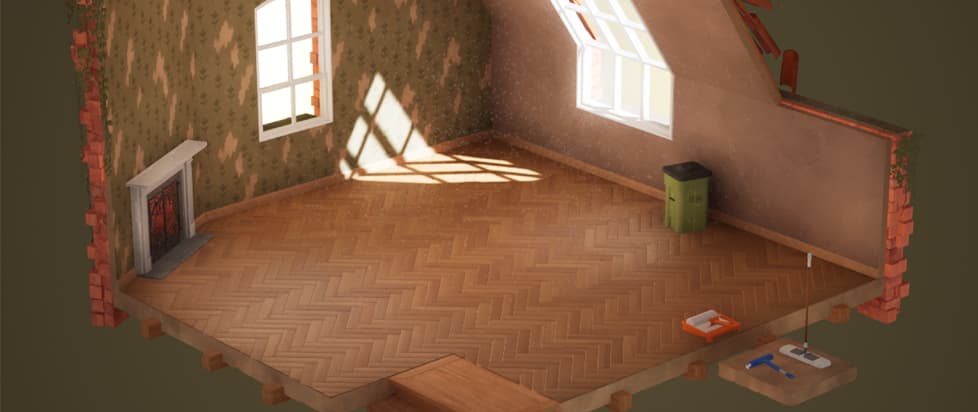
Even with that, Dosa Divas left me charmed and hungry. If the full game leans hard into its anti-corporate, pro-home-cooking message and keeps the combat snappy, this could quietly become one of the more interesting food RPGs out there.
The Eternal Life of Goldman – When style smothers play
The Eternal Life of Goldman is the kind of game that makes me mad because I want to love it. The art direction is honestly gorgeous – like a watercolor children’s cartoon melted into a dream. Buildings have this soft, illustrated charm, and the overall mood is eerie without being grimdark. On screenshots alone, I would have wishlisted it instantly.
Then I actually played the demo on Steam Deck, and it fell apart fast.
First, the basics just weren’t there. Audio felt stuck “on” with no easy way to tame it. A run button would occasionally lock me running in one direction like my character had just decided “forward is the only truth now.” Worst of all was a blurry visual filter that might be an intentional stylistic flourish but, in practice, made it hard to tell what I could stand on and what was just set dressing. After a few rooms my eyes physically hurt.
There’s clearly a Celeste-like philosophy behind the platforming, with fast, generous instant restarts whenever you mistime a jump or get smacked. That part I appreciate. What I do not appreciate is needing three or four deaths per room just to figure out what is or isn’t a solid surface because the visual language is muddy.
Story-wise, there’s some neat, dreamlike framing. Directions come from a stretchy ghost and cryptic NPCs, the way points often feel more like suggestions than rules, and that’s a deliberate choice. I’m fine with mystery. I’m less fine with mystery layered on top of basic playability issues.
By the time I wrapped the demo, I’d gone from “wow, this is enchanting” to “I never want to squint at this again.” Unless the full release takes a chainsaw to the readability and control issues, I’m out. No amount of painterly charm excuses a platformer that actively fights your ability to read the screen.
Zero Parades – Gorgeous, sharp, and a bit too self-aware
Zero Parades is that kid in class who’s genuinely smart but can’t stop name-dropping their favorite philosophers to prove it. The demo opens with a Jenny Holzer epigraph – the famous “Abuse of power comes as no surprise” line – and the second it popped up, I got this weird sinking feeling. Not because the quote is bad (it’s not), but because it screamed: this is the type of game to have Jenny Holzer quotes in it.
That distinction matters. I’ve got no problem with games that crib from literature or theory – I’ve seen Dragon’s Dogma throw in some de Régnier, and Disco Elysium basically writes fanfic about Marx. The difference is whether it feels descriptive of the game’s actual concerns, or just referential flexing to signal “we’re smart, actually.”
The thing is, once you get past that opening eyebrow-raise, there’s a lot to like. The protagonist is well written, unusually so. Her reactions feel specific, not generic “player insert” mush, and the script lets her actually have a point of view through dialogue instead of hiding behind quippy banter.
The environmental design is also stunning. The spaces you move through are layered with detail and mood, the UI is clean and readable in a way a lot of text-heavy indies fail at, and the whole thing just looks like a finished game, not a placeholder “vertical slice.”
My hesitation is purely narrative tone. Zero Parades feels like it’s constantly looking over its shoulder at other games in the “political narrative” space, trying to make sure you know it’s read the right books and follows the right accounts. There’s heart here, absolutely, but it sometimes comes packaged in a way that feels more like performing radicalism than actually letting the story breathe.

I still plan to keep an eye on it, because there’s too much raw craft here to ignore. But I’m wary of a full game that keeps hammering the same self-conscious notes instead of trusting its characters and world to carry the weight.
Thrifty Business – Half great sim, half dead air
I grew up in actual thrift stores where “over three bucks” meant the item was basically luxury goods. So when I see a “thrift” game, I immediately wonder: is this about the messy, community-driven, everything-smells-like-old-paper reality? Or is it secretly a vintage reseller fantasy where you flip grandma’s dishes for $200 on Depop?
Thrifty Business lands closer to the first camp, which I appreciate. You run a charity shop, earn community points for giving customers good deals, tracking down what they actually need, and hosting events in your little retail space. It’s not about squeezing every last cent from your inventory; it’s about making a space feel genuinely useful to the neighborhood.
The decorating side is excellent. You get to arrange shelves, set up displays, and even order boxes of unused stock online – which, yes, stings a bit if you know how much weird overstock IRL ends up in landfills, but also makes for smoother gameplay. That part scratched the same itch that Animal Crossing’s interior design always has for me: fussing over layout, nudging furniture around, making an environment feel intentional.
Then customers walk in, and the “game” part stumbles. Selling mostly felt like standing around waiting to see if someone would buy something, with very little feedback about why they did or didn’t. There’s way less sense of cause and effect than I want from this kind of sim. Decorating is a joy; actually running the store feels more like watching a screensaver.
If the full release fleshes out the customer behavior, gives you clearer levers to pull, and makes the day-to-day shopkeeping feel more like an active puzzle and less like background noise, Thrifty Business could be special. Right now, it’s half of a really good game sewn to half of a barely-there one.
Wax Heads – The fantasy of being the perfect clerk
Wax Heads is the one demo that made me immediately sit up and go, “Oh, they get it.” I’ve never actually worked in a record shop, but I’ve burned enough hours in bookstores and dusty game stores to know the specific joy of nailing a recommendation – not just what the person asked for, but what they needed.
That’s the entire loop here. You walk the aisles of a beautifully realized music store, listen, read, browse, and then pick the album that fits the customer, not just their surface-level request. The early chapters in the demo act as training shifts: short, snappy “levels” that you can finish in a few minutes but that still push you to pay attention.
The art is a love letter to losing hours flipping through bins for a hidden gem. Stickers, handwritten signs, slightly crooked posters – it all feels painfully authentic. And the soundtrack nails something deceptively difficult: songs that sound like they could be real records, from real bands, instead of bland royalty-free loops.
There’s not much to complain about here, honestly. The core loop is already tight, the vibe is immaculate, and it runs cleanly on both Mac and Deck. This went straight to the top of my wishlist, and unless the full game somehow manages to completely whiff the landing, I’m in.
Hozy – Decorating fantasy in the age of $400 vacuums
I booted up Hozy right after buying a new vacuum in real life, which is the worst possible headspace for an interior design game. When you’ve just stared at appliance prices long enough to question capitalism as a concept, watching a virtual apartment fill up with sleek furniture can hit weirdly close to “Instagram landlord core.”
Hozy leans hard into ultra-realistic decor. The first apartment in the demo, with its clean lines and generically tasteful pieces, honestly feels like it crawled straight out of an Amazon wishlist. That’s not inherently bad – it’s recognizable as “real modern housing” – but it also means the early spaces lack personality out of the box.
Once you actually start unboxing, arranging, and tweaking, though, the game clicks into place. The act of pulling items out of boxes, rotating them, and slotting them into just the right nook scratches the exact same itch as any good decorating sim. The final rooms you can create feel alive, with sunlight streaming through windows and leaves drifting past in a way that makes the space feel grounded instead of sterile.
On Mac, I do wish the repetitive motions – painting walls, tweaking angles, rotating items – felt a bit better on a trackpad. It’s not unplayable, but the physical friction adds up over time. The good news is that Hozy treats its spaces more like sandboxes to express yourself in than rigid puzzles with one correct solution. That’s crucial. The moment an interior design game stops letting me be messy is the moment I bounce.
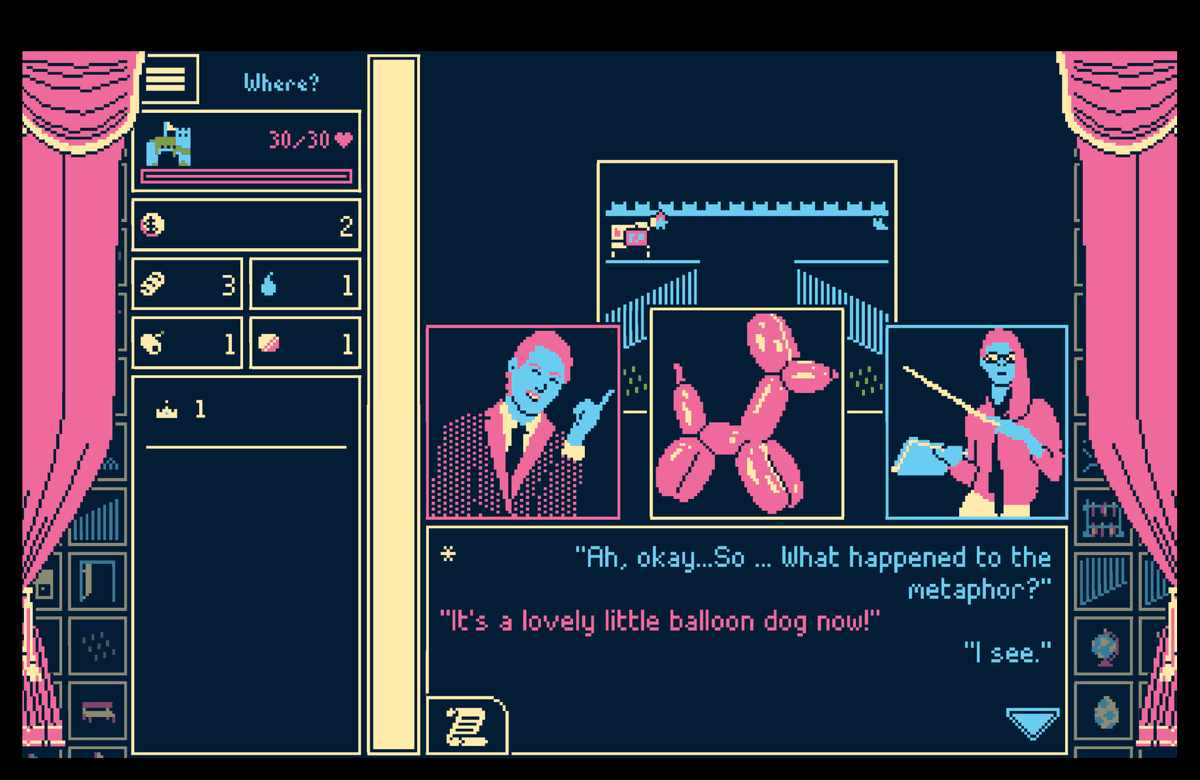
As long as the full release keeps expanding the catalog and maybe lets you inject more personality into the spaces (give me clutter, give me weirdness), I can see myself sinking a lot of late-night hours into this.
What these demos say about where indies are right now
Across all eight demos, a few patterns kept cropping up, and they say as much about the indie scene as any individual game.
First: art and writing are ahead of polish. Games like Wax Heads, Titanium Court, Zero Parades, and Dosa Divas have a ridiculous amount of personality already. Their worlds feel specific. Their characters talk like people, not stock archetypes. Visually, even the more divisive styles (Titanium Court’s intense color palettes, Goldman’s watercolor dreamscapes) are ambitious and memorable.
But then you run into things like Goldman’s readability issues, Thrifty Business’ limp selling loop, or Hozy’s slightly clunky controls, and it’s obvious where the time and money ran thinner. That’s not me dunking on small teams – I know how hard this stuff is. It’s just the reality: it’s easier to ship a compelling vibe than it is to ship frictionless systems on every platform.
Second: Steam Deck and Mac matter now, whether devs like it or not. Almost everything I played ran at least “acceptable” on one or both, but the difference between “acceptable” and “we actually tested this” is huge. Wax Heads and Petal Runner felt like they respected my time and hardware. Goldman, by contrast, felt like a PC build awkwardly stuffed into the Deck without enough love.
If you’re putting a demo into Next Fest in 2026 and you’re ignoring the Deck, you’re just leaving goodwill on the table. This is literally the hardware people use to play demos on the couch while half-watching something. If your controls bug out or your filters give me eyestrain, I’m not going to assume it’ll be magically fixed at launch. I’m going to uninstall.
Third: minigames and loops need teeth. Petal Runner’s combat, Dosa Divas’ cooking and fighting, Thrifty Business’ shopkeeping – they all live or die on staying interesting past the first hour. Demos obviously can’t show the whole arc, but they can show enough variety to convince me you’ve thought about it. Right now, Petal Runner and Dosa Divas are winning that race in my head; Thrifty Business is trailing behind.
What I’m actually wishlisting – and what I’m not
So where does that leave me, now that the Next Fest dust has settled and the dopamine hit of endless “Install Demo” clicks has worn off?
Immediate wishlist locks: Wax Heads, Petal Runner, and Titanium Court. These three felt the most fully formed, the most confident in what they are. I can see the spine of a full game in each of them already, not just a clever prototype.
Strong maybes: Dosa Divas and Hozy. Both charmed me enough that I want to see more, but I need to know they won’t drown themselves in repetition. If I hear the cooking in Dosa Divas evolves meaningfully, or Hozy leans into weirder decor and keeps sanding down its UI friction, I’m in.
On probation: Zero Parades. The craft is undeniable, but if the full release keeps leading with “look how clever we are” instead of trusting its characters and politics to breathe, it’s going to wear me down. I’m hopeful, but guarded.
Probably skipping: The Eternal Life of Goldman and Thrifty Business, unless I hear about major overhauls. Goldman’s problems aren’t small “demo roughness”; they’re fundamental clarity issues. Thrifty Business, meanwhile, needs to make running the shop feel as intentional as decorating it. If they fix that, I’ll happily eat my words.
In the short window where these demos are still live, my practical advice is simple: treat them like contracts, not teasers. If a game can’t respect your time, your hardware, and your basic ability to understand what the hell is happening in its first 30–60 minutes, don’t give it the benefit of the doubt just because the art slaps or the pitch sounds clever.
Steam Next Fest is the one moment where indies and players are on equal footing: they give you a slice of their future game for free, you give them your unfiltered reaction. This round, enough of these demos held up their end of the deal that I’m genuinely excited about what’s coming next. And that’s more than I can say for half the bloated AAA stuff clogging my wishlist right now.
FinalBoss // Gear
Level up your setup
01Graphics cardson Amazon→02Gaming laptopson Amazon→03High-refresh gaming monitorson Amazon→04Discounted game keyson Kinguin→Affiliate links · As an Amazon Associate, FinalBoss earns from qualifying purchases.
Want to Level Up Your Gaming?
Get access to exclusive strategies, hidden tips, and pro-level insights that we don't share publicly.
Ultimate Gaming Strategy Guide + Weekly Pro Tips