
Table of Contents (5)
The fun part is real, which makes the letdown worse
Thick as Thieves has exactly the kind of pitch that usually gets me into trouble. First-person stealth. Co-op heists. Strange tools. A moody old-world city. That cocktail is catnip for anyone who still has a soft spot for immersive sims and games that let a plan go beautifully right or hilariously wrong. The irritating part is that the good stuff in early reviews sounds completely believable. The bad stuff sounds even more believable. This does not read like a disaster. It reads like something more frustrating: a genuinely clever heist game that burns through its best ideas far too quickly and then asks players to keep pretending the magic is still there.
That distinction matters. Repetition in a heist game is not some tiny quality-of-life complaint for people who need constant novelty. Repetition is the entire life-or-death test. These games are built on reruns. The fantasy is not finishing one mission and moving on. The fantasy is doing another job, then another, then one more because this time the route will be cleaner, the loot better, the escape tighter, the improvisation smarter. When reviews keep circling back to limited maps, AI weirdness, and shallow progression, they are not nitpicking around the edges. They are pointing straight at the genre’s foundation.
Across the coverage so far, the praise seems consistent enough to take seriously. Thick as Thieves apparently nails some of the immediate texture that stealth fans crave: readable spaces, satisfying scouting, those lovely moments where one player covers a hallway while the other grabs loot, and a gimmick like the Vistara diamond that helps reveal traps, guards, and secrets. I buy that. A lot of games can look clumsy in screenshots and still feel great when the systems start clicking. My problem is that the same reviews describing those sparks also describe a package that feels too thin to sustain them. That is the exact kind of game I resent the most, because it does just enough right to make the missed opportunity sting.
Repetition is not about doing missions again. It is about the game shrinking in your hands
A good stealth map gets bigger the more familiar it becomes. That sounds backwards, but it is true. Hitman maps expand as you learn how disguises, routines, blind spots, and social spaces interact. Dishonored missions open up when you start seeing rooftops, ducts, side entrances, and power interactions as parts of one giant machine. Even older Thief levels could feel enormous because knowledge turned fear into possibility instead of reducing everything to a solved worksheet. A weak stealth map does the opposite. It gets smaller. It stops being a place and becomes a route.
The biggest warning around Thick as Thieves is that it may be getting smaller very, very fast. Reviews repeatedly point to just two main maps being revisited across a broader mission set, with familiar objectives and route planning settling into routine after the first several runs. That is not automatically fatal. Two maps can carry a lot if they are deep, reactive, and full of meaningful variations. But that depth has to be systemic, not cosmetic. If players are still entering the same spaces, dodging the same choke points, and extracting through the same safe habits, then “multiple missions” starts sounding like a polite way of saying the same stage in different clothes.
- Limited spaces make discovery evaporate faster than the game can replace it.
- Familiar objectives turn planning into checklist work instead of creative problem-solving.
- Narrow variation means mastery quickly becomes memorization, which is death for this kind of fantasy.
That last point is the killer. I do not need infinite content from every stealth game. I need the illusion that the next run might surprise me. Once that illusion is gone, the whole genre starts coughing up dust. Thick as Thieves seems especially vulnerable because its strongest appeal is the heist fantasy itself. There is no giant combat sandbox to fall back on, no sprawling RPG structure to absorb the sameness, no massive roguelike randomness engine to keep each run noisy. If the planning loop calcifies, then all the fancy atmosphere in the world cannot hide the bones underneath.
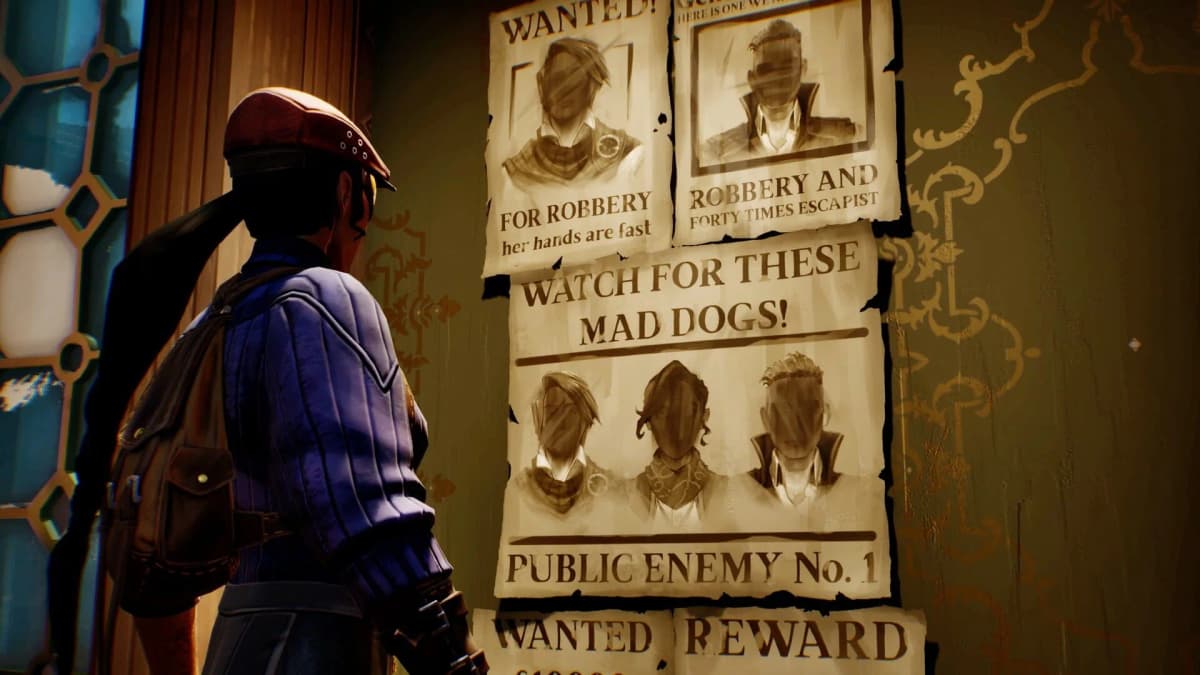
AI quirks are not a side issue in stealth. They are the difference between tension and nonsense
Players forgive mediocre enemy AI in action games all the time. A dumb soldier in a shooter is practically part of the decor. Stealth does not get that luxury. In stealth, the entire pleasure comes from trusting the rules enough to dance around them. Guard behavior has to be legible. Companion behavior has to be reliable. The game does not need perfect simulation, but it does need consistency. When a stealth run fails, the player should feel caught, not cheated. That line is everything.
Reviews warning about inconsistent guards, pathfinding oddities, and easy-to-manipulate behavior hit a nerve because those problems poison the exact fantasy Thick as Thieves is selling. If guards are exploitable in one moment and bizarrely awkward in the next, then the challenge stops feeling like an elegant puzzle and starts feeling like a bug report with better lighting. If allies or enemies get stuck, react strangely, or fail to read space in a believable way, then the heist no longer feels tense. It feels flimsy. Failure becomes hard to respect, and success becomes hard to brag about.
The Vistara diamond complicates this in an interesting but messy way. On paper, a tool that reveals threats and secrets sounds perfect for co-op planning. It gives teams information, reduces blind trial-and-error, and encourages deliberate movement. Great. But at least one review also suggests that it can trivialize too much of the map-reading process. That creates an ugly split. The game removes uncertainty with a powerful scouting tool, then reintroduces frustration through awkward AI and punitive timing. That is not elegant tension. That is the player getting pinballed between convenience and irritation.
Time pressure only sharpens the problem. Some impressions and reviews mention strict end-of-mission timers or escape windows that can feel harsher than the systems around them deserve. I like timers in heist games when they create a heartbeat, when the job suddenly shifts from patient infiltration to desperate extraction. I hate timers when they expose how little room the game has for experimentation. In a thin stealth game, a punishing clock does not push creativity. It pushes the safest route, the most rehearsed path, the least interesting play. That folds right back into the repetition problem.

Progression has to change the job, not just decorate it
Shallow progression is where a lot of promising smaller games quietly die. Players will tolerate reused spaces longer than critics sometimes expect if the unlocks actually alter behavior. New gear should open a different entrance. A different thief should change team rhythm. Fresh gadgets should let a clumsy early route evolve into a stylish late-game plan. The point is not more numbers. The point is more verbs. When reviews say Thick as Thieves offers progression and currency systems that feel slight, that tells me the game may be missing the one thing that could have compensated for its limited map count.
This is why “shallow” lands harder than it sounds. If an upgrade gives a tiny boost to efficiency but leaves the core route intact, players feel the machinery immediately. They know they are grinding for garnish. In heist games, meaningful progression should create stories. One unlock should support cleaner stealth. Another should reward greed. Another should let a duo split roles in a more dramatic way, with one player setting the board and the other exploiting it. If the unlock tree mostly polishes the same loop, then the loop had better be extraordinary. Early reviews do not make that case.
Limited character variety can compound this problem. Some coverage describes a very small stable of playable thieves and a progression economy that does not radically transform how they operate. That makes each run feel less like a fresh caper and more like another attempt to optimize the same routine. Games like Payday survived long grinds because builds, loud-versus-stealth decisions, weapons, roles, and map variety kept generating new arguments inside the team. Invisible, Inc. stayed fresh because every run forced adaptation through agents, augments, security escalation, and procedural structure. Thick as Thieves seems trapped in the middle ground where it has just enough systems to promise replayability and not enough to deliver it.
The game sounds like it may have pivoted, and players can feel pivots
There is another thread running through some of the coverage that I find hard to ignore. A few reviewers suggest the game shows signs of a larger pivot during development, especially given its earlier identity and its current co-op-focused form. I cannot verify the full internal history, and I am not going to pretend otherwise. Still, players are usually good at sensing when a project was built around one fantasy and released around another. The seams show up in odd places: content count, system priorities, weird compromises, mechanics that feel overbuilt in one direction and undercooked in another.
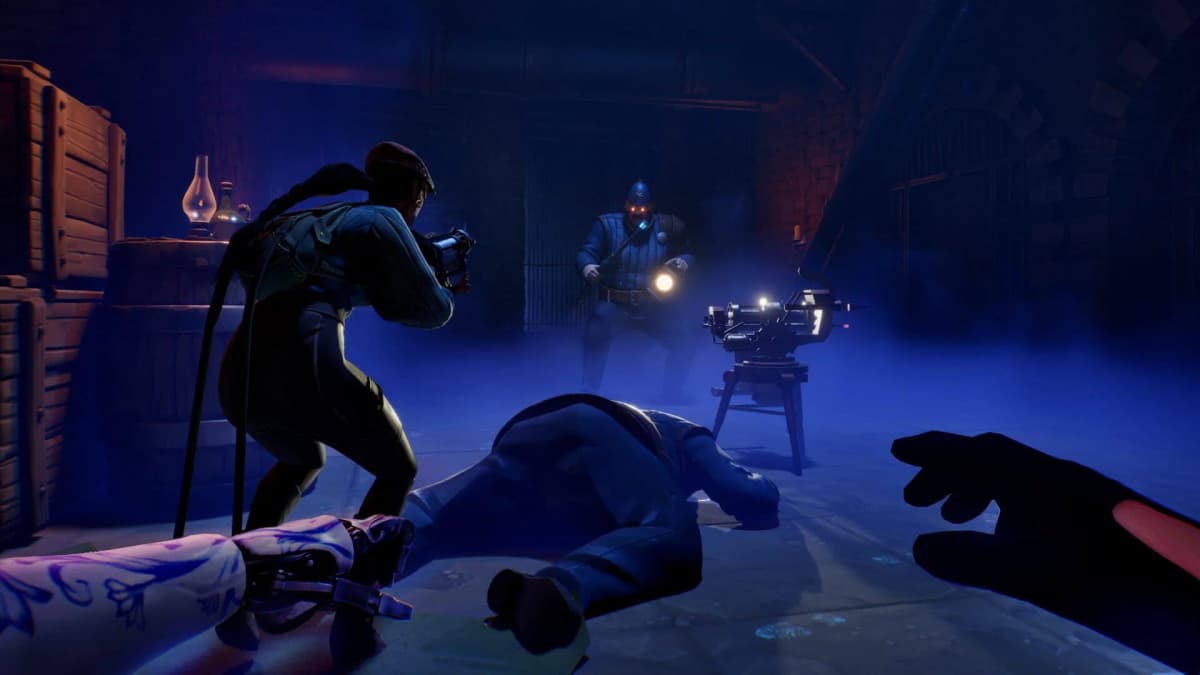
That feeling matters here because Thick as Thieves carries immersive-sim expectations whether it asked for them or not. If a game leans on stealth, atmosphere, maps, peeking, tools, and emergent infiltration, players are going to compare it to the giants of the subgenre. That is not unfair. That is the neighborhood it moved into. Small scope is not a sin. Plenty of compact games punch above their size. But compact games need clarity. They need one or two systems so strong that the limited footprint feels intentional rather than incomplete. From the reviews so far, Thick as Thieves sounds more like an early chapter than a fully convincing destination.
FinalBoss // Gear
Level up your setup
01Top-rated gaming headsetson Amazon→02High-refresh gaming monitorson Amazon→03Gaming chairson Amazon→04Discounted game keyson Kinguin→
Affiliate links · As an Amazon Associate, FinalBoss earns from qualifying purchases.
Want to Level Up Your Gaming?
Get access to exclusive strategies, hidden tips, and pro-level insights that we don't share publicly.
Ultimate Gaming Strategy Guide + Weekly Pro Tips