
The fastest way to stop failing early in Thick as Thieves is to treat every heist as a route problem, not a full-clear looting run. OtherSide Entertainment’s $4.99 stealth game drops you into Kilcairn, an alternate-history 1910s Scottish city, as a member of the Thieves’ Guild who has to find the right loot, grab it, and get to the exit before a hard time window runs out. Stay in shadow, read clues fast enough to shrink the map, pick the thief that fits the job, and leave before the run collapses into a bad escape.
Table of Contents (9)
The short version
- Beat the clock, not the level. Each contract runs on a tight window (roughly 30–45 minutes) before your magical getaway portal vanishes. Plan around the exit, not the loot.
- Move shadow to shadow. Stealth here is built on darkness and guard sightlines, not a kill-everyone approach. Plan your next dark patch before you cross a lit room.
- Follow the magnifying-glass clues. Treasure spots, clues, and spawns are randomized each run, so chase the clue trail instead of memorizing one lucky layout.
- Pick the right thief. The Spider grapples to high routes and alternate entries; the Chameleon disguises as a guard and walks in the front door.
- Loadout matters. You take three tools plus one class skill per mission. Pick for the contract, not by habit.
- In co-op (max two players), split clue work. One searches, one tracks the map and the exit.
1. Stay in darkness by default
Darkness is your safest travel resource. Thick as Thieves leans on shadow-based stealth in the tradition of Thief: you stay hidden and move through dark space rather than fighting your way through. Guards patrol those spaces and can spot you from a surprising distance, so build every route from shadow to shadow. If you need to cross a lit room, decide two things before you move: where your next dark patch is, and what your next turn will be after that. That keeps you from freezing in the open while checking the map or second-guessing the clue trail.
The common early mistake is stopping in a doorway or bright hallway to think. In a timed heist, that does double damage: you burn seconds and you make yourself easier to spot. Do your planning in cover. Read the room, then move with intent. If you are playing with a partner, do not stack both players in the same exposed spot either — one hidden player gives the team a recovery option if the other gets forced off a route.
2. Follow the clues instead of looting everything
Treasure locations, clues, and even your spawn point are randomized on every run, so “search everything nearby” is the slow way to fail. Each mission gives you a contract and a separate objective, and the items you need are found by following in-game clues marked with magnifying-glass icons. The best opening is to collapse the search space as fast as possible: read the immediate layout, head to the nearest clue along the shortest safe line, and grab obvious loot only if it costs almost no time.
A clean beginner opening looks like this: spawn, read the layout, tag the first clue, clear only the containers directly on your path, then decide whether the target is likely still in your current wing or somewhere else. If the clue chain points away from where you started, rotate immediately. Untouched rooms are not a reason to stay. That is how the timer quietly kills early runs.
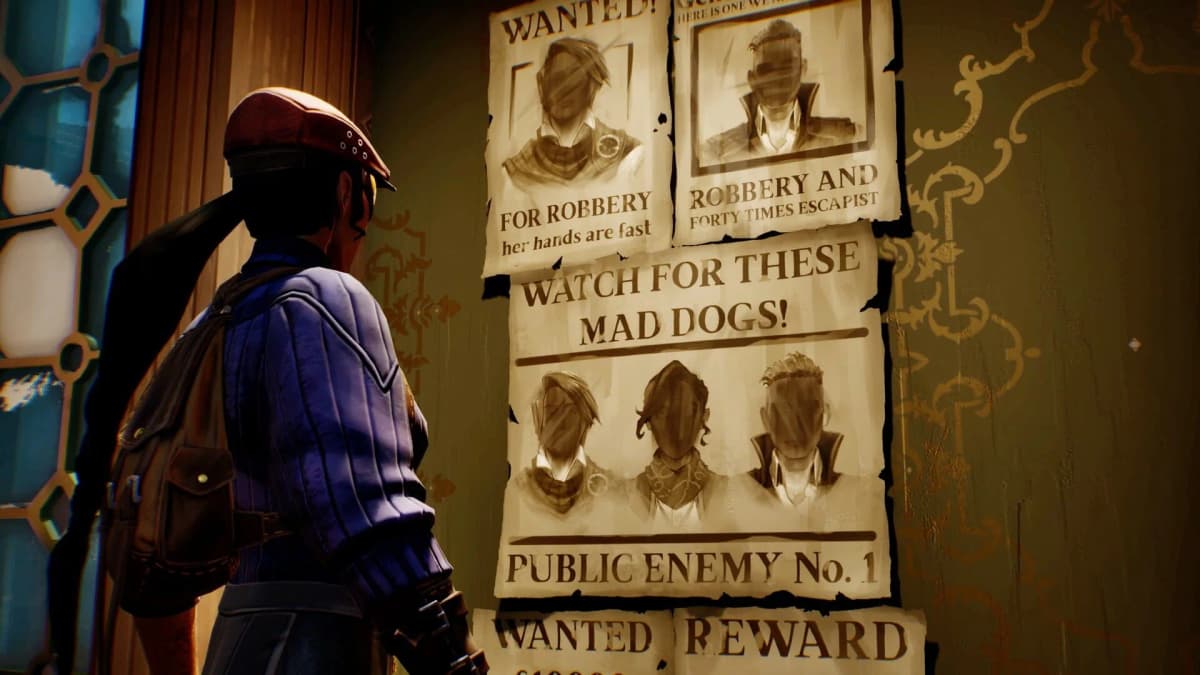
In two-player co-op, this gets even stronger. One player can take the near-side search line while the other handles the first clue read and map orientation. You are not splitting for speed alone — you are cutting the dead time where both players stand still reading the same information.
3. Turn clues into route decisions right away
Clues are only valuable if they remove parts of the map from consideration. New players often collect them correctly and still lose because they never convert the clue into a decision. The useful question is not “What did that clue say?” but “Which area am I no longer checking because of it?”
Reduce every clue to simple navigation: upper or lower level, near or far side, next to a landmark room, or definitely not in the wing you are standing in. Once you do that, your route becomes much more stable. Instead of wandering room to room, you are working through a smaller, more logical section of the map. If you are playing with a partner, keep clue callouts short and directional. “Upper floor, east side” is useful. Repeating the entire clue text is not.

4. Play for extraction before it gets desperate
The timer is not background pressure — it decides whether your run counts at all. Each contract runs on a window of roughly 30 to 45 minutes, and once it expires your magical getaway portal disappears. After you grab the main treasure, the pressure to reach the exit only goes up. The easiest beginner trap is thinking you can do one more room, one more drawer, one more side path, and still leave cleanly. Timed heists punish that hard.
Decide early whether a run is becoming an objective run or a greedy loot run. If the clues come together fast, lean into the objective and keep your extraction path in mind as you move. If the clue chain is slow or the route back looks exposed, lower your greed immediately. You can also extract early without fully clearing a contract — a partial success that gets out beats a perfect route that never reaches the portal. Good extraction triggers for beginners:
- You have the objective, or enough information to finish it on the next clean push.
- Your route has already forced extra detours and the clock is no longer comfortable.
- The dark lanes you used on the way in are still open, so leaving now is cheaper than leaving later.
If you wait until the run feels desperate, you are usually already late.
5. Pick the right thief and build your loadout for the job
You play one of two thieves, and the choice changes how a level reads. The Spider carries a grappling hook for reaching high ground and alternate entry points, which is ideal when the front of a building is heavily patrolled. The Chameleon can disguise as a security guard and walk straight through the front door, which suits maps where blending in beats climbing around.
On top of your thief, you choose three tools plus one class skill before each mission. Match them to the contract instead of grabbing the same kit every time. Useful options include Slithersap for disabling security, smoke bombs for breaking line of sight when a route goes wrong, a pickpocket fairy that lifts keys from a distance, and a trash-talking fairy that pulls a guard off his patrol. There are six gear pieces in the launch campaign, so treat loadout selection as part of the plan, not an afterthought.

In co-op, run complementary kits rather than two of the same. A Chameleon working the front while a Spider opens a high route gives you two ways into the same objective, which is exactly what you want when the clock is tight.
6. Learn the two maps, then climb the difficulty
The launch campaign runs 16 contracts across three mission types and two maps: Elway Manor and the Constable’s Guildhall. Because the loot moves but the geometry stays put, the beginner skill that transfers best is landmark knowledge. Do not memorize where one item happened to spawn. Memorize how each map connects: which hall stays dark, which stair gives a clean rotation, which room is good for reorienting, and which path gets you back to the portal without unnecessary exposure.
Difficulty runs from Novice to Master Thief, and the security layout and guard configuration shift as you climb, with sharper sightlines at the top end. Clear the early difficulties on both maps first so the geometry is second nature before the guards get harder. One handy quirk to know: if you are caught you drop your loot, but guards will walk past dropped jewels, so a failed grab is not always a failed run — you can sometimes loop back for what you dropped.
Common mistakes
- Treating it like a full-clear looter. The clock, not the level, is the real opponent. Chasing every container is how runs die.
- Planning in the light. Stopping in a doorway or lit hallway to think burns time and exposes you. Plan in cover.
- Collecting clues without acting on them. A clue you do not convert into “stop checking this wing” is wasted.
- Bringing the same loadout to every contract. Pick tools and a thief for the specific job; Spider and Chameleon open very different routes.
- Greeding past the extraction window. Once the portal timer is uncomfortable, leave. A partial success beats a missed extraction.
Practical takeaway
Win Thick as Thieves by playing the route, not the room. Stay in shadow, follow the magnifying-glass clues to shrink the map, pick the thief and three tools that fit the contract, and keep your eye on the portal so you extract before the 30-to-45-minute window closes. Learn Elway Manor and the Constable’s Guildhall on the lower difficulties first, and the randomized loot stops feeling chaotic and starts feeling like a problem you can solve every run.
FinalBoss // Gear
Level up your setup
01Top-rated gaming headsetson Amazon→02High-refresh gaming monitorson Amazon→03Gaming chairson Amazon→04Discounted game keyson Kinguin→Affiliate links · As an Amazon Associate, FinalBoss earns from qualifying purchases.
Want to Level Up Your Gaming?
Get access to exclusive strategies, hidden tips, and pro-level insights that we don't share publicly.
Ultimate Guide Strategy Guide + Weekly Pro Tips