
Yet another “next big thing” multiplayer pitch just died quietly, and this time it’s attached to Warren Spector. Thick as Thieves, the immersive sim heist game that was supposed to be a four-player PvPvE playground, is launching instead as a solo and two-player co-op title. That’s not just a design tweak. It’s a late-stage amputation that says a lot about where immersive sims – and trend-chasing multiplayer modes – really stand in 2026.
Table of Contents (8)
Key takeaways
- Thick as Thieves has fully scrapped its PvPvE concept and is now built around solo and 2-player co-op stealth heists.
- Developers say solo/co-op was “more fun” in testing and lets them focus on dynamic stealth and tighter moment-to-moment gameplay.
- The pivot comes alarmingly close to launch (May 20/21 on PC, PS5, and Xbox Series), raising questions about scope and production reality.
- Design-wise, this probably makes for a better immersive sim – but it also exposes how fragile these ambitious multiplayer pitches really are.
A trendy feature just got cut off at the wrist
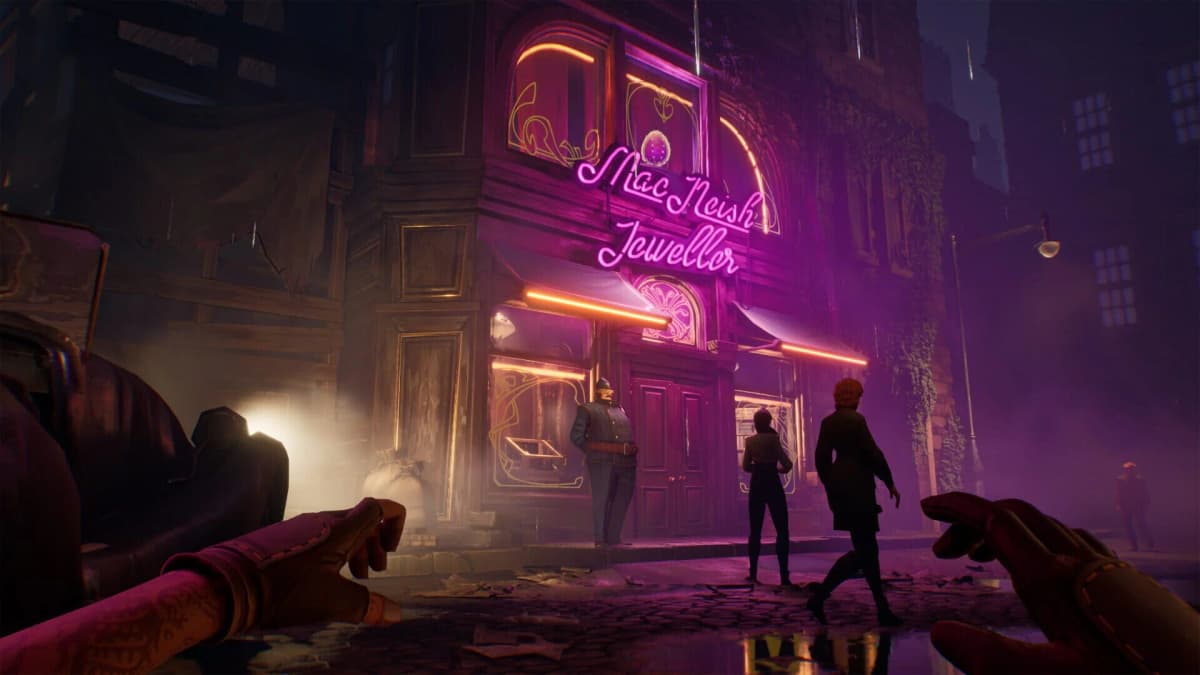
When Thick as Thieves was unveiled back in late 2024, the pitch was clear: a PvPvE immersive sim from the mind behind Deus Ex and Thief. Four players sneaking through an alternate-history Scottish city, stealing from the rich while competing with rival crews and dealing with AI guards. It was “what if Thief met Hunt: Showdown” – the kind of sentence that exists to win funding meetings.
Fast forward to April 2026, and that headline feature is gone. OtherSide Entertainment now describes Thick as Thieves as a “single-player and two-player cooperative” immersive sim set in Kilcairn, with missions tuned for short, replayable stealth runs. No more rival teams, no competitive twist, no extraction-style pressure. Just you, or you and a friend, against guards, layouts, and your own greed.
The official reason? In testing, solo and co-op were simply more fun. The team says the change lets them double down on “dynamic stealth gameplay” and the moment-to-moment cat-and-mouse that made Spector’s older work stand out.
On its face, that’s the right call. But it’s also a confession: the shiny PvPvE hook that sold this game to the internet apparently didn’t survive contact with reality.
For immersive sims, “less” players often means more game
Strip away the marketing, and this pivot actually puts Thick as Thieves back where immersive sims have always been strongest: one brain (or two) breaking a system over and over until it squeals.
The genre’s best moments – slipping past a guard with one HP in Thief, hacking a turret to flip a fight in Deus Ex, improvising with physics in Prey – don’t come from outsmarting other players. They come from wrestling with level design, AI patterns, and overlapping mechanics that react in surprising ways. That kind of design thrives on:
- Predictable-enough AI that you can learn and then exploit
- Spaces built to support multiple solutions, not just combat funnels
- Time to observe, test, and fail without the match collapsing
Drop human opponents into that mix and the whole thing skews. Suddenly everything has to be faster, deadlier, more readable. Level layouts that would be perfect for stealth become angle-camping nightmares. The AI sneaking sim quietly turns into another extraction shooter with fancy doors.
OtherSide’s own messaging hints at this. By ditching PvP, they say they can make each mission more tactical, with consistent pacing and a clearer focus on stealth over chaos. That means they can commit to guards with actual patrol routes instead of bullet-sponge fodder, systems you can tease apart over many runs, and missions that aren’t constantly being hard-reset by some other squad bum-rushing your carefully planned break-in.

Put bluntly: if what you wanted was “immersive sim heists with Warren Spector DNA,” the new Thick as Thieves probably serves you better than the old pitch ever would have.
The timing is the part that should make you uneasy
Here’s the rub: this isn’t some early-development course correction. Thick as Thieves just showed up at the Triple-I Initiative showcase with a new gameplay trailer and a release date in May – roughly six weeks out when the pivot was confirmed. That’s late. Very late.
That doesn’t mean they literally ripped out PvP last week. Big structural changes like this usually start months earlier. But choosing to go public now, this close to launch, tells us a few things:
- The original PvPvE vision survived long enough to be marketed, pitched, and repeated across multiple events.
- It clearly wasn’t cut at the concept phase – resources went into it before someone pulled the plug.
- Communication lagged reality: players were still expecting competitive heists long after those plans were in danger.
French outlet NoFrag didn’t mince words, essentially calling the original “multiplayer immersive sim” idea a bad one and side-eyeing a switch this late in the game. That’s harsh, but the late pivot does raise fair questions.
What else was built around that PvPvE framing and then reworked? How many levels were initially tuned for four human wildcards and are now being retrofitted for one or two patient thieves? How much of the budget and schedule went into network, balance, and features that no longer exist?
OtherSide isn’t a mega-publisher with infinite runway. This is the studio that stumbled hard with Underworld Ascendant and saw its shot at System Shock 3 evaporate. A late design U-turn here isn’t just an abstract concern – it’s a sign they’re still learning, under pressure, how to scope responsibly in a market that punishes mid-range projects for any misstep.
PvPvE sounds amazing on paper and keeps dying in practice
Thick as Thieves isn’t the only game whose PvPvE dreams have melted down. Over the last few years we’ve seen a string of “PvPvE heist” and “extraction” pitches launch, limp along, or never even make it to release.
Hood: Outlaws & Legends tried to do medieval stealth PvPvE and faded almost immediately. Creative Assembly’s Hyenas – not a heist sim, but another “what if extraction but with our twist” project – didn’t even survive to launch. Even successful examples like Hunt: Showdown sit in a delicate spot: high-friction, high-anxiety games that demand a dedicated playerbase and constant tuning.
It’s obvious why publishers and studios keep circling this space. On a slide, PvPvE is a miracle formula:
- AI enemies provide structure and PvE progression.
- Human opponents add unpredictability and “streamable” drama.
- Extraction or heist framing creates easy stakes – win big or lose it all.
In reality, it’s expensive and brutally unforgiving. You’re basically building two games – a solid PvE experience and a competitive meta-layer – then praying they don’t ruin each other. If your AI is too dumb, it’s boring; if it’s too sharp, it third-parties every fight. If maps are great for stealth, they’re usually terrible for readable PvP combat. If they’re tuned for PvP, stealth becomes a costume, not a playstyle.
For an immersive sim, the trade-off is even harsher. Every hour spent making sure four human players can grief each other in a fair, network-safe way is an hour not spent on systemic depth, level reactivity, and all the weird edge cases that make this genre sing.
Seen through that lens, Thick as Thieves abandoning PvPvE is almost a relief. It suggests someone in the room finally said the quiet part: “We can’t do everything, so let’s do one thing well.” The problem is that this honesty arrived after years of messaging built around doing everything.
What this means for Thick as Thieves specifically
Let’s pull back from industry patterns and zoom in on the game you’ll actually be able to buy.
Thick as Thieves now presents itself as a mission-based stealth heist game set in the city of Kilcairn, an alternate-history 1910s Scottish metropolis where crude tech and magic mix. Sessions are meant to be short and replayable: scout, infiltrate, grab what you can, get out. You’ll be able to play entirely solo or with one partner online.
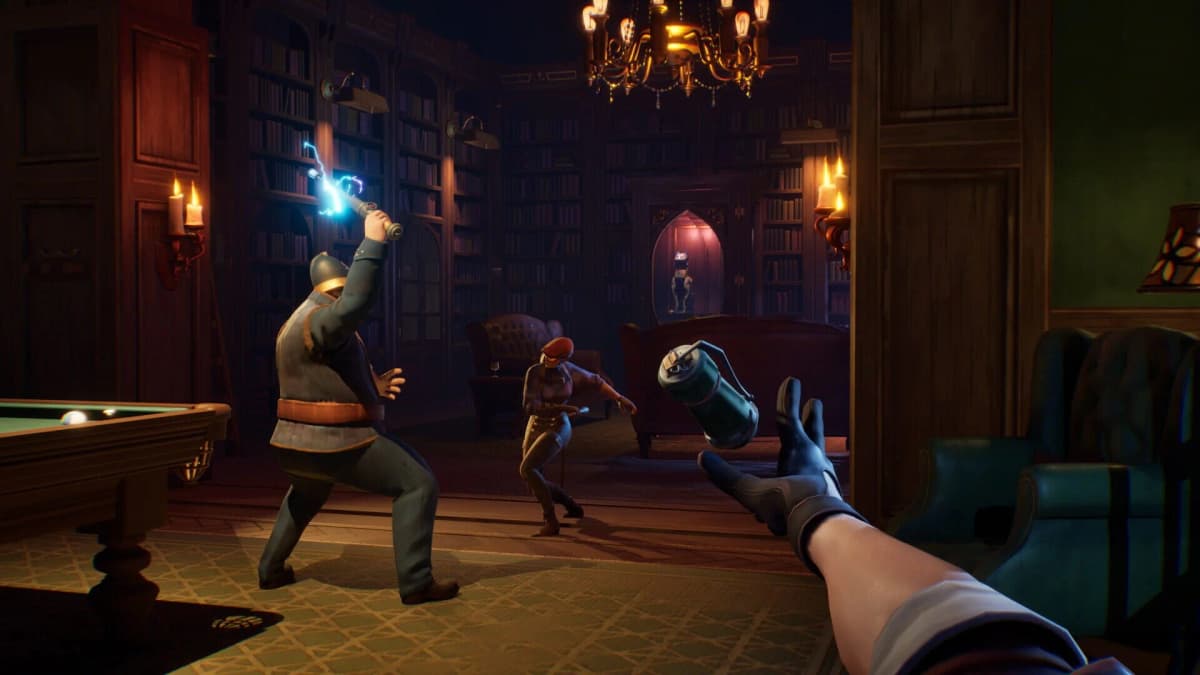
That smaller headcount matters. Two-player co-op is a sweet spot for stealth. One player can manipulate patrols while the other slips through, or you can coordinate distractions without turning every mission into a four-way shouting match. It also reduces the chaos that tends to turn “stealth” games into accidental horde shooters the second one person gets bored.
Design-wise, the studio is promising:
- Levels that support multiple routes, vertical approaches, and improvisation.
- Systems for gadgets, tools, and maybe magical tricks that let you solve problems off-script.
- Heists calibrated so that greed – pushing deeper for one more chest – is a constant temptation.
If they can deliver even a fraction of the systemic interplay of classic Looking Glass-era games, this could land as a genuinely solid “AA immersive sim” – the kind we barely get anymore, especially in the stealth space.
The question is how much of that promise survives the turbulence of its development history. OtherSide’s last big swing launched shaky enough that “wait for reviews” became the default stance. A late pivot this dramatic doesn’t erase that track record; it just changes the risks. The worry is less “the PvP will be a mess” and more “how cohesive is what’s left?”
What to watch next
There are a few very specific signals that will tell us whether Thick as Thieves pulled off this landing or just survived it.
- Triple-I Initiative and follow-up previews: The new trailer gives a curated slice; hands-on impressions in the weeks before May 20/21 will matter a lot more. Look for comments about AI behavior, level flexibility, and whether missions feel built for sneaking rather than just careful shooting.
- How “optional” co-op really feels: If solo players report clumsy, obviously co-op-first layouts – switches that clearly want two people, enemy densities tuned for more firepower – that’ll be a red flag.
- Technical stability at launch: Network issues are harder to hide when the entire pitch is “you and a friend pull off tight, timing-based stealth.” Even with only two players, jank here will cut deep.
- Post-launch messaging: If OtherSide starts hinting at “experimental” modes or light competitive features down the line, that’ll suggest a studio still wrestling with the siren song of PvPvE instead of fully committing to the lane they’ve chosen.
Most important of all will be something you can feel but not bullet-point: whether missions have that tinkering, systemic texture that lets you play three times and see different stories each run, or whether they’re brittle puzzle boxes pretending to be sims.
TL;DR
Thick as Thieves has quietly killed its original PvPvE multiplayer pitch and is now a solo/2-player co-op immersive sim heist game, launching in May on PC and current-gen consoles. That’s almost certainly the right move for a stealth-focused immersive sim, but the fact it happened so late in development exposes how shaky these ambitious multiplayer “twists” can be once they leave the pitch deck. The tension between bold, marketable ideas and the smaller, more focused games studios can actually ship isn’t going anywhere, and Thick as Thieves is now one more case study in how messy that line really is.
FinalBoss // Gear
Level up your setup
01Top-rated gaming headsetson Amazon→02High-refresh gaming monitorson Amazon→03Gaming chairson Amazon→04Discounted game keyson Kinguin→
Affiliate links · As an Amazon Associate, FinalBoss earns from qualifying purchases.
Want to Level Up Your Gaming?
Get access to exclusive strategies, hidden tips, and pro-level insights that we don't share publicly.
Ultimate Gaming Strategy Guide + Weekly Pro Tips