
Table of Contents (9)
Immersive sims usually lose themselves by getting bigger. Thick As Thieves may have survived by getting smaller.
Stealth games from the Thief and Deus Ex family have a bad habit of chasing the wrong kind of ambition. They go wider, louder, more systemic on paper, then somehow less convincing when you are actually sneaking through a room. The real thrill of this kind of game is not scale for its own sake. It is reading a space, noticing a patrol, spotting a locked door, and realizing you have three different ways to make the same problem disappear. Thick As Thieves looks more in tune with that tradition now than it did when it was first pitched as an asymmetrical PvPvE experiment.
That change matters. In early April, OtherSide said the project had become more fun as a solo and co-op game, so it shifted away from the original PvPvE setup and into a two-player co-op and single-player structure. Judging by the launch reviews and official footage now out in the wild, that redesign probably saved the game’s identity. The good news is that Thick As Thieves seems to understand the pleasure of casing a place, using a weird gadget at exactly the right second, and slipping out richer than you were five minutes ago. The less good news is that the launch version also sounds tiny, a little too easy to solve, and maybe one strong weekend away from exhausting most of its surprises.
Key takeaways
- Thick As Thieves is no longer a PvPvE stealth game; it is now built around two-player co-op and single-player heists.
- The strongest early praise is aimed at its gadget play, readable stealth spaces, and classic immersive-sim problem solving.
- The biggest concern is longevity: launch coverage broadly points to 16 missions spread across just two maps, with an estimated playtime around four hours.
- AI behavior appears functional but not especially devious, which matters more now that human rivals are gone.
- At roughly $5 on Steam, it looks easier to recommend as a compact stealth snack than as a long-term obsession.
The redesign probably made it a better stealth game, even if it also exposed the ceiling
When Thick As Thieves was still wearing the PvPvE label, the immediate worry was obvious: stealth games already struggle to maintain tension against AI, and throwing live opponents into the same space can either create brilliant stories or completely wreck the careful pacing that sneaking depends on. One human intruder is exciting in theory. In practice, that often turns every elegant route into a panic sprint. By shifting to co-op and solo play, OtherSide seems to have stopped fighting its own genre.
That pivot changes what the game needs to be good at. Without hostile human thieves ruining your plan, the pressure has to come from level design, guard routines, traps, timing, and the tools in your pocket. That is a much more honest fit for an immersive stealth game. It also means there is nowhere to hide if those authored systems are only decent instead of great. A human rival can create chaos that papers over repetition. AI guards cannot. So the redesign makes Thick As Thieves feel more focused, but it also puts every weakness under a brighter lamp.
The tone and setting help. Kilcairn, the game’s early-1900s magic-laced city, sounds like a smart middle ground between old-school gloom and pulp fantasy. It is not pure Victorian cosplay, and it is not trying to become a looter shooter with waistcoats. The best descriptions of the game make it sound closer to a compact Thief-style burglary box with a splash of Dishonored’s supernatural weirdness than anything extraction-shaped. That is a better pitch than the original one ever was.
The gadget layer is where Thick As Thieves seems most alive
If there is one reason stealth fans are still going to circle this game despite the small launch package, it is the tool design. Thick As Thieves is still being framed as an immersive sim, and that label only means something if gadgets are more than colored keys for colored locks. Early coverage suggests that part is real. The standout example is the Vistara Diamond, which reportedly reveals guards, traps, and hidden magic doors. That is more interesting than a simple wallhack toy because it turns information into planning. Suddenly the room is not just dangerous or safe. It is legible.
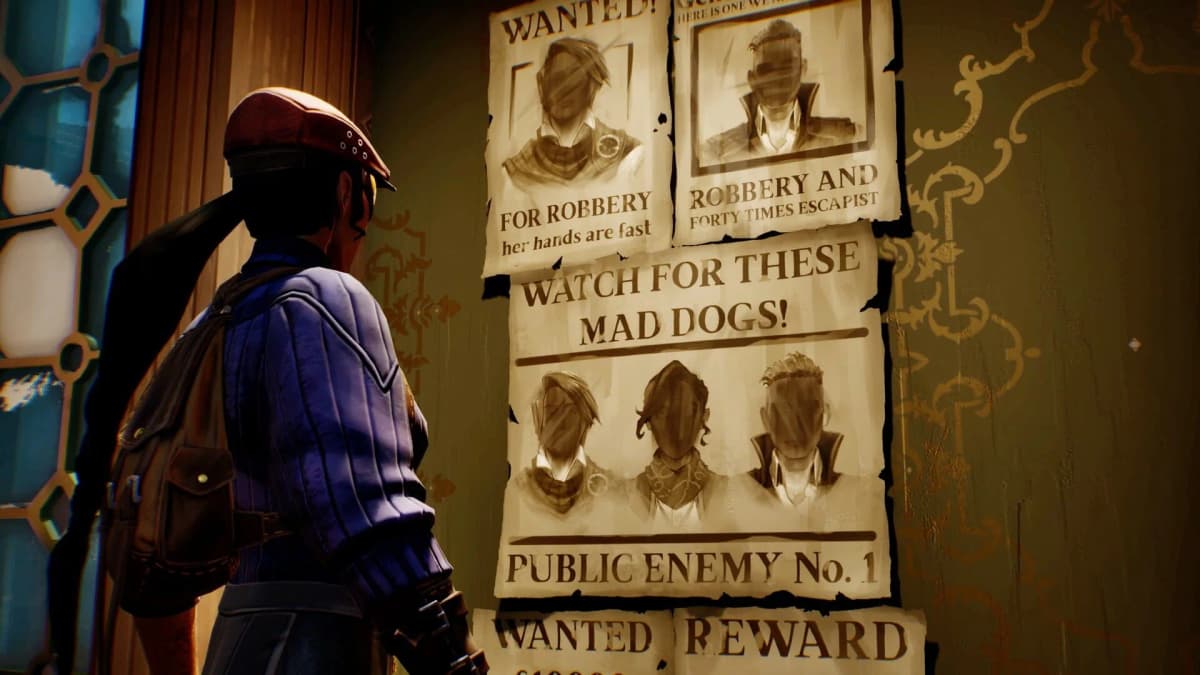
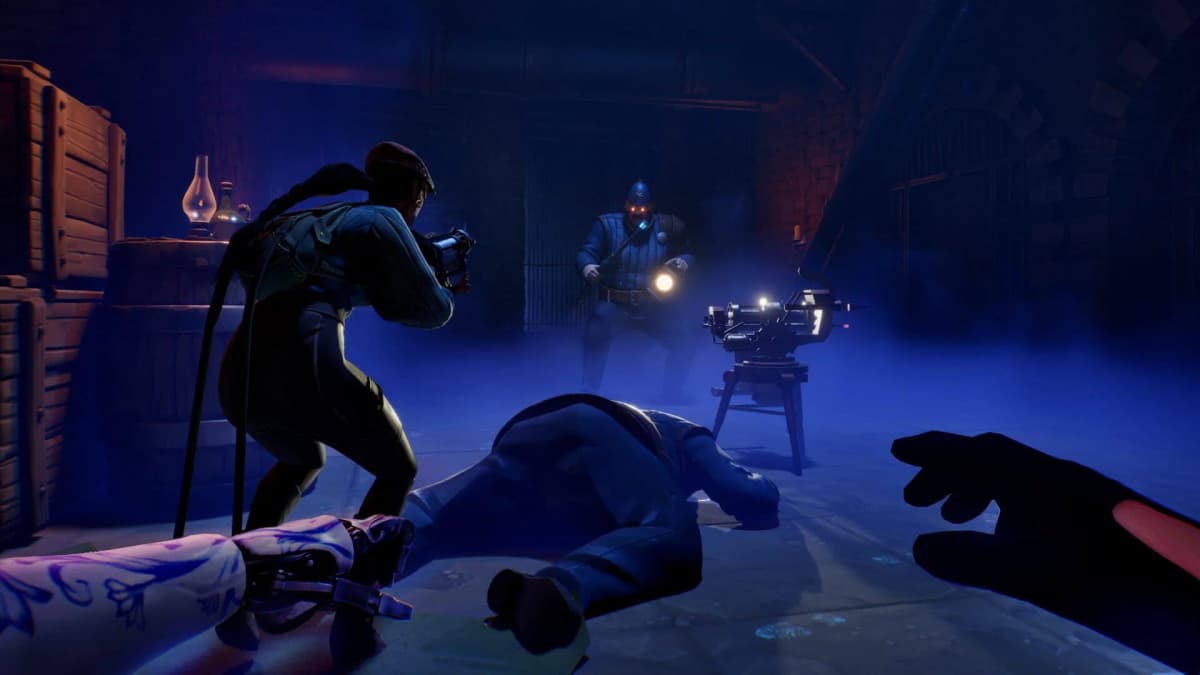
That matters a lot in co-op. Good co-op stealth is not about doubling the damage output or letting one player revive the other after a bad fight. It is about division of labor and last-second improvisation. One player scouts the route, one handles the lock, one creates the distraction, both decide whether that optional loot is worth the extra patrol cycle. Thick As Thieves seems to understand that rhythm. The official overview points to distinct thieves, including the more mobile Spider and the unlockable Chameleon, and that alone suggests the team knows heist fantasy gets stronger when players are not functionally identical.
The reassuring detail here is that the game’s identity sounds reconnaissance-heavy rather than action-heavy. Previous descriptions of the project focused on exploring the city, tracking down clues, and watching character behavior before committing to a job. Even if the launch build only realizes part of that broader fantasy, the best version of Thick As Thieves is clearly not about brute force. It is about entering a mission with partial knowledge, learning the space, then making little greedy decisions until greed almost gets you caught. That is the right kind of tension for this genre.
The levels sound smart and dense, but the launch package is undeniably thin
This is where the praise and the warning meet. Most launch coverage agrees on the rough outline: an introductory campaign of 16 missions, spread across two revisited maps, with total playtime hovering around four hours. The two locations named most often are Elway Manor and the Constables’ Guild Hall. There is some dynamism in how those spaces are reused, along with randomized loot and shifting objectives, which helps. Repetition is not automatically bad in stealth games anyway. Hitman has spent years proving that mastery can be half the appeal.
But Hitman also survives repetition because each sandbox is enormous, socially layered, and crammed with disguises, routes, accidents, and escalating what-if scenarios. Thick As Thieves sounds denser than broad, more handcrafted than sprawling, and that can be a strength right up until the walls start feeling familiar. Revisiting the same manor with a different objective is only exciting as long as the systems keep producing new decisions. If you already know the safe path, already know how guards can be baited, and already know which tools solve which situation, the tension drains fast.
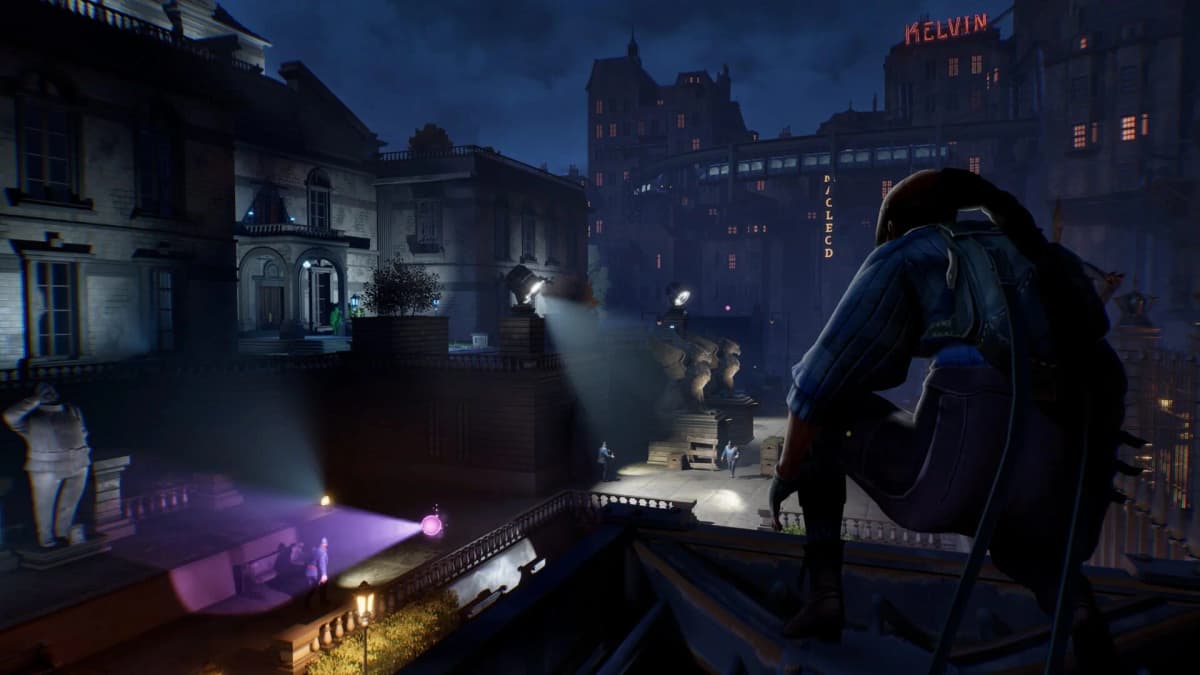
There is still a compelling case for this smaller structure. A lot of stealth games overstay their welcome. A short campaign with two well-built spaces can be far more satisfying than a 20-hour drag full of copy-pasted outposts. Thick As Thieves seems strongest when viewed as a tightly packed sampler, almost a tasting plate of immersive-sim ideas. The issue is not whether two maps can be enough. The issue is whether these two maps can keep feeling fresh once the novelty of the setting, gadgets, and co-op chatter wears off.
One advantage the game appears to have is readability. Multiple impressions praise the stylized art direction, and that is not a cosmetic footnote in stealth. Readability is half the battle. You need to understand sightlines, surfaces, shadows, interactable props, and traversal options at a glance. A stealth game can be technically gorgeous and still miserable if every room becomes visual soup. Thick As Thieves sounds cleaner than that, which should make its spaces easier to learn and easier to exploit.
The real threat to longevity does not seem to be bugs. It is softness.
The recurring concern in launch impressions is not catastrophic technical trouble. It is that the guards may be too easy to manipulate and the mission structure may flatten once you have seen the trick. That is a much bigger problem than it sounds. In a stealth game, AI does not need to be omniscient or brutally punishing. It needs to be convincing enough that you keep respecting it. The second guards become predictable furniture, the fantasy starts to wobble. Sneaking past a patrol is fun. Farming a patrol route because the game cannot meaningfully surprise you is homework.
That weakness lands harder because of the PvPvE pivot. A human opponent can inject paranoia into even a familiar map. Without that layer, Thick As Thieves needs guards, traps, and mission pressure to do all the heavy lifting. Some early coverage also points to a strict end-mission timer during escape sequences. Timers can be great in heist games when they cap a carefully managed risk-reward spiral. They are much less appealing when they feel like a hard stop on the slow, greedy, methodical play that stealth fans usually enjoy. A heist should tighten the screws. It should not feel like the game is shoving you out the door because it ran out of confidence.
This is also why the short length alone is not the whole story. Four hours can be perfect if those hours are dense, replayable, and full of little self-authored stories. Four hours can feel threadbare if the same soft AI keeps collapsing under the same tricks. The most worrying phrase attached to Thick As Thieves right now is not “short campaign.” It is “I’m not sure how long it will hold my attention.” That is a very different complaint, and a harder one to patch around.
The price changes the argument, but it does not erase the limitations
The easiest reason not to panic about all of this is the launch price. At about $4.99 on Steam, Thick As Thieves is not asking for a giant leap of faith. That matters. A compact stealth game with smart tools, strong atmosphere, and a handful of memorable co-op runs is a lot easier to forgive at that price than it would be at $30 or $40. In raw value terms, the pitch is pretty straightforward: if you and a friend want a short heist game that actually cares about sneaking, planning, and getting out clean, this looks like a far better gamble than most budget releases.
Still, low price should not become an excuse for every shortcoming. A cheap game can still feel disposable. Thick As Thieves sounds like it earns its price through craft, not volume, which is the right way around. But the bargain framing also risks underselling what made people interested in the first place: Warren Spector and Paul Neurath returning to the immersive-stealth lane is not something players were waiting on because they wanted a disposable evening. They were waiting because that lineage still means something. The game seems to honor part of that legacy. It just may do it in a smaller, more fleeting form than many hoped.
The audience line is fairly clear. If your favorite stealth memories involve poking at systems, replaying a mission to try a cleaner route, and laughing with a co-op partner when a simple theft turns into an improvised panic job, Thick As Thieves looks worth a look. If you want a sprawling sim, a heavy story campaign, or a stealth sandbox you will still be unpacking two months later, the launch version sounds too lean. Solo players can still find something here, especially now that solo is an intended mode rather than an afterthought, but the co-op chemistry appears to be the part that gives the game its spark.
Bottom line
Based on the most consistent launch reporting and official material, Thick As Thieves looks like a smartly redirected stealth game that nails the feeling of a small heist better than its original PvPvE concept ever promised. The gadget play sounds sharp, the levels sound tightly built, and the co-op angle seems to create exactly the kind of whispered, last-second problem solving this genre thrives on. The catch is that the launch package also sounds short, repetitive by design, and a little too dependent on AI that may not stay threatening for long. That makes this easier to recommend as a cheap stealth treat than as the next great immersive sim. FinalBoss verdict: 7/10. A good little robbery, not a long criminal career.
TL;DR
- Play it if: you want a low-cost co-op stealth game with immersive-sim flavor, useful gadgets, readable spaces, and a compact heist structure.
- Wait if: you need deeper AI, more maps, a longer campaign, or the kind of replayable sandbox that keeps giving for weeks.
- Best selling point: tool-based stealth and co-op improvisation in a stylish, magic-tinged early-1900s setting.
- Biggest concern: only two core maps at launch, plus reports that guards are easy to outsmart once you learn the patterns.
- Overall read: a promising stealth snack that probably found the right final form, even if that final form may be too small to last.
FinalBoss // Gear
Level up your setup
01Top-rated gaming headsetson Amazon→02High-refresh gaming monitorson Amazon→03Gaming chairson Amazon→04Discounted game keyson Kinguin→
Affiliate links · As an Amazon Associate, FinalBoss earns from qualifying purchases.
Want to Level Up Your Gaming?
Get access to exclusive strategies, hidden tips, and pro-level insights that we don't share publicly.
Ultimate Reviews Strategy Guide + Weekly Pro Tips