
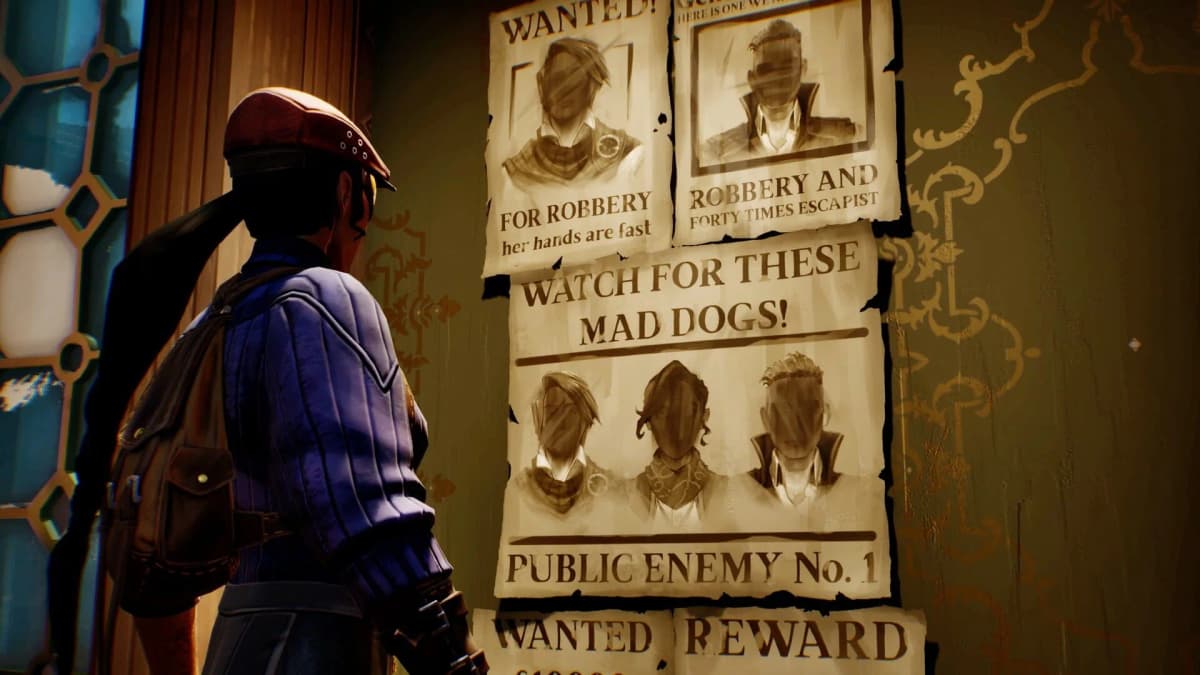
At the end of May, OtherSide Entertainment reduced its workforce by 17 members and canceled its in-development multiplayer immersive sim, internally designated Argos: Riders on the Storm. The studio characterized the decision as a forced adaptation to a brutally challenging industry climate, framing the contraction as structural rather than a judgment on Thick as Thieves, its project that entered the market on May 20. The distinction is academically interesting but operationally irrelevant. OtherSide is now a single-project studio, and the multiplayer immersive sim it had in development is dead. The question is not whether the industry is challenging – it is – but whether a studio built by the architects of Deus Ex and System Shock can sustain itself on one remaining title after abandoning its most ambitious conceptual bet.
Table of Contents (5)
The Economics of Argos
Argos: Riders on the Storm represented a high-risk genre synthesis. The immersive sim, built on dense environmental storytelling, systemic player agency, and authored world logic, does not map cleanly onto the demands of multiplayer service architecture. A multiplayer immersive sim requires not only the level design and AI system complexity of a traditional single-player immersive sim, but also netcode stability, anti-cheat infrastructure, matchmaking or persistent-world backend costs, and a live-content pipeline designed to retain a concurrent player base. These are resource categories that scale exponentially, not linearly. For a studio operating under Megabit, the publishing arm of Aonic Group, the capital requirements to bring such a project to market and sustain it post-launch likely outstripped the projected return.
The immersive sim audience is historically dedicated but numerically limited. The commercial ceiling for single-player entries in this space has repeatedly demonstrated that critical regard does not translate into the sales volume required to justify AAA-scale budgets. Translating that audience into a multiplayer service model assumes a player density that few niche genres can support without subsidization from a major platform or a breakthrough hit. The development of a multiplayer immersive sim also requires a bifurcated design focus: the systemic environmental density that defines the genre must coexist with netcode latency requirements, server architecture, and anti-cheat integration that can compromise the very simulation depth players expect. OtherSide’s cancellation of Argos indicates that the math stopped working, if it ever did.
Post-Launch Timing and Portfolio Logic
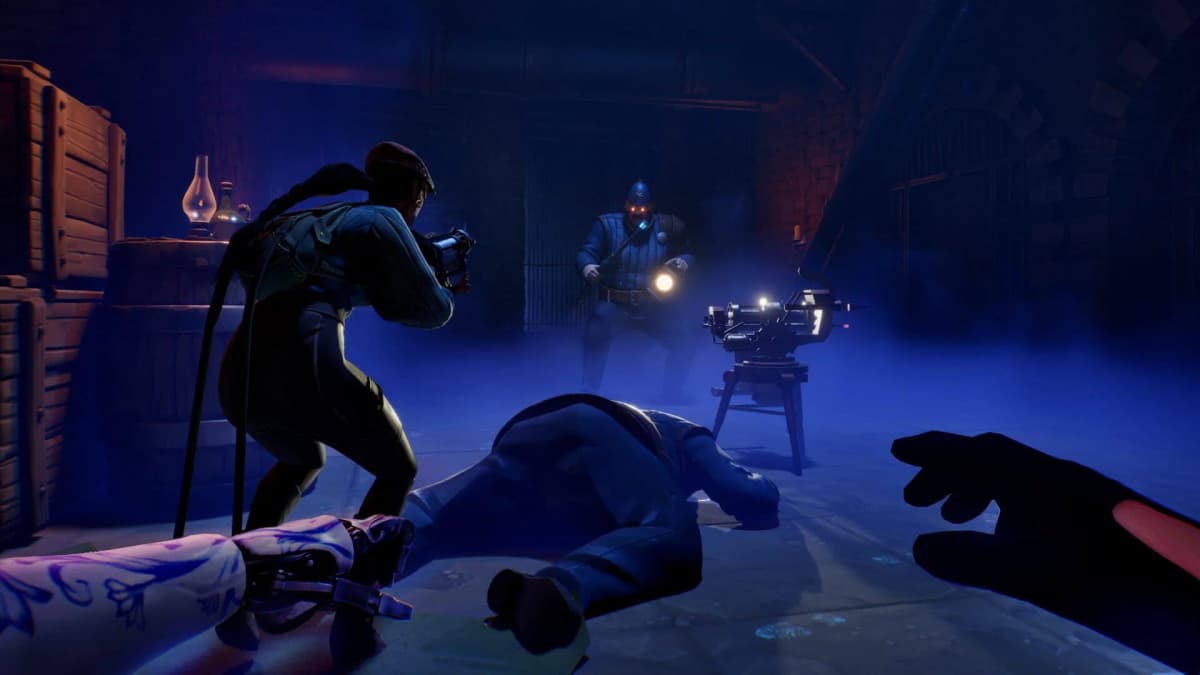
The layoffs took effect at the end of May, placing them in the immediate aftermath of Thick as Thieves’ May 20 launch. OtherSide has explicitly stated that the cuts were driven by macroeconomic industry toxicity rather than by the commercial performance of Thick as Thieves. This framing serves a public relations function: it externalizes responsibility and shields a new release from association with contraction. Yet portfolio decisions are rarely made in isolation from recent commercial data. A publisher evaluating its investment in a studio at the precise moment a new title enters the market is inherently applying fresh revenue and engagement data to future funding allocations. The simultaneous cancellation of Argos and reduction of staff suggests that Megabit and OtherSide determined the studio could not support two concurrent development tracks. Whether Thick as Thieves underperformed, overperformed, or matched expectations, the calculus was clear: Argos required resources that the studio could no longer justify allocating.
The Decomposition of “For Now”
When a studio cancels a project and describes the suspension as temporary, the language typically functions as organizational decompression. In the case of Argos, the termination of 17 staff members – a significant percentage of a small development house — means the specific human capital required to advance a multiplayer immersive sim has been dispersed. Engine-specific knowledge, network architecture decisions, and design documentation lose their institutional anchors. A codebase without its primary architects enters a state of accelerating obsolescence. Market conditions for niche multiplayer titles are not projected to soften in the near term; if anything, the live-service contraction across the industry has made publishers more risk-averse toward unproven multiplayer concepts. The probability that Argos: Riders on the Storm will be reconstituted in its original form is functionally zero. Any concepts salvaged from its development will likely manifest as modular features or thematic echoes within Thick as Thieves, or remain dormant until repurposed for an entirely different pitch with a different scope and a different team.
Consolidation Around Thick as Thieves
Thick as Thieves is now the entirety of OtherSide’s visible development pipeline. Published by Megabit, it sits in the portfolio of a studio co-founded by Warren Spector and Paul Neurath, both central figures in the foundational immersive-sim lineage that includes Deus Ex and System Shock. The contraction to a sole project simplifies resource management but also strips away strategic redundancy. There is no secondary project to absorb engineering talent during content lulls, no parallel revenue stream to offset post-launch support costs, and no internal prototype to pitch for follow-on funding. If Thick as Thieves requires substantial post-launch investment to build an audience or to fulfill a content roadmap, the studio must extract that support from Megabit without the leverage of a promising secondary title to demonstrate future value. Conversely, if the game maintains stable engagement and a viable revenue stream, the studio may stabilize around a narrower mandate. But the margin for error has been removed. There is no longer a diversified portfolio to absorb the volatility of market reception. OtherSide has made itself a pure play on Thick as Thieves.
What to Watch
Specific signals will clarify whether this contraction is a tactical pause or a terminal reduction in OtherSide’s ambition. A meaningful drop in Thick as Thieves patch frequency or the absence of a public roadmap within the next 90 days would indicate that Megabit is not reinvesting revenue into the project’s long-term health. Sustained hiring silence is equally telling: if OtherSide does not post roles for multiplayer systems engineers, network programmers, or live-service designers in the coming months, it confirms the engineering base for a project like Argos no longer exists. Finally, whether Aonic Group or Megabit includes OtherSide in future portfolio showcases or investment announcements will reveal whether the studio is viewed as a continuing growth asset or a managed holding requiring no new capital.
OtherSide Entertainment has reduced itself to one project and one audience. The multiplayer immersive sim it pursued under the Argos codename has been canceled, the staff responsible for it have been released, and the reasoning offered — a brutally challenging industry — does not change the material outcome. Thick as Thieves is what remains. Its performance will determine whether a studio built by some of the genre’s architects continues to operate within it.
FinalBoss // Gear
Level up your setup
01Top-rated gaming headsetson Amazon→02High-refresh gaming monitorson Amazon→03Gaming chairson Amazon→04Discounted game keyson Kinguin→
Affiliate links · As an Amazon Associate, FinalBoss earns from qualifying purchases.
Want to Level Up Your Gaming?
Get access to exclusive strategies, hidden tips, and pro-level insights that we don't share publicly.
Ultimate Gaming Strategy Guide + Weekly Pro Tips