
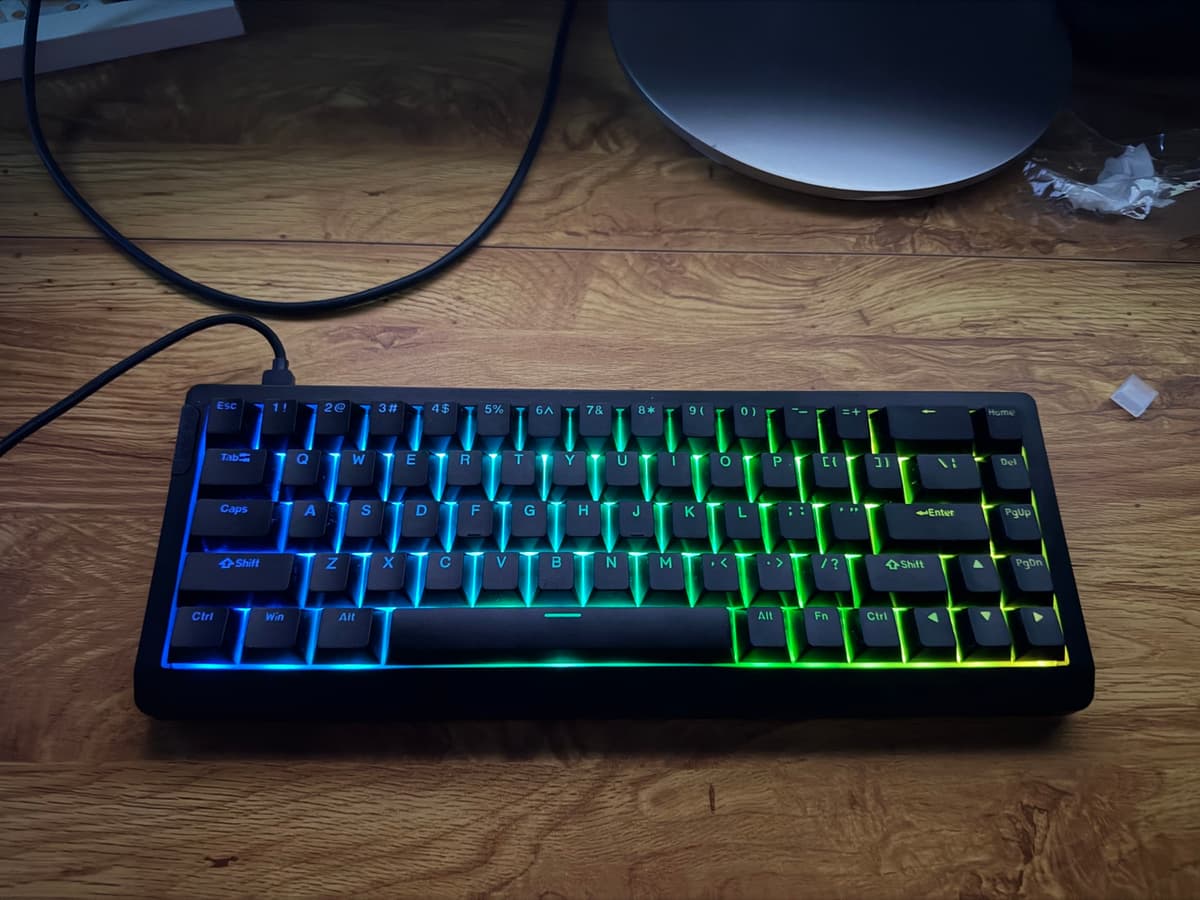
Fifty bucks is not supposed to buy a serious Hall Effect keyboard. The Epomaker HE68 Lite ignores that rule and makes a bunch of pricier boards look a little silly.
That is the whole Epomaker HE68 Lite review in one sentence: as a budget competitive keyboard, it is outrageously hard to argue against. As an all-purpose daily driver, especially if part of your day is MacBook work and part of it is late-night ranked matches, the cracks show fast. The shell is light plastic. The angle is fixed. There is no wireless mode at all. And while the big gaming features are real, the typing experience never stops reminding you this thing was built to help you win duels, not write 3,000 words in comfort.
Still, when a 65% board this cheap gives you Clear Mag HE switches, 8000Hz polling, 128kHz per-key scan, Rapid Trigger, SOCD / Snap Key, Dynamic Keystroke, ModTap, hot-swap support, and a sound profile that does not embarrass itself out of the box, it stops being a cute budget option and starts becoming a problem for the rest of the market.
Table of Contents (9)
Key takeaways
- The Epomaker HE68 Lite is a wired-only 65% Hall Effect keyboard with a USB-C connection, around 600g of weight, 3.4mm total travel, and a genuinely absurd feature list for roughly $49.
- For FPS / MOBA hands-on testing, Rapid Trigger mattered most. Valorant and CS2 movement felt cleaner almost immediately, while League benefited from deeper actuation to avoid accidental casts.
- The five-layer foam stack does a lot of heavy lifting. This keyboard sounds softer and fuller than its plastic chassis has any right to, though the Costar stabilizer caveat still applies on larger keys.
- Driver 3.0 works on Windows and Mac, and the board is usable with a MacBook right away, but the software is clunky and the Chinese-default quirk is a rough first impression.
The specs are wild, but the layout choice is what makes it practical
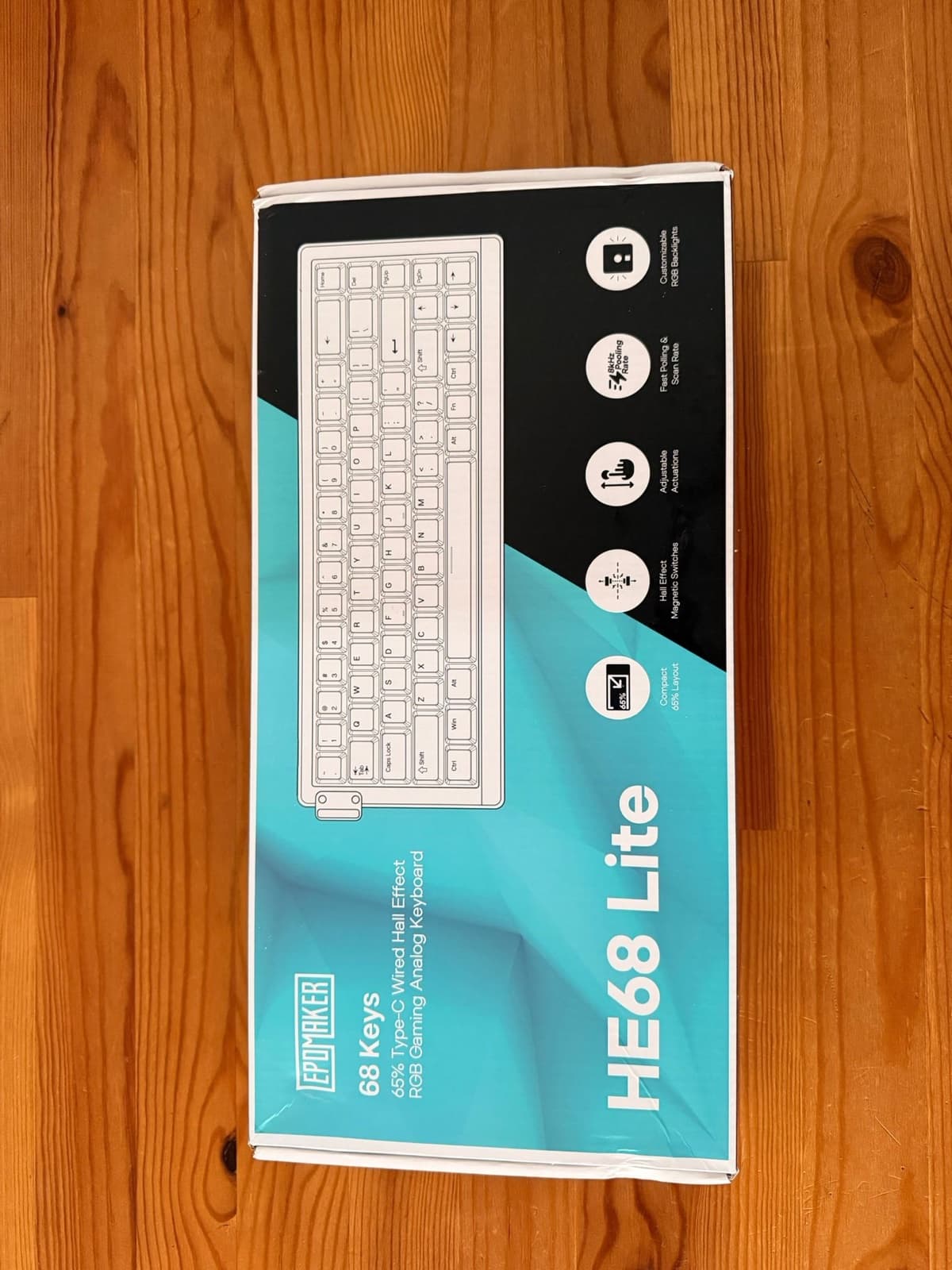
There are boards with prettier cases, boards with better software, and boards with a more premium typing identity. Very few of them start this low. The HE68 Lite is a 68-key, 65% layout with arrow keys intact, which matters more than the spec sheet crowd sometimes admits. One reason the Wooting 60HE+ still feels like a specialist tool is that 60% life is not for everybody. The Epomaker keeps enough daily usability to avoid feeling like a tournament-only slab.
On paper, it sounds almost fake for the price: Hall Effect magnetic switches, adjustable actuation, Epomaker’s advertised 0.01mm actuation granularity, a usable 0.1mm to 4.0mm tuning range, 8000Hz polling, 128kHz per-key scan, Rapid Trigger, SOCD / Snap Key, Dynamic Keystroke, and ModTap. The stock Clear Mag HE switches are smooth linear units with a PC top housing for brighter RGB and about 3.4mm of travel. The switches are hot-swappable, the keycaps are shine-through PBT, and the whole thing stays wired over USB-C with no battery inside. That last part sounds boring until you remember how many “do everything” boards end up compromising the one thing competitive players actually want: consistency.
Epomaker also stuffed five foam layers into this cheap shell: Poron sandwich foam, IXPE switch pad, PET layer, switch socket pad, and bottom foam. That stack is the secret sauce. It does not make the board feel luxurious in the hand, but it absolutely changes the sound and keeps the HE68 Lite from turning into a hollow plastic clacker.
In Valorant and CS2, Rapid Trigger is the reason this board matters
The real test was simple: ignore the marketing fireworks and see whether movement actually improves in games where keyboard timing decides fights. In Valorant and CS2, the answer was yes, fast.
I kept movement keys at very shallow actuation and turned on Rapid Trigger. That changed the feel of A and D immediately. Counter-strafing stopped feeling gummy. Jiggle peeks became cleaner because the keyboard released movement the moment I backed off the key instead of waiting for a more traditional reset point. That is the Hall Effect sales pitch in plain English: less dead feeling between intention and response. No magic. No fake superhuman reaction boost. Just cleaner stop-start control.
SOCD / Snap Key is the flashier checkbox, and yes, it works. Opposing movement inputs resolve with that sharp, gamey snap people buy these boards for. In drills and normal play, it can make left-right transitions feel almost too neat. The caveat is the same one it always is: some games, anti-cheat teams, or tournament rules have been skeptical of this class of feature. I would not buy the HE68 Lite solely because it has SOCD / Snap Key. I would buy it because even with conservative settings and sane use, Rapid Trigger alone gives it real competitive value.
Overwatch benefited too, just in a slightly different way. The board felt excellent for frantic AD strafing and fast ability keys, but the gains were less dramatic than in tactical shooters. That is not a knock on the keyboard. It is a reminder that Hall Effect boards tend to shine brightest in games where movement reset timing is part of the skill expression.
League and everyday use exposed the split personality
MOBA play was the moment the HE68 Lite stopped being a pure honeymoon device and became something I had to tune around. In League, hair-trigger settings on QWER felt terrible. That setup is fun for five minutes and then starts causing the kind of accidental casts that lose lane trades for dumb reasons. Once I pushed those keys to a deeper actuation point and kept only a few inputs more sensitive, the board settled down and became far more usable.
That is also where features like ModTap make more sense than the headline-grabbers. On a 65% layout, turning a key into one function on tap and another on hold is genuinely useful. Caps Lock becoming Escape on tap and Control on hold is the kind of change that improves daily use without turning the board into a gimmick machine. Dynamic Keystroke is here too, but for my use it felt more like a toy box than a must-have. Competitive players should care far more about actuation tuning and Rapid Trigger than multi-stage stunt mappings.
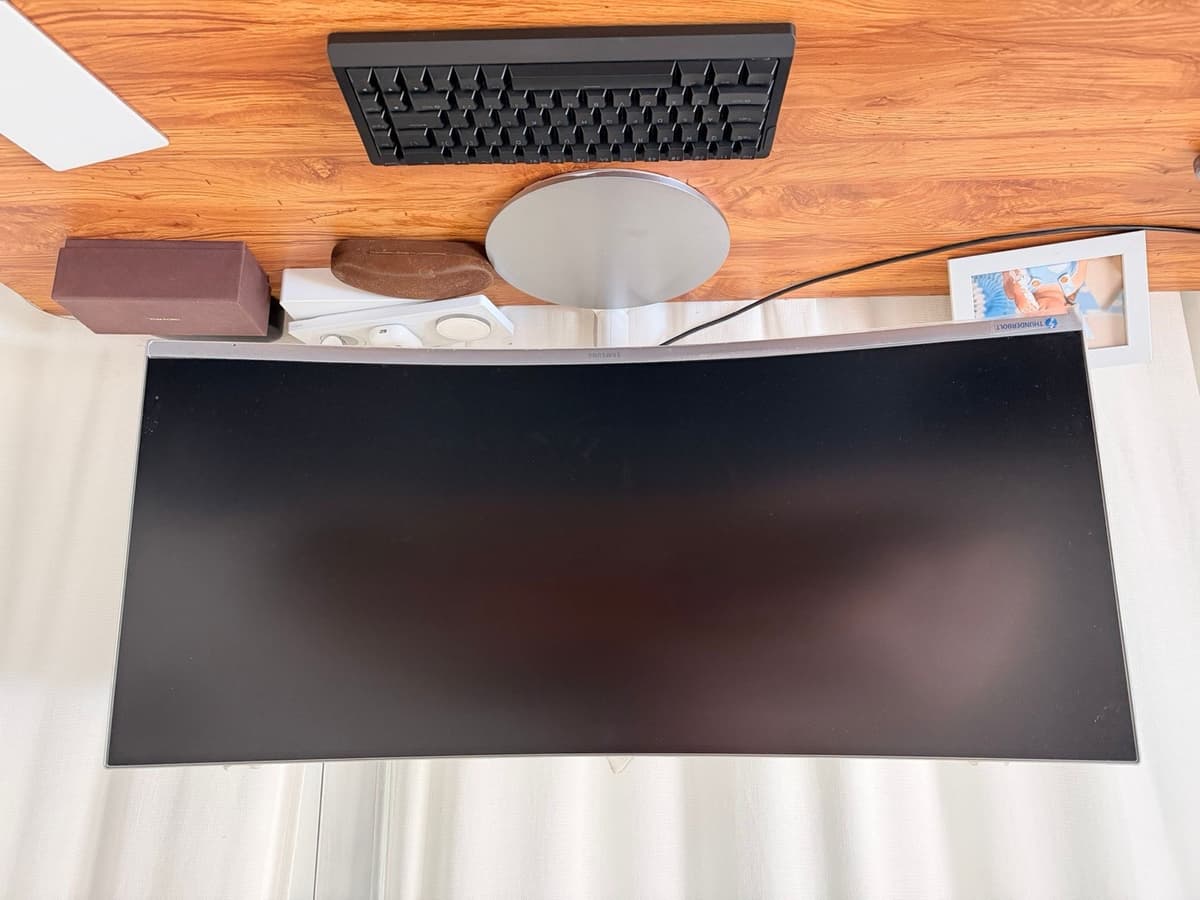
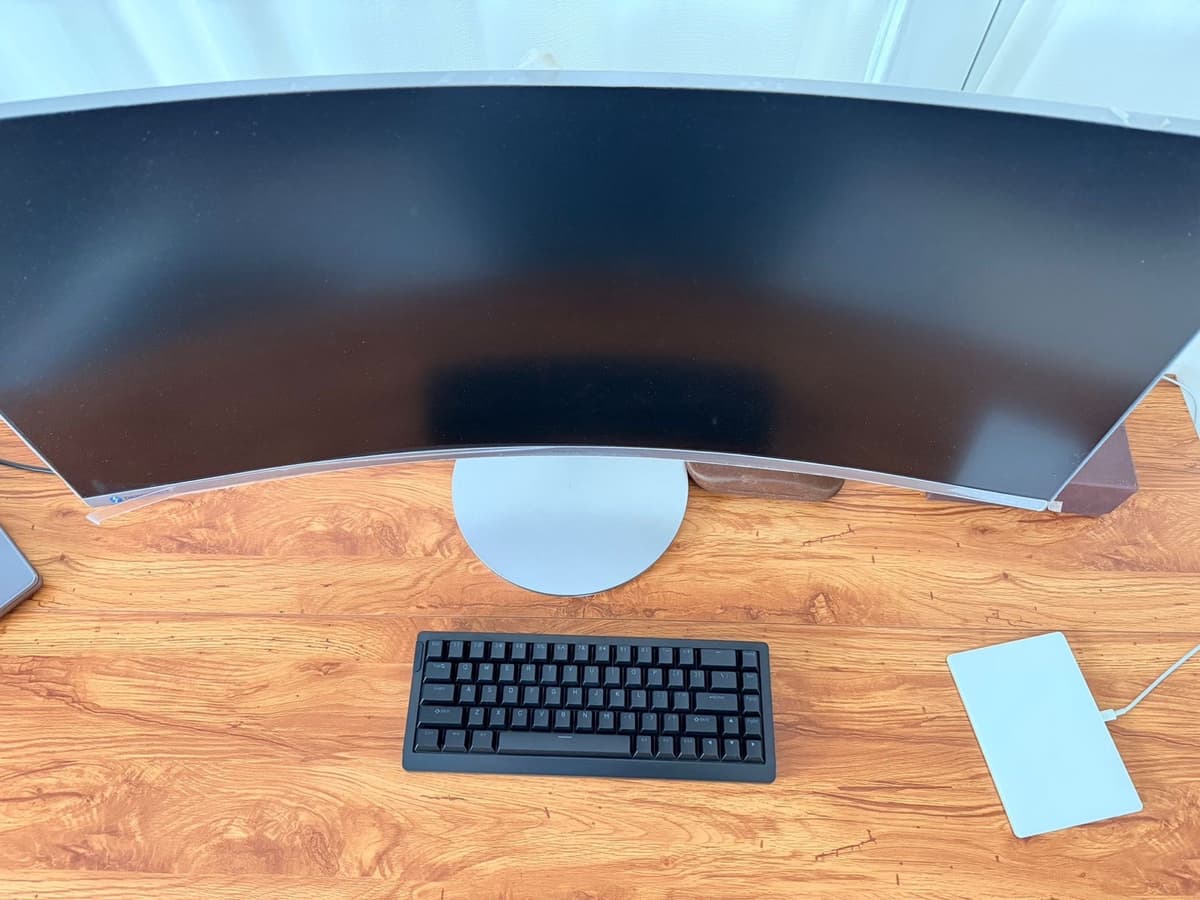
For work, the keyboard was fine, not lovable. I used it with a MacBook for email, documents, browser-heavy office stuff, and the occasional spreadsheet sprint. Basic MacBook compatibility is not the issue; the board works over USB-C, and the automatic Mac/Win switching is helpful. The problem is feel. The linear Hall Effect switch experience is smooth, but it is also a little flat for all-day typing, and the fixed angle did my wrists no favors during longer sessions. This is a better gaming weapon than office companion. That distinction matters.
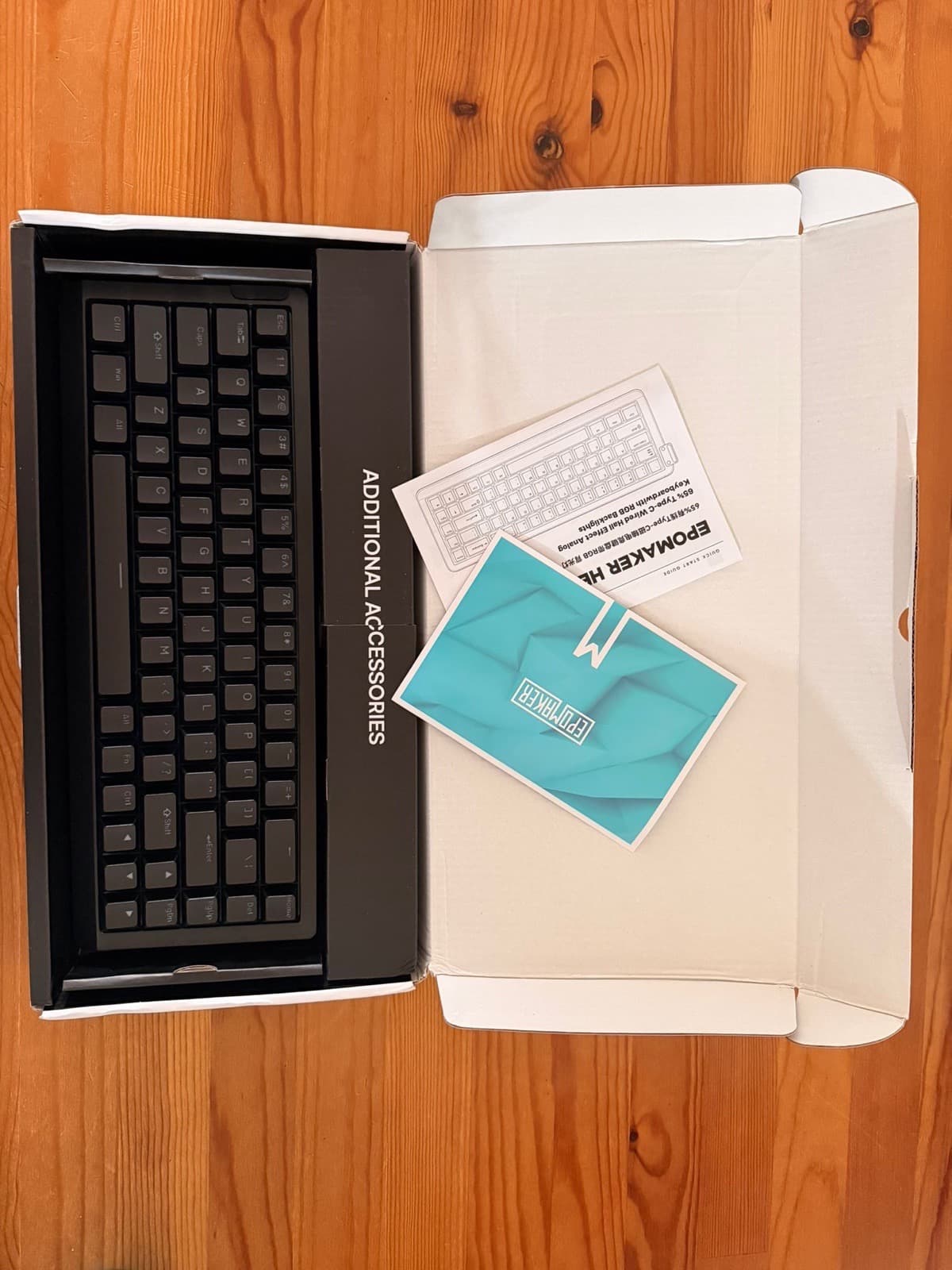
It sounds far more expensive than it looks, until the bigger keys remind you what this costs
Cheap gaming keyboards usually fail in one of two ways: they either sound hollow and harsh, or they feel like every corner was cut where your fingers land. The HE68 Lite dodges the first problem surprisingly well. The five-layer foam setup gives it a muted, soft-edged sound that lands much closer to “pleasantly damped” than “budget plastic tray mount.” There is a little bit of thock to it, and more importantly, it avoids the cheap metallic sting that makes long sessions irritating.
The shine-through PBT caps are also better than expected. They are not luxury caps, but they do not feel greasy or flimsy, and the legends stay readable in a dim room. RGB fans will appreciate that the PC-top switch housing helps the lighting pop without turning the whole board into a tacky glow brick.
Then the budget truths come back. The chassis is light. Around 600g is great for portability, but it also means the board does not have that planted, expensive confidence of something like the Akko MOD007B-HE. There is no adjustable typing angle, and the tray-mount plastic case has that unmistakable entry-level character once you stop listening to the foam and start feeling the frame.
The Costar stabilizer caveat is real too. Mine was not a disaster, and I would not call the larger keys rattly messes, but the spacebar and other stabilized keys do not feel as consistent as the alphas. Some reviewers have found the stock stabilizers surprisingly solid, and I get why; they are far from the worst in this bracket. Still, the Costar-style setup brings that familiar budget-board compromise where the big keys sound and feel just a little more mechanical, a little less refined, than the rest of the deck. If you are sensitive to stabilizer feel, you will notice it.
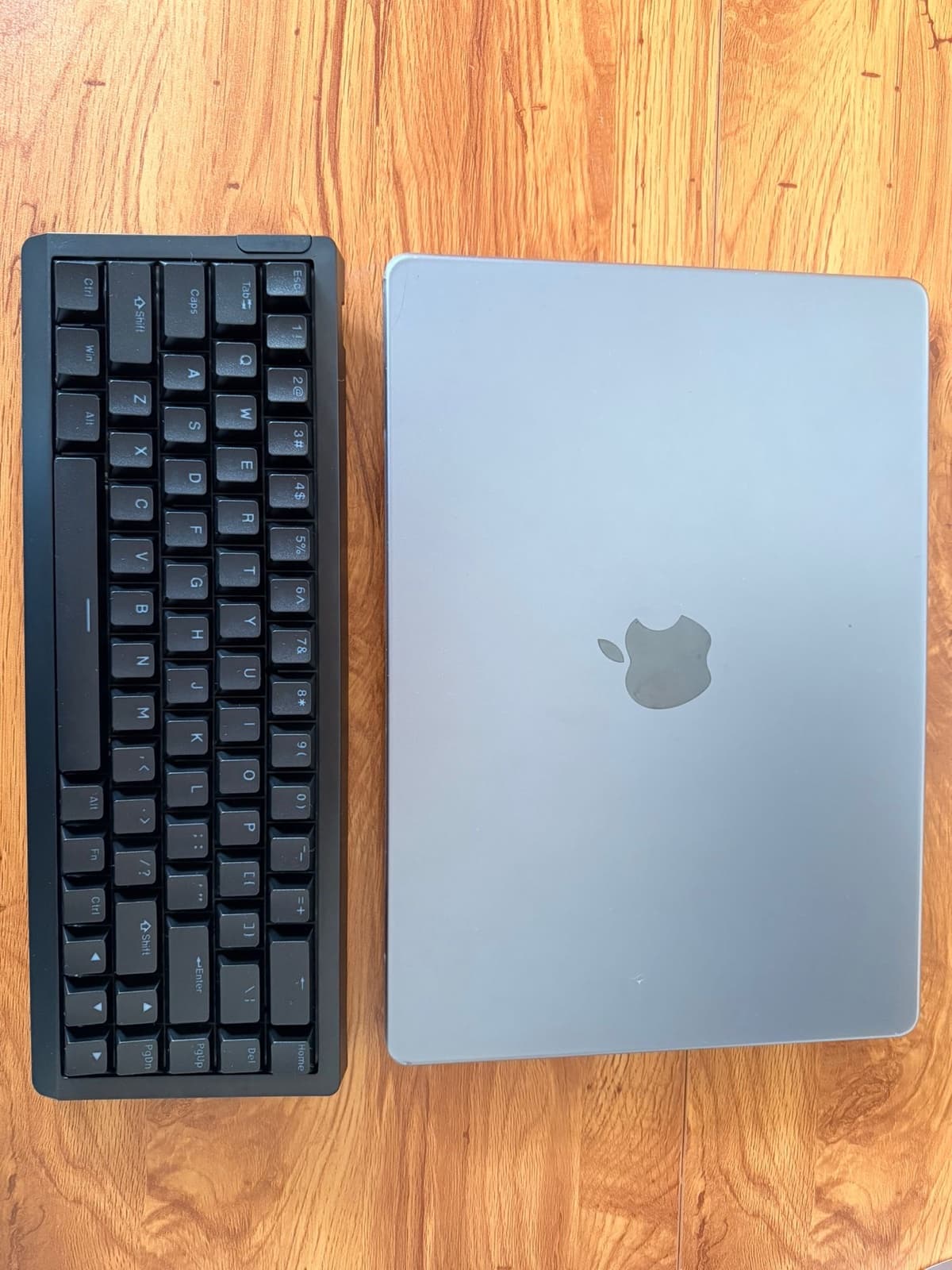
Driver 3.0 and the MacBook compatibility note: usable, rough, nowhere near Wooting
Software is where cheap Hall Effect boards usually expose themselves, and Epomaker does not escape that. Driver 3.0 gives you the important stuff: actuation tuning, Rapid Trigger behavior, RGB control, SOCD / Snap Key, Dynamic Keystroke, and ModTap. There is a Windows version and a Mac version, which is already better than some budget boards that treat Mac users like an afterthought.
The first-run experience is still rough. The Chinese-default quirk is real, and it is a terrible first impression on a product that otherwise makes such a strong case for itself. Once past that, the software is functional enough. I could set profiles, adjust behavior, and get the board where I wanted it for different genres. But this is the exact spot where the Wooting 60HE+ comparison stops being flattering for Epomaker. Wooting still owns the premium end in software polish, community trust, and that sense that the company built the ecosystem first and the marketing second.
On MacBook, the news is mostly good with a small asterisk. The HE68 Lite works as a basic wired keyboard immediately, and the 65% layout with arrows is much nicer for general productivity than a stripped 60%. If your plan is office work on a MacBook by day and games on a Windows desktop by night, the board can fit that life. The asterisk is that nothing about the software or key feel makes it a Mac-first dream board. It is compatible. It is not elegant.
Wooting 60HE+, Akko MOD007B-HE, and Razer Huntsman Mini Analog: where the extra money actually goes
The Wooting 60HE+ is still the reference point for people who obsess over Hall Effect boards for good reason. The software is better. The overall fit and finish feel more grown up. The ecosystem has maturity the budget crowd is still chasing. But the HE68 Lite gets uncomfortably close where a lot of players actually live: movement tuning, responsiveness, and core in-game usefulness. The price gap is huge. The performance gap in normal play is not.
The Akko MOD007B-HE is easier to justify if you care about build quality, heft, and a more premium desk presence. It feels like a nicer object. It is also priced like one. The Epomaker has no answer to that beyond a brutal one: many competitive players will care more about getting 85 to 90 percent of the practical gaming experience for a fraction of the money than they will about a denser case and a more satisfying typing sound.
Razer’s Huntsman Mini Analog still has brand recognition and a mature software ecosystem behind it, but the value argument is rough in 2025 when a $49 board gives you modern Hall Effect features, a 65% layout instead of 60%, and a package that feels less compromised in day-to-day use. If you are already deep in Razer gear, there is a case. If not, the Epomaker is the more rational buy.
Bottom line
The Epomaker HE68 Lite is an easy recommendation for the right person and a mediocre fit for the wrong one. If your main goal is competitive gaming on a budget, this is one of the clearest buys in the Hall Effect space right now. If you want one keyboard to be your premium typing board, travel board, wireless living-room board, and workhorse for eight-hour writing days, this is not that machine.
- Buy it if: you want an affordable Hall Effect board for Valorant, CS2, Overwatch, or League; you care about Rapid Trigger more than luxury materials; you want arrow keys; and wired-only is fine.
- Skip it if: typing feel matters as much as gaming performance; you want a heavier premium case, adjustable feet, wireless connectivity, or truly polished software; or large-key stabilizer feel drives you crazy.
Final verdict: 8.5/10. As a budget gaming-first keyboard, the HE68 Lite is a killer. As a do-it-all desk companion, it is merely acceptable. That is still a huge win at $49.
TL;DR
- Excellent value for a Hall Effect board with Rapid Trigger, 8000Hz polling, and strong core competitive features.
- Very good in FPS games once tuned, especially for counter-strafing and fast movement resets.
- Perfectly usable for MOBA play and MacBook work, but it needs smarter actuation settings and never becomes a typing favorite.
- Sound punches above the price thanks to the foam stack, while the plastic shell, fixed angle, wired-only design, and Costar stabilizer caveat keep it grounded.
- Wooting 60HE+ still wins on polish; the Epomaker wins the value war by a mile.
The unresolved part is what this keyboard does to the rest of the market: if a $49 board is already this close where it counts, how much of the $200 Hall Effect tier is still performance, and how much of it is now just comfort, polish, and branding?
FinalBoss // Gear
Level up your setup
01Top-rated gaming headsetson Amazon→02High-refresh gaming monitorson Amazon→03Gaming chairson Amazon→04Discounted game keyson Kinguin→Affiliate links · As an Amazon Associate, FinalBoss earns from qualifying purchases.
Want to Level Up Your Gaming?
Get access to exclusive strategies, hidden tips, and pro-level insights that we don't share publicly.
Ultimate Reviews Strategy Guide + Weekly Pro Tips