
Table of Contents (9)
The exact moment this remake broke me (in the best way)
I knew the Fatal Frame 2: Crimson Butterfly remake had me when I reached out to hold a hand that wasn’t there.
I was wandering through the dollmaker’s cottage in Minakami Village – that rotten, beautiful corpse of a place – and I instinctively pressed the button to grab Mayu’s hand. Except Mayu wasn’t with me. I knew she wasn’t. The game knew she wasn’t. But my thumb still twitched, trying to reach for my sister.
That tiny, pathetic input – reaching for comfort in a place designed to deny you comfort – is when I realized this remake had crawled under my skin in a way almost no horror game has managed in years. It’s clumsy. It’s infuriating. Its ghosts cheat. Its combat can absolutely go to hell.
And yet, somehow, I’m sitting here genuinely convinced this might be the greatest horror experience I’ll play this year. Not “greatest horror game” in the sense of clean mechanics and immaculate pacing, but the one that will haunt me the longest. The one that quietly re-wired how I think about what horror is even for.
The Fatal Frame 2 remake, out now on PS5, Xbox Series X/S, PC, and Switch, doesn’t really care whether you’re having “fun.” It cares whether you feel fragile, lonely, and uncomfortably attached to a girl who keeps slipping away from you in the dark. And honestly? That’s why it works.
I didn’t need another power fantasy horror – I needed Minakami
I’ve been playing horror games long enough to watch the genre twist itself in circles. I grew up on fixed-camera Resident Evil, lived through the Silent Hill 2 obsession, and now we’re in the era of pristine remakes and ultra-polished “prestige horror.” I love a slick remake as much as anyone, but they all started blending into one long highlight reel of headshots and set pieces.
Fatal Frame 2: Crimson Butterfly always had a different reputation. Even IGN, in its 30 horror game “masterpieces” roundup, casually drops the original Crimson Butterfly into the canon like it’s just obvious: of course this soft-spoken PS2 relic belongs next to Resident Evil and Silent Hill. But the West never really gave the series the exposure it deserved, and for over a decade, it felt like the franchise was quietly rotting away in some corporate vault.
This remake is the first proper Western release for the series in years, and it shows up like something exhumed from another era: slower, sadder, and way more willing to make you feel weak. You play as Mio searching for her twin sister Mayu in the cursed Minakami Village – a place that feels less like a level and more like a purgatorial loop. The houses are collapsing, the sky is frozen in a permanent twilight, and everything seems to quietly insist you should never have come here… but also that you’ll never be allowed to leave.
What pushes it from “moody Japanese village” to “this is going to live rent-free in my skull” is how every system feeds back into one emotion: melancholy. Not jump-scare adrenaline, not gory excitement. Just this stubborn, sticky sadness that clings to everything – especially to Mio and Mayu’s relationship.
Hand-holding as a horror mechanic shouldn’t work this well
The remake’s most important mechanic isn’t the Camera Obscura. It’s holding hands.
On paper, that sounds like a cutesy escort gimmick. In practice, it’s the emotional spine of the whole game. When Mayu is with you, you can physically take her hand and guide her through Minakami’s decaying streets and creaking interiors. It’s not some invisible “companion aura.” You feel it every time: the slight tug when she lags behind, the way the camera shifts just a bit to accommodate the both of you.
Mechanically, holding hands regenerates Mio’s health; emotionally, it regenerates your ability to keep going. The village is oppressive when you’re alone – the sound design picks up more of the wind, the boards groan a little louder, the dolls stare a little harder. When Mayu vanishes (and she will vanish), that missing hand becomes more horrifying than any ghost.
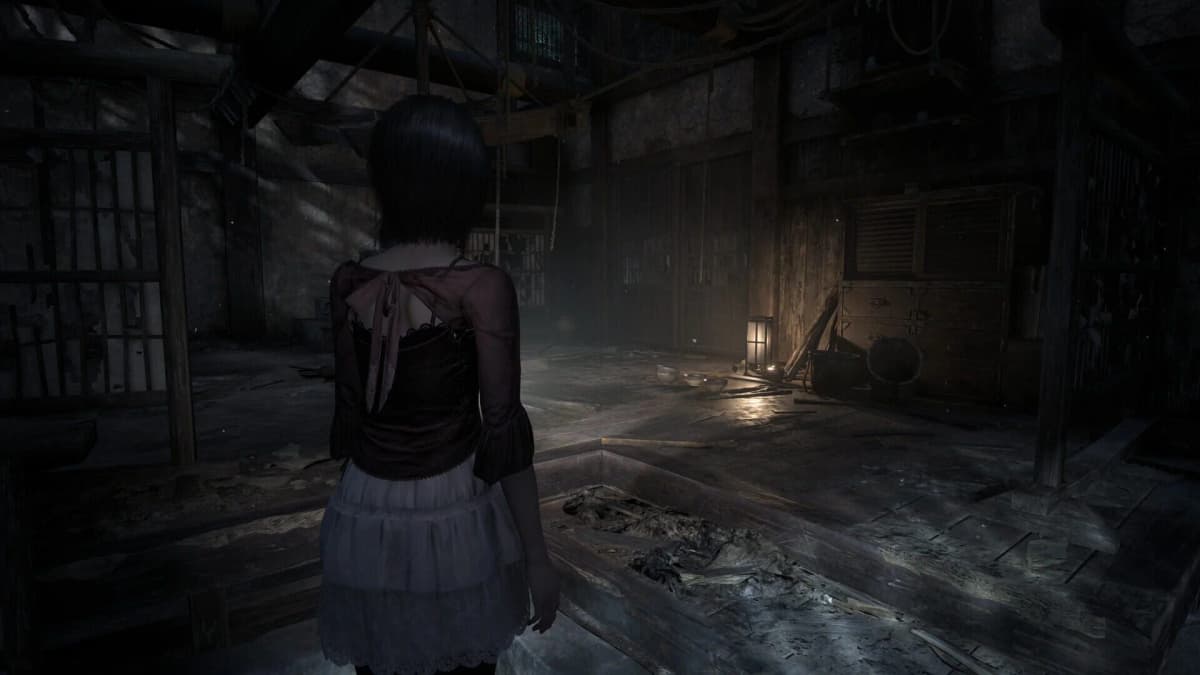
I’ve played games with escorts, companions, co-op partners, AI buddies – you name it. But I can’t think of another horror title that weaponizes simple, tactile companionship this effectively. There are moments in the remake where I feel like I’m not actually scared of the ghosts; I’m scared of losing the one person who makes the ghosts bearable.
That’s where I start to become convinced greatest horror experiences aren’t really about how cleanly they scare you, but how precisely they decide what you’re scared of. Here, it’s not the jump scare waiting behind a door – it’s the idea that you might have to open that door without Mayu’s hand in yours.
The Camera Obscura: the best terrible weapon I’ve used in years
Let’s talk about the infamous Camera Obscura. The remake reworks it with psychic filters, prayer bead upgrades, and over-the-shoulder framing, but the core idea is the same: to fight ghosts, you have to look straight at them through a camera and take their picture at just the right moment.
On a mechanical level, it’s kind of a nightmare. Zoom and focus feel deliberately sluggish. The film is a finite resource, and when you run out mid-fight – which you absolutely will, especially early on – you’re stuck in an awkward dance of panic, backpedaling, and bitter regret. The remake piles on a Willpower-like system and special shot filters that expose hidden items or deal extra spiritual damage, but when a fight goes wrong, all those systems melt into chaos.
Then there’s the health regeneration. Aggravate certain ghosts too much and they start endlessly regenerating, turning a tense encounter into a 15-minute war of attrition. You’re there hammering the shutter, burning film, watching their HP crawl back up while you cycle through lenses and mutter creative insults at the designers. I’ve had multiple fights where I felt less like a terrified girl with a cursed camera and more like someone stuck in a bad MMO boss loop.
And yet – and this is where I surprise myself – I don’t actually want them to “fix” all of this. I want them to tune it, sure. I won’t defend infinite regen as good design. But the clumsiness, the awkwardness, the feeling that you and Mio are barely holding it together – that’s the point. This is not Resident Evil 4 where you’re one upgrade away from becoming a stylish murder machine. This is a game where, even fully upgraded with prayer beads and psychic filters, the Camera Obscura never stops feeling like a brittle, inadequate tool for a job you never wanted.
Most horror design these days is obsessed with balance: give the player just enough ammo, just enough power, just enough escape routes to keep them engaged but not frustrated. Fatal Frame 2 absolutely blows past that line into genuine irritation sometimes. But in doing so, it nails something rarer – that sense of being emotionally under-equipped. You’re not just scared of dying; you’re scared of having to pick up this damn camera again and do another terrible, intimate photo shoot with something that wants you dead.
Most horror design these days is obsessed with balance: give the player just enough ammo, just enough power, just enough escape routes to keep them engaged but not frustrated. Fatal Frame 2 absolutely blows past that line into genuine irritation sometimes. But in doing so, it nails something rarer – that sense of being emotionally under-equipped. You’re not just scared of dying; you’re scared of having to pick up this damn camera again and do another terrible, intimate photo shoot with something that wants you dead.
🎮 Get This Game at the Best Price
Compare prices instantly and save up to 80% on Steam keys with Kinguin — trusted by 15+ million gamers worldwide.
*Affiliate link — supports our independent coverage at no extra cost to you
Dolls, butterflies, and the art of fragile horror
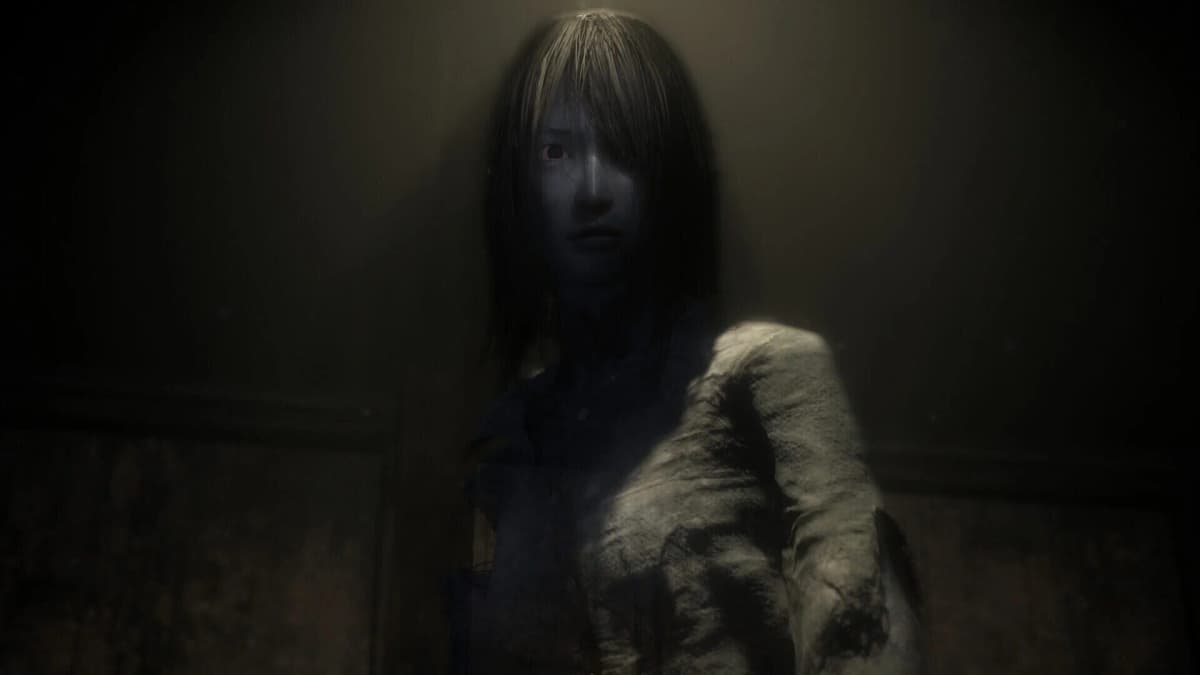
What really cements this remake for me is how obsessive it is about its imagery. Minakami Village is full of dolls – on shelves, in boxes, hanging from the ceiling by their necks. Some are headless. Some look like they’re mid-fall, frozen in time. They’re not just there to be “creepy doll #4382.” They’re echoing Mio and Mayu’s whole existence: decorative, delicate, positioned by forces they don’t control.
Crimson butterflies themselves flit through the village like fleeting memories, always just slightly out of reach. The remake’s expanded areas and sidequests – especially the ones focused on missing women and children – lean hard into this idea of abandonment and failed protection. It’s not just that villagers died; it’s that they were used, sacrificed, rearranged like porcelain figures in someone else’s ritual.
There’s one image I can’t shake: a ghost woman tumbling down a stairway, her robe splitting just enough to expose this vulnerable, human moment right in the middle of supernatural horror. It’s grotesque, but also weirdly tender – like the game is whispering, “Yes, even monsters were people once.” That’s the kind of detail that sticks with me way more than another ultra-HD decapitation.
And then there’s the doors. Good lord, the doors. Mio opens them so painfully slowly that you start anticipating the scare before it happens… and the game knows that. Sometimes there is a ghost suddenly in your face, grinning full-screen like a JPEG from hell. Sometimes there isn’t, and the absence is almost worse. The remake absolutely repeats this trick to death, but weirdly, that repetition starts to feel ritualistic – like you’re participating in Minakami’s own purgatorial routine.
This is where I circle back to that key idea: I’m convinced greatest horror games aren’t the ones with the most variety of scares, but the ones that pick a specific emotional register and grind it into your bones. Fatal Frame 2: Crimson Butterfly picks fragility and refuses to let go.
Yes, the scares repeat. That’s part of the point.
I can hear the counterarguments already. The ghosts cheat. The fights drag on too long. The door scares get old. The enemy AI feels inconsistent. All of that is true. If you come into this remake wanting RE4 Remake-level combat polish or Dead Space-style encounter design, you’re going to bounce hard. This is not that game, and it’s not trying to be.
What it’s doing instead is leaning into monotony as a form of horror. The ghosts don’t just spawn once; they come back. Areas get repopulated. You open a door you’ve opened before, knowing this time something might be waiting for you. Or maybe the
I’ve played horror games that terrified me for ten hours and then evaporated the moment I hit credits. Crimson Butterfly, even ten-ish hours into a completionist run, feels different. The repetition makes it feel less like a rollercoaster and more like a haunting – the same scenes, the same spaces, looping until you start to feel like you belong to them.
Do I think every player will vibe with that? No. Some will bounce off and call it boring. Some will quite reasonably say the aggravated ghost regen needs to be patched yesterday. I won’t argue with them. I’ll just quietly keep walking Minakami’s alleys, opening its doors, checking every crevice for another fallen doll, and thinking, “Yeah, this is exactly the kind of ugly, stubborn experience horror needs right now.”
Why this messy remake might be my personal greatest horror game
When people argue about the “greatest horror game of all time,” it usually turns into a list-war: Silent Hill 2, Resident Evil 4, Amnesia, Outlast, whatever remake just blew up on Twitch. I’ve played most of them. I respect most of them. But the Fatal Frame 2: Crimson Butterfly remake has me quietly rethinking how we even measure that title.
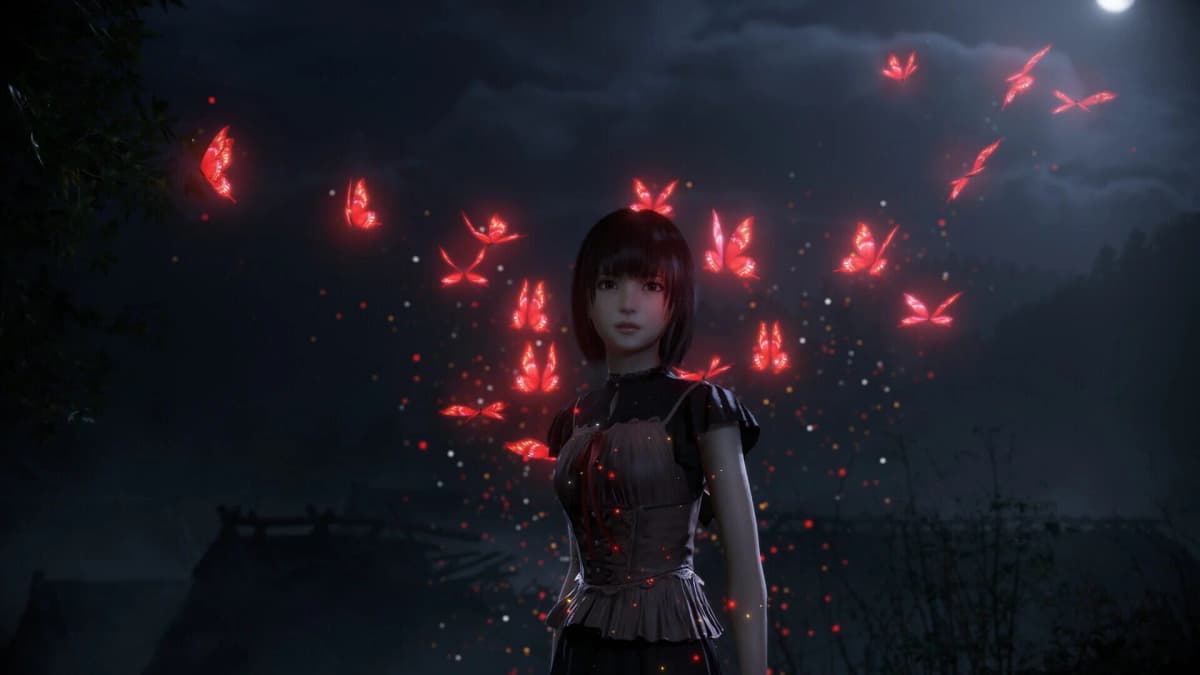
If “greatest” means smoothest, most technically accomplished horror game? No, this isn’t it. Not even close. But if it means the one that understands horror as an emotion instead of a checklist of features? The one that nails a specific, suffocating mood and refuses to compromise it for the sake of pace or comfort? Then yeah, I’m dangerously close to calling this my personal greatest horror game.
It’s the way the expanded village areas make Minakami feel less like a backdrop and more like a living wound. It’s the sidequests that take you into the lives of missing villagers, especially the children, and quietly connect their fates to Mio and Mayu’s. It’s the way the doll imagery turns the twins into fallen angels – objects that only make sense when there are two of them together. It’s that simple hand-holding input that becomes a lifeline you keep reaching for, even when you know nobody is there.
And it’s the fact that, despite every clumsy fight, every overlong ghost encounter, every moment where I swear I’m done after this next save point… I keep going back. Not because I want to “beat” it, but because I weirdly want to stay in its sadness a little longer.
Where I draw the line – and why I still recommend it
Let me be crystal clear: there is bullshit here. Some ghosts having what feels like infinite regen? Bullshit. The game occasionally turning combat into a test of attrition rather than skill? Bullshit. The overuse of one specific scare format? Yeah, that’s lazy.
But here’s the line for me: if a horror game frustrates me in ways that have nothing to do with what it’s trying to say, I drop it. I bounced off more than one modern horror reboot because the jank felt disconnected from the themes. In Crimson Butterfly, the friction is at least pointing toward something: vulnerability, exhaustion, the sense that you’re stuck playing by someone else’s cruel rules.
That’s why I can sit here, half-furious at these regenerating wraiths, and still tell people who care about horror as an art form: you need to play this. If you’re only in it for clean mechanical thrills, sure, go back to your finely tuned remakes. But if you want to see what happens when a game doubles down on mood, on grief, on that sick feeling of reaching for a hand that isn’t there – this remake is essential.
I came into Fatal Frame 2: Crimson Butterfly Remake expecting a nice nostalgia trip into a cult classic I’d always meant to properly play. I walked out (well, not out – I’m still in Minakami, really) convinced greatest horror experiences don’t have to be “perfect” to be unforgettable. They just have to know exactly what they want you to feel, and be ruthless about making you feel it.
This one wants you to feel small, sad, and breakable. And against all my instincts as someone who’s spent years chasing competence, power, and “optimal builds,” I’m grateful for it.
FinalBoss // Gear
Level up your setup
01Retro consoleson Amazon→028BitDo controllerson Amazon→03Capture cards (Elgato & more)on Amazon→04Discounted game keyson Kinguin→Affiliate links · As an Amazon Associate, FinalBoss earns from qualifying purchases.
Want to Level Up Your Gaming?
Get access to exclusive strategies, hidden tips, and pro-level insights that we don't share publicly.
Ultimate Gaming Strategy Guide + Weekly Pro Tips