
Table of Contents (12)
The tiny, stupid-looking gadget that actually fixed a real gaming problem
I remember the exact moment I snapped. I was mid-run in Elden Ring, fingers hovering over WASD, when my spacebar stuck for half a second. Not a big deal on paper, but that half-second delay yeeted me off a ledge and straight into the kind of rage you only get from a game that already hates you.
I looked down and saw it: a faint, orange, shameful smear across my spacebar. The crime scene of too many late-night “just one more try” sessions with a bag of crisps in arm’s reach. My mechanical keyboard, which I baby harder than some people treat their pets, had become a greasy crime against humanity.
It wasn’t just the keyboard. My mouse had that permanent oily sheen, my controller grips felt like they’d been dipped in fast food, and every deep clean meant pulling off keycaps and discovering crumbs from snacks I didn’t even remember eating. It was disgusting, and I knew exactly why: I love snacking while I play, and I was too lazy to fully stop.
So when I first saw “finger-sticks” – those ridiculous little finger-chopsticks marketed as a gaming accessory – I rolled my eyes so hard I almost uninstalled Steam. It looked like yet another AliExpress special: plastic junk dressed up as esports tech for people who already own RGB everything.
But here’s the thing: I’ve been using a set of these dumb little plastic finger-sticks for about three years now. They go through the dishwasher, they cost less than a coffee (around €4 for a 4-pack in the current Spring Sale), and they have done more to keep my gear clean than any fancy “hygiene” solution I’ve ever tried.
And I’m honestly a bit annoyed they actually work as well as they do, because it proves how much bullshit the rest of the peripheral “hygiene” market is built on.
What finger-sticks actually are (and why they’re not just meme garbage)
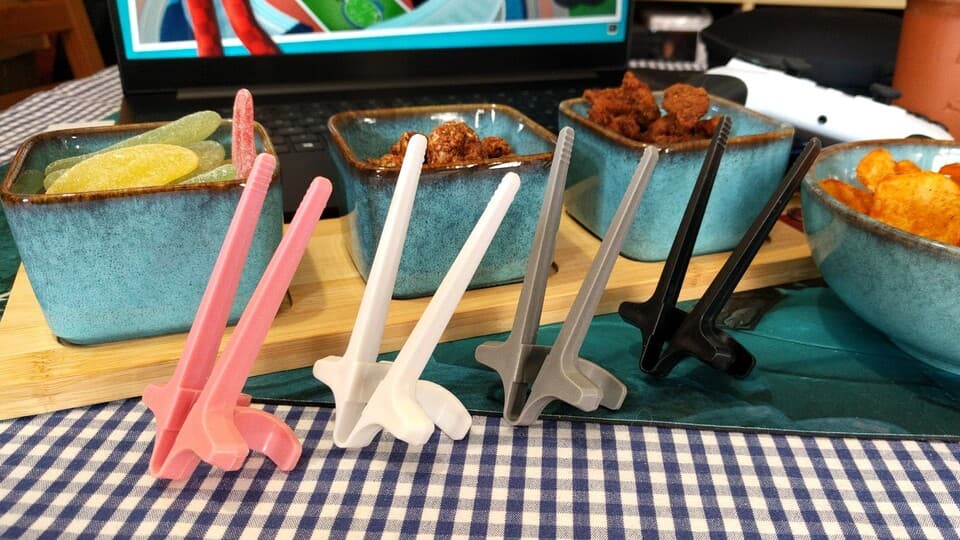
If you’ve managed to avoid seeing these things, here’s the idea: they’re like mini chopsticks that clip onto your fingers. You slide them over your index and middle finger (some designs use one finger and a thumb), and suddenly you can grab crisps, nuts, gummy bears, whatever – without your real fingers ever touching the food.
Your actual hands stay on the keyboard, mouse, controller, or handheld. No pausing to wipe, no greasy WASD, no Cheeto-dusted thumbsticks. Just snack, drop the finger-sticks, and keep playing.
The big platforms are full of them now. AliExpress sells 4-piece sets explicitly as a “gaming accessory” to keep keyboards clean. Etsy has “GamerSticks” with slightly fancier designs and the whole handmade vibe, promising comfort for all hand sizes and clean keyboards. Amazon is stuffed with clones. They’re all the same basic idea: cheap plastic clips with chopstick ends that let you eat like a raccoon with surgical tools.
A lot of listings brag about being dishwasher safe and quote three years of durability like it’s some certified lab result. Spoiler: it isn’t. That’s pure vendor anecdote. I haven’t found a single independent test or long-term study verifying those claims. No materials breakdown, no stress testing, nothing. Just “trust us, bro, we put them in a dishwasher and they survived.”
But here’s where it gets awkward for my inner skeptic: mine really have survived. Dozens of cycles in the dishwasher, tossed in with cutlery, no special treatment. After about three years, they’re a bit scratched, a bit discoloured, but they still clamp onto my fingers and still grab snacks just fine. That doesn’t make the marketing suddenly scientific, but it does make it very hard for me to call them useless.
More importantly, they’ve done exactly what every gaming product promises but almost never delivers: they actually fixed a real, everyday problem.
I tried the “grown-up” solutions first. They all sucked.
Before I caved to the finger-stick meme, I genuinely tried to handle this like an adult.
I did the “no food at the desk” rule. It lasted maybe three evenings before I ended up standing in the kitchen, scrolling my phone instead of playing, because I apparently can’t exist for more than an hour without a snack nearby once I’m in a long session.
I tried the “wash your hands every time you grab something” tactic. That one was even dumber in practice. It turns every gaming night into an interval workout where the miniboss isn’t the enemy on-screen, it’s the 15-metre sprint to the sink after every handful of crisps. Also, your hands don’t magically stay dry and perfect either; your skin gets wrecked, and you still end up transferring salt and crumbs back onto your gear.
Then there are the hygiene covers and films — the stuff that’s big in offices, clinics, and industrial settings. If you fall down that rabbit hole, you’ll find thin TPU or silicone keyboard protector films like Baaske’s Uni Flex (about 25 µm thick, reusable), CHERRY’s WetEX covers for specific keyboards, or OCTO-flex’s “Made in Germany” keyboard protectors that brag about guarding against MRSA and other bacteria. There are even silicone button covers from companies like Meba-Saw for industrial environments, around €4.58 before VAT per piece.

These are serious, professional products. They’re designed for places where hygiene isn’t just “ew, my keyboard is gross,” it’s “one third of clinic keyboards are contaminated with problematic bacteria, and this could literally make patients sick.” There are studies backing the need for this stuff. You clean them with soap, isopropanol, or disinfectant wipes. They’re built to last for years.
And they’re honestly overkill for my home desk — while still somehow missing the actual problem I have as a gamer.
Keyboard films feel weird to type on. They change the sound, they change the texture, and if you’re using a mechanical keyboard you spent real money on, it feels like putting cling film over a sports car. Plenty of people get used to it, sure, but I hate it. They also only protect the keyboard. Your mouse, your controller, your handheld? Still one bag of crisps away from becoming a crime scene.
Most of these solutions are reactive. They’re built around the idea that your peripherals will get dirty and you’ll wipe the barrier clean later. Finger-sticks flip that logic: they make it harder for your gear to get dirty in the first place. And that’s a surprisingly big deal.
How finger-sticks actually change the way you snack while playing
Here’s what my setup looks like now on a typical night: I’ve got my PC on, Discord open, a game running, and a bowl of crisps or nuts within arm’s reach. On top of that bowl sits a pair of finger-sticks.
Mid-match or mid-cutscene, I slide them onto my fingers, grab a few snacks, slide them off, and go straight back to mouse and keyboard. My actual fingers never touch the food. The only thing transferring to my keycaps is the sweat of my terrible aim or my whiffed combos, not oil and salt.
On console it’s the same deal: DualSense, Xbox pad, Switch Pro, whatever. I keep a pair on the coffee table. Grab snack, drop finger-sticks, hands straight back to the controller. No pausing to find a napkin, no sticky ABXY, no analog sticks going shiny within a month.
On handhelds it’s honestly a godsend. I don’t want my Steam Deck or Switch OLED display smeared with grease every time I adjust my grip. With finger-sticks, the only thing touching the screen is my thumb — which hasn’t just been knuckle-deep in a bag of paprika crisps.
The physical design is basically idiot-proof. The ones I use are just cheap plastic with a small hinge and soft tips to grip food. They’re not some marvel of engineering. The magic is entirely in the behaviour shift: instead of fighting my urge to snack, they let me keep my disgusting habits while stopping the fallout from ever reaching my gear.
And when I’m done, they go in the cutlery basket, run a dishwasher cycle, and come out ready for the next session. No special cleaning spray, no weird wipes, no recurring costs.
Calling out the bullshit: marketing vs reality
I still think a lot of the marketing around finger-sticks is nonsense. “Dishwasher safe for three years” is a cute slogan, not science. None of the listings I’ve seen back that up with actual test data or certification. There’s no breakdown of the plastic blend, no heat tolerance chart, no number of wash cycles guaranteed.
Calling out the bullshit: marketing vs reality
I still think a lot of the marketing around finger-sticks is nonsense. “Dishwasher safe for three years” is a cute slogan, not science. None of the listings I’ve seen back that up with actual test data or certification. There’s no breakdown of the plastic blend, no heat tolerance chart, no number of wash cycles guaranteed.
🎮 Get This Game at the Best Price
Compare prices instantly and save up to 80% on Steam keys with Kinguin — trusted by 15+ million gamers worldwide.
*Affiliate link — supports our independent coverage at no extra cost to you
Compare that to the industrial keyboard covers: they at least reference hygiene standards, talk about resistance to disinfectants, and cite real-world use cases in hospitals or labs. OCTO-flex leans on studies about bacterial contamination in clinics. CHERRY positions WetEX as part of a professional hygiene workflow. That doesn’t mean they’re perfect, but it’s not just random anecdote with stock photos of gamers.
Finger-sticks, by contrast, are obviously impulse-buy territory. Four euros here, a colourful 4-pack there, some “before/after” keyboard photos that look like they were staged by a bored intern. If you go in expecting anything more than cheap plastic that makes snacking cleaner, you’re setting yourself up to be disappointed.
But here’s where I land: I don’t need a peer-reviewed paper to tell me whether my keyboard is less disgusting when I literally stop touching food with my actual fingers. I can see the difference. I can feel it. The legends on my keycaps aren’t fading as fast. There’s no grainy grime between the keys. My controller grips don’t squeak when I hold them.
So yeah, the marketing is overblown. No, we don’t have lab swabs of “before finger-sticks” and “after finger-sticks” peripherals. But in day-to-day use, they deliver on the one promise that matters: they keep my hands clean while I keep shovelling snacks into my face.
The payoff: cleaner gear, fewer deep cleans, less guilt
I’m picky about my gear. I play fighters a lot, I care about timing and feel, and I’ve sunk stupid amounts of money into keyboards, mice, and controllers over the years. I’ve already made the mistake of slowly ruining a good fightstick with snack grime, then spending hours cleaning Sanwa buttons with cotton buds like a gremlin.
Since I started using finger-sticks, the difference is obvious:
- My main mechanical board needs a proper deep clean maybe twice a year instead of every couple of months.
- My daily driver mouse doesn’t have that permanent oily glow on the primary buttons.
- My controllers go longer before the textured grips lose that fresh, grippy feel.
- The gap under keycaps isn’t a graveyard of crumbs from forgotten snack eras.
And yes, I know some of this is just me being more aware. When you make a deliberate effort to keep food and fingers separate, you naturally treat your gear better. But that’s exactly the point: finger-sticks make that separation frictionless. They’re right there, they’re easy, and they turn “ugh, I shouldn’t” into “fine, I’ll just use the gadget.”
“Just don’t eat at your desk” is a fantasy, not advice
The most common pushback I see whenever finger-sticks get mentioned is some version of: “Just don’t eat while you play.”
That’s adorable. It’s also completely detached from how most people actually game and work now.
People grind ranked after work. They raid late. They play “one more match” at midnight. They work from home with a keyboard that does double duty for spreadsheets and Starfield. Snacks are going to happen. Coffee is going to happen. Your desk is basically home base for half your day.
Finger-sticks aren’t for the fantasy version of you who eats at a proper table, washes hands for a full 30 seconds, and never alt-tabs to a delivery app mid-session. They’re for the real version — the one who has a bowl of crisps or M&Ms next to the mousepad and pretends it’s not a problem until a key sticks.
They’re also a neat little home-office hack. Shared keyboard with kids? Family PC in the living room? You may not care about a bit of dust, but you probably do care about mystery stickiness and sauce fingerprints. Giving people a tiny tool that makes it easier not to wreck shared gear is just practical.
Spring Sale math: is this actually worth four euros?
Right now you can grab a 4-pack for about €4 in the Spring Sale on the big platforms. That’s one of those prices where it’s almost stupid not to at least try them if you recognise yourself in anything I’ve described.

Put that against the alternatives:
- A single industrial silicone button cover from Meba-Saw is already in the €4-5 range before VAT, and that’s just for specific switches, not an entire keyboard.
- Professional films like Baaske Uni Flex or CHERRY WetEX are designed for bulk orders and specific keyboards; they’re great if you’re equipping a clinic, wildly overbuilt if you just don’t want Doritos on your G Pro X.
- Replacing worn-out keycaps or a sticky controller costs way more than a couple of plastic snack claws.
Are finger-sticks as durable as industrial covers? Probably not. Are they backed by hygiene studies? Definitely not. But they live in a different category: proactive, portable, disposable if they break, and cheap enough that you don’t have to think twice.
If you do buy them, ignore the gimmicky upsells. You don’t need “pro gamer edition” titanium-tipped versions. You don’t need RGB. The €4 plastics work. Grab a basic set, toss one by your PC, one by the couch, maybe one in a backpack for the office, and you’re done.
What this says about gaming accessories in general
What really fascinates me about finger-sticks is that they’re the exact opposite of how gaming accessories usually try to sell themselves.
Most “gamer” gear tries to convince you it’ll make you better: faster response, higher DPI, lower latency, more FPS, enhanced whatever. It’s all about performance and flexing specs, even when the difference barely matters outside of marketing slides.
Finger-sticks make no serious claim to improve your KD or your APM. They just admit something most brands won’t: your real problem isn’t that your mouse only does 8K Hz, it’s that your spacebar is full of stale tortilla shards and your controller smells like old pizza.
I kind of love that. It’s honest in a way the rest of the accessory world rarely is. It’s a low-tech, almost stupidly simple tool that solves a daily annoyance instead of pretending it’ll turn you into the next esports prodigy.
And it’s a good reminder to check our own priorities. Before dropping triple digits on a “pro” pad because a streamer said it changed their life, maybe spend four euros protecting the gear you already own from your own bad habits.
Where I’ve landed after three years of living with them
Three years in, here’s my honest stance.
I’m not going to pretend finger-sticks are some must-have revolution. If you never snack at your desk, or you’re already the kind of person who wipes everything down obsessively, you’re not missing out on enlightenment. They’re a niche tool for a very specific kind of gremlin behaviour — the snack-gamer hybrid that I absolutely am.
But as that gremlin, I can say this: these cheap little plastic claws have earned a permanent spot in my setup. There’s a pair by my main rig, a pair near the console, and if I forget them when I travel, I genuinely notice how much more I hesitate before snacking near my laptop or handheld.
They’ve cut my cleaning time, kept my peripherals feeling newer for longer, and removed that faint layer of guilt that used to sit between me and every crumb I dropped onto my desk. For something that costs less than a fast-food side dish, that’s a ridiculous amount of value.
I still think a lot of gaming accessories are bullshit. I still roll my eyes at RGB mouse bungees and “gamer” air fresheners. But finger-sticks? Against my own expectations, they’ve earned my respect — and my recommendation, especially while you can snag a 4-pack for about four euros in the Spring Sale.
If your keyboard, mouse, or controller is even half as grimy as mine used to be, this is one of the rare impulse buys that might actually make your gaming life better in a way you’ll notice every single day.
FinalBoss // Gear
Level up your setup
01Top-rated gaming headsetson Amazon→02High-refresh gaming monitorson Amazon→03Gaming chairson Amazon→04Discounted game keyson Kinguin→Affiliate links · As an Amazon Associate, FinalBoss earns from qualifying purchases.
Want to Level Up Your Gaming?
Get access to exclusive strategies, hidden tips, and pro-level insights that we don't share publicly.
Ultimate Gaming Strategy Guide + Weekly Pro Tips