
Most city-builders start strong and die in the late game, when your “thriving metropolis” becomes a spreadsheet with nicer trees. RAEV: Kingdom on the Distant Shores is swinging at that exact problem by asking a bigger question: what if the point wasn’t one perfect city, but an entire interconnected fox kingdom?
That’s the real pitch behind RAEV’s Steam Closed Beta Playtest, which kicked off around March 26. On the surface it’s another gridless medieval builder, but under the fur and charm there’s a 4X-lite kingdom sim trying to break the one-city ceiling the genre has leaned on for decades.
Table of Contents (8)
Key Takeaways
- RAEV isn’t “just” a city-builder – it’s built around multiple interconnected cities across a world map, with trade routes and regional specialisation.
- A gridless, modular building system aims for Manor Lords-style organic layouts, but scaled up to continent management.
- Your citizens are anthropomorphic foxfolk (Raevins) with traits, careers, and the potential to become elite heroes who raid dungeons and fight dragons.
- The closed beta is a work-in-progress PC/Steam test focused on core systems (placement, biomes, roles, logistics), and player feedback will heavily shape the 2026 release.
This isn’t just “Manor Lords with foxes”
On paper, RAEV is very easy to misread. Gridless placement? Organic medieval settlements? Tactical battles? We’ve all seen the “like Manor Lords” comparison thrown around.
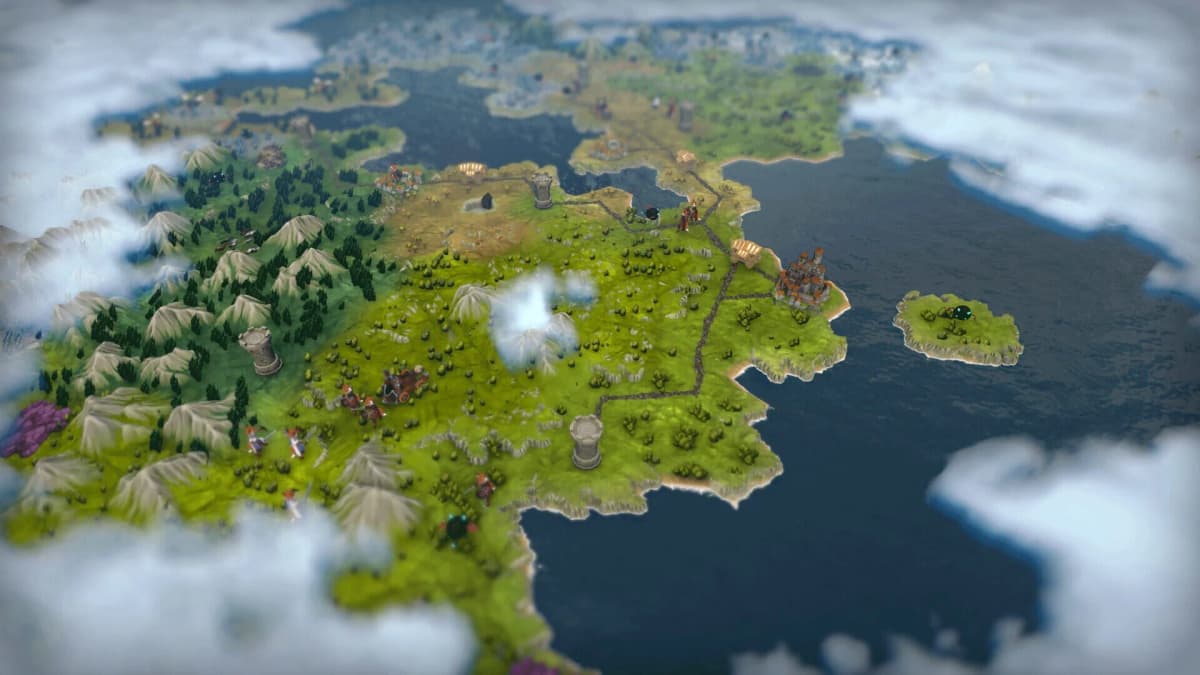
But digging through the press kit and early coverage, the structure is very different. You don’t stop at building one picturesque town. You start from a single campfire and then keep going – founding new settlements across a full world map, turning the land of Nytland into a network of cities tied together by trade, logistics, and politics.
Each city can take on a different role in your wider strategy: a trade hub, a production center, a fortified border town. Modular building attachments let you tweak how those cities work and look, while freeform, gridless placement gives you the freedom to make each settlement visually distinct instead of endlessly copy-pasted blocks.
That’s the promise: not one mega-city you polish forever, but a kingdom made of many deliberately imperfect places that only work because they work together.
Multiple cities could fix city-builders’ late-game problem
If you’ve played anything from SimCity to Frostpunk, you know the pattern. Early game is discovery and improvisation. Late game is pathing bugs, resource plate-spinning, and waiting for bars to go up.
RAEV’s answer is to push outward instead of upward. Once a town is stable, you don’t just min-max it into oblivion; you look at the wider map. There’s a Black Forest region with different resources and weather. A frozen tundra with harsher heating demands. Frontier zones where bandits and creatures harass your caravans. Each new site is another decision: what role does this place play in the kingdom, and what risks does it shoulder for everyone else?
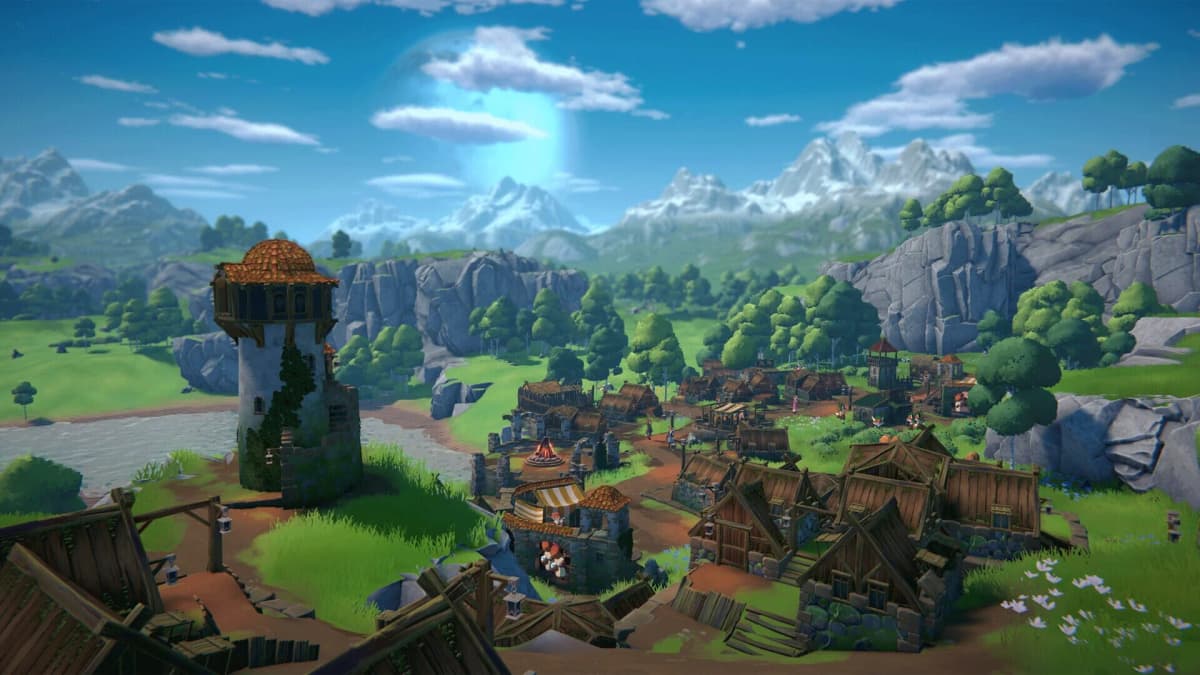
According to the game’s materials, trade routes and logistics are meant to be core gameplay, not an optional endgame chore. You can arm caravans, fortify exposed towns, and use expeditions to push into ruins or uncharted territory for rare resources. Alpha Beta Gamer’s preview notes full-on dungeon raids and boss encounters threatening nearby settlements – a big swing toward blending city-builder pacing with more classic RPG-style spikes of danger.
Done right, that’s how you keep a builder interesting past the 10-hour mark: make expansion less about more tiles, more houses, more of the same – and more about different kinds of problems in different regions that feed back into the whole kingdom.
Foxfolk with careers, not anonymous labour blobs
Then there are the Raevins – the anthropomorphic foxfolk that make up your population. This is where RAEV leans harder into personality than most kingdom sims.
Each Raevin has traits, skills, personalities, and aspirations. They’re not just “worker #54” assigned to a lumber mill; the game tracks a structured career path that can take someone from peasant, to militia, to elite professions and even hero units capable of fighting dragons.
Housing and services gate that progression. Better homes, more amenities, and the right environmental fit (herbalists in the right biome, merchants in bustling trade hubs, soldiers near dangerous borders) help citizens thrive and grow into those high-impact roles. In other words, your social infrastructure matters as much as your production chains.
There’s a risk here: deep individualisation can easily become “RimWorld brain” levels of micromanagement. But if Ravine Games can keep the macro layer clean while letting a few standout Raevins naturally emerge as heroes, it could give the kingdom scale some much-needed emotional texture.
4X-lite ambitions: war, diplomacy, and moral choices
Ravine Games isn’t stopping at logistics and fox careers. RAEV also pulls in grand-strategy systems: technology trees, rare resources, and full-blown war and diplomacy.
You rule as monarch of Nytland, appointing governors over your cities and deciding how your kingdom behaves beyond its borders. The game leans into morality-flavoured archetypes: a “General Astrid” style of brute-force conquest vs a “Squire Kai” approach of peace and compassion. Underneath the characterisation, that translates into choices about alliances, sieges, and how often your elite units are razing versus rescuing.
Tech-wise, you’re climbing from basic farming up through metallurgy and more advanced crafting, with exploration and expeditions unlocking new recipes and advantages. Rare resources can tilt the balance against neighbouring kingdoms in wars or economic contests.
This is where the uncomfortable question lands: can a debut studio really make all of this hang together? City-building AI, multi-city logistics, character-driven progression, 4X diplomacy, climate simulation, tactical combat, dungeon bosses – that’s a serious pile of moving parts for any team, let alone a newborn indie studio published by V Publishing.
Plenty of games have tried “4X + builder” and ended up with one half shallow and the other half broken. That’s the bar RAEV has to clear.
The beta will live or die on usability, not feature lists
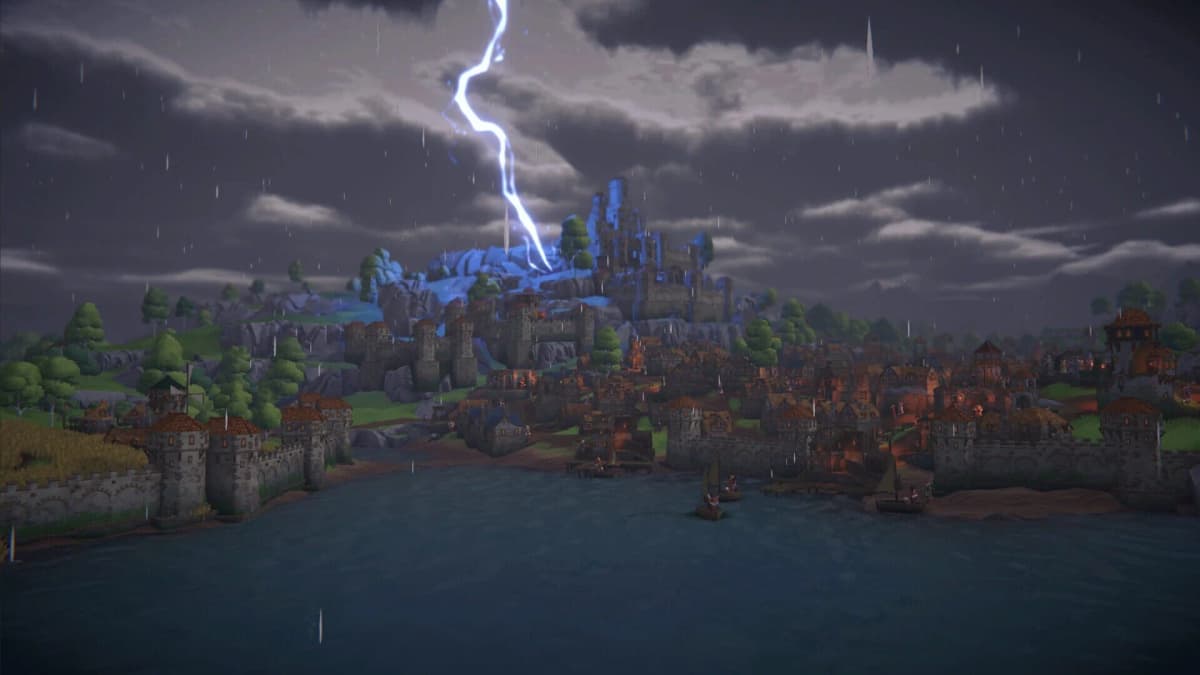
The Steam Closed Beta Playtest is our first real chance to see whether this thing actually works in motion.
Official comms peg the main beta window as March 26–30, with players opting in through the Steam page’s “Request Access” button. Some coverage suggests access may continue beyond that initial window, but at minimum this is the moment the doors have opened and feedback starts flowing back to Ravine Games. The team is clear this build is work-in-progress and not representative of the final 2026 PC release.
What matters in this beta isn’t whether you can eventually train a dragon-slaying fox paladin. It’s whether the basics feel sane:
- Does gridless placement stay intuitive at scale, or become a fiddly mess once you’re juggling multiple cities?
- Can you understand and control trade routes without needing a second monitor for notes?
- Do Raevin careers and roles make sense without micromanaging every citizen like a management sim?
- Does the UI surface climate, threats, and logistics clearly enough for you to make meaningful kingdom-level decisions?
Ravine’s pitch leans hard on “accessible” and “a sense of personal ownership” over your experience. That’s marketing language until the interface, pacing, and feedback loops prove it in practice.
What to watch next
A few concrete signals will tell us how seriously to take RAEV over the next year:
- Post-beta patch notes and dev diaries (April–May 2026): How quickly Ravine responds to beta pain points – especially around logistics, performance, and UI – will show whether this is a tight, focused project or a feature soup.
- Scope changes before launch: If major systems (e.g., dungeon bosses, diplomacy, or multi-city complexity) get cut or heavily reduced, that’s a sign the initial ambition was too wide.
- Performance on mid-range PCs: Continent-wide simulation and gridless building can chew through CPUs. Watch for player reports on stutter or late-game slowdowns.
- How “kingdom management” actually feels: If early adopters describe the mid-to-late game as juggling distinct regions with different identities and problems, RAEV is doing what it set out to do. If they talk mostly about one main city and some forgettable outposts, it’s closer to business as usual.
RAEV: Kingdom on the Distant Shores is aiming at a very specific gap: players who love deep city-builders but are tired of watching one city bloat into tedium. If Ravine Games can make multi-city management feel powerful instead of exhausting, this fox kingdom might actually have teeth.
TL;DR
RAEV: Kingdom on the Distant Shores is a PC kingdom-scale city-builder where you guide anthropomorphic foxfolk from a single campfire into a continent of interconnected cities. It tries to fix the genre’s late-game boredom by leaning into multi-city logistics, character-driven careers, climate challenges, and light 4X systems like war, diplomacy, and dungeon expeditions. The current Steam Closed Beta Playtest is the first real test of whether that ambition feels like smart kingdom management or just more micromanagement in a cuter package.
FinalBoss // Gear
Level up your setup
01Top-rated gaming headsetson Amazon→02High-refresh gaming monitorson Amazon→03Gaming chairson Amazon→04Discounted game keyson Kinguin→Affiliate links · As an Amazon Associate, FinalBoss earns from qualifying purchases.
Want to Level Up Your Gaming?
Get access to exclusive strategies, hidden tips, and pro-level insights that we don't share publicly.
Ultimate Gaming Strategy Guide + Weekly Pro Tips