
For years, Steam’s refund policy has given PC players a basic and badly needed safety net: request a refund within 14 days of purchase with fewer than two hours played, and Valve will generally hear you out. That protection matters when a game runs terribly, misrepresents itself, or simply turns out to be a purchase you regret five minutes after clicking the button. This Game Costs 200 Dollars put that system under a very loud microscope, and my conclusion is blunt: the refunds were not the scandal. The $200 pricing stunt was.
The reported figures are ridiculous enough to sound invented. Michael Major, the 18-year-old developer behind Stolen Valor Studios, released a sequel to This Game Costs 10 Dollars on Steam with the platform’s maximum $200 price tag. It was framed as a “psychological comedic experience,” which is an admirably direct way of saying that the price was the joke. The title reportedly reached 6,717 purchases and around $1.38 million in gross sales before 6,707 buyers refunded it. The reported final proceeds landed at roughly $2,045.
That leaves approximately 10 purchases that stuck. A 99.85% refund rate is not a normal commercial failure. It is a meme transaction collapsing under the weight of its own punchline.
Table of Contents (5)
The $1.38 Million Was Never Real Demand
I understand why the seven-figure headline caught fire. Seeing a tiny Steam release apparently produce $1.3 million to $1.4 million in sales makes people imagine an indie developer who cracked the code through nerve, comedy, and a willingness to charge a price usually reserved for specialized software. That story is far more exciting than the truth.
Gross sales are not income. In this case, they were a temporary record of money passing through Steam before almost every buyer exercised the right to take it back. The final figure near $2,000 tells the actual story: curiosity is not commitment, a viral purchase is not a loyal customer, and a giant number on a sales dashboard does not mean a game has found an audience.
The price was the advertisement. A game called This Game Costs 200 Dollars charging $200 practically writes its own social-media headline. People buy it to see what the hell is happening, to participate in the gag, to screen-capture the storefront, or because the refund window makes the whole thing feel consequence-free. That gets attention. It does not build the kind of relationship between a game and its players that makes a price meaningful.
Steam did not manufacture that bad incentive. The game’s presentation did. A $200 joke product turns the storefront into a carnival booth, then acts surprised when people treat the transaction like a carnival game.
Steam Refunds Did Exactly What Players Need Them to Do
There is already an ugly reflex around this story: people see the developer’s reported $2,045 outcome and immediately demand stricter refunds. I reject that completely. Steam should not make refunds harder because an intentionally absurd release attracted impulsive buyers.
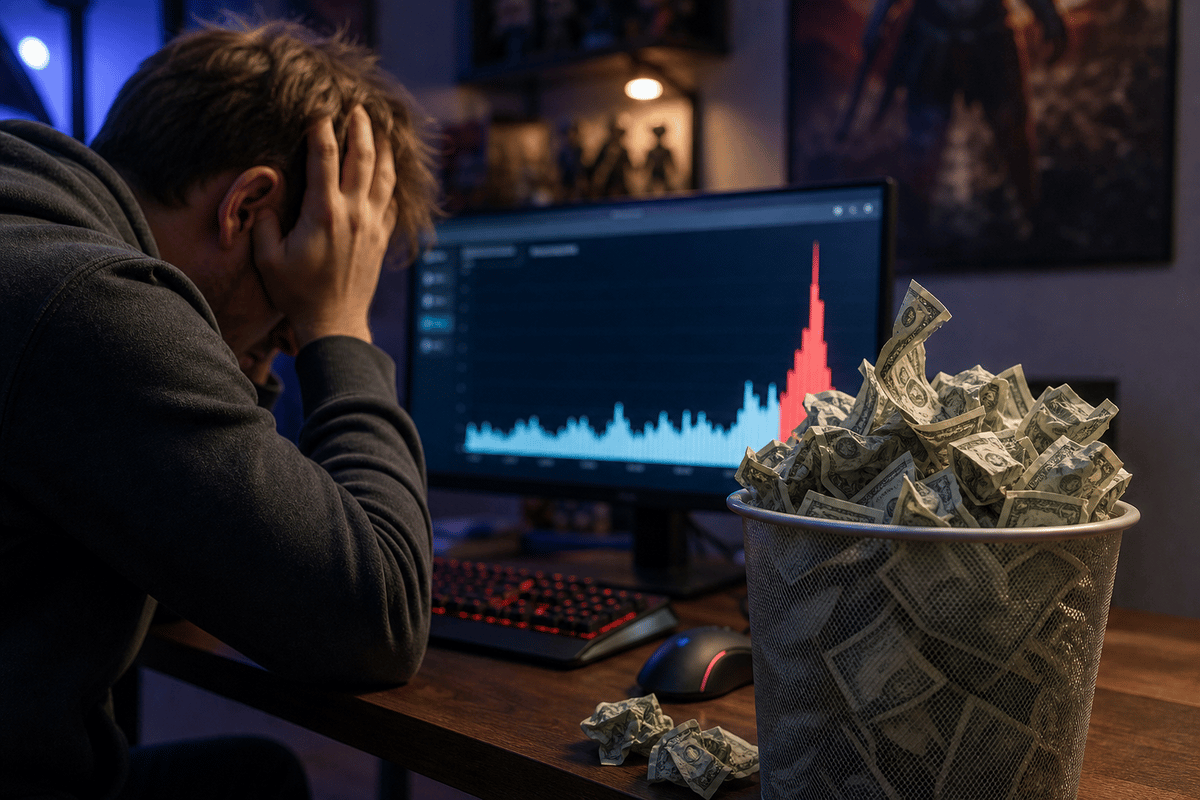
PC gaming needs buyer protection precisely because store pages can make anything look convincing. A player can have a game fail to launch, discover catastrophic performance problems, hit a bait-and-switch monetization wall, or realize that the “gameplay” shown in marketing barely resembles what they bought. Steam’s two-hour and 14-day framework gives players a realistic chance to walk away before a bad purchase becomes permanent.
That safeguard becomes even more important at $200. A refund system that works for a $10 curiosity purchase but disappears when the price looks outrageous would be a rotten system. The larger the risk to the buyer, the more valuable the escape hatch becomes.
Reports around this case say that much of the purchasing activity came from China and that many buyers never even launched the game. That behavior makes the episode look less like players discovering a disappointing game after meaningful time with it and more like a mass novelty-buying event where the refund was baked into the ritual. Even so, location alone proves nothing about intent, and Valve should never turn regional assumptions into a punishment machine.
The consumer-facing principle remains simple: players should not lose their refund rights because a developer chose to create a high-price spectacle. Steam’s policy caught a purchase pattern that had almost no durable interest behind it. That is the policy functioning as designed.
The Real Problem Is the Attention Hack
What irritates me is the inevitable attempt to turn this into a tragic story about a daring developer being punished by cruel customers. The title was built around a deliberately provocative price. That choice was a visibility strategy. It got the game talked about, bought in huge numbers, and briefly associated with a gross-revenue total that made it look like a breakout success. The stunt worked as publicity. It failed as a durable business model because almost nobody wanted to keep the product.
That distinction matters because Steam is full of smaller releases fighting for a few seconds of attention. Developers making sincere games have to convince people that their work is worth a fair price. They need gameplay footage, clear descriptions, actual player feedback, and an honest answer to the question of what someone receives for their money. A $200 gag bypasses all of that by making the price itself the content.
Players also have a responsibility here. Buying a bizarrely expensive joke game solely because a refund is available turns Steam’s buyer protection into a toy. The policy still deserves to exist, but treating every purchase as a low-effort social experiment makes the store worse for everyone who uses it to find games worth playing.
That is the player-facing consequence of this kind of stunt. It normalizes the idea that a purchase can be a prank, a screenshot, or a temporary vote in an online spectacle. Then legitimate new releases have to work harder to earn trust from people already trained to see the storefront as a joke.
Valve Needs Better Signals Than a Giant Refund Number
A 99.9% refund rate should set off alarms inside Valve, but refunds alone cannot tell Valve what actually happened. A game can suffer a huge return rate because it launches in poor condition, because its store page is misleading, because players discover hardware issues, or because a short-lived viral moment creates thousands of impulse purchases. The raw number is a symptom. It is a terrible diagnosis.
Valve should keep its consumer-friendly refund policy and build a sharper internal picture of abnormal launches. A better system would examine the behavior around the refunds rather than treating every return as identical.
- Refund timing: Valve should separate purchases refunded within minutes from refunds requested after an hour and 45 minutes of actual play. Those are radically different events.
- Launch behavior: The platform should know how many buyers installed and started the game at all. A mountain of unlaunched purchases points toward a novelty surge rather than dissatisfaction with the game itself.
- Conversion durability: Valve should track how many purchases remain after 24 hours, seven days, and the full 14-day refund window. That reveals whether a sales spike represents real interest or temporary noise.
- Geographic and payment concentration: Unusual clustering can identify an abnormal buying pattern without making assumptions about any individual player or region.
- Review-and-refund mismatch: A game with massive refunds and substantial meaningful playtime deserves a different response from one that is bought, never opened, and rapidly returned.
I am not asking Valve to ban weird games, cap prices below $200, or police comedy. Steam has room for strange experiments, and the store would be duller without them. Valve should use those signals to identify launches that are functioning as attention traps and decide whether they need closer scrutiny, clearer storefront information, or less algorithmic amplification while the refund wave plays out.
The point is to protect players without flattening every unusual indie release into the same suspicious category. A genuinely niche, expensive game can find a real audience. This Game Costs 200 Dollars found a tidal wave of temporary transactions.
Players Should Treat Extreme Prices as a Warning Label
The sensible response for players is not fear of Steam. It is basic discipline. A $200 game deserves far more scrutiny than a routine purchase, especially when the title, marketing, and price are all winking at the same joke.
- Watch for real gameplay footage that demonstrates what the game actually does rather than relying on meme screenshots, vague descriptions, or a deliberately outrageous pitch.
- Read fresh player reviews after launch, with special attention to reports that describe the game’s actual content and technical state.
- Wait for the initial novelty rush to pass before buying. A storefront flooded by impulse purchasers and instant refunds provides almost no useful signal about whether a game is worth owning.
- Use Steam’s refund policy as protection against a bad purchase, not as permission to make a purchase with no intention of keeping it.
I have no sympathy for the argument that players should have been trapped in $200 purchases to preserve the appearance of success. Steam correctly gave them a way out. My frustration is aimed at the cynical little ecosystem that turns a storefront into a stage for inflated numbers, performative buying, and inevitable refund chaos.
FinalBoss // Gear
Level up your setup
01Graphics cardson Amazon→02Gaming laptopson Amazon→03High-refresh gaming monitorson Amazon→04Discounted game keyson Kinguin→Affiliate links · As an Amazon Associate, FinalBoss earns from qualifying purchases.
Want to Level Up Your Gaming?
Get access to exclusive strategies, hidden tips, and pro-level insights that we don't share publicly.
Ultimate Gaming Strategy Guide + Weekly Pro Tips