

This LEGO Batman keeps getting compared to Arkham, and the review wave makes it clear why
Stop treating Lego Batman: Legacy of the Dark Knight like another harmless licensed tie-in. The review wave says TT Games finally found a hook strong enough to drag this series out of the “pretty good with kids” lane and back into real Batman conversation. The big reason is simple: this thing apparently borrows shamelessly from Rocksteady’s Arkham playbook, and for once that sounds less like empty marketing and more like the entire point.
Across early reviews from outlets including VGC, PC Gamer, IGN, Eurogamer, GamesRadar+, and PCGamesN, the same verdict keeps surfacing from different angles: this is the most Arkham-like Batman game since Arkham itself slowed down, and the Lego filter doesn’t weaken that idea nearly as much as you’d expect. It may actually make it easier to enjoy. That matters, because Batman games have spent years either chasing the wrong parts of the character or drowning him in live-service sludge. A smaller, funnier, more forgiving Arkham remix? That’s a better pitch than it sounds.
Key takeaways
- The headline feature is Arkham-style combat: counters, crowd control, shield-break solutions, and gadget-assisted rhythm fights.
- Reviews suggest TT Games didn’t just copy the look of Arkham; it borrowed the feel of encounters and stealth-traversal pacing too.
- The Lego framing appears to make combat simpler and less punishing, which could widen the audience without flattening the fantasy.
- Open-world Gotham sounds dense rather than bloated, with roughly 20 story missions and a healthy pile of side content.
- The main caveats are weaker stealth, local-only co-op, physics jank, some technical inconsistency, and the risk of collectible fatigue.
- Right now, this looks like a strong buy for Batman fans and one of TT’s best games in years, but cautious players may still want patch notes first.
The Arkham trick actually works
This is where the game either lives or dies, and by most accounts it lives. VGC went as far as calling it “a new Arkham game in all but name,” while PC Gamer described it as “the most Arkham game since the last Arkham game.” Those are not casual comparisons. They point to something much more specific than “Batman punches people.” Reviewers keep mentioning free-flow combat, counter timing, shielded enemies that force you to reposition or attack from behind, and gadgets used as real fight tools instead of flavor text.
That matters because Arkham combat was never just about looking cool. It was about rhythm. You read a room, bounce between targets, interrupt the right attack, and keep the chain alive before chaos breaks the spell. If Legacy of the Dark Knight truly captures even 70 percent of that loop, it instantly becomes more interesting than most licensed action games. The Lego series has historically leaned on button-mashing, character swapping, and puzzle gating. Fine enough. Memorable? Not often. An Arkham-style combat loop gives moment-to-moment play actual bite.
The smart twist is that the Lego layer seems to sand off the cruelty. One preview described the same precision-and-flow philosophy as Arkham, but in a simpler, less punishing form. That sounds right for this audience. Not every Batman fan wants to be thrown into the deep end of combat challenge rooms. Some want the fantasy of moving through a mob cleanly, using gadgets, counters, and cape-flare theatrics without the harder edge of Rocksteady’s timing windows. If TT has pulled that off, then this isn’t a watered-down imitation. It’s a successful translation.
There’s also a bigger implication here. Batman’s identity in games has been oddly fragile outside Arkham because developers either chase brute-force spectacle or overbuild around progression systems. A more readable, family-friendly version of free-flow combat could be the rare middle ground: deep enough to stay satisfying, approachable enough to keep co-op or younger players from bouncing off. That is a genuinely useful design decision, not a compromise to apologize for.
This is still a Lego game, just one with better instincts
The other reason the reviews sound enthusiastic is that TT apparently didn’t abandon its own identity to get there. Several critics describe the game as a remix of decades of Batman movies, comics, and TV history, filtered through slapstick comedy and toy-box parody. That could have gone badly. Batman fandom does not lack for grim self-importance, and Lego adaptations can sometimes confuse reference volume with charm. But the coverage suggests this one mostly gets the balance right: enough Bat-history to feel like a celebration, enough silliness to stop it turning into cosplay Arkham.
That combination is probably why the game is landing so well. If it were only Arkham-lite, the comparison would become a trap. If it were only another Lego collectathon, the game would blur into TT’s back catalog. What makes Legacy of the Dark Knight sound fresh is the collision. You get counter-heavy brawls and stealth-adjacent Batman fantasy, but also the joke timing, visual gags, and breezier tone that Lego is better at than most licensed games. Reviews also suggest TT kept the character roster more focused around a smaller Bat-family core, which is a subtle but important improvement. Too many playable characters can turn these games into a pile of menu icons. A tighter cast usually means cleaner design.
That said, there is a ceiling on how far this formula can go. Even positive reviews hint that stealth is the weaker piece of the Arkham imitation. That makes sense. Predator encounters work in Arkham because enemy behavior, space design, and player tools all feed the same cat-and-mouse tension. Lego games are usually broader, brighter, and less interested in menace. If stealth here is serviceable rather than special, that is not fatal. It just means the combat is doing most of the heavy lifting.
Gotham sounds busy in the good way, not the exhausting way
Open worlds have become a dangerous promise. “Packed with things to do” can mean “stuffed with chores.” The encouraging part of the review consensus is that Gotham seems compact, active, and worth sweeping for secrets without collapsing under map-marker bloat. IGN mentions roughly 20 linear missions alongside an open-world Gotham filled with hundreds of collectibles. That could read as a warning, but other reviews soften the concern by describing the progression as more focused than older Lego games.
That distinction matters. There’s a big difference between a world that keeps handing you small reasons to explore and one that feels like a second job. PCGamesN and GameSpot both frame the city as a return to form for TT’s open-world design, with better traversal and stronger activity variety than the studio’s recent output. If that holds up, Gotham may be the secret weapon here. Batman needs a city with pull. He does not work as well in sterile mission corridors or overloaded crossover sprawl. A night-time Gotham full of side tasks, hidden bricks, Bat-family interactions, and movement toys sounds like the right kind of gravitational field.
There’s also a practical reason this structure seems to be clicking. Reviews put the main story around 12 to 16 hours, with a lot more left for completionists. That is a sweet spot. Long enough to feel substantial. Short enough to avoid the dead-eyed fatigue that infects so many open-world action games. Batman, especially in Lego form, benefits from momentum. Let players bounce from mission to collectible trail to combat encounter to puzzle room without stretching the premise until it squeaks.
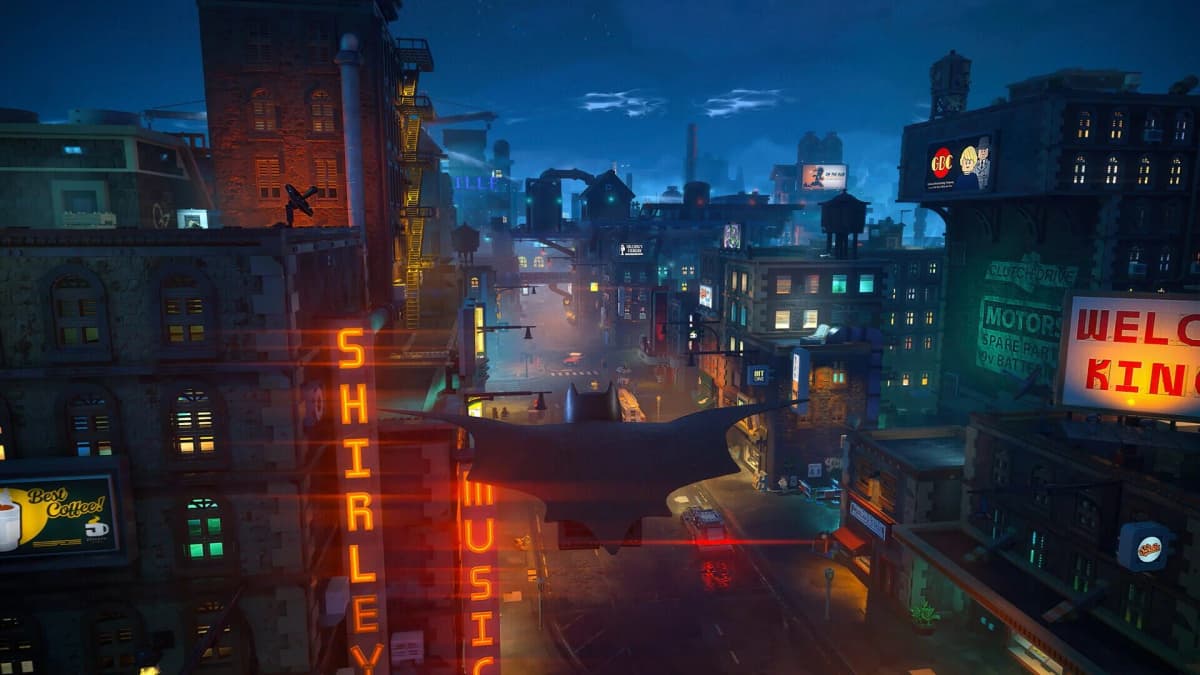
The puzzle side also seems healthy, though not revolutionary. Character-specific abilities and environmental interactions remain part of the package, which is exactly where they should be. Batman without detective toys, gadget locks, and side-route tinkering would feel thin. The trick is keeping those puzzles from becoming repetitive speed bumps between fights. Reviews sound positive here, but not ecstatic, which is usually a sign that the design works well enough without stealing the spotlight.
Want to Level Up Your Gaming?
Get access to exclusive strategies, hidden tips, and pro-level insights that we don't share publicly.
Ultimate Reviews Strategy Guide + Weekly Pro Tips
The cracks are real, and they matter more depending on your patience level
Here’s the part where the buy-case stops being universal. Even the strongest notices come with a cluster of caveats that shouldn’t be hand-waved away. Stealth seems less convincing than combat. Some reviewers mention physics jank. Others call out rough edges in performance or general technical stability. There are also notes about odd voice imitations and local-only co-op, which is a bigger limitation than it sounds in 2026. A family-friendly Batman game with no online co-op feels curiously old-fashioned.
The technical complaints are especially important because they sound inconsistent rather than catastrophic. That usually means platform-specific or situational problems, the kind that can be patched but still shape launch-week sentiment. Without a clear platform-by-platform breakdown, the safest reading is that the game is broadly well-liked but not spotless. If you are the kind of player who shrugs at a few animation hiccups or collision weirdness, the upside probably outweighs the mess. If jank poisons your whole session, waiting for updates is the smarter move.
There’s another possible issue hiding inside the praise: repetition. Arkham-style combat feels incredible until encounter design starts recycling itself. Collectathons feel cozy until the item count starts dictating your evening. Several reviews clearly love what TT built, but the recurring mentions of hundreds of collectibles and a weaker stealth layer suggest the game may eventually lean too hard on its strongest system. That is a familiar Batman problem. Once the rhythm clicks, developers often trust it a little too much.
Who should play it, and who should cool off
If you’ve been starving for something that feels even vaguely Arkham-shaped, this looks like the easiest recommendation. Not because it replaces Rocksteady’s best work, but because it appears to understand why those games worked in the first place: readable combat language, gadget expression, spatial flow, and a Gotham that invites loitering. Batman fans with kids also seem especially well served here. The softer difficulty profile could make this the rare crossover hit that genuinely works across age groups.
It also sounds like a strong fit for players who fell off some of TT’s more bloated or unfocused projects. The consensus points to a tighter cast, better mission variety, and an open world with more purpose. If the studio has finally stopped mistaking sheer volume for value, that alone is good news.
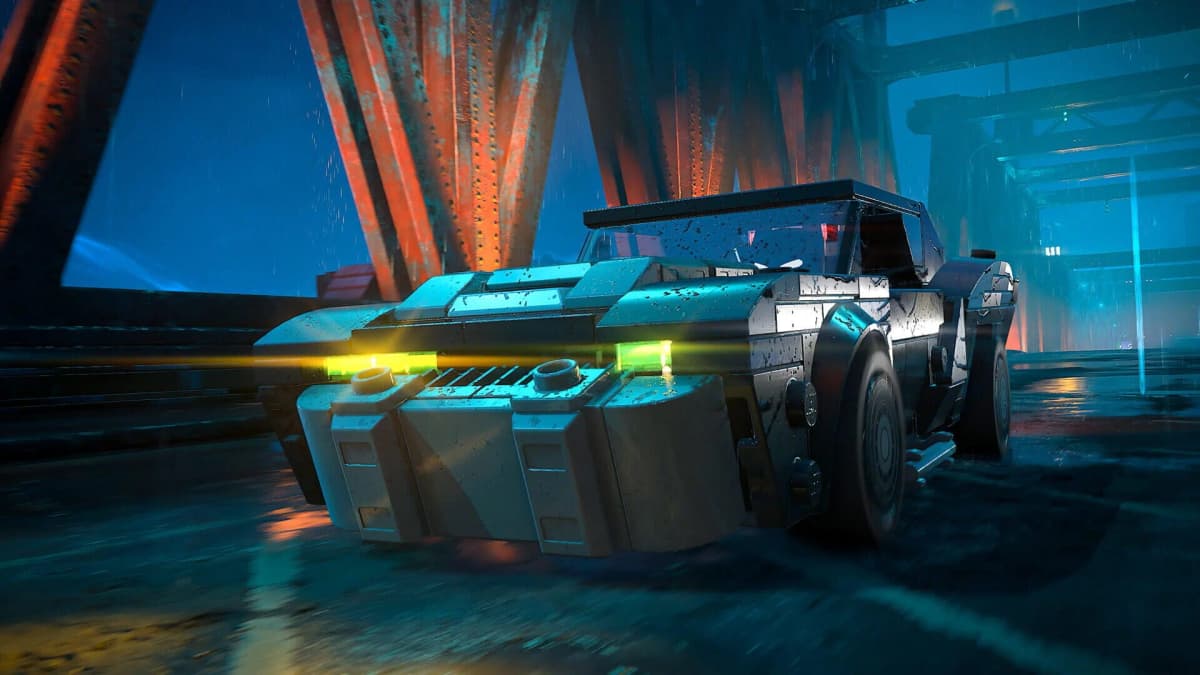
Who should wait? Players who want stealth on par with Arkham’s predator rooms. Players who only care about online co-op. Players with zero tolerance for technical wobble. And players who are simply done with collectibles as a design language. This game sounds better than the old Lego template, not magically free of it.
Bottom line
Based on the current review consensus rather than a completed FinalBoss hands-on playthrough, Lego Batman: Legacy of the Dark Knight looks like one of the easiest pleasant surprises of the year. The big win is not that it copies Arkham. The big win is that it seems to understand which parts were worth copying, then reshapes them into something lighter, friendlier, and still recognizably Batman. That is a much smarter move than building another giant licensed sandbox that nobody remembers six months later.
The hesitation is equally clear: technical roughness, weaker stealth, and the usual risk of Lego-style repetition keep this from sounding like an unquestioned classic. If patches smooth out the rougher edges, this could end up being remembered as TT’s best game in years. If not, it may settle into that frustrating tier of “excellent idea, slightly messy landing.”
Provisional FinalBoss verdict: 8/10. Strong buy for Batman fans, co-op households sharing a couch, and anyone who misses the rhythm of Arkham combat. More cautious players should keep one eye on patch notes before jumping in.
TL;DR
- Lego Batman: Legacy of the Dark Knight appears to be the most Arkham-like Lego game TT has ever made.
- Combat is the star, with counters, gadgets, shield-break logic, and smoother free-flow energy than past Lego titles.
- The Lego tone doesn’t seem to sabotage the Batman fantasy; it makes it more approachable.
- Gotham sounds dense and worth exploring, with a main story around 12 to 16 hours and plenty left for completionists.
- Main concerns: weaker stealth, local-only co-op, physics jank, and technical inconsistency.
- Provisional score based on review consensus: 8/10.
If that score holds after more hands-on scrutiny, the most interesting question hanging over this game is not whether Arkham DNA fits inside a Lego Batman. It’s whether TT has finally stumbled into the one formula strong enough to drag the entire Lego line forward instead of just polishing the same brick again.