
Table of Contents (8)
The moment a mouse made Counter-Strike 2 feel different
This week I’ve been “working” my way through far too many Counter-Strike 2 deathmatches and aim maps. You know the drill: Mirage mid, instant requeue, brain half-cooked but crosshair laser-focused. At some point in that blur of jiggle peeks, I had one of those weird out-of-body moments where I snapped a guy so fast it felt like I fired before my brain even said “click”.
I’ve played Counter-Strike in some form since 1.6 LAN cafés – long enough that I don’t normally notice hardware changes unless they’re genuinely huge. New sensor, 4K polling, 40,000 DPI, lighter shell… it all blurs into “yeah, feels good, whatever”. But this time I knew exactly what had changed: the Logitech G Pro X2 Superstrike sitting under my hand, and more specifically, the absolutely bizarre analogue, haptic-driven switches under its left and right buttons.
I went into this thing ready to roll my eyes. I’m tired of fake innovation in gaming mice. I don’t care about another marketing bullet point; I care about not losing duels because my finger had to travel a few tenths of a millimetre too far. After a couple of weeks of CS2, MOBA, and RTS with the Superstrike, I’m going to say the quiet part out loud:
Analogue, haptic-driven actuation on a mouse button is not a gimmick. It’s a real competitive advantage, the biggest leap in mouse clicks since we ditched crappy office hardware for “gaming” mice in the first place. And if you play games like Counter-Strike 2 seriously, you’re going to feel this whether you want to or not.
What Logitech actually changed here (and why it matters)
Let’s strip away the marketing language and talk about what this thing really is. Traditional gaming mice use mechanical switches under the main buttons – little physical contacts that close when you press down far enough. They have a fixed actuation point, a fixed reset point, and a click feel that’s entirely tied to the spring and metal inside. Best case, they’re crisp and consistent. Worst case, they double-click themselves into the bin after a year.
The G Pro X2 Superstrike throws that entire idea in the trash for the primary buttons. Instead of a mechanical switch, it uses an analogue sensing system Logitech calls HITS (Haptic Inductive Trigger System). The mouse is literally measuring how far the button is moving using induction, and then it lets you decide where along that travel the click should actually “fire”. No fixed actuation, no fixed reset. The system tracks your finger position in real time.
Because there’s no mechanical switch snapping shut, the Superstrike has to fake the sensation of a click. That’s where the haptics come in. When the sensor detects your button has crossed your chosen actuation point, a tiny haptic motor kicks in and gives your finger a little thump – a synthetic but surprisingly convincing “click” that lines up exactly where you told the software to put it.
You can set this absurdly shallow, so the actuation happens right at the top of the travel, or deeper if you want more pre-travel. You can also tune the reset point, rapid-trigger style, so the button becomes ready to fire again as soon as you lift off even a fraction. It’s the same basic idea as Hall effect keyboards with rapid trigger: your inputs aren’t tied to a clunky metal leaf anymore; they’re tied to precise position data.
And yes, that translates into raw numbers. Between the adjustable actuation and rapid reset, you’re looking at up to around 30ms shaved off your first shot versus a typical mechanical switch, based on the kind of testing pros and reviewers have been doing. In competitive shooter terms, 30ms isn’t “nice to have”. That’s the line between “we traded” and “he never saw me on his screen”.
Why it hits different in Counter-Strike 2
CS2’s whole identity is built on tiny timing windows. Sub-tick netcode, instant peeks, micro-adjustments — the game is literally about who shoots first and more cleanly in a 100-200ms slice of time. Every duel is a battle of tiny human and hardware delays stacked on top of each other.
With the Superstrike dialled to a shallow actuation, I started winning fights that felt borderline unfair. Holding a pixel angle on Mirage connector, jiggle-peeking from top mid, dry-swinging Banana on Inferno — situations where I’m used to relying entirely on game sense and crosshair placement suddenly had this extra snap to them. My finger didn’t have to travel as far, and more importantly, the button was ready to fire the next shot the instant I started to release it.
This is where the “rapid trigger” angle really shows up. In CS2, that means faster taps with pistols, cleaner burst control on rifles, and much more responsive jiggle-shooting around cover. Instead of waiting for a clunky mechanical reset before taking your next shot, you can set the reset threshold so low that you can spam tap-fire without the button ever feeling like it hangs. The actuation and reset points are under your control, not some switch manufacturer’s default.
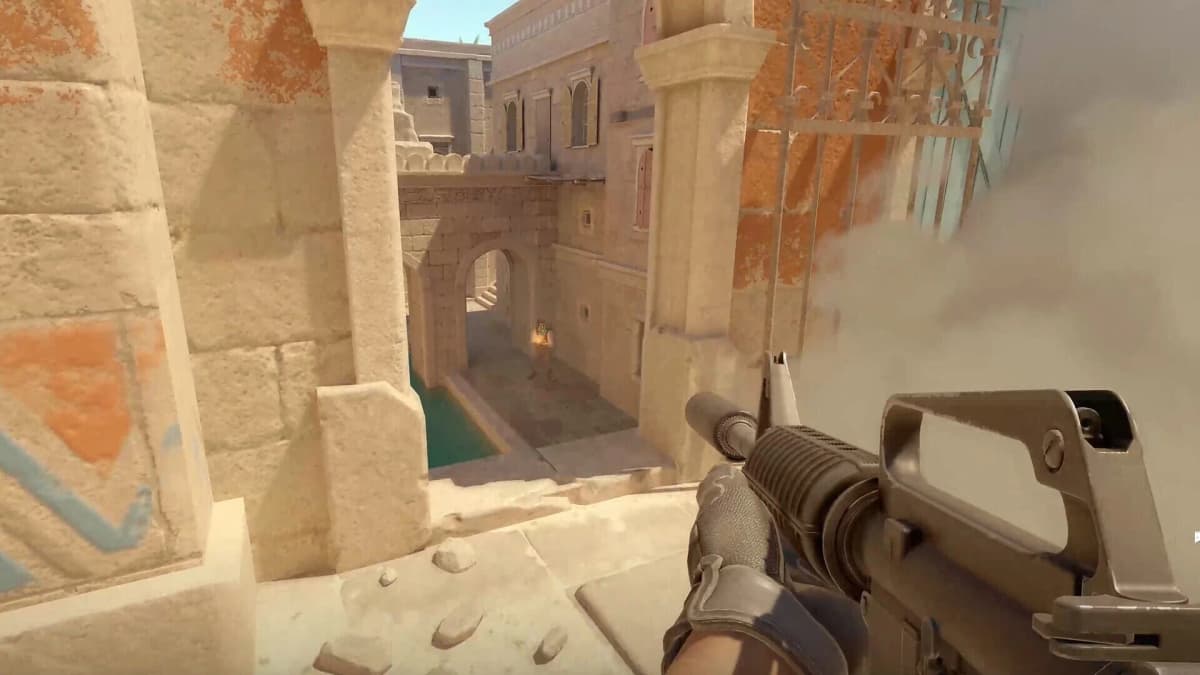
Is this suddenly going to turn a Silver into s1mple? Obviously not. Your crosshair still has to be on target. Your movement still has to be tight. But the ceiling moves. The more precise your mechanics already are, the more horrifyingly obvious this becomes. Once your aim is honed enough that your finger input is the bottleneck, shaving off tens of milliseconds from your click path is like removing ankle weights you forgot you were wearing.
And it’s not just CS2. I spammed MOBAs and RTS with this thing as well. In a MOBA, ultra-light actuation on your main buttons makes rapid ability combos feel smoother and less fatiguing, especially over long sessions. In RTS, spamming unit commands and control group clicks with minimal travel genuinely reduces strain; I found my hand less tense after a couple of late-night StarCraft-style macro marathons. Still, no other genre exposes the timing benefits like a tight 1v1 duel in Counter-Strike.
Pro players clearly feel it too. At a recent CS2 major, reports had something like 13 of the final 50 pros on stage already using the Superstrike, despite it being brand new and brutally expensive. These are players with access to basically any gear they want. They don’t swap to a fresh, unproven mouse in the middle of a tournament unless they feel a genuine mechanical edge. One player summed it up bluntly: the technology is just better.
We’ve seen this movie before: Hall effect keyboards
If all of this sounds suspiciously familiar, that’s because we already went through the same argument with keyboards. When analogue boards and Hall effect switches started creeping into the gaming scene a few years ago, a lot of us — me included — were skeptical. Early designs felt mushy, software was sketchy, and the boards often looked and sounded worse than a good old-fashioned mechanical.
Then the tech matured. Suddenly you could buy a Hall effect board that felt and sounded as good as any enthusiast mechanical, but with per-key adjustable actuation and rapid trigger layered on top. I eventually swapped my daily driver to a Hall effect board “just to test it” and never went back. Being able to dial WASD to a shallow actuation for movement, give jump a deeper press to avoid accidental hops, and run super-fast reset on tap-fire keys is addictive.
These days, you don’t have to be some sweatlord Valorant pro to justify a Hall effect keyboard. Even as a mostly single-player enjoyer, the upside of tuning your keys how you like — with zero real downsides — is enough of a reason. The skepticism that this was a niche gimmick has aged badly. Cheap clones are everywhere, high-end brands are all in, and analogue tech is just… normal now.
The G Pro X2 Superstrike is basically the Hall effect moment for mice. It proves that fully analogue primary buttons with proper haptic feedback aren’t some sci-fi prototype; they’re shippable, usable, and demonstrably beneficial in competitive games. Smaller peripheral brands will look at the hype, look at the pro adoption, and start working on their own versions yesterday. There’s no universe where they just ignore this and keep selling the same old mechanical switches forever.
Yes, Logitech rushed it – and I’m strangely okay with that
Here’s the part where I stop sounding like a Logitech sales rep and start sounding like an annoyed customer: the Superstrike is basically a G Pro X Superlight 2 with magic clicks stapled on. Same general shell, same HERO 2 sensor, similar weight around 61g, same 8,000Hz wireless polling support, same “good but not god-tier” feet that feel a bit sluggish on cloth pads. Even the annoying quirk where the middle click can stop registering if you hold it down lightly for too long? Yeah, that’s here too.
That’s not me nitpicking for fun. For a mouse that costs around $180, these flaws matter. The feet are mediocre out of the box for anyone on a softer pad. The scroll click behaviour can be genuinely frustrating if you throw a lot of smokes or use middle click binds. And if you were hoping Logitech would use this as an excuse to push their shape design forward, tough — it’s “if you’ve used a G Pro, you’ve basically held this”.
But then you listen to Logitech’s own engineers openly admit they rushed this thing out the door because they knew they had a “golden nugget” and wanted to move fast before anyone else beat them to it, and the strategy becomes very obvious. This wasn’t about building the perfect mouse; it was about planting a massive flag in the ground that says: analogue, haptic-driven primary clicks are ours first.
From a consumer-first point of view, that kind of corporate footrace is easy to side-eye. From a competitive gamer’s point of view? I’m honestly glad they did it. The base Superlight 2 platform is already good enough that “Superlight 2 plus game-changing clicks” is still a very compelling product, flaws and all. I’d rather be using this tech right now in a familiar shell than waiting two or three more years for someone to finally bless us with a “perfect” first-gen implementation that arrives after the real innovation window has closed.
And we need to talk about the price. $179.99 for a mouse is obscene. That’s entry-level GPU money in some parts of the world. It’s completely fair to look at that number and tap out, especially when there are excellent lightweight wireless mice for half that cost. But early adopters always get punished. Look at Hall effect keyboards: the first crop was brutally priced, and now you can buy capable analogue boards for a fraction of that. The same thing is going to happen here. This is the bleeding edge tax, not the forever price.
Is this basically pay-to-win hardware?
Whenever we talk about hardware that directly affects combat timing, the “pay-to-win” argument shows up. And it’s not ridiculous to ask: if a mouse can reliably shave up to 30ms off my time-to-fire compared to someone on an older mechanical switch, is that an unfair advantage?
My honest feeling after using the Superstrike: it’s an advantage, but not in the cartoonish way some people seem to think. It’s not aim assist. It’s not macros. It’s more like going from a 60Hz monitor to 144Hz back in the day. If your fundamentals are garbage, you’ll barely notice. If your fundamentals are sharp, suddenly everything feels more connected and your potential climbs. The mouse removes one source of sluggishness in the chain between your intent and the bullet leaving the virtual barrel.
We’ve been here before. High-refresh monitors, lightweight mice, low-latency wireless, better mouse feet — all of these things are “advantages” that cost money and have unquestionably influenced who wins and loses close fights. We didn’t ban any of them, because you can’t freeze technology in place without suffocating the whole competitive scene. You just wait until the innovation trickles down, and then it becomes the new baseline.
That’s exactly where I see analogue mouse buttons landing. Today, it’s an expensive niche. In a couple of years, some mid-range mouse with decent analogue clicks and haptics will cost half as much, and tournaments will quietly accept that this is just how mice work now. Banning a tech like this because it’s “too good” would be ridiculous — it’s literally just more responsive input, not game automation.
Where this could go next (if companies don’t screw it up)
The really wild part is that we’re only seeing the most conservative version of this technology right now. Logitech played it safe: two analogue primary buttons with simulated clicks. No pressure-sensitive side buttons. No analogue scroll clicks. No crazy software-level integrations where games can treat your mouse button like a trigger instead of a simple on/off switch.
Fast forward a couple of hardware generations and imagine what this could look like. A mouse where your right-click ADS sensitivity changes based on how far you press. Utility throws in CS2 that scale power with button depression instead of awkward jump-throw binds. Side buttons that respond differently to light taps versus deep presses. Haptics that do more than just fake a mechanical click — subtle patterns that confirm ability cooldowns or weapon swaps without you needing to look at the HUD.
For once, the haptics in a PC peripheral aren’t there as a cheap “immersion” trick. They actually serve a clear mechanical purpose: replacing a physical switch with something programmable. That’s the kind of use case I want to see more of. I could not care less about a mouse that buzzes when I get shot. I care a lot about a mouse that lets me decide precisely where and when my click happens.
If Logitech doesn’t drive that vision forward, someone else will. Smaller brands are notoriously fast at cloning good ideas in the mouse space. We’ve seen them chase lightweight shells, 3395-class sensors, magnesium frames, 8K polling — you name it. Now that Superstrike has proved fully analogue, haptic-driven buttons can exist in a mainstream product, it’s only a matter of time before a Pulsar, Lamzu, or Razer takes a swing at their own take.
My line in the sand as a competitive player
After a couple of weeks of Counter-Strike 2 on the G Pro X2 Superstrike, going back to a normal mechanical-click mouse feels… wrong. Not unusable, not broken, just sluggish in a way that’s hard to un-feel once you’ve lived at the new speed. It’s like switching back to 60Hz after years at 240Hz: technically playable, but you know exactly what you’re missing.
In raw numbers, my aim trainer scores only bumped a little — a few percentage points here and there, especially in click-timing and target-switching scenarios. But the bigger change was consistency. Misfires from not fully depressing the button? Gone. Weird feeling of the switch not resetting between fast taps? Also gone. The combination of shallow actuation and tight reset meant my clicks lined up with my intent more often. Over hundreds of duels, that kind of consistency wins games.
So here’s where I’ve landed: for casual single-player stuff, I can happily use whatever mouse is comfortable. For any game where I care about performance — Counter-Strike 2 ranked, sweaty ARAM nights, RTS ladder — I don’t want to give up analogue, haptic-driven clicks anymore. It’s joined things like a high-refresh monitor and a decent mousepad as “non-negotiable” for my own setup.
I’m not saying everyone needs to run out and drop nearly $200 on the Superstrike tomorrow. I’m saying this: don’t write off analogue mouse buttons as a novelty. This is the first genuinely meaningful leap for mice in years, not another DPI arms race or pointless polling rate flex. If you care about how your games feel to play — not just what benchmark graph you can post on Reddit — this tech matters.
That moment in CS2 where I snapped a guy so fast it felt like cheating? That wasn’t just a lucky flick. It was the realization that my mouse had finally stopped being an invisible bottleneck and started being a real extension of my intent again. And for a jaded old Counter-Strike nerd like me, that’s enough to make me genuinely excited about PC hardware for the first time in a long, long while.
FinalBoss // Gear
Level up your setup
01Graphics cardson Amazon→02Gaming laptopson Amazon→03High-refresh gaming monitorson Amazon→04Discounted game keyson Kinguin→Affiliate links · As an Amazon Associate, FinalBoss earns from qualifying purchases.
Want to Level Up Your Gaming?
Get access to exclusive strategies, hidden tips, and pro-level insights that we don't share publicly.
Ultimate Gaming Strategy Guide + Weekly Pro Tips