
Table of Contents (10)
A £50 wired PS5 headset that shouldn’t sound this good
I’ve been firmly in the wireless camp for years. Between premium sets like the SteelSeries Arctis Nova Pro Wireless and esports-style cans like Razer’s BlackShark V2 Pro, I’ve got used to paying three, four, sometimes five times the price of a “budget” headset just to avoid a cable.
So when I plugged in the Turtle Beach Atlas 200 for PS5 – a £49.99 wired headset that’s currently down to £37.89 in Amazon’s Spring Sale for the black model – I was fully expecting a “yeah, it’s fine for the money” kind of experience.
Instead, a sub-£50 headset walked in, cranked up Sony’s Tempest 3D AudioTech, and made me question why I’ve been spending so much on PS5 audio. It’s not perfect (the mic is absolutely the weak link), but as a pure sound upgrade for your console, the Atlas 200 punches way, way above its weight.
My setup and why I even bothered with a cheap wired headset
I used the Turtle Beach Atlas 200 primarily on a standard PS5 disc edition, playing on a 55-inch 4K TV with the headset plugged straight into the DualSense controller’s 3.5mm jack. No USB dongles, no optical audio boxes, just old-school “stick the cable in and go”.
Because I mostly live in story-heavy single-player games and late-night multiplayer sessions, my priorities were:
- Immersion and positional audio for horror and cinematic games
- Clear separation of footsteps, abilities, and callouts in multiplayer
- Comfort over two-to-three-hour sessions
- A mic that’s “good enough” for PS5 Discord and party chat
I went into this expecting the Atlas 200 to be a “backup” option – something I’d recommend to friends who just bought a PS5 and can’t justify a £150+ wireless headset. After about 10 hours spread across Silent Hill f, Marvel Rivals, and a grab-bag of shooters and indies, that expectation shifted. This isn’t just a backup; it’s the default recommendation in my head for anyone on a budget who doesn’t mind a cable.
First impressions: looks budget, sounds anything but
Out of the box, the Atlas 200 looks exactly like what it is: a no-nonsense, wired PS5 headset. Plastic shell, Turtle Beach branding, a straightforward headband. You’re not getting the brushed metal and fancy dials of £200 headsets, but it also doesn’t feel like it’ll crumble if you twist it a bit.
The headband has just enough padding that I never hit a “hot spot” on the crown of my head, and the earcups fully enveloped my ears without crushing them. After back-to-back 2–3 hour sessions, I didn’t feel that “I need these off my head right now” urgency that cheap headsets often trigger.
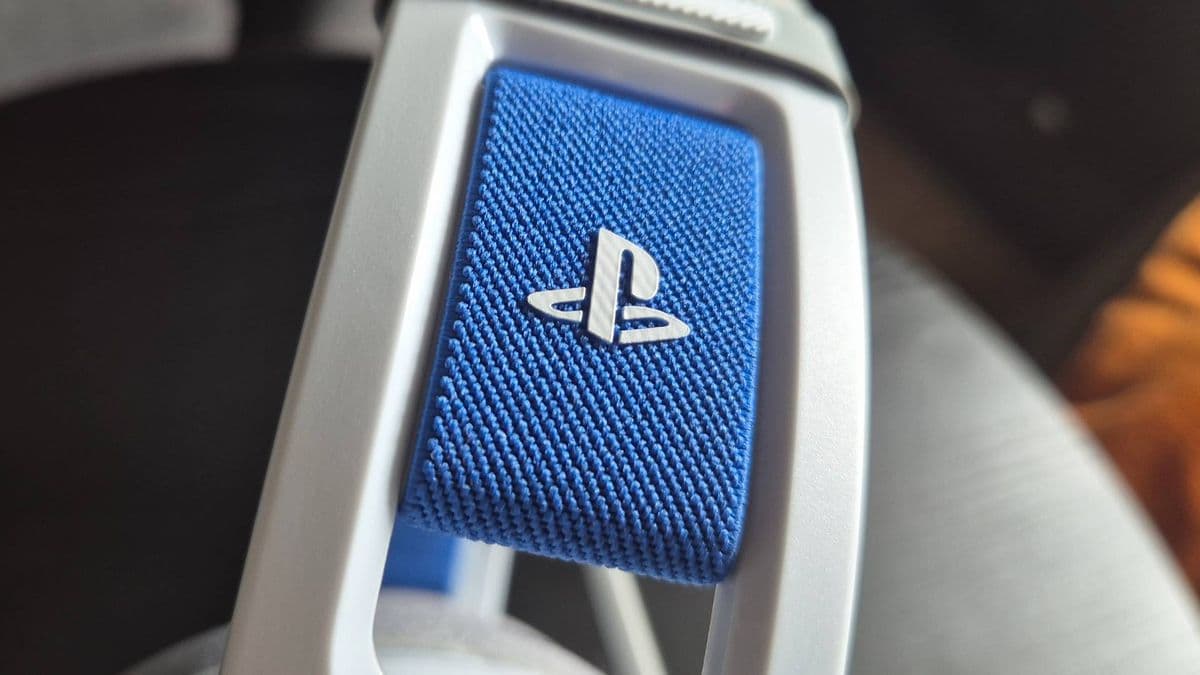
There are black and white variants floating around. The white one, with its blue accents, ties in nicely with the PS5’s aesthetic; the black one is the one that’s currently at the lowest price in Amazon’s Spring Sale: £37.89 for black, £41.99 for white at the time of writing. Under the shell, they’re identical.
Controls are simple and all on the headset: a volume wheel, and the usual mic controls. It’s not trying to be clever; you can find everything by touch without taking the headset off, which is exactly what I want during a tense match.
Comfort, build, and living with the wire
Let’s talk about the elephant in the room: it’s wired. You’re tethered from the earcup to your DualSense, and if you’re used to flopping onto the couch or jumping up mid-match, you will notice that leash.
In practice, plugged into the controller, the cable never felt too short. I could sit back in my usual spot, rest my hands comfortably, and only really thought about the cable if I went to put the controller down without thinking. The upside is zero fuss: no pairing, no interference, no battery warnings when you’re down to the last squad.
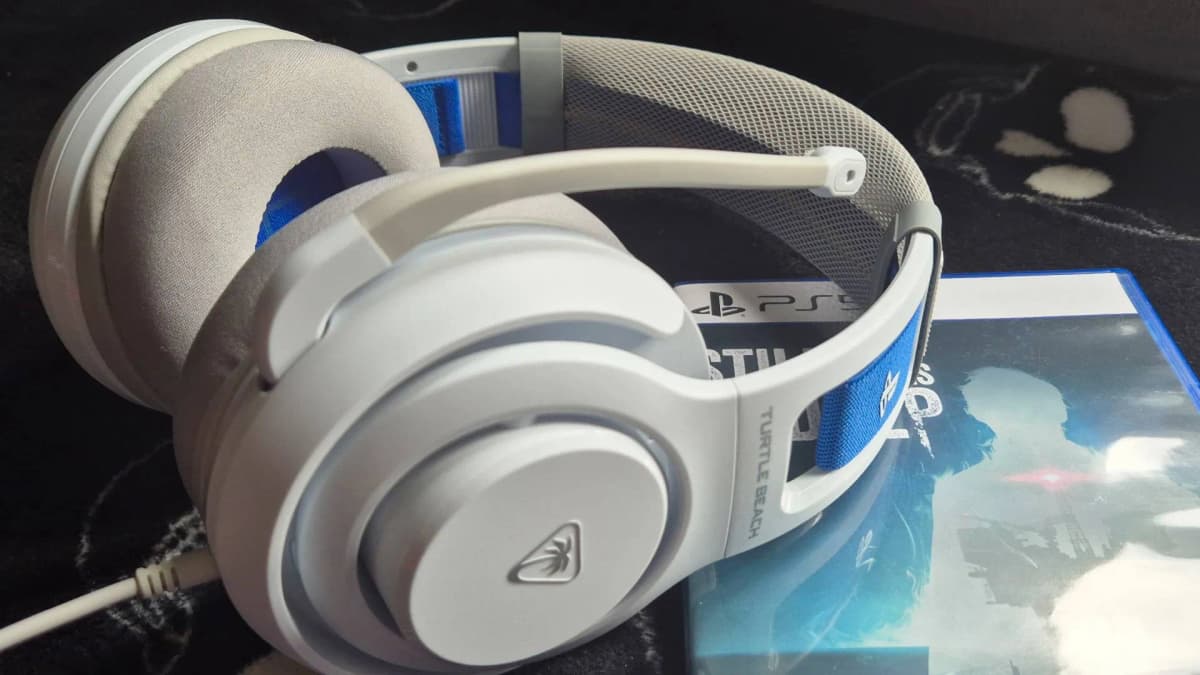
Build-wise, the Atlas 200 sits firmly in the “sturdy enough” zone. It flexes a bit if you twist it, but doesn’t creak like it’s about to snap. The ear cushions are soft, with enough clamp to stay put but not enough to clamp your skull. I wore it through long stretches of Silent Hill f and only really felt warmth build up during longer sessions, which is normal for closed-back headsets.
If your priority is comfort and simplicity rather than premium materials, this covers the essentials. Just don’t expect luxury – this is a performer, not a showpiece.
Audio performance: where the Atlas 200 punches way up
The moment that sold me on the Atlas 200 happened about 20 minutes into Silent Hill f. I was walking through the foggy streets of Ebisugaoka, PS5’s Tempest 3D AudioTech enabled, and the whole soundscape wrapped around my head in a way I honestly didn’t expect from a £50 headset.
Turtle Beach’s Nanoclear drivers lean into punchy low-end, and you feel it immediately. Footsteps have real weight, thunder cracks rumble, and monster roars are properly unsettling. But crucially, it’s not a muddy mess – the mid and high frequencies keep enough clarity that dialogue and environmental cues cut through.
In horror games, that combo is killer. In Silent Hill f, I could track the distant scrape of something in the fog to my left while the score swelled above me. Rain sounded like it was falling in a 3D space, not just “on my left” or “on my right”. The Atlas 200 doesn’t turn into a reference studio headset, but it nails what you actually want as a player: impact plus clarity.
The same tuning paid off in Marvel Rivals, which is about as far from slow-burn horror as you can get. That game’s soundstage is chaos: abilities firing, announcer lines, footsteps, ultimates, explosions. Through the Atlas 200, it stayed legible. Footsteps and important directional cues stayed audible even when the mix got busy, and the warmer low-end made explosions and abilities feel satisfying without completely swallowing the rest of the game.
If you’re coming from TV speakers or a truly bargain-bin headset, the jump in immersion is massive. I’ve used more expensive wireless headsets that genuinely didn’t feel that much more engaging on PS5 when Tempest audio was in play.
Tempest 3D Audio on PS5: the moment it clicked
Sony’s Tempest 3D AudioTech is one of those features that sounds like marketing fluff until you pair it with the right headset. The Atlas 200 is one of those “right” pairings.
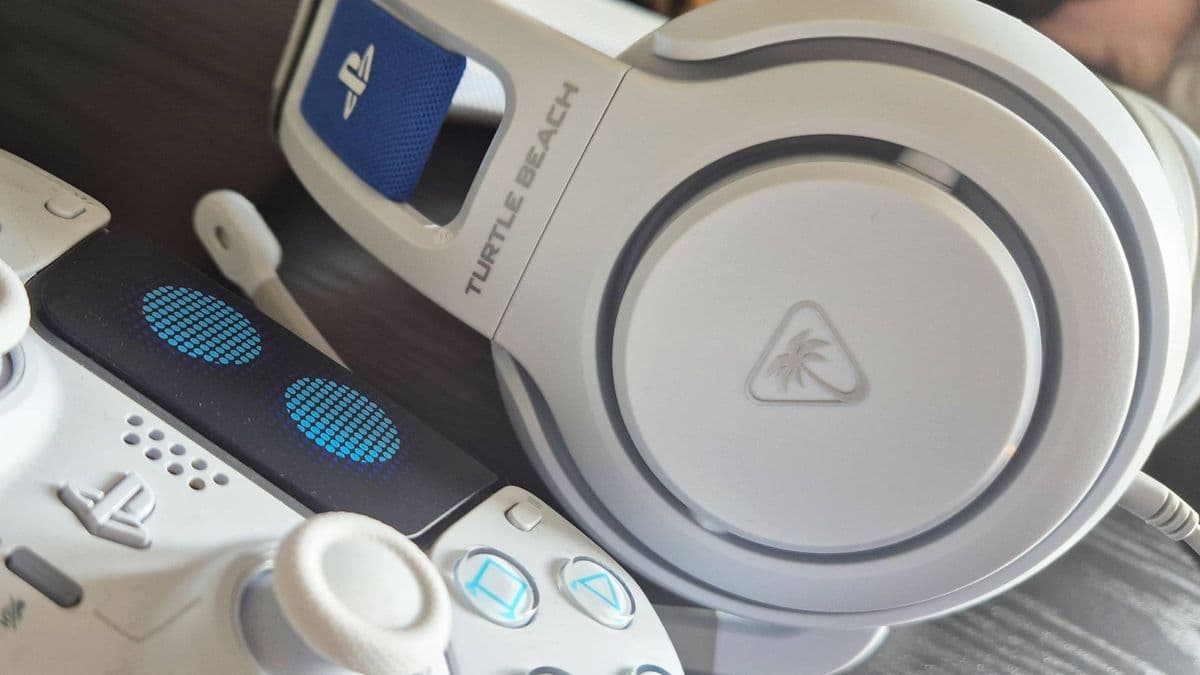
With Tempest enabled, you get a genuine sense of verticality and depth. In Silent Hill f, ambient groans that were “somewhere over there” on TV speakers turned into “that’s above me and slightly behind to the right”. In Marvel Rivals, it helped me pick out flanks and airborne abilities faster than I could with generic stereo – and I didn’t feel like I had to crank the volume to hear positional cues.
What impressed me most is how cleanly the Atlas 200 translates this without any built-in gimmicks. There’s no clunky software layer on PS5, no custom EQ apps – it just plays nicely with the console’s own audio tech. You turn Tempest on, and the headset does the rest.
Is it as pinpoint as a high-end, audiophile-grade set plugged into an amp? No. But at under £50, it nails the “I can actually hear where things are happening” test far better than it has any right to.
Multiplayer chaos & voice chat: great ears, so-so mouth
Here’s where the cracks show. The microphone on the Atlas 200 is absolutely the compromise point, and if you’re picky about mic quality, you’ll notice it immediately.
During PS5 Discord and party chat sessions, my friends could always hear me, but the feedback was consistent: “You sound like you’re on a plane announcement.” It’s not distorted, it’s not cutting in and out, but there’s a constant muffled, boxy tone to your voice that never goes away.
I had several moments mid-match where I had to repeat myself because a callout just didn’t cut through the mix clearly enough. If you’ve ever heard those slightly compressed tannoy systems at a train station, you’re in the right ballpark. Functional? Yes. Pleasant? Not really.
The thing is, in this sub-£50 price band, you’re rarely getting a standout mic anyway. In my experience, you usually have to step up well past the £100 mark – around the £129 region and above – before headset microphones start sounding genuinely clear and broadcast-like. So the Atlas 200 isn’t uniquely bad; it’s just average in a field where “average” is not great.
If you mainly play single-player games, or you’re the kind of multiplayer player who chats occasionally rather than shot-calling all night, it’s perfectly serviceable. If you stream, record content, or you’re obsessed with mic quality, you’ll either want a separate USB mic or a more expensive headset. Simple as that.
Wired vs wireless in 2026: what you’re really giving up
In 2026, the headset conversation is dominated by wireless: dual connections, hot-swap batteries, ANC, Bluetooth for phones – the whole works. Compared to something like a SteelSeries Arctis Nova Pro Wireless that often sits north of £200 even on sale, the Atlas 200 is brutally simple.
Here’s what you give up by going with the Atlas 200:
- Wireless freedom – you’re tethered to your DualSense
- Multipoint connections – no simultaneous phone + console audio
- ANC and transparency modes
- On-headset sound profiles or software tweaking
Here’s what you gain:
- No latency worries – wired is instant
- No batteries, charging docks, or power management
- Full compatibility with PS5’s Tempest 3D AudioTech through the controller jack
- Shockingly solid sound for under £50
For a lot of PS5 players, that trade-off is more than acceptable. If your console lives under your TV, you mostly game from the same spot, and you don’t care about taking calls on your headset mid-session, you’re not actually losing much in practical terms – you’re just gaining a cable and keeping a big chunk of your budget.
Value and the Amazon Spring Sale: why timing matters
At its regular £49.99 MSRP, I’d already call the Turtle Beach Atlas 200 one of the better budget PS5 headsets I’ve used. The fact that it’s been holding that price while headsets across the spectrum creep upwards is impressive on its own.
During Amazon’s Spring Sale, though, that value gets even sharper:
- Black Atlas 200: £37.89
- White Atlas 200: £41.99
- Sale runs until March 16, 2026 (or while stock lasts)
A £12 discount doesn’t sound wild compared to the £100+ cuts we’re seeing on ultra-premium wireless sets in the same sale, but when the starting price is only £49.99, that drop actually matters. You’re effectively dipping into “entry-level impulse buy” territory for a headset that genuinely sounds like something in the mid-range.
If your budget ceiling is under £50 and you want something that makes Tempest 3D and modern game soundtracks come alive, this sale window is exactly the kind of moment where it makes sense to hit “add to basket”.
Who the Turtle Beach Atlas 200 is actually for
After living with it for a while, I wouldn’t say the Atlas 200 is a “for everyone” headset. It’s specifically great for a certain type of PS5 player:
- Single-player fans who want immersive audio in horror, story-driven, and cinematic games without spending triple figures.
- Budget-conscious players who mainly use voice chat casually and can tolerate a middling mic in exchange for strong game audio.
- PS5 owners new to headsets who want something that just works out of the box through the DualSense, no setup or dongles.
- Parents or gift-buyers looking for a “safe bet” headset that doesn’t feel cheap in use, even if the price is low.
Who it’s not for:
- Players who hate cables or regularly sit far away from their console/TV.
- Streamers, content creators, or people who care a lot about how their voice sounds to others.
- Anyone chasing premium creature comforts like ANC, wireless switching, or app-based EQ tweaking.
If you see yourself in that first group, the Atlas 200 is an easy recommendation, especially at its Spring Sale price.
FinalBoss // Gear
Level up your setup
01Best-selling PS5 gameson Amazon→02DualSense controllerson Amazon→03PS5 SSD upgrades (M.2 NVMe)on Amazon→04Discounted game keyson Kinguin→Affiliate links · As an Amazon Associate, FinalBoss earns from qualifying purchases.
Want to Level Up Your Gaming?
Get access to exclusive strategies, hidden tips, and pro-level insights that we don't share publicly.
Ultimate Reviews Strategy Guide + Weekly Pro Tips