
I went into A Knight of the Seven Kingdoms with my guard up. After years of watching Westeros grow bigger, louder, and more dragon-filled, the idea of yet another spin-off sounded like more homework in a universe that already feels like a full-time job. I put the first episode on expecting background noise and ended up watching the entire season across two nights, fully locked in. Not because it’s the next huge event show, but because it refuses to be one.
This is a Westeros story about a knight who isn’t all that legendary (yet) and a squire who’s hiding a massive secret, wandering between inns, fields, and small tourneys. No Iron Throne in sight, no sprawling subplot map to memorize, barely any sex or baroque cruelty. The scale is so modest it almost feels wrong to call it a “Game of Thrones spin-off” – and that’s exactly why it works.
Table of Contents (7)
A smaller Westeros that finally breathes
The first thing that hit me, literally in the opening episode, is how deliberately the show shrinks everything down. Even the title sequence feels like a statement of intent. Where Game of Thrones and House of the Dragon flex their budgets with sweeping maps, symbolic machines and choral blasts, A Knight of the Seven Kingdoms pares it all back. Shorter, cleaner, almost like the show is saying, “Relax. You don’t need to study for this one.”
The episodes themselves follow the same pattern. They’re closer to a tight 35-40-minute drama than the hour-plus marathons we’ve gotten used to in Westeros. At first I thought “Oh, this is going to feel slight,” but that tighter runtime forces the writing to stay glued to Dunk and Egg instead of wandering off to half a dozen courts and conspiracies. By the third episode, I realized I wasn’t missing the bloat at all. I was relieved it was gone.
This “smallness” doesn’t mean nothing important happens. The story is still nestled between big events and big names fans will recognize, and by the finale the choices made here clearly ripple out into the future of the Targaryen dynasty. But the show keeps those stakes in the background. What matters is whether Dunk can live up to the idea of knighthood he’s built in his head, and whether Egg can survive growing up with a conscience in a family that often lacks one.
Dunk and Egg: the odd couple that quietly carries the season
Everything stands or falls on Dunk and Egg, and luckily this pairing just works. Peter Claffey’s Dunk is not your typical TV hero knight. He’s huge and physically imposing, sure, but there’s a softness to him – a kind of uncertain gentleness – that makes his whole arc land. He’s constantly second-guessing himself, carrying grief for his dead master Ser Arlan, and clinging to this almost naïve belief that a knight is supposed to be decent first and deadly second.
Dexter Sol Ansell’s Egg is the perfect foil. Where Dunk is earnest and a bit slow on the uptake, Egg is sharp, impulsive, and much more aware of the class games being played around them. He’s technically a prince in disguise, but the show wisely underplays the “royal incognito” gimmick. What matters is that Egg has seen the ugliness of Targaryen politics up close, and he desperately wants Dunk to be right about the possibility of “good” knighthood.
By the midpoint of the season, their banter and body language feel lived-in. Little moments – Egg correcting Dunk’s reading, or Dunk awkwardly trying to comfort him after a particularly brutal loss – do more heavy lifting than any amount of “as you know” lore-dumping. It’s a show that trusts you to understand a relationship from glances and silences, not just monologues.
The flashback-heavy penultimate episode underlines how well this dynamic has been built. Instead of going for the obvious route of a huge pre-finale battle, the show dives back into Dunk’s childhood and early days with Ser Arlan. We see how his life has been defined by being almost chosen, almost protected, almost worthy. It reframes his clumsy heroism not as cliché but as survival – this is a man who has decided, in a brutal world, to be kind on purpose. Watching Egg slowly see that and choose him as his anchor is quietly powerful.
From diarrhea jokes to survivor’s guilt: tone that actually feels human
If you’ve heard anything about the show online, it’s probably that there’s a fairly unforgettable diarrhea gag in the first episode. I rolled my eyes when I saw the setup: a swelling, heroic score as Dunk prepares for a big moment… only for it to end in violent bowel betrayal. On paper it sounds juvenile. In practice, it’s the thesis statement for the whole show.
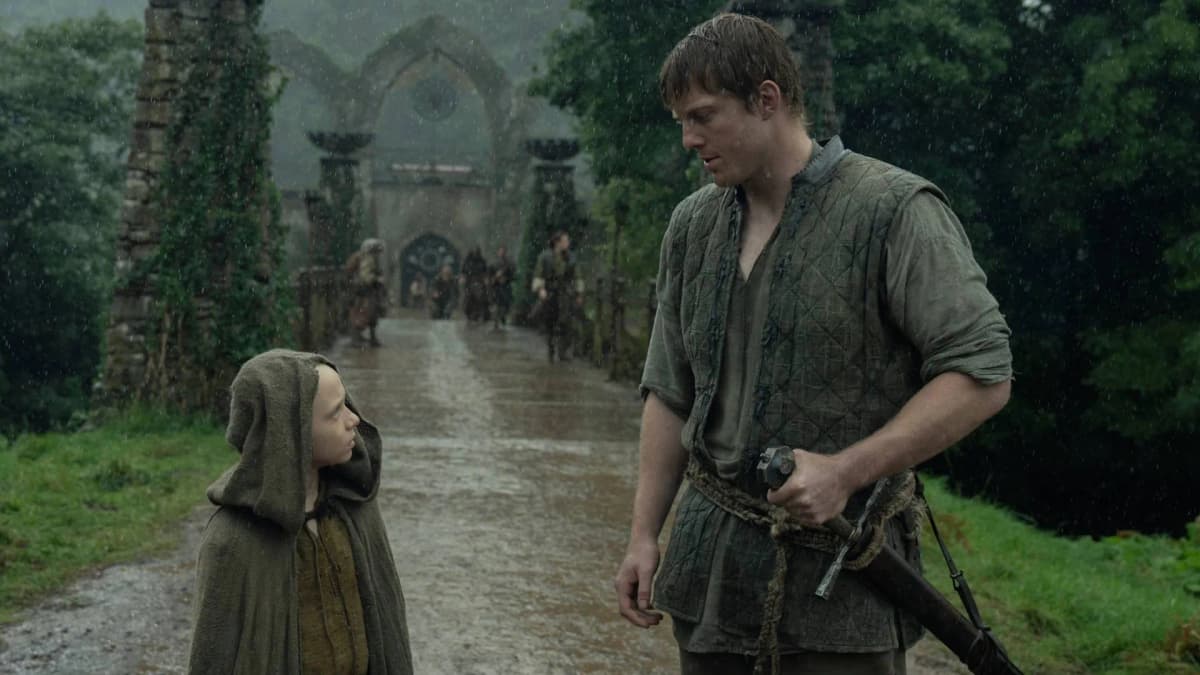
Westeros has always loved undercutting heroism, but usually that’s done with a beheading or a betrayal. Here, it’s done with bodily functions. The point isn’t just “ha, poop”; it’s that even in this famously grand, doom-laden universe, sometimes the thing that takes you down a peg isn’t a scheming lord – it’s your own stomach. It’s funny, but it also tells you immediately that this series isn’t interested in playing the same self-serious tune nonstop.
What surprised me is how the show balances that crude humor with genuine heartbreak without whiplash. Early on we watch Dunk grieve for Ser Arlan in quiet, unshowy ways – refusing to sell the old man’s gear, talking to him under his breath, carrying that legacy like a weight. Later, when tragedy hits on a much grander scale and Prince Baelor dies, the tone turns raw and heavy. Dunk’s survivor’s guilt could have been melodramatic; instead it’s played with this numb, shell-shocked distance that feels painfully real.
The finale drives all of that home. Dunk is offered what could be read as a “happy” ending in another type of story: Egg taken back into the royal fold, Dunk rewarded and elevated. Instead, he refuses to hand the boy back to the machine that chewed up Baelor and so many others. The way the show humanizes Prince Maekar in that sequence – letting him be a grieving father and a fallible man, not just a stern Targaryen statue – keeps things messy and human.
And then, just as easily as it dips into tragedy, the series finds hope again. The last stretch is tinged with melancholy, but there’s humor and lightness back in the mix. The ghostly, almost wordless farewell to Ser Arlan’s spirit as Dunk and Egg ride off – Dunk finally a knight to someone else, Arlan free to let go – landed harder for me than most of the showier deaths we’ve seen in this universe.
A season that dares to feel complete
One thing I loved – and honestly didn’t expect from a modern franchise spin-off – is how self-contained this first season feels. There is a confirmed second season coming (currently slated for 2027), and you can absolutely sense threads the show can tug on later, especially with Egg’s heritage and the shifting politics in the background. But if, for some bizarre reason, it all stopped here, this run would still feel like a complete story.
You follow Dunk from rootless hedge knight to a man with a real purpose. You watch Egg go from precocious runaway to someone who chooses a different idea of family. You get a clear beginning, middle, and end, capped with that lovely final conversation about the “seven” – or rather nine – kingdoms. Egg rattling off regions and technicalities while Dunk just thinks in terms of roads and places to sleep is such a neat encapsulation of what the show is doing: reminding you the map looks very different depending on whether you’re a prince or a pauper.
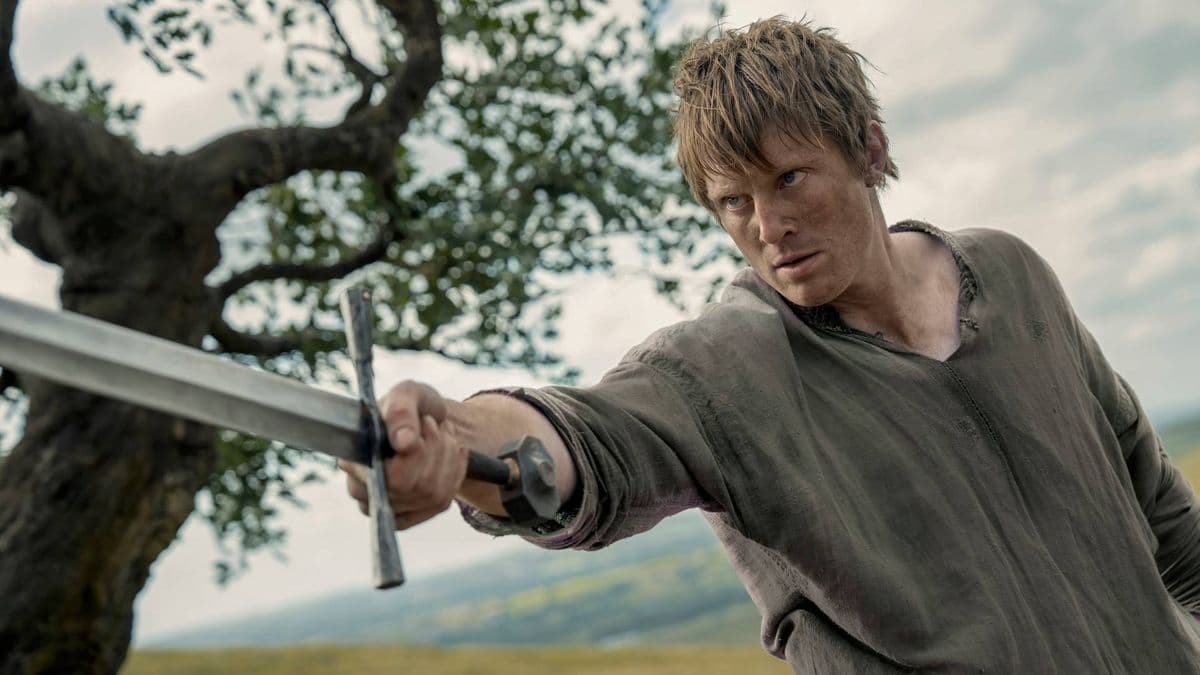
Knowing that French audiences have even seen the title morph into something closer to “A Knight of the Nine Crowns” off the back of that exchange just underlines how much the finale is playing with the mythology without turning it into a lecture. It’s nerdy in the background if you want it to be, but the emotional arc lands even if you’ve never cracked open a Westeros wiki in your life.
Against Game of Thrones and House of the Dragon, it finds its own lane
It’s impossible to watch anything set in Westeros now without mentally stacking it next to Game of Thrones and House of the Dragon. Those shows are all about big swings: dynastic wars, apocalyptic threats, massive dragons blotting out the sky. A Knight of the Seven Kingdoms doesn’t try to compete on that field, and that’s its smartest move.
While House of the Dragon continues to double down on brooding court intrigue, time jumps, and a deep dive into Targaryen self-destruction, Dunk and Egg’s tale feels like a breath of fresh, countryside air. It’s closer in spirit to something like Andor in the Star Wars universe: a ground-level story about regular people (or as regular as a secret prince can be) dealing with the fallout of decisions made far above their pay grade.
The timing made that contrast even sharper. As the first season of A Knight of the Seven Kingdoms was wrapping up, HBO dropped a flashy new trailer for the next season of House of the Dragon. Explosions, dragons, doom, the works. It looks spectacular, but it also made me realize how much I appreciated spending a few weeks in a Westeros where the biggest question in an episode might be “Can Dunk afford another horse?” instead of “Which child is going to die this week?”
That isn’t to say there’s no darkness here. People still die horribly. Injustices still sting. Power still corrupts. But because the show keeps coming back to lived-in, everyday details – a shared meal, a badly patched boot, a quiet moment by a campfire – the big shocks don’t feel like spectacle for its own sake. They feel like things that happened to characters you actually know, not just names on a sigil chart.
Performances, production, and the look of a humbler Westeros
On a technical level, A Knight of the Seven Kingdoms clearly doesn’t have the same “blank check” budget its dragon-heavy cousins enjoy, but that constraint works for it more often than not. There are still proper set-pieces – a tense trial, crowded tourney grounds, the aftermath of a brutal clash – yet the show mostly lives in smaller spaces: tents, muddy roads, cramped inns, dusty noble halls where you can almost smell the stale wine.
The direction leans into natural light and grounded blocking. You’re rarely watching from some epic, godlike vantage point; you’re down at ground level with Dunk, craning your neck up at castles that look more imposing because the camera isn’t trying to show off every stone. When the score swells, it’s usually for a character beat, not a landscape shot.
Performance-wise, the show is quietly stacked. Claffey and Ansell do the heavy lifting, but the supporting cast of nobles, knights, and hangers-on mostly avoid feeling like stock archetypes. Even figures who could have been simple villains get shaded in. Prince Maekar, especially in the finale, walks this careful line between intimidating patriarch and broken father. It’s a testament to the writing that a man who could easily have been “that stern Targaryen from the background” ends up being one of the most emotionally complicated presences in the season.
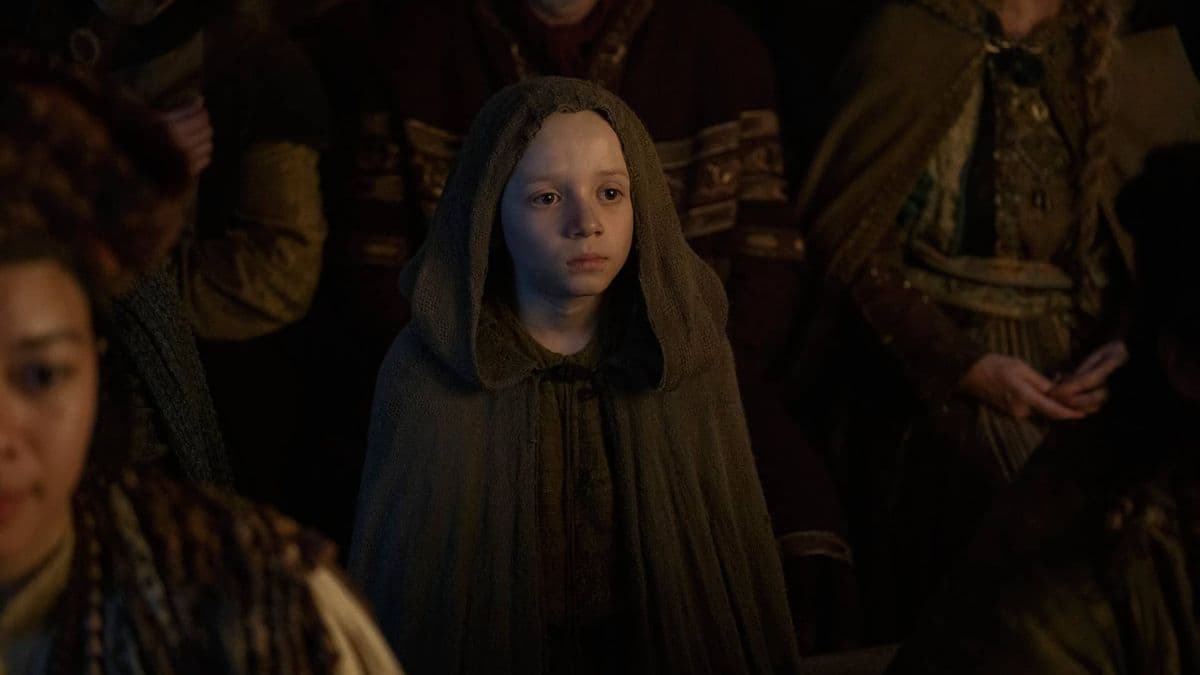
What really matters, though, is that the production never drowns the intimacy. Costumes, props, and locations feel lived-in, but they don’t pull focus from the conversations. The modest scope isn’t hiding a lack of ambition; it’s pointing all that ambition inwards, into character work.
No lore degree required: who this is actually for
One of my biggest frustrations with big fantasy franchises is how “entry points” stop feeling like entry points after a season or two. You start with a clean slate and before you know it, you’re decoding family trees and watching “ending explained” videos just to keep up. A Knight of the Seven Kingdoms is the rare spin-off that genuinely feels like you can hand it to someone who’s only vaguely aware of Westeros as “that show with dragons and weddings gone wrong.”
Everything you need is on the screen. The show doesn’t assume you know who ends up on the Iron Throne centuries later. It doesn’t bog you down with sigils or prophecies. Instead, it operates on universal stuff: grief, chosen family, class resentment, the fear of not living up to the stories you’ve told yourself about who you could be.
If you are a lore nerd, there’s plenty to chew on – the shifting count of kingdoms, the politicking in the background, the way certain names and places get dropped like quiet depth charges. But none of that is required reading. For me, that’s the true magic trick here: this season manages to enrich the wider universe while still functioning as a simple, compelling tale about a knight and his squire.
FinalBoss // Gear
Level up your setup
01Top-rated gaming headsetson Amazon→02High-refresh gaming monitorson Amazon→03Gaming chairson Amazon→04Discounted game keyson Kinguin→Affiliate links · As an Amazon Associate, FinalBoss earns from qualifying purchases.
Want to Level Up Your Gaming?
Get access to exclusive strategies, hidden tips, and pro-level insights that we don't share publicly.
Ultimate TV Shows Strategy Guide + Weekly Pro Tips