
The first real proof that the Elden Ring movie exists isn’t a glossy teaser or casting poster. It’s a half-finished church in the middle of an English field, surrounded by wagons, crucifix stakes and loose planks – a physical chunk of Limgrave quietly taking shape.
Those leaked set photos and videos do more than confirm that A24 and Alex Garland have moved from pitch decks to actual construction. They show how literal this adaptation is willing to be with FromSoftware’s world – and hint at the much harder problem the film still has to solve: Elden Ring’s storytelling is nothing like a traditional screenplay.
Table of Contents (8)
Key takeaways
- The leaked UK set is a highly accurate recreation of Limgrave’s Church of Marika area, down to props and crucifix stakes, confirming physical production is underway.
- A24 and Alex Garland are clearly aiming for visual fidelity to the game’s present-day Lands Between, not a loose “inspired by” fantasy setting.
- Faithful sets are the easy part; the real challenge is translating Elden Ring’s opaque, player-driven lore into a two-hour narrative without over-explaining it.
- The choice of A24 and Garland suggests a slower, more atmospheric adaptation aimed at prestige genre audiences rather than a broad four‑quadrant blockbuster.
Faithful sets are the easy part – but they’re a strong signal
The leaks, which surfaced in early April via short videos and photos from a creator known as THROX, show a sizable outdoor build in what appears to be rural England. We are not talking about a couple of generic stone ruins: this is a near one‑to‑one reconstruction of a specific Elden Ring location.
Key elements line up across the different clips and stills:
- A ruined stone church on a rise, matching the proportions and layout of the Church of Marika in Limgrave.
- A large interior statue strongly resembling Queen Marika’s in-game depiction.
- Wooden carts, barrels, crates, torches and scattered debris that mimic the game’s environmental clutter.
- Wooden crucifix stakes planted in the ground, echoing the impaled corpses that dot Necrolimbo’s fields.
Initially, some viewers assumed the images were AI fabrications – a fair suspicion in 2026. But additional angles, construction details, crew activity and consistent reporting from multiple outlets make it clear this is a real, ongoing build. Hobby-focused press in Spain and UK sites all converged on the same reading: these are Elden Ring sets, in active pre-production, for the A24 / Alex Garland feature.
Production design fidelity might seem like the bare minimum, and in a sense it is. It is far easier to print concept art from FromSoftware, hand it to an art department and say “copy this” than to translate Hidetaka Miyazaki’s approach to structure and exposition. But the fact that A24 is spending serious money to recreate specific landmarks – not just a generic dark fantasy field – tells you this is not a loose “inspired by the game” job. They are aiming at the actual Lands Between.
What the Church of Marika implies about the movie’s timeline and focus
The most interesting thing about the Church of Marika build is not that it exists. It’s what version of the Elden Ring timeline it points to.
The sets, as far as we can see, mirror the “present” state of Limgrave from the game: a decayed but standing church, weathered statues, battlefield detritus, crucifix stakes with a recently ruined feel. There is no obvious attempt to show a pre‑Shattering golden age where everything is pristine, nor a far‑future ruin where nature has completely reclaimed the structures.
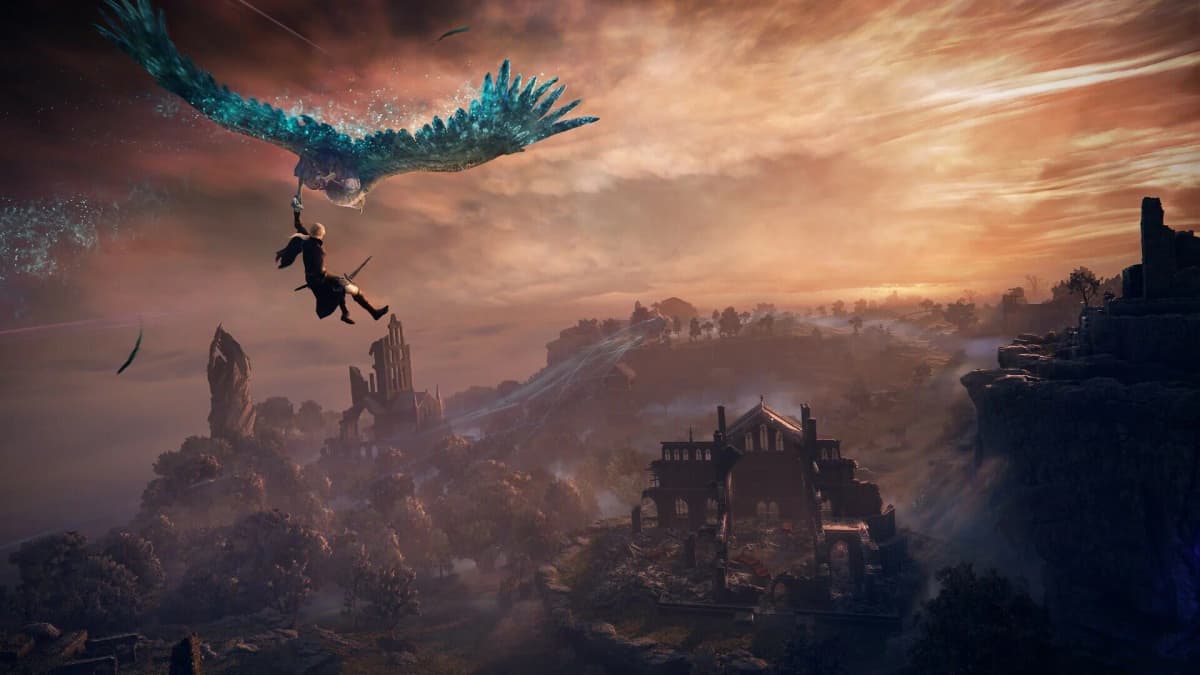
That strongly suggests the film will not be a distant prequel about Marika’s early reign or the war of the demigods, at least not exclusively. It points toward a story framed in the same era players inhabit: the post‑Shattering, Tarnished-return period, with the Lands Between broken but not yet erased.
It does not, however, tell us whether Garland plans to:
- Follow a Tarnished-like figure on a condensated version of the game’s pilgrimage.
- Center the narrative on existing major characters (Marika, Radagon, Godfrey, etc.) with the Church acting as a recurring location.
- Tell a smaller, contained story set against the backdrop of the greater war – something closer to a side quest elevated to feature length.
Any of these approaches could still use the Church of Marika as a visual and thematic anchor. The point is that A24 is not dodging the game’s iconography. They are walking straight into it, which raises the stakes for how they handle everything around those visuals.
A24 and Alex Garland are deliberately rejecting the “safe” game-movie formula
On paper, the pairing of A24 and Alex Garland for an Elden Ring adaptation never looked like a Sonic or Uncharted situation. The leaked sets drive that home. This is not a quippy, PG‑13 action-comedy vehicle. It looks and feels closer to The Green Knight than to Detective Pikachu.
A24’s recent track record in genre cinema – Hereditary, Midsommar, The Witch, The Green Knight – leans toward slow-burn, uncompromising, visually driven films that prioritize mood over plot density. Garland’s own work with Ex Machina, Annihilation and Men is obsessed with ambiguity, unreliable perception and protagonists who never get clean answers.

That creative DNA actually lines up with FromSoftware’s design philosophy more closely than most adaptations get. Elden Ring does not spoon‑feed lore; it buries it in item descriptions, half‑heard dialogue and geography. The game trusts players to assemble their own version of the truth or to live comfortably without one.
The risk is that cinema, especially at feature length, has less tolerance for that level of opacity. Even something as acclaimed as HBO’s The Last of Us still followed a very clear emotional throughline and episodic structure. Fallout’s TV adaptation took lore-dump material and wrapped it in punchy, traditional character arcs. Elden Ring does not offer a neatly packaged “Joel and Ellie” equivalent to port over.
So A24 and Garland are effectively choosing hard mode: take one of the least traditionally structured AAA narratives of the last decade and adapt it using one of the least hand‑holding production brands in mainstream film. The set leaks prove they are serious. They do not prove the approach will work.
The narrative problem no set photo can solve
Faithful art direction answers exactly one question: “Will it look like Elden Ring?” Based on what we’ve seen, the answer is almost certainly yes. What it does not answer is how the film will handle three structural issues baked into FromSoftware’s worlds:
- Player agency: The game’s story is about a blank Tarnished making choices in a sprawling, nonlinear world. A film must lock in a specific protagonist and path, instantly alienating some headcanon versions of the story.
- Exposition style: Lore that players dig out over 60–100 hours cannot all be dumped into two hours of dialogue without killing pacing. Something has to give: density, clarity or faithfulness.
- Ambiguity: Elden Ring is powerful precisely because so many questions remain unanswered, or answered only in fragments. A film that over‑explains the Shattering, Marika’s motives or the metaphysics of the Erdtree risks weakening the source.
Garland has a history with ambiguity. Annihilation famously left core mysteries unexplained, prioritizing atmosphere and psychological decay over canon answers. That is encouraging. The uncomfortable flip side is that when Garland’s work misfires for audiences, it tends to be because viewers feel locked out emotionally, not just confused intellectually.

An Elden Ring film that doubles down on cryptic symbolism without giving non‑players a compelling emotional entry point will be praised in some circles and shrugged off in others. The inclusion of performers like Cailee Spaeny, Kit Connor and Ben Whishaw points toward a character-driven approach, but until there is a synopsis or even a hint of whose story this is, the narrative problem remains theoretical.
Why these leaks matter more than concept art and casting lists
Game-to-film projects live in development limbo all the time. Concept art gets made, casting gets floated, press releases go out – and then nothing. Physical sets being built in a field are different. They are sunk cost. Lumber, stone and labor do not get spent lightly by a mid‑budget studio like A24.
The Elden Ring leaks tell us three concrete things about where the project really is:
- Pre-production has moved into physical realization. We are past the “maybe it happens” stage. Schedules, suppliers and location logistics are in motion.
- The art department has direct access to, and respect for, FromSoftware’s visual canon. This looks like licensed reference material, not second‑hand imitation.
- The scope is substantial enough to justify bespoke outdoor structures. This is not a bottle movie that will hide everything on soundstages and green screen.
For players, the practical takeaway is simple: Elden Ring’s film adaptation is real, it is actively building the Lands Between in the UK, and the people in charge are not trying to file the serial numbers off the source material. The remaining questions are no longer “will this happen?” but “how far will they push the weirdness?” and “who is this actually for – fans, cinephiles, or both?”
What to watch next
- Official confirmation of the leaked locations: When A24 finally releases a first-look still or production note, check whether they acknowledge Limgrave and the Church of Marika by name. That will signal how tightly the script hugs the game’s geography.
- Story synopsis or logline: The first one- or two-sentence description of the plot will be the real litmus test. If it mentions a Tarnished, the Shattering or the hunt for Elden Lord status, expect a direct adaptation. If it leans on “a wanderer in a cursed land,” think more standalone tale.
- Rating and runtime: A hard R and a two-hour-plus runtime would align with A24’s usual approach and allow for slower, more oppressive pacing – closer to how Elden Ring feels to play.
- Who does the talking on the press tour: If Garland and the production designers are pushed to the front, expect emphasis on mood and world-building. If marketing leans on actors explaining the lore, that’s a different strategy.
TL;DR
Leaked footage from a UK field shows A24 and Alex Garland building an impressively accurate real-world version of Elden Ring’s Limgrave, including the Church of Marika and surrounding crucifix-studded terrain. That confirms the film’s production is properly underway and visually committed to FromSoftware’s world, not a generic fantasy re-skin. The real test will be whether Garland can turn Elden Ring’s opaque, player-driven lore into a focused, cinematic story without flattening the mystery that makes the Lands Between worth visiting in the first place.
FinalBoss // Gear
Level up your setup
01Top-rated gaming headsetson Amazon→02High-refresh gaming monitorson Amazon→03Gaming chairson Amazon→04Discounted game keyson Kinguin→Affiliate links · As an Amazon Associate, FinalBoss earns from qualifying purchases.
Want to Level Up Your Gaming?
Get access to exclusive strategies, hidden tips, and pro-level insights that we don't share publicly.
Ultimate Gaming Strategy Guide + Weekly Pro Tips