
Tides of Tomorrow’s ‘Story‑Link’ turns single‑player into a social experiment—can it deliver?
Game intel
Tides of Tomorrow
From the makers of Road 96, Tides of Tomorrow challenges you to survive the troubled ocean planet of Elynd, as well as the choices made by your friends and fav…
Single-player that remembers other players? Tides of Tomorrow might finally try it for real
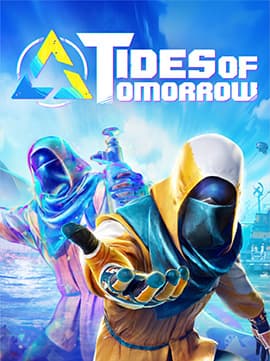
Character profile videos don’t usually move the needle. But DigixArt’s new look at Nahe-the Tidewalker who kickstarts your run in Tides of Tomorrow-comes with something that actually could: Online Story‑Link. It’s an opt‑in system that lets you pick another player’s “story seed,” then play through a world subtly (or not so subtly) shaped by their choices. A free demo is live on Steam, and if this idea lands, we might finally get a “choices matter” pitch that does more than juggle colored endings.
Key takeaways
- Online Story‑Link lets you select a prior player’s run to influence your world-think Souls bloodstains meets Road 96’s branching vignettes.
- Nahe isn’t just lore dressing; they’re the narrative doorway into this shared‑but‑solo framework.
- The demo should reveal whether echoes are cosmetic breadcrumbs or true systemic changes to quests, factions, and outcomes.
- Full launch is slated for February 24, 2026 on PC, PS5, and Xbox Series X|S, with both digital and physical editions.
Breaking down the announcement
THQ Nordic and DigixArt (the team behind Road 96 and 11‑11: Memories Retold) introduced Nahe as the Tidewalker who pulls you into this drowned, post‑apocalyptic world ravaged by a disease called Plastemia. From there, you’re sailing between floating settlements, scavenging, and choosing who to trust across three factions—the ruthless Marauders, salt‑of‑the‑earth Reclaimers, and the more enigmatic Mystics. That’s the familiar loop. The unfamiliar piece is Story‑Link: before a run, you can choose to follow the echo of a dev, a friend, a streamer, or a random player, and their decisions can remap what you face—who’s alive, which settlements thrive, which quests even exist.
According to the pitch, you’ll see “ghosts” that hint at where that prior Tidewalker moved, the choices they made, and even attempts to communicate. If that reads like Souls bloodstains, Death Stranding’s social infrastructure, and Nier: Automata’s faint player imprints had a narrative baby, you’re not wrong. The difference is DigixArt’s flavor: a curated, vignette‑driven structure similar to Road 96, only now sorted through community‑sourced seeds rather than purely procedural dice rolls.
Why this matters now
We’ve all been burned by “your choices matter” marketing that boils down to slightly different cutscenes. DigixArt has flirted with systemic narrative before—Road 96’s road trip stitched together character vignettes in ways that felt fresh, even if the final destinations converged more than some hoped. Story‑Link, at least on paper, addresses that fatigue by importing variability from an actual player base. If the person you follow saved a settlement, maybe a key character survives in your run; if they burned a bridge, maybe you never even meet them. That’s a more organic way to create meaningful divergence than flipping a single morality flag.
It also taps into how we already play games socially. Imagine streamers planting chaotic seeds for their communities to chase, or friend groups passing around “clean” and “messy” runs to see how far the timeline can bend. If DigixArt can make those differences felt in moment‑to‑moment play—different levels, altered NPC allegiance, reconfigured quest chains—this could be the rare narrative system that’s both clever and replayable.
The big questions (and where the demo needs to prove itself)
Cool idea, but implementation is everything. First: how deep does Story‑Link really go? The press info promises locations, events, and outcomes that can differ entirely based on whose echo you follow. That’s ambitious. If it boils down to “this vendor is here instead of there,” players will sniff out the smoke and mirrors fast. The demo needs to show alternate quest lines, not just alternate item placements.
Second: curation vs. chaos. Player‑driven seeds can lead to amazing emergent stories—or incoherent ones. How does the game filter griefy choices without neutering agency? Souls‑like messaging works because it’s abstract and limited; narrative consequences are trickier. I’m curious whether DigixArt uses guardrails to keep arcs legible while still letting the community push at the edges.
Third: ownership. If I pick a friend’s Story‑Link, do I ever feel like the hero of my own journey, or a tourist in someone else’s timeline? The best asynchronous systems (think Death Stranding) make you feel connected without losing your identity. Tides of Tomorrow has to nail that balance—Nahe’s role as a consistent anchor character could help here, giving each run a recognizable spine even as the world warps around it.
Finally: online dependency. The feature name screams online, but what happens if you play offline? Is there a house‑seed, or does the game quietly fetch a curated pool in the background? Not a deal‑breaker, but it’s the difference between a cool flourish and a system that meaningfully defines the experience.
Want to Level Up Your Gaming?
Get access to exclusive strategies, hidden tips, and pro-level insights that we don't share publicly.
Ultimate Gaming Strategy Guide + Weekly Pro Tips
What gamers should try in the demo
If you dip into the demo, stress‑test the concept. Run twice with different Story‑Links—say, a random global seed and a friend’s—and track what actually changes. Do factions treat you differently? Are quest objectives rearranged or outright replaced? Do the “ghosts” convey useful context or just vibes? If you can tell distinct stories about each run without squinting, that’s a strong signal DigixArt is onto something.
Also pay attention to the sailing and survival rhythm. The sea‑roaming structure in a flooded world could be a great fit for DigixArt’s vignette‑style storytelling (think Wind Waker’s sense of discovery, minus the Zelda puzzle‑boxing). If resource gathering meaningfully feeds into narrative choices—upgrading your boat opens routes, which opens alliances—that loop will stick.
The road (sea?) to 2026
Tides of Tomorrow launches February 24, 2026 on PC, PlayStation 5, and Xbox Series X|S, with digital and physical editions planned. That’s a long runway for DigixArt to roll out more character spotlights beyond Nahe and, hopefully, show the breadth of Story‑Link permutations. After Road 96 and its prequel Mile 0, the studio’s earned a reputation for narrative experiments that swing big. This one swings bigger—and if it connects, it could be the template other narrative games crib from in the next cycle.
TL;DR
DigixArt’s Tides of Tomorrow wants to make your single‑player story feel shared through Online Story‑Link, and Nahe is your entry point. If the demo proves that echoes cause real, systemic differences—not just set dressing—this could be the smartest evolution of “choices matter” in years. If not, it’s another cool idea that didn’t survive the storm.