
Table of Contents (7)
Tim Sweeney’s megaphone has a gag-legally
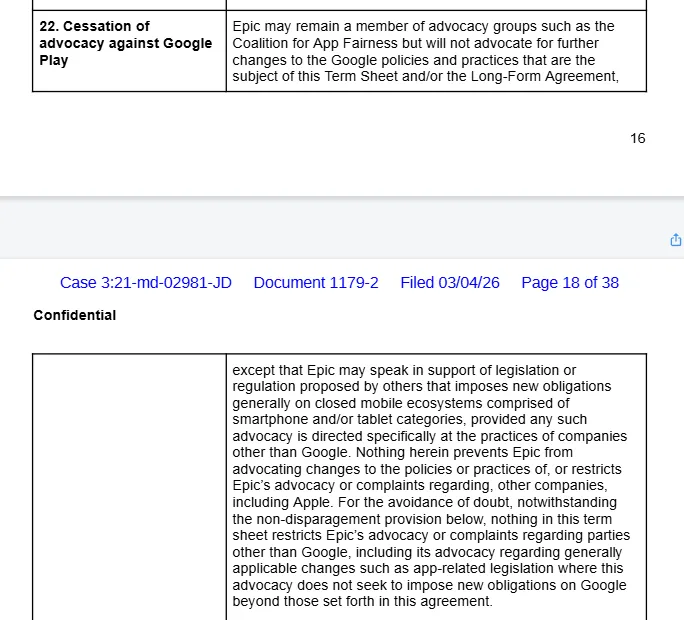
Tim Sweeney spent the last half-decade as the public face of app-store pushback. The newly revealed March 3 term sheet between Epic and Google quietly changes that: it doesn’t just stop Epic from bad‑mouthing Google’s Play policies – it requires Epic to publicly endorse Google’s platform changes as “procompetitive,” forbids attacking Google (while explicitly allowing criticism of Apple), and may even obligate Sweeney to defend the deal elsewhere. Those restrictions last until five years after Google completes its fee changes by Sept. 30, 2027 – so, potentially until Sept. 2032. (Reports by The Verge first published the term-sheet details; TechCrunch and others reported the fee changes.)
Key takeaways
- Epic’s term sheet with Google contains a binding non-disparagement and affirmative-advocacy clause that curtails Sweeney’s public criticism of Google’s app-store practices for years (The Verge).
- Google is moving ahead with Play Store fee cuts and third‑party store changes on its own timetable; the clause locks Epic into endorsing those changes even as Google implements them (The Verge, TechCrunch).
- The term sheet also includes other negotiated elements — like a new “metaverse browser” app class — but the speech restrictions are the unusual, politically consequential part (The Verge).
- No public denial from Epic or Google as of initial reporting, and the developer community’s leading public critic is effectively muzzled while the platform reshapes Android distribution.
This is not a garden‑variety NDA
Companies settle lawsuits all the time and non‑disparagement clauses are common. What makes this different is the affirmative obligation: Epic must publicly characterize Google’s platform fixes as procompetitive. That’s not “don’t insult us” — that’s “say this is good for competition.” It turns a silence into a narrative tool for Google, arguably neutralizing the most visible advocate for app‑store reform.
Reports show the clause explicitly permits Epic to criticize Apple but not Google. That asymmetry reads like more than legal housekeeping; it’s a political move. Sweeney has historically been blunt — calling Android a “fake open platform” and Project Hug “astonishingly corrupt” — and his voice helped shape the Coalition for App Fairness and public pressure that emboldened regulators. Muzzle that voice and you change the public fight’s texture.

Why now: Google is already changing the game
Google isn’t waiting for judicial sign‑off. It has publicly rolled out lower Play Store fees, a Registered App Stores program to ease sideloading, and options for alternative billing across markets through 2026-27 (The Verge, TechCrunch). If Google can both change the system and get Epic to stand up in public and call those moves procompetitive, it neutralizes a high‑profile critic while still claiming the moral high ground to regulators and developers.
The uncomfortable observation the PR team hoped you’d miss
This deal reads like a two‑fer for Google: policy concessions that placate regulators and a legal gag that removes one of the reform movement’s loudest voices. Settlements historically include silence clauses; explicit advocacy obligations do not. If you care about public accountability in platform policy, notice that this shifts debate power from an outspoken CEO to private contract language hidden in a term sheet.
What to watch next
- Official confirmation: Look for Epic or Google statements and any court filings that make the term sheet public or put it into a final settlement.
- Sweeney’s public behavior: Watch his X/Twitter and interviews. If he goes silent about Google but not Apple, that will be the clearest signal this clause is in force.
- Developer reaction: Will other studios or the Coalition for App Fairness push back at a public‑advocacy clause that muzzles a coalition leader?
- Legal ripple effects: If Epic is compelled to “defend” Google’s changes in other forums, that could alter how regulators and courts hear testimony on platform power.
- Concrete dates: Google’s fee changes are expected through 2026-27, and the term sheet ties expiration to their completion — the September 2032 ceiling is the practical maximum to watch.
If a platform can buy not just concessions but public praise, the shape of tech policy debate changes. We should care about who’s allowed to speak for developers — and whether the loudest critic of platform power has been legally softened into a mouthpiece for the platform itself.
TL;DR
Epic’s March 3 term sheet with Google reportedly contains a binding non‑disparagement and advocacy clause that will limit Tim Sweeney’s public criticism of Google’s Play policies for years (reports by The Verge, TechCrunch). Google is already rolling out lower fees and third‑party store changes; the clause risks converting Sweeney from critic to forced endorser at a politically sensitive moment. Watch for official filings, Sweeney’s public comments, and any developer pushback — those will tell you whether this is a tactical settlement or a quiet reshaping of the app‑store debate.
FinalBoss // Gear
Level up your setup
01Top-rated gaming headsetson Amazon→02High-refresh gaming monitorson Amazon→03Gaming chairson Amazon→04Discounted game keyson Kinguin→Affiliate links · As an Amazon Associate, FinalBoss earns from qualifying purchases.
Want to Level Up Your Gaming?
Get access to exclusive strategies, hidden tips, and pro-level insights that we don't share publicly.
Ultimate Gaming Strategy Guide + Weekly Pro Tips