
In Timberborn, irrigation is the rule that decides whether your crops and trees can grow at all. The simplest reliable setup is an early fluid dump next to a small hole or low spot, because one beaver can keep that water tile filled and the surrounding soil irrigated without advanced infrastructure. Once your settlement scales, canals are usually better than isolated pools, especially narrow channels cut through flat land. The one catch is that public sources disagree slightly on the exact maximum reach: some frame it as 15 blocks from water, while newer guides describe a practical maximum of 16 tiles with a 3-wide canal. Either way, the big lesson is the same: shape matters, elevation matters, and water quality matters.
If you are running into farms that stay dry, the game is usually not asking for more workers or more storage. It is asking for better water placement. Irrigation in Timberborn comes from watered blocks creating irrigated soil around them, so your real job is to place a small amount of water where it can touch the most farmland.
Table of Contents (7)
What irrigation does and when you first deal with it
Irrigation is not a separate crop bonus you unlock later. You encounter it as soon as you try to farm anywhere that is not naturally kept wet by a river, reservoir, or placed water. A field beside flowing water will usually work immediately; the same field built too far inland will stall because the soil is dry. That is why irrigation has such a central role in Timberborn: it decides where your food district can exist, where tree farms can survive, and how much usable land you can squeeze from a map.
The practical goal is always efficiency. You do not want a giant lake if a thin channel would water the same number of farm tiles. You also do not want to haul water into a dump forever if a canal from the river would cover the land more cleanly. Once you look at irrigation as a coverage problem, a lot of map decisions get easier.
The easiest early-game setup: fluid dump plus a shallow basin
For early colonies, the most straightforward irrigation method is a fluid dump placed next to a hole or low tile. A beaver hauls water from your nearest source, dumps it into that pocket, and the watered tile starts irrigating the surrounding soil. This method is popular for a reason: it is simple, it works on awkward maps, and it does not require you to redesign the whole district around a canal right away.
- Pick farmland that is close enough to your current water source that hauling is not painful.
- Use a natural depression or dig a small basin so the dumped water stays where you want it.
- Keep the crops on the same elevation as the water if possible, because higher ground loses effective reach.
- Start small. A compact patch of food that stays irrigated is better than a huge field that dries every drought.
This setup is best understood as a labor trade. You are spending hauling time to create irrigated land where the map does not naturally give you any. That is great in the early game, but it stops being efficient if you are trying to support a very large farm on one dump. If a dry season hits and your hauling chain is thin, the basin may not stay topped up consistently enough to support oversized crop blocks.
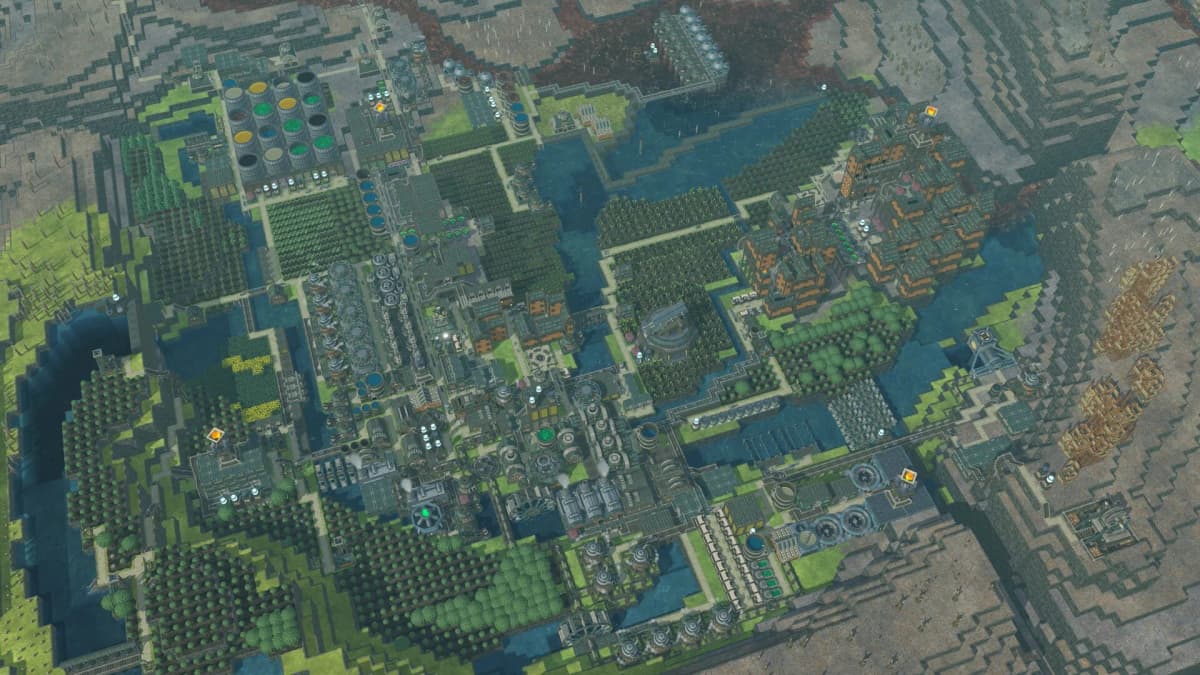
The most common mistake here is placing the farm uphill from the water pocket. Even if the layout looks close on paper, every vertical step cuts into the reach. A second frequent mistake is building the dump too far from a reliable clean source, which turns irrigation into a logistics problem instead of a farming solution.
Why canals are usually the best long-term irrigation layout
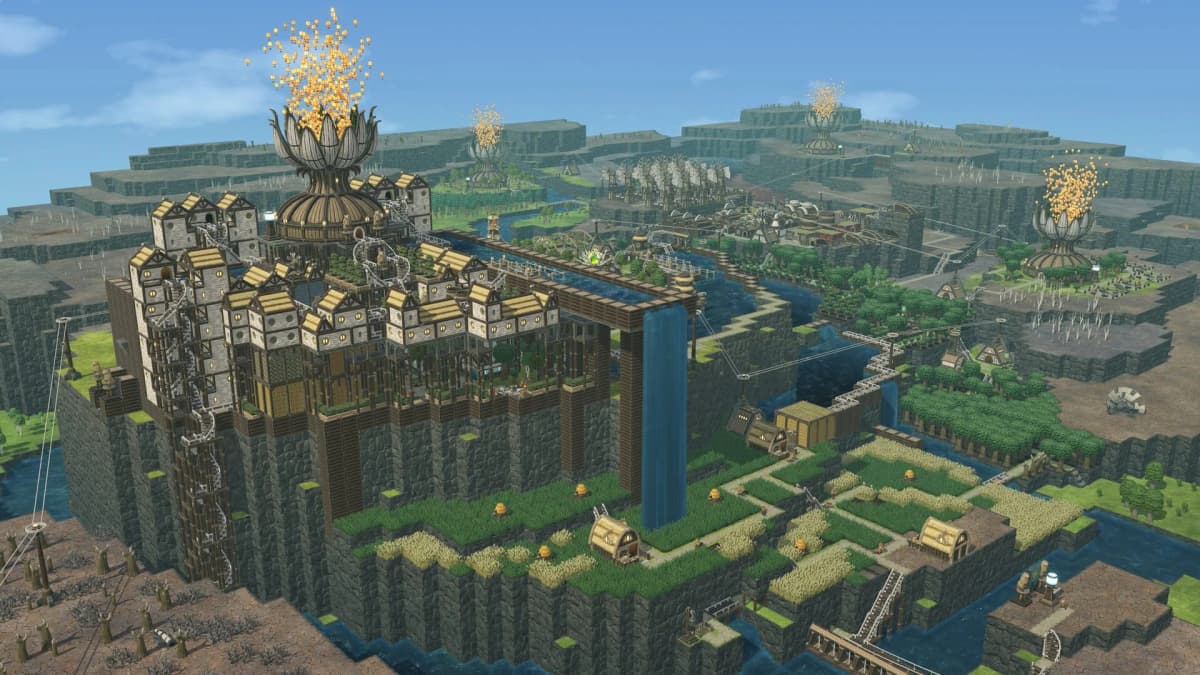
Once you have room to shape terrain, canals are usually the most space-efficient option. Public guides broadly agree on the important pattern: a 1-wide channel irrigates about 6 tiles, a 2-wide channel about 12 tiles, and a 3-wide channel reaches the practical maximum of about 16 tiles. The same testing also says depth does not increase the irrigation range, which is a big deal because it means deeper is not automatically better.
That makes narrow canals extremely strong when land is scarce. Instead of sacrificing a big square pool in the middle of your district, you can run a line of water through the center of the farm and let both sides benefit. In many maps, that gives you more crop tiles per water tile and keeps walking distances cleaner as well.
- 1-wide canal: good when you only need a slim strip of farmland or you are carving through tight terrain.
- 2-wide canal: a balanced choice when you want better coverage without devoting too much land to water.
- 3-wide canal: usually the point where extra width stops paying off, because current public testing frames it as the maximum useful range.
There is one important caveat: older community material describes irrigation as reaching 15 blocks from a watered block rather than 16. That may reflect version differences, a counting-method difference, or both. If you are laying out a giant permanent farm, treat 15-to-16 as a verify in your current version issue rather than a number to trust blindly from an old diagram.
Elevation can quietly ruin an otherwise good farm
Irrigation gets weaker when the farmland sits higher than the water. That one rule explains why some farm districts feel inconsistent even when the water seems close. A flat canal running through flat land performs predictably. A canal at the bottom of stepped terrain does not. Each rise in height reduces effective reach, so a terrace or ridge can break coverage much sooner than expected.
This is why terrain shaping is such a strong optimization tool in Timberborn. If a map gives you rough land, spending labor on excavation or dynamite to lower ridges and cut channels can save water and expand usable farmland. In practice, you are trading construction effort for permanent irrigation efficiency. That is often worth it, especially on maps where arable land is limited by awkward height changes rather than by total space.
When planning tree farms or large crop blocks, keep the watered tiles and the growing tiles on the same shelf whenever you can. If you have to terrace, it is usually better to break the farm into smaller level bands than to expect one low water line to support everything above it.
Water quality matters, not just water coverage
A wet tile is not automatically a safe tile. Public mechanics testing suggests that contaminated water can still irrigate, but once contamination reaches roughly 50%, it may spread out to about 7 tiles and kill crops and trees. So if your district is touching polluted flows or badtide-affected water, the danger is not only drinking supply. It can also wipe out the farm itself.
The safe rule is simple: source irrigation from clean water whenever possible, and keep polluted branches physically separated from farmland. If you are reusing old channels after a contamination event, check the whole route instead of assuming the river has cleaned itself fast enough for crops. In other words, irrigation is both a coverage system and a quality system.
Best scaling patterns for bigger colonies
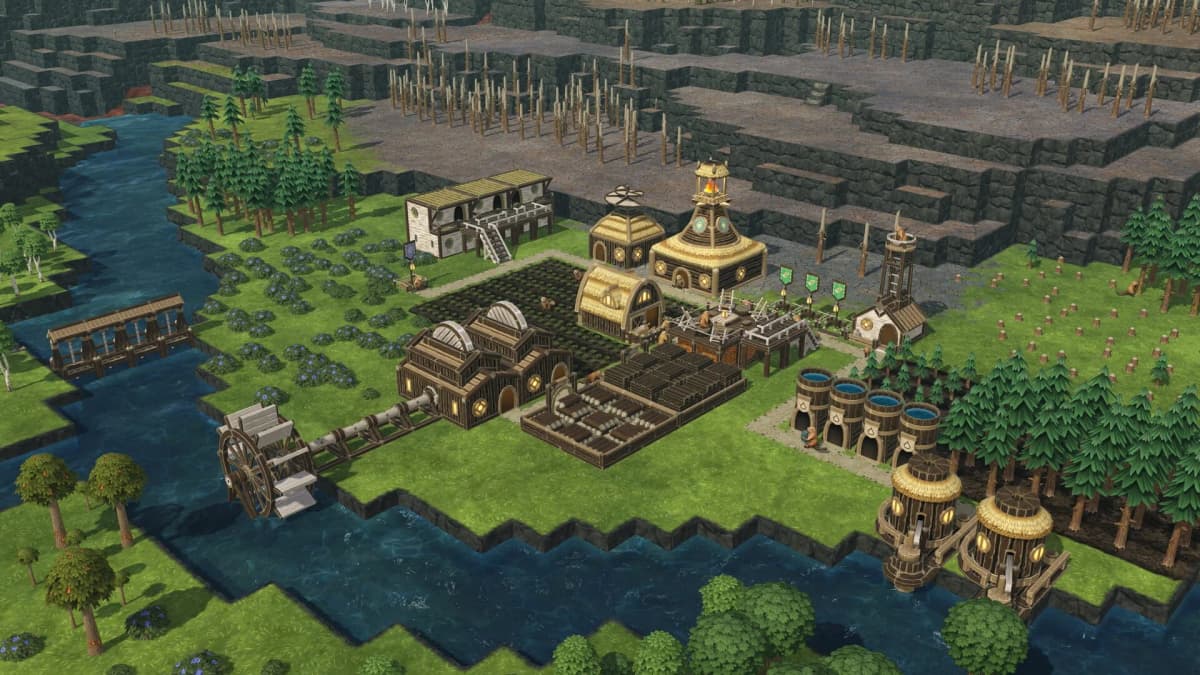
For long-term districts, river-adjacent farming remains the most robust pattern because it minimizes logistics and keeps irrigation predictable. A natural water source plus controlled channels is usually stronger than trying to run a whole agricultural economy from scattered fluid dumps. Dumps are still useful, but they are better as tactical fixes than as the entire plan.
When water becomes abundant, another strong pattern is to use pumps and small irrigating pockets to support multiple farm clusters. One public guide specifically recommends creating small 4×4 holes in several locations and feeding them from your broader water network. That lets you split food production across districts without building one giant central farm that depends on a single canal line.
There is also a newer community-tested idea around subsurface irrigation. A Steam guide focused on buried water layouts says a 2×1 water area below the surface can irrigate roughly five additional ground blocks. That is interesting for compact builds, but confidence is lower here than for standard canals because it comes from community testing rather than a clear official mechanic description. Treat buried irrigation as a specialized layout worth testing in a small patch before you redesign a major district around it.
Common irrigation mistakes that waste land
- Building fields uphill from the water source and expecting flat-ground coverage.
- Making canals deeper when current public testing says depth does not increase range.
- Using a very wide pool where a 1-wide to 3-wide canal would cover more farmland.
- Scaling a fluid dump setup far past the point where hauling can keep up.
- Ignoring contaminated water because the soil still looks irrigated.
- Copying an old 15-tile diagram or a newer 16-tile diagram without checking your current version first.
If you are about to commit to a big farm district, the safest approach is to test one short canal or one irrigation pocket on the exact terrain you plan to use. In Timberborn, the broad rules are stable, but the last few tiles of coverage depend on shape, height, and version enough that a small test plot can save a lot of rebuilding.
FinalBoss // Gear
Level up your setup
01Graphics cardson Amazon→02Gaming laptopson Amazon→03High-refresh gaming monitorson Amazon→04Discounted game keyson Kinguin→
Affiliate links · As an Amazon Associate, FinalBoss earns from qualifying purchases.
Want to Level Up Your Gaming?
Get access to exclusive strategies, hidden tips, and pro-level insights that we don't share publicly.
Ultimate Guide Strategy Guide + Weekly Pro Tips