
Do not race into housing, decoration, or distant expansion in Timberborn. The safest opening is to pause immediately, lay out a compact work loop, gather berries, plant carrots, secure water pumps and tanks, then add wood processing and renewable forestry before the first drought. That sequence works because Timberborn is not mainly a fast-growth city builder. It is a drought-management game first, and your colony lives or dies on whether water, food, wood, and storage are stable before the river stops flowing.
Table of Contents (13)
What this Timberborn guide is actually for
If you searched for a general Timberborn guide, this is the part of the game you are really trying to solve: the opening cycle before the first serious dry spell. You do not “obtain” this guide as an in-game item. You encounter its role the moment a new colony starts and the map begins asking the same hard questions every run: where will the beavers drink, what will they eat after berries run out, and how will you keep production going when green land starts turning brown?
That is why newer beginner advice consistently puts sustainability ahead of expansion. Older early-access habits often treated the early game like a sprint. More recent guidance, especially around the game’s full-release era, leans harder on stable loops, smarter storage, and water control tools such as dams, reservoirs, tanks, and floodgates. The exact best opener can vary by map and faction, but the role of a strong opening guide stays the same: it gets you to the first drought without a supply collapse.
The best opening build order
The most reliable order is simple: pause, place paths, secure food, secure water, then lock in wood and replanting. The details matter, because a sloppy version of that plan still wastes time.
Step 1: Pause immediately and draw the core path network
Your first few seconds matter more than they look. Pausing right away lets you place paths and connect the first resource buildings before any worker starts wandering inefficiently. Keep the opening layout tight. The ideal early colony is not pretty; it is short-distance. Resource buildings should touch the same small work zone so hauling time stays low.
At minimum, plan space for:
- berry gathering near the starting food source
- carrot farming on irrigated green land
- water pumping on reliable river tiles
- water storage close to housing and main paths
- log storage near lumber production
- food storage near farms and later food processing
This is the first place many runs quietly fail. The colony may look busy, but if every beaver spends half the day walking, your real output is much lower than the building count suggests.
Step 2: Use berries now, but switch to carrots immediately
Berries are the starting bridge, not the long-term plan. Gather them early because they are already there, but start carrot production as soon as you can. Across beginner guides, carrots are the most common recommended starter crop because they grow quickly and give you the cleanest path from scavenging to reliable farming.
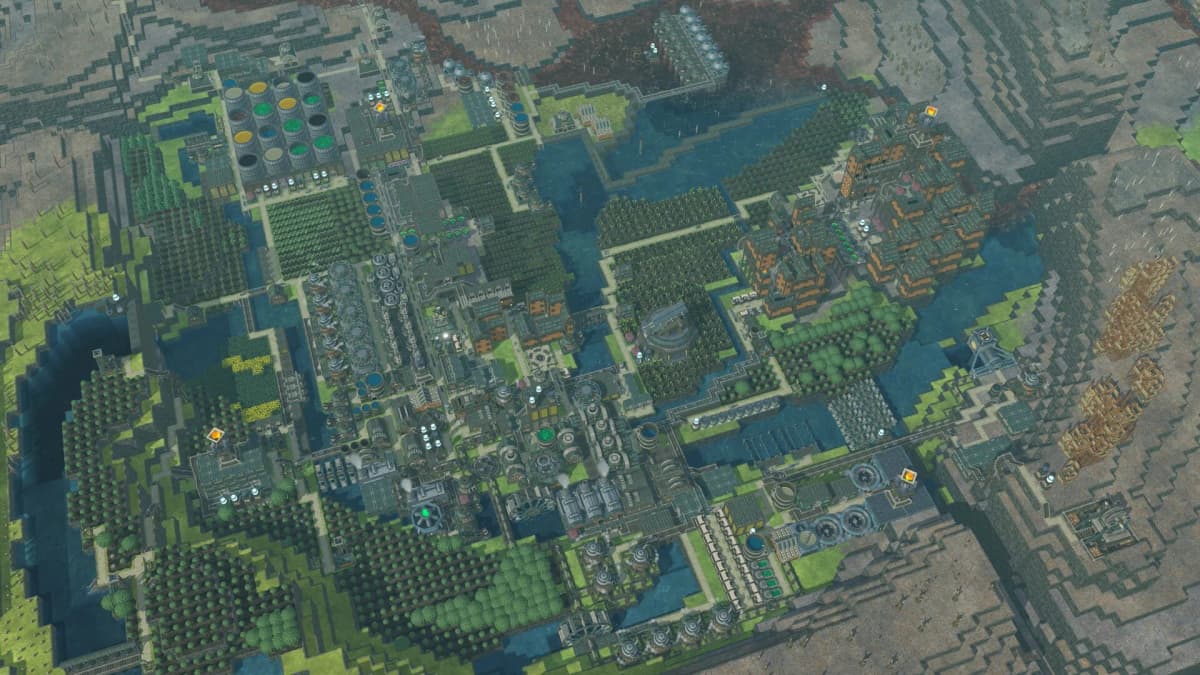
The important land-use rule is easy to miss: buildings can sit on barren ground, but crops need irrigated green terrain. That means you should not waste prime fertile tiles on storage or workshops if you can place those on dry land beside the farm instead. Save the green strip for crops and build the industry around it.
If your opening map has easy berry access, you can delay full farming for a moment, but not for long. If you wait until the berry supply looks low, you are already late. Farming needs lead time, and the first drought punishes late transitions much harder than it punishes modest overproduction.
Step 3: Secure water before you think about growth
Water is the real early-game clock. You need pumps, you need tanks, and you need enough stored supply to ride out dry periods. A practical community benchmark is to aim for at least three days of water and five days of food per beaver before each drought. That is not an official game requirement, and maps can change the real number, but it is a useful planning target because it forces you to think in stockpiles instead of daily income.
Do not make the common mistake of stopping at water pumps alone. Pumped water sitting in the river is not safety. Water only becomes drought insurance after it reaches tanks and stays there. Put tanks close enough to your main colony that refilling and drinking stay efficient.
Step 4: Add wood processing and renewable forestry
Once food and water are not about to break, shift into wood security. Early logs disappear faster than new players expect because every expansion piece competes for the same stockpile. A forester-style replanting setup is what turns your colony from a temporary camp into a renewable settlement. Without it, you are simply consuming the map.
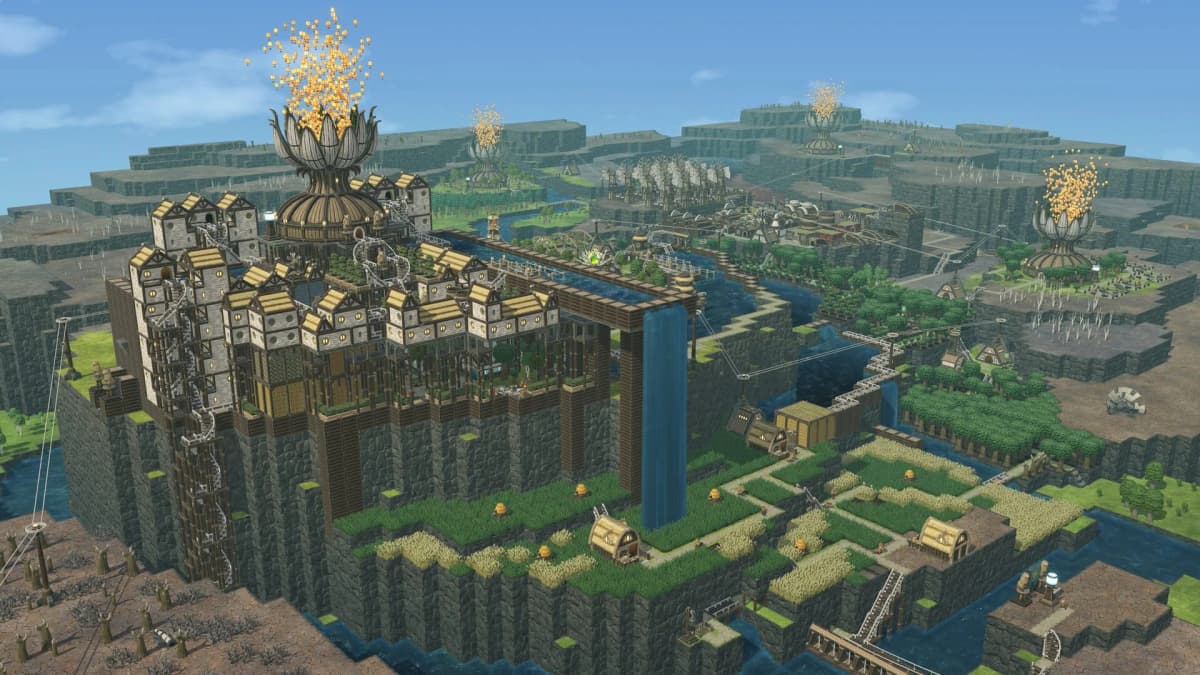
Keep log piles near lumber production. This sounds minor, but it is one of the highest-value efficiency fixes in the game. Timberborn punishes bad storage placement through travel time, not through warning messages, so poor layout can look harmless until the whole colony starts feeling oddly slow.
Why this guide performs well across most starts
This opening performs well because it solves the universal bottlenecks first. Every map and faction can change the order slightly. Some starts make berries and immediate water access so easy that you can delay one piece by a day or two. Other starts push you harder toward carrots and forestry. That is why confidence is only moderate on one exact “best” opening sequence. The broad consensus is stronger than the fine detail: get renewable food online early, store water before drought, and do not overexpand before the core loop is stable.
In practical terms, this is a consistency-first route. It is not always the fastest way to explode into a huge settlement, but it is one of the best ways to avoid the classic collapse where the colony looks healthy until the river dries and half the workforce spends the next cycle hauling emergency water instead of producing anything useful.
Water control tools and when they matter
Early tanks solve short droughts. Water engineering solves the bigger problem. Dams, reservoirs, and floodgates are the tools that turn a map from reactive survival into planned survival. Their role is not just “build later for optimization.” They are the backbone of long-term drought management because they let you keep water where you need it, preserve irrigation longer, and smooth out bad cycles.
If you are still learning, think of the progression like this:
- Pumps and tanks keep beavers alive through the first dry periods.
- Dams and small retention areas help preserve local water and fertile land.
- Reservoirs and floodgates give you more deliberate control once the colony has labor and wood to support bigger projects.
The mistake here is building engineering projects too late or too early. Too late, and droughts keep resetting your farms. Too early, and you starve the colony of the workers and materials needed for basic survival. Get the loop stable first, then scale the water system.
Storage and layout are not side details
A lot of beginner layouts fail because storage is treated like overflow space instead of production infrastructure. In Timberborn, where you place storage directly changes how much work your colony gets done in a day. Food should stay near farms and later near grills or bakeries. Logs should stay near lumber-related buildings. Housing and workplaces should cluster closely enough that the colony is not commuting across half the district.
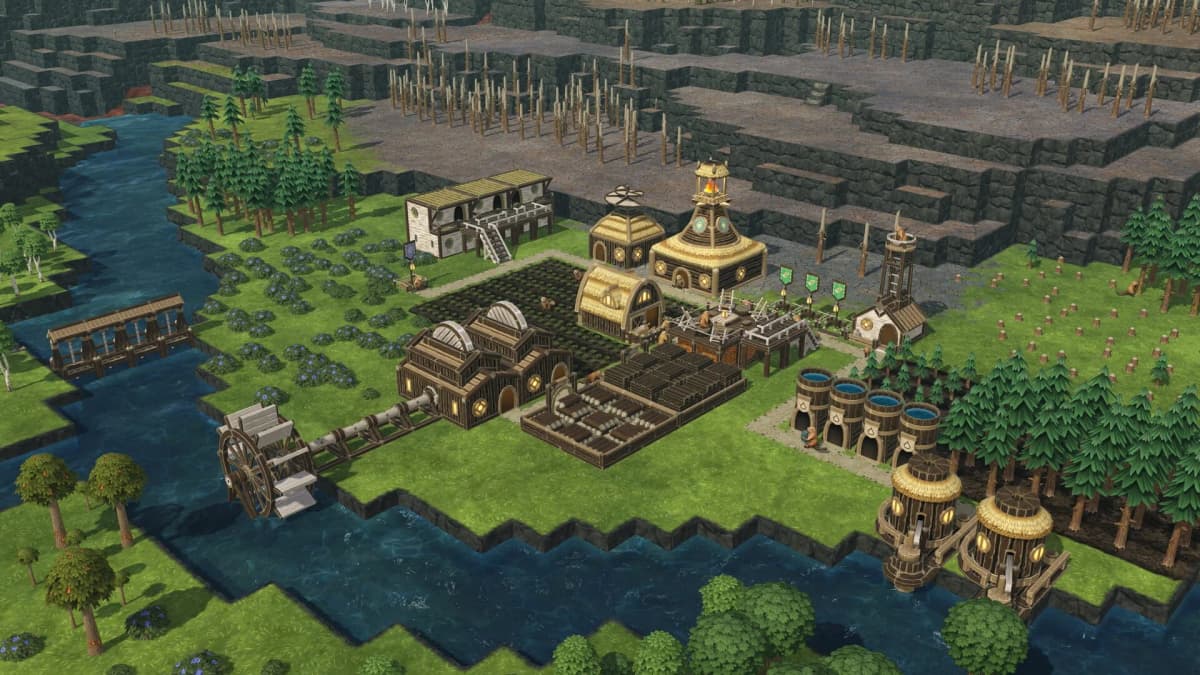
Once your build grows upward or outward, path loops and multilevel shortcuts become real quality-of-life upgrades. They are not required for first-drought survival, but they reduce congestion and trim wasted movement. That matters more as population rises because path inefficiency scales badly. Ten beavers walking too far is annoying. Thirty doing it can quietly cripple throughput.
When to expand into a new district
Do not treat district expansion as the reward for surviving one drought. Treat it as something you do when the starting district is genuinely saturated and can support the move. One beginner guideline suggests moving roughly 10 beavers into a new district as a workable starting population. That is a useful planning number, not a hard rule, because the right timing depends on how much food, water, and hauling capacity the original settlement can spare.
The key question is whether the new district solves a resource problem or just creates a logistics problem. Expand when the second district gives you access to better land, more wood, or critical space you cannot efficiently use from the first district. If it only adds travel distance and another supply chain to feed, it is probably too early.
Common mistakes that this guide helps you avoid
- Expanding before stabilizing: more buildings are useless if water and carrots are not secure.
- Building on fertile land: workshops and storage belong on barren ground whenever possible.
- Relying on berries too long: they are a bridge, not a permanent food plan.
- Ignoring storage placement: long hauling routes make every production chain worse.
- Skipping renewable wood: early logs vanish quickly, especially once you start engineering projects.
- Treating drought prep as optional: if tanks are not filling before the dry cycle, the colony is already behind.
How to adjust this guide for patch-era changes
As the game has moved closer to and into its 1.0-era balance, newer advice has focused more on automation, logistics, and resilient water systems than many older guides did. That does not invalidate the basic opener. It just means the early-game role of this guide is even clearer now: survive first, then optimize. If future patches change crop efficiency, district hauling, or water-control balance, the exact priority order may shift a little, especially around carrots versus other early food chains. The underlying test probably will not change much: a good opening is the one that reaches drought with surplus instead of panic.
Practical takeaway
If you want one clean rule to follow in Timberborn, make every early decision answer this question: does it improve water, food, wood, or storage before the next drought? Pause at the start, keep the colony compact, move from berries into carrots, store more water than you think you need, and start renewable wood before the map’s free supply runs out. That approach will not always be the flashiest opener, but it is the one that keeps a new settlement alive long enough to become efficient.
FinalBoss // Gear
Level up your setup
01Graphics cardson Amazon→02Gaming laptopson Amazon→03High-refresh gaming monitorson Amazon→04Discounted game keyson Kinguin→
Affiliate links · As an Amazon Associate, FinalBoss earns from qualifying purchases.
Want to Level Up Your Gaming?
Get access to exclusive strategies, hidden tips, and pro-level insights that we don't share publicly.
Ultimate Guide Strategy Guide + Weekly Pro Tips