
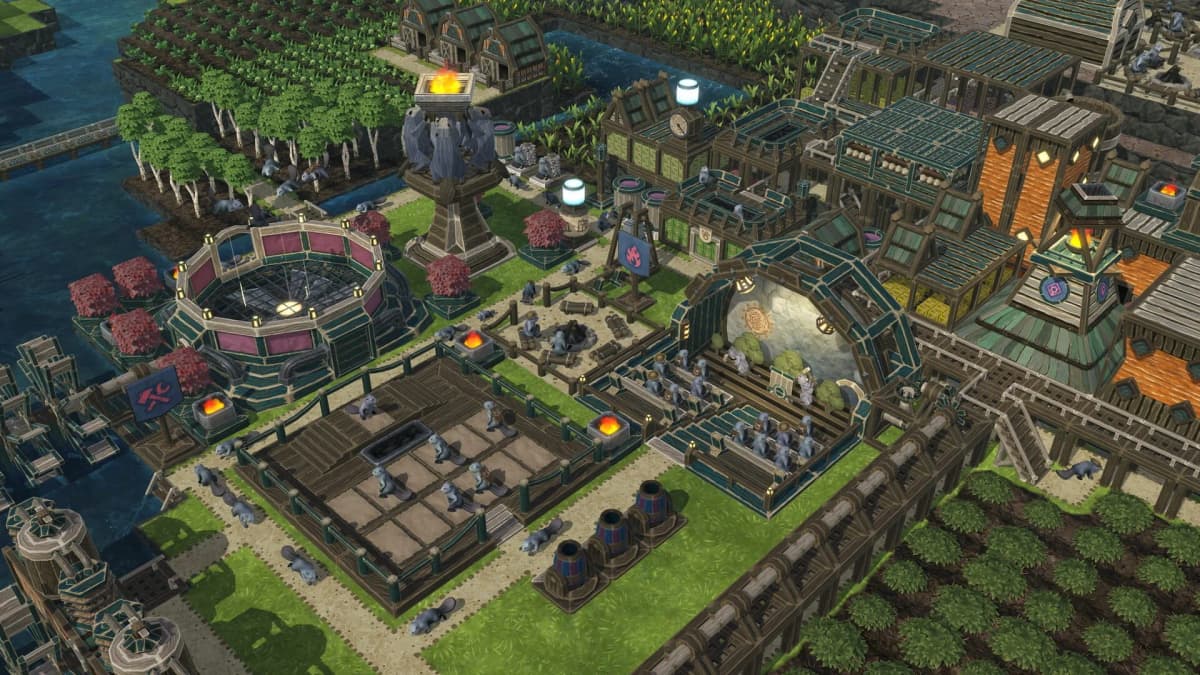
City builders have spent years teaching the same instinct: expand first, fix problems later. Timberborn flips that logic on its head. Here, growth means nothing if the river runs dry at the wrong moment, and that single idea gives the game a stronger identity than a lot of bigger, shinier management sims.
This Timberborn review comes down to that identity. On the surface, it is the beaver city builder where you stack platforms, build dams, and turn a post-human landscape into a tidy little industrial ecosystem. Underneath the charming theme, though, it is a deeply systems-driven strategy game about drought cycles, terrain control, irrigation, logistics, and long-range planning. When it clicks, it feels fresh in a genre that often settles for familiar loops. When it misses, it is usually because the game asks players to create their own momentum after its best ideas are already understood.
The short verdict is strong but specific: Timberborn is one of the most distinctive city builders in its lane, and one of the easiest recommendations for players who enjoy optimization, survival pressure, and self-directed problem solving. It is a weaker fit for anyone chasing story, combat, or a heavily guided campaign with dramatic scripted escalation.
Table of Contents (8)
Key takeaways
- Timberborn stands out because water management is the core challenge, not a side system.
- Vertical building and terrain use give the colony design a tactile, puzzle-like feel.
- The lack of enemies or strong narrative helps the sandbox breathe, but it also makes late-game motivation more dependent on the player.
- Its best audience is strategy fans who enjoy planning, automation, and learning through failure.
A city builder where the river is the real map
The defining strength of Timberborn is that it treats water as the center of the whole colony instead of background decoration. Plenty of builders make rivers look pretty. Timberborn makes them terrifying in a practical, mechanical way. Your settlement survives because you collect water, store it, redirect it, and protect access to it before a drought exposes every bad decision you made two seasons earlier.
That changes the texture of nearly every choice. A dam is not just a nice efficiency upgrade; it can be the difference between stable farming and a slow-motion collapse. A reservoir is not optional flavor; it is insurance. A bad early layout can create a chain reaction where pumps stall, crops lose irrigation, food supplies dip, and population stability falls apart all at once. That cascading pressure is why Timberborn feels more gripping than its cozy animal theme first suggests.
It also gives the game a wonderfully concrete rhythm. Wet periods are for preparation, expansion, and infrastructure. Dry periods are the test. If a city builder like Anno often turns into a balancing act of production ratios, Timberborn adds another layer by making geography itself part of the equation. Elevation matters. River flow matters. The placement of channels, pumps, farms, and storage matters. This is less about painting a pretty settlement on a map and more about forcing the map to cooperate.
That is where the genre magic happens. The classic Timberborn disaster is easy to picture: the riverbed empties, green farmland turns brown at the edges, water access shrinks, and a colony that looked healthy a short while ago starts wobbling because its foundation was never truly secure. The game earns its reputation because those failures do not feel random. They feel legible. Brutal, yes, but legible.
Why the beaver theme works far better than the pitch makes it sound
There is always a risk with an offbeat premise that people will mistake it for a joke game. Timberborn avoids that trap because the beaver fantasy actually supports the mechanics. Lumber, dams, water control, and industrious settlement planning all make instant thematic sense. The concept is memorable, but it is not carrying the game on charm alone. It gives the systems a kind of internal logic that many city builders never quite find.
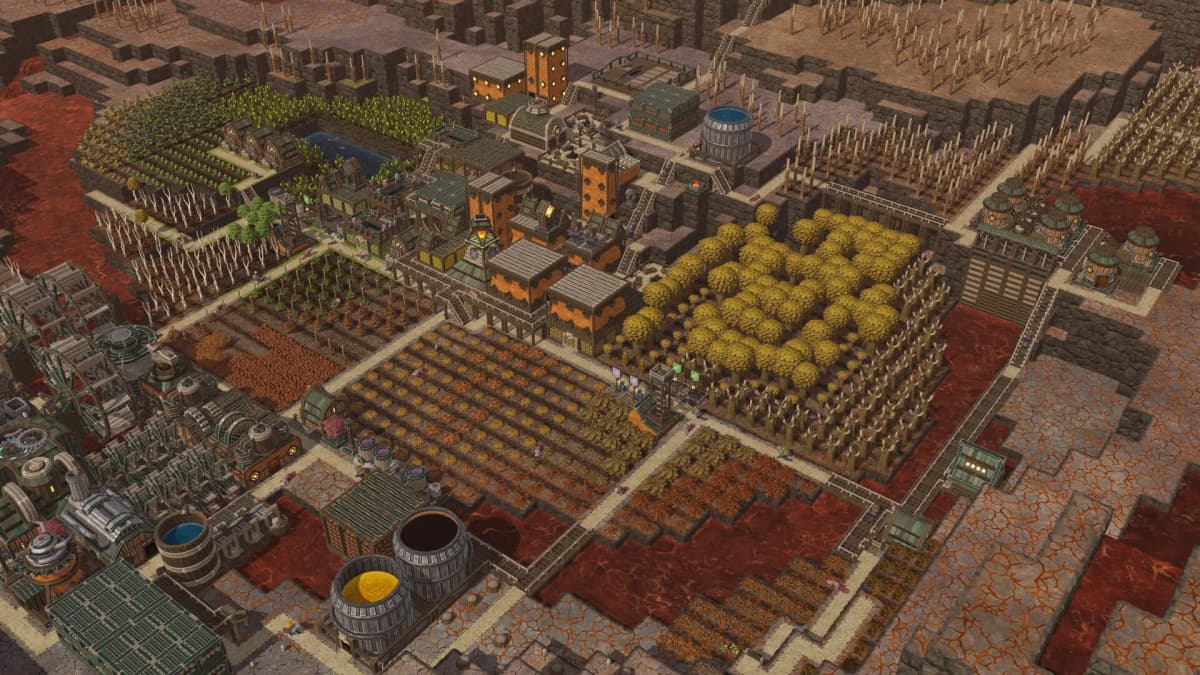
The other big piece is verticality. Review coverage has been consistent on this point for good reason: building upward is not a gimmick here. Platforms, stacked structures, layered paths, and compact infrastructure make the colony feel like an engineering project rather than a flat spreadsheet spread across a field. A cramped area can become efficient instead of annoying. Awkward terrain can turn into a design challenge instead of dead space. That shift is a huge part of why Timberborn feels so satisfying to optimization-minded players.
The faction split helps too, even if opinions on balance and preferred playstyle vary. The important part is that the differences are meaningful enough to change how a colony develops. That gives the sandbox more replay value than a single, one-size-fits-all ruleset would. Even where players disagree about which faction has the stronger tools, the disagreement itself says something useful: the asymmetry matters.
Where Timberborn earns its reputation
The biggest compliment to pay Timberborn is that its systems create stories without needing much authored narrative. There are no enemies charging the gate, no cinematic villain speeches, and not much of a traditional campaign spine. Instead, the drama comes from infrastructure. A successful run feels like a long argument with the landscape that the beavers eventually win through patience, clever routing, and better preparation.
That makes the game unusually good at rewarding experimentation. Some builders quietly punish creativity because they are really asking for one efficient solution. Timberborn seems happier when players poke at the edges of the rules. Redirect a river. Build denser. Use height more aggressively. Rethink where farms belong. Build for redundancy instead of minimum cost. The pleasure is not simply in surviving, but in gradually turning a messy colony into a robust machine that can absorb seasonal shocks.
It also helps that the game’s later layers lean into automation rather than abandoning the core loop. Recent discussion around bots and mechanical workers points to a late-game that keeps feeding the optimization fantasy instead of replacing it with something completely different. That is smart design. The best management games do not discard their central idea after the opening hours; they deepen it. Timberborn appears to understand that, which is part of why it has held attention beyond the initial “beavers building dams” novelty.
There is a clear audience overlap with players who love colony sims, logistics puzzles, and automation sandboxes. If Frostpunk is a pressure cooker built on moral stress and Factorio is a machine obsession built on throughput, Timberborn sits somewhere adjacent to both without really copying either. It is calmer than a disaster game, but more demanding than a chill builder. The tension comes from anticipation rather than panic. That makes it easy to sink into for hours if the underlying puzzle grabs you.
Where the cracks show
The same qualities that make Timberborn special also narrow its appeal. The first weakness is structure. If a player wants a strong story, a campaign with hand-authored escalation, or a clear narrative end point, this game is going to feel thin. It is a sandbox-first strategy title. That is not a flaw in itself, but it does mean the sense of purpose comes less from the game telling you what matters and more from deciding that for yourself.
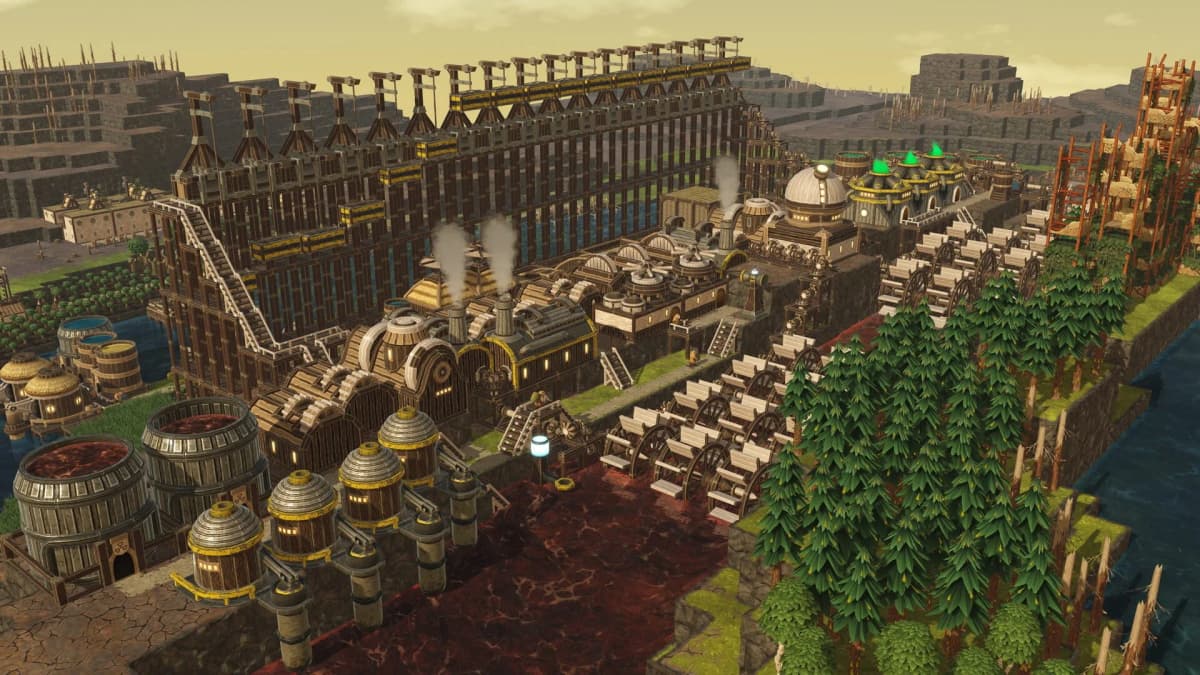
The second issue is how unforgiving the water economy can be. This is one of those games where a small planning error can become a colony-wide crisis because so many systems are interlocked. Food, hydration, labor, expansion, and survival all lean on the same foundation. Fans of hard strategy will call that excellent design, and they are not wrong. Still, it can make the learning curve feel harsher than the art style implies. Timberborn is cute right up until it is not.
There are also design rough edges that come up more often than complaints about spectacle or presentation. Some of the friction lies in logistics limits, district management, pathing considerations, or the way certain mechanics can feel more fiddly than elegant. In other words, the frustrations most often associated with Timberborn are system-friction frustrations. That is better than a broken foundation, but it still matters. A deep management game lives or dies on how readable its rules feel when the colony starts getting complex.
Late-game variety is the last big caveat. Players who love pure optimization may see that as the best part, because the sandbox becomes a space for refinement, automation, and giant engineering projects. Players who need externally provided goals may hit a wall once they understand the main survival equation. The game can start feeling like an elegant puzzle box you keep reopening rather than a journey that constantly reveals new forms of pressure. For some, that is endless replay value. For others, it is diminishing returns.
Who this Timberborn review recommends it to
Timberborn is at its best for a very specific kind of strategy player: someone who likes solving systems, accepts failure as part of learning, and enjoys watching a messy colony become a stable network of production, storage, and environmental control. If building reservoirs sounds more satisfying than fighting armies, this game is speaking your language.
- Play it if: you enjoy colony sims, logistics chains, automation, terrain puzzles, vertical building, and open-ended optimization.
- Play it if: you prefer strategy tension built on planning and infrastructure rather than combat or story drama.
- Skip it if: you want a narrative-heavy campaign, constant action, or a management game that stays relaxed even when you make bad calls.
- Skip it if: self-directed sandboxes tend to lose you once the core loop is understood.
That audience fit matters more than the raw score. For the right player, Timberborn is not merely good; it becomes one of those games that reorganizes how the genre feels. For the wrong player, it can look clever from a distance while feeling sparse or punishing in practice.
Bottom line
Timberborn succeeds because it has an idea strong enough to organize everything around it. Water is the problem, the tool, the timer, and the long-term test. The vertical building, beaver theme, and faction differences all help, but the real reason the game stands out is that it turns environmental control into the heart of city building. That is a far more memorable hook than another generic medieval economy sim with a different coat of paint.
TL;DR
- Best feature: water management that genuinely changes how every colony is planned.
- Biggest strength: vertical construction and terrain use make optimization feel tactile and creative.
- Biggest weakness: limited narrative structure and a late game that relies on self-made goals.
- Final verdict: a standout city builder for systems-focused players, and a specialized one for everyone else.
FinalBoss // Gear
Level up your setup
01Graphics cardson Amazon→02Gaming laptopson Amazon→03High-refresh gaming monitorson Amazon→04Discounted game keyson Kinguin→
Affiliate links · As an Amazon Associate, FinalBoss earns from qualifying purchases.
Want to Level Up Your Gaming?
Get access to exclusive strategies, hidden tips, and pro-level insights that we don't share publicly.
Ultimate Reviews Strategy Guide + Weekly Pro Tips