
Table of Contents (8)
The Day I Realised the “Idol Game” Was Doing More Than Most Grimdark RPGs
When Tokyo Mirage Sessions #FE first dropped on Wii U, I laughed it off. I’m a long-time Shin Megami Tensei and Fire Emblem snob – the kind of idiot who plays Nocturne on Hard “for the principle of it” and argues about which Fire Emblem has the best permadeath tension. So when Nintendo told me, “Hey, the crossover you’ve been waiting for is here… and it’s about J-pop idols and talent agencies,” I rolled my eyes so hard I practically soft-reset my skull.
On paper, it sounded like a marketing department mashup: a little Persona social sim, some Fire Emblem fanservice, slap on a bunch of neon idol aesthetics and call it a day. I picked it up anyway – mostly because the Wii U library was starving – fully prepared to sneer my way through 10 hours and shelve it as a curiosity.
Instead, ten years later, I’m sitting here genuinely annoyed that more people don’t talk about this game as one of the smartest, most coherent JRPGs of the 2010s. Not because it’s flawless (it absolutely isn’t), but because Tokyo Mirage Sessions is one of the few RPGs that actually has the guts to say something real about art, labor and the way we fight recurring evil – and then builds its systems around that idea.
While everyone else was whining that it wasn’t “dark enough” or clutching pearls over censored outfits, this game quietly laid out a thesis: collective art-making is a weapon, pop performance is labor, and both matter when the world starts to slide into the abyss.
Combat That Feels Like a Concert, Not Just a Turn Order
Let’s start with the part that hooked me before I even clocked the themes: the combat. People love to call Tokyo Mirage Sessions “Persona-lite,” but that sells its battle system criminally short. The whole Session mechanic might be the most elegant twist on classic weakness exploitation I’ve seen in a turn-based JRPG.
The basics: you hit an enemy with something they’re weak to – weapon, element, whatever – and that can trigger a Session, a chained follow-up from other party members whose skills connect off that weakness. The first hit costs EP (your usual skill resource). Every chained follow-up after that? Free. No resource drain, just escalating damage and spectacle. It’s the RPG equivalent of nailing the first chorus and suddenly the whole band crashes in behind you.
Early on, it’s simple: one extra hit, maybe two. But as you unlock new Carnage Unities (basically weapon fusions) and Session skills in the Bloom Palace, the thing snowballs. Benched characters start jumping in from off-stage, turning a clean opening into a 7+ hit lightshow of spears, fireballs and sonic kicks. It’s like the game is screaming at you: build a lineup, not just a party.
What I love is how much this flips the usual “optimal play is boring” problem on its head. In so many RPGs, exploiting weaknesses becomes rote bookkeeping. You’re not making art, you’re doing taxes. Here, you’re rewarded for thinking of each turn as a performance setup. You’re not just asking, “How do I do the most damage?” You’re asking, “Who do I want to bring on stage next, and what kind of combo do I want this to become?”
Then the game layers on Ad-lib Performances and Special Performances – wild, character-specific supers that cut in like surprise solos. Ad-libs can hijack a normal skill and spin it into a full-song setpiece, complete with music, choreography and massive effects. Dual Arts kick off mid-Session and suddenly two characters share the spotlight, extending the chain even further. On paper, it sounds like too much. In practice, it feels like being trapped inside the most over-produced J-pop concert imaginable, and I mean that in the best possible way.
Yes, by late game the animation length can get indulgent. I’ve seen people say the pace starts to drag because every random encounter risks turning into a fireworks show. Personally? I’ll take “too many victory laps” over another bland, three-hit auto-attack slog any day. At least here, the excess is working in service of the fantasy: you are literally turning combat into a show.
When Your Job Is Your Weapon: Performer Labor as Mechanics
This is where Tokyo Mirage Sessions quietly bodies a lot of “serious” RPGs. Most games love slapping jobs and titles on characters without ever making their actual work feel real. “Mercenary,” “student,” “cop,” “idol” – it all blurs into the same basic loop of fight, loot, repeat.
Here, your day job is the combat system. Your crew isn’t a secret superhero squad that happens to sing sometimes. They’re entertainers whose ability to transform their feelings and experiences into performance – literally Performa, the energy of creativity – is what powers their weapons. Your armor is stage outfits. Your skill trees are acting lessons, dance practice, vocal coaching, commercial gigs. When you level up a character’s side story, you’re not just ticking affection meters, you’re watching them wrestle with what it means to have an audience and a career.

Even the basic reward loop has teeth. Every hit in a Session chain spits out money or items. It’s not subtle: all your labor is compensated, every member of the troupe gets paid for contributing to the show. In a genre where party members are usually unpaid interns in the protagonist’s personal trauma journey, that tiny mechanical decision reads like a middle finger to the idea that creative work should be its own reward.
Whether Atlus intended it or not, the game ends up saying something sharp: performance isn’t some frivolous distraction from “real” heroism. It is the heroism. The grind of improving your craft, the invisible work of rehearsal and self-doubt and collaboration – Tokyo Mirage Sessions drags that labor onstage and gives it stats.
Dungeons as Industry Nightmares, Not Just Elemental Caves
Structurally, the game borrows heavily from Persona: themed dungeons that represent distorted psyches and social spaces. But instead of generic “lust castles” or “greed pyramids,” you’re trudging through nightmares built from the machinery of show business.
One early standout is the photography dungeon, a space warped by a toxic photographer’s gaze. Staircases twist in impossible Escher loops, walls are plastered with blown-up headshots, and the whole place feels like being trapped inside a lens that never blinks. Elsewhere, you get a fashion labyrinth, an infernal TV studio, a warped concert hall – all places where real people grind themselves down chasing the spotlight.
And yeah, this is where I have to stop praising long enough to call out the bullshit: mechanically, a lot of these dungeons are just okay. There’s too much backtracking. Some of the puzzles feel like they escaped from a mid-tier PS2 JRPG. Popping back to the Bloom Palace or Fortuna Office for upgrades means sitting through more loading screens than I’d like, especially on the original Wii U version. The Switch Encore release smooths some of that out, but the bones are the same.
But even when the layouts are middling, the ideas behind them land. You’re not spelunking random ruins; you’re tearing through the guts of an industry that eats people alive. The enemies aren’t just demons – they’re corrupted agents, twisted fans, weaponized expectation. It’s Persona’s “dungeon as metaphor” approach, except instead of watered-down Seven Deadly Sins, we’re talking about specific pressures of modern entertainment work.
The Finale That Quietly Outclasses Darker, Edgier RPGs
The moment Tokyo Mirage Sessions fully clicked for me was its climax. I won’t get into spoiler blow-by-blows, but the setup is this: evil in this universe isn’t some one-off atrocity, it’s cyclical. It keeps coming back dressed in slightly different clothes, preying on the same old insecurities. Sound familiar?
The solution the game lands on isn’t “find a bigger sword” or “accept the darkness in your heart” – the usual JRPG philosophy grab bag. Instead, your crew revives a long-forgotten opera, buried in dusty texts and half-remembered legends, and stages it in the present to push the darkness back. Art created in one age becomes a survival manual for the next one.
That hit me harder in 2026 than it ever did in 2016. We’re living in this exhausting loop where the same hateful ideologies keep respawning with a fresh coat of meme paint. The same corporate exploitation schemes keep getting rebranded as “creator economy” or “platform opportunity.” It’s all recurring evil – just with nicer UX.
Tokyo Mirage Sessions’ answer to that is refreshingly earnest: people before you have already faced versions of this. They left you blueprints in their art, in their stories, in their performances. Your job isn’t to pretend you’re the first to resist; it’s to listen, reinterpret and carry that resistance forward in your own medium.
No, It’s Not “Just Idol Fluff” – And That Dismissal Says More About Us
I’m still irritated by how quickly the gaming hive mind dismissed Tokyo Mirage Sessions as “idol trash.” A lot of that came from bait-and-switch expectations – people wanted SMT x Fire Emblem and got something closer to “Persona goes to a talent agency.” Fair enough. But there was also this sneering attitude that because it’s about J-pop, fashion, and stage fright instead of war crimes and leather jackets, it must be shallow.
Meanwhile, the game is quietly tackling stuff like:
- How it feels to be typecast and told you’re only good for one kind of role.
- The terror of losing your voice – literally, for one character – and wondering if you’re still worth anything without it.
- The grind of smiling through burnout because the show, and the industry, doesn’t care about your mental health.
- The parasitic side of fandom, where adoration flips into entitlement the second you step outside someone’s fantasy.
These aren’t background flavor text ideas. They’re baked into character arcs, side quests and dungeon themes. When one actress is being pushed into sleazy jobs she’s not comfortable with, it’s not presented as kinky fanservice – it’s a problem to solve, a system to push back against. When another character obsesses over her idol persona, the game actually interrogates what it means to live as a brand instead of a person.
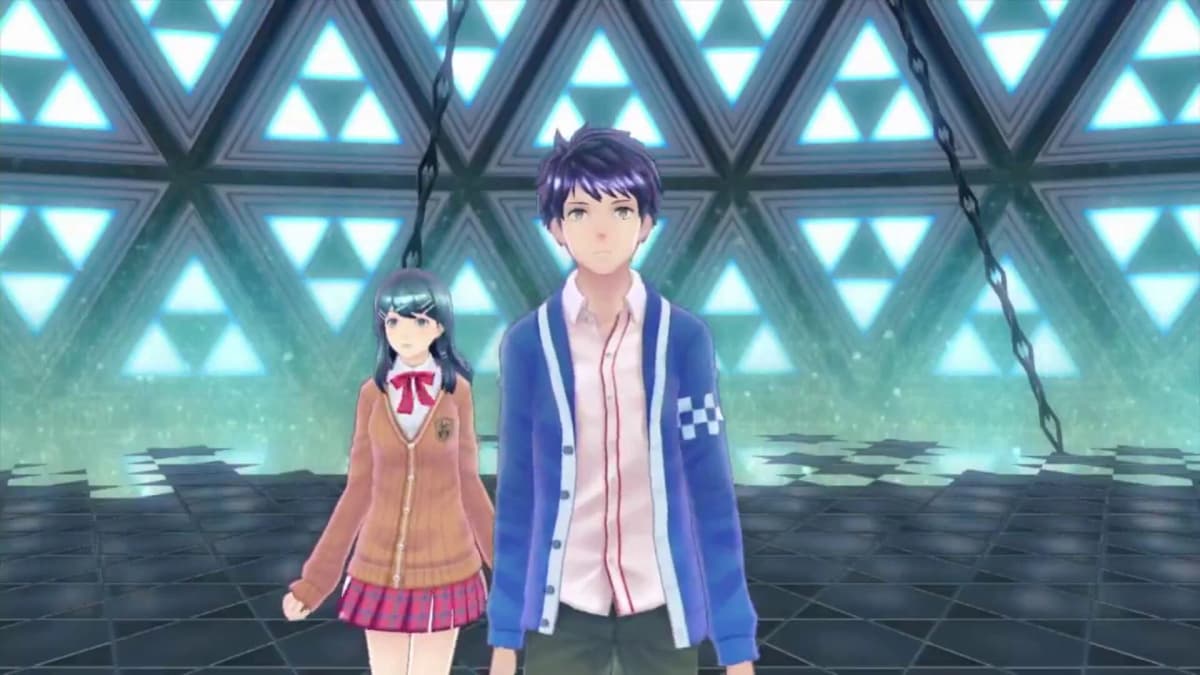
And honestly? The way we talk about this game exposes a deep bias in gaming culture. If this exact script had been about an angst-ridden rock band of sad boys, people would be writing 5,000-word thinkpieces about authenticity and the commodification of rebellion. But because it’s bright, colorful and unapologetically rooted in feminine-coded J-pop aesthetics, a chunk of the audience slapped a “fluff” label on it and walked away.
I’m over it. Guns and grim palettes don’t automatically make something serious. Tokyo Mirage Sessions understands performance as work, fandom as a double-edged sword, and art as a way of passing down survival strategies. That’s more than I can say for a lot of self-proclaimed “mature” RPGs that confuse misery with depth.
Why Tokyo Mirage Sessions Hits Harder in 2026
Replaying the Switch Encore version recently, the game felt weirdly prophetic. We’re now deep into the era of global idol industries, VTubers, algorithm-optimized parasocial relationships – entire economies built on turning performance into round-the-clock labor. Stories about pop stars hunting demons with the power of music are suddenly everywhere, from animated films to quirky indie RPGs.
Tokyo Mirage Sessions doesn’t have all the answers – it’s still a commercial product, still romanticizes the industry to a degree – but it sees the pressure cooker clearly. It shows you the machinery, then lets you imagine a version of that world where the performers aren’t just content, they’re collaborators in fighting something genuinely monstrous.
What sticks with me is how collective the whole thing is. You don’t save Tokyo as a lone genius. You do it as a group of working artists, plus the people who support them: managers, mentors, even fans. The game imagines a creative ecosystem where everyone’s contribution matters, from the front-facing idol to the person who believed in them when they were bombing auditions.
In an industry – both real and fictional – obsessed with individual protagonists, that’s quietly radical. Evil keeps coming back, but so does the chorus.
My Line in the Sand: This Game Changed How I Look at “Grinding”
After a couple of full playthroughs, Tokyo Mirage Sessions did something I didn’t expect: it made it hard for me to take lazy RPG design seriously. When I boot up a game now and see “actor” or “musician” or “cop” in a character bio, I immediately ask, “Okay, but where does that show up in the mechanics? Where’s the labor?”
Because once you’ve seen a system where every combo chain is literally a staged performance, where the grind to unlock new moves is directly tied to your character’s career growth, it’s hard to go back to “this bard hits things with a sword and sort of plays a lute in cutscenes sometimes.” Tokyo Mirage Sessions showed me that “grinding” doesn’t have to be a mindless treadmill – it can be a way to embody your character’s work.
It’s far from perfect. Some dungeons drag. The censorship drama around outfits in Encore was a needless mess that distracted from far more interesting conversations about how the game portrays exploitation. And Atlus has clearly decided that Persona is the cash cow worth milking while this weirdo idol experiment rots in the vault.
But if we’re talking about JRPGs that actually commit to a central idea and build everything – story, combat, aesthetics – around it, Tokyo Mirage Sessions #FE is absolutely up there. It believes, maybe naively, that art isn’t just an escape hatch from a broken world. It’s one of the sharpest tools we have to recognize patterns of harm, remember who fought before us and imagine how we might fight back now.
Ten years ago, I wrote it off as a silly idol spin-off. Now, if someone tells me they love JRPGs and haven’t played it, that’s the first thing I recommend. Not because it’s niche, or ironic, or “so bad it’s good,” but because it’s one of the few games honest enough to say: yes, the demons keep coming back – but so do the songs.
FinalBoss // Gear
Level up your setup
01Top-rated gaming headsetson Amazon→02High-refresh gaming monitorson Amazon→03Gaming chairson Amazon→04Discounted game keyson Kinguin→Affiliate links · As an Amazon Associate, FinalBoss earns from qualifying purchases.
Want to Level Up Your Gaming?
Get access to exclusive strategies, hidden tips, and pro-level insights that we don't share publicly.
Ultimate Gaming Strategy Guide + Weekly Pro Tips