
Table of Contents (7)
Tomodachi Life Just Gave Me a God Complex (And I’m Not Sure I Like It)
Tomodachi Life: Living the Dream might be the first game that’s ever made me genuinely offended on behalf of my Mii.
Within an hour of starting my island on Switch, I’d created a fictional grandma called Helga – 67 years old, reserved, observant, just the right amount of quirky – and introduced her to the Mii version of myself. I dragged my Mii over to her like some overbearing social coordinator, dropped us on a bench, and watched the conversation unfold.
It did not go well.
My Mii walked away visibly upset, and I actually felt my stomach drop. I wasn’t just annoyed at the game; I was annoyed at Helga. Some part of my brain instantly went, “How dare you upset my tiny digital doppelgänger, you algorithmic grandma?” That’s when it hit me: this game is messing with my head in a way most life sims don’t even try.
I’ve played The Sims. I’ve sunk ungodly hours into Animal Crossing. I’ve lived through the Tamagotchi era. None of those have made me feel as uncomfortably powerful – and weirdly responsible – as Tomodachi Life: Living the Dream does in its first few hours.
The twist is: I’m a complete newcomer. I skipped the 2014 3DS original. So this Switch version is my first real taste of Nintendo’s “what if Miis had chaotic inner lives” experiment. And right now, I’m stuck in this bizarre emotional limbo where I’m absolutely in love with the absurdist humor and customization… but already side-eyeing whether this whole “playing God” loop is going to fall apart once the novelty wears off.
The Island Is Finally a Real Place, Not Just a Menu
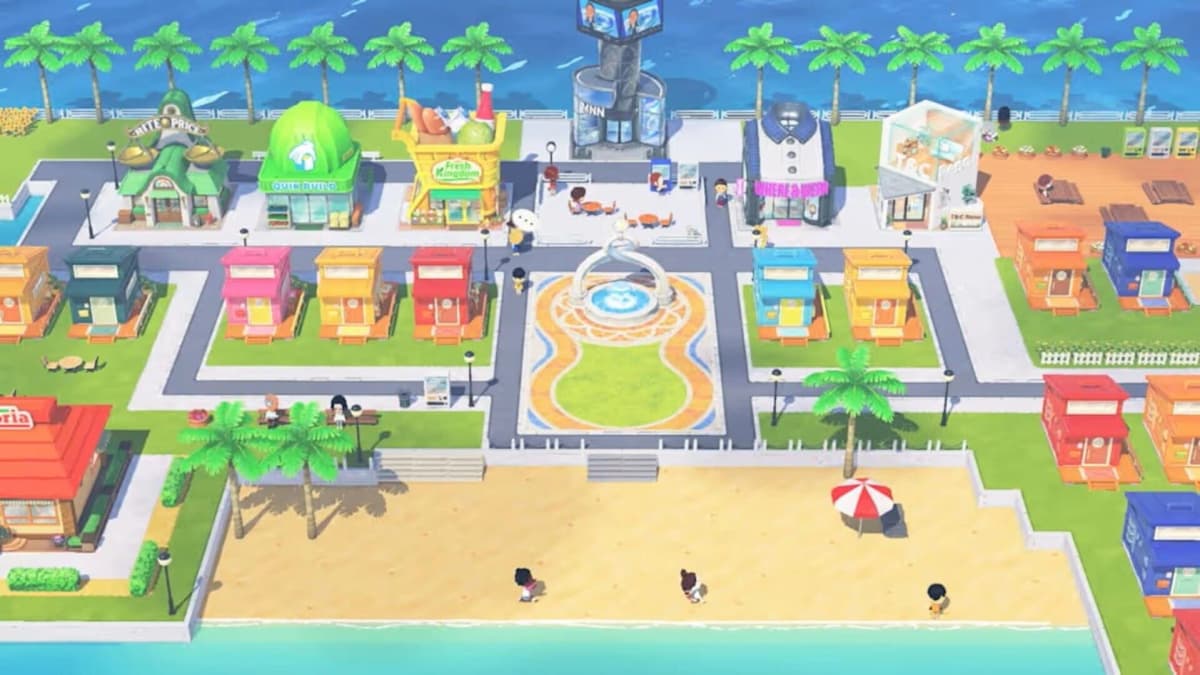
The first thing that sold me on Living the Dream is how physical the island feels compared to what I know about the 3DS version. Instead of just bouncing between menu icons and static screens, you’ve got a fully explorable island where Miis wander around, laze on benches, poke vending machines, or just stare into the middle distance like they’re contemplating the void.
And I mean that literally: I can just grab a Mii, pick them up, and drop them wherever I want. Want to force an awkward conversation between your boss Mii and your best friend Mii? Drag, drop, and wait for the social carnage. Want your partner Mii to sit alone on a bench facing a trash can, pondering their life choices? You can absolutely do that.
There’s a “cap’n” of the island, and in my case that’s… me. The game outright frames you as this slightly meddling god-figure whose job is to keep everyone vaguely happy and the island vaguely lively. Miis wander, you nudge, they react, you intervene again. It’s a constant feedback loop where you’re always just one step away from either fixing their lives or making them worse.
That loop is helped a lot by how easy it is to physically shape the island. Terraforming uses a satisfying tile-based system – nothing as deep as a full city-builder, but there’s real pleasure in carving out little walking paths, dropping benches under trees, and placing random objects just to see if the Miis will ever use them. One minute I’m laying down trees and lamps for “high-octane relaxing,” the next I’m realizing half my residents are ignoring my lovingly arranged park to sit on the sand and talk about food instead.
This isn’t Animal Crossing-style long-term design strategy. It’s more like poking an ant farm with your finger and seeing which way the ants scatter. And for the first few days, that’s honestly brilliant.
Mii Customization Is the Best It’s Ever Been (And It Needs to Be)
Let’s talk about Miis. Nintendo has spent the better part of a decade pretending Miis are an embarrassing relic of the Wii era, and then this game shows up and reminds me that, actually, Miis can be nightmare fuel in the best possible way.
Living the Dream goes way harder on customization than I expected. You’ve got more detailed options: better hair (split into front and back sections so you can mix styles), more expressive faces, weird little details like ears you can finally tweak properly, and prefab styles you can quickly adjust instead of building every Mii from scratch. It’s not some ultra-realistic character creator, but that’s the point – the uncanny, plastic look is part of the magic.
Then there’s the personality system. The game makes you answer a handful of questions, tweaks some sliders, and spits out a personality label that feels like it was written by a judgmental horoscope app. My Mii got tagged as a “Reserved Perfectionist.” I laughed, then stared at the screen a little too long. Thanks, Nintendo, I didn’t open this game to be called out.
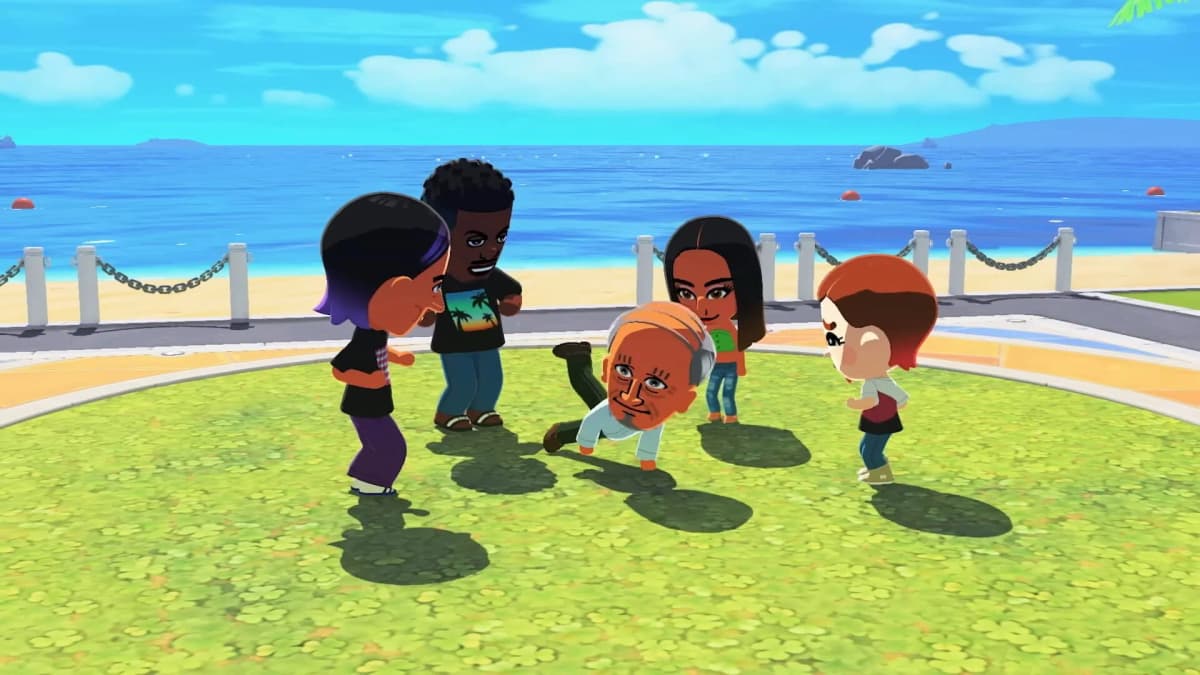
Those personality quirks don’t turn Tomodachi into some deep psychological sim, but they feed into the magic trick: you start to believe these are your people. Even when you invent them from scratch – like Helga, or the kid who proudly wanders around in a cow suit – their weird little behaviors start to matter. When they’re sad, it annoys you. When they’re ecstatic about a gift, you feel smugly validated, even though you just gave them digital toast.
And because the editor is genuinely powerful, you’re encouraged to fill the island with people you actually know: partners, friends, coworkers, celebrities, fictional characters, the guy who makes your coffee. So when the game starts generating completely deranged social situations between them, it lands twice as hard.
The Humor Is Peak Nintendo Nonsense
Here’s where Tomodachi Life absolutely nails it: this thing might be the funniest Nintendo game I’ve touched in years, and I don’t just mean “cute chuckles.” I mean out-loud, “what the hell did I just watch?” laughter.
You’ll see Miis randomly trip and faceplant, then decide whether to help them up yourself or drag a nearby stranger over to do it. They can freeze mid-step in a hiccup loop until you intervene. One second you’re watching a totally ordinary chat, the next your Mii is asking your partner’s Mii if they’re “good at movies” and getting the response, “I’m better at movies than everyone else.”
Conversations veer into bizarre territory at whiplash speed. Lines like, “Would you say that a board game makes you think of an iced latte?” just appear out of nowhere, delivered with straight-faced sincerity. I’ve had dream sequences that feel like someone fed a Miitopia script into a fever-dream generator: four Miis worshipping a hyper-realistic rabbit, surreal landscapes, the kind of imagery that makes you blink twice and wonder how this passed internal review.
Then there are the in-game news broadcasts, which are basically sketch comedy interludes starring your Miis, and the strange mini-games like Red Light, Green Light or Zoom Quiz that inject a bit of WarioWare-style energy into the loop. They’re simple, but they’re sharp, and they give you more items and gifts to feed back into your God toolbox.
This is where Tomodachi feels like Nintendo finally letting its freak flag fly again. It’s weird, wacky, unpredictable, a little bit cringy, and absolutely built for “you won’t believe what my Miis just did” stories. As a pure absurdist comedy engine, Living the Dream is incredible value.
But Here’s the Problem: The God Game Loop Gets Repetitive, Fast
Now we get to the part where I start side-eyeing this game hard.
Under all that brilliant nonsense, Tomodachi Life is built on a pretty simple loop: your Miis have needs, you satisfy them, they level up, you give them stuff. Over and over. That’s the core of the game. And the longer I play, the more I feel the edges of that loop closing in.
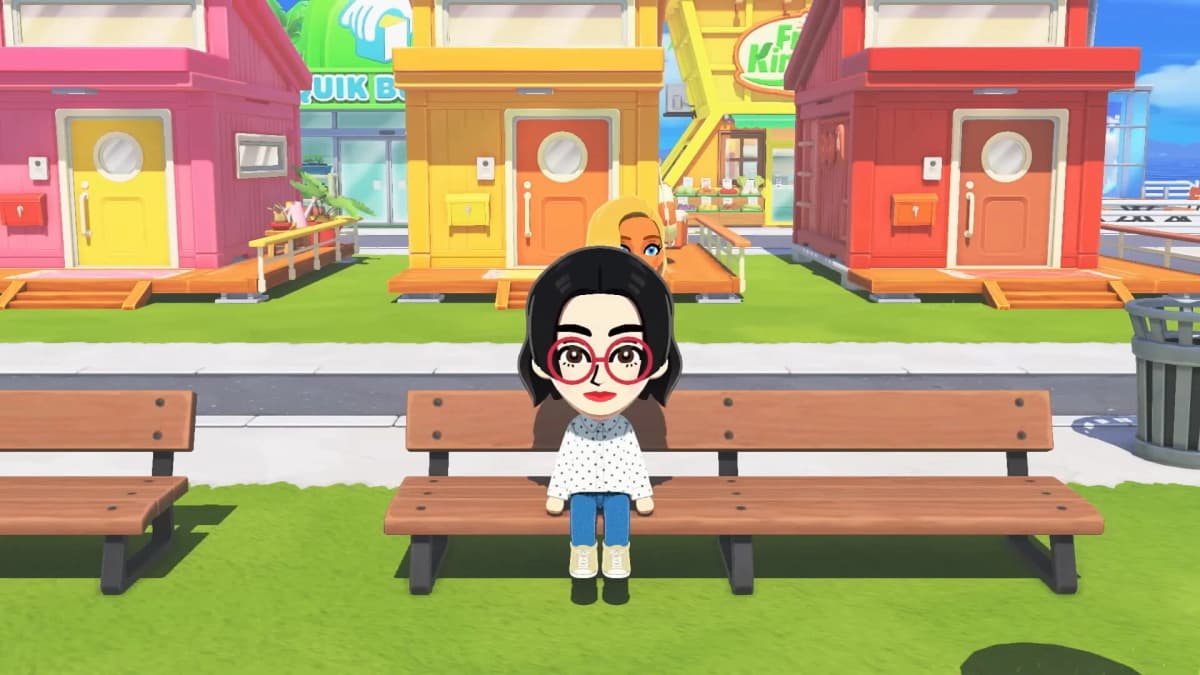
A Mii gets hungry. You open the food shop, wince at the price of an apple (why is an apple an economic jumpscare?), buy them something, and hope they like it. A different Mii decides they want to be friends with someone specific, so you help them brainstorm a topic – I picked “Movies” for my partner and me, because of course I did – and then sit back to see if the friendship takes. Sometimes it does. Sometimes they walk away awkwardly and sulk.
Every time they level up, you choose a reward: a new phrase, a new expression, maybe a gift like a baseball or a toy they’ll occasionally pull out at the beach or in their apartment. It’s satisfying the first dozen times. It’s still kind of satisfying the second dozen times. But eventually, you start to see the cracks: “I’m hungry,” “I want to be friends with X,” “I want something new to say,” “I’m bored of my clothes.” Rinse, repeat, forever.
And because you can pick up and drag Miis around like little dolls, the temptation is to constantly micromanage every interaction. Drop this one next to that one. Nudge two people together and hope they start flirting. Haul someone out of their house to go touch grass at the park. You’re the invisible hand behind every moment of social progress.
Here’s the thing: I don’t actually love that. Playing God sounds fun in theory, but in practice, it starts to feel like owning Sea-Monkeys or a Tamagotchi again. You’re constantly checking in to make sure your little guys aren’t starving or lonely, only now they also want you to play party games with them and redesign their apartment.
For a while, the chaos and novelty paper over how basic that loop really is. Eventually, though, you hit that point where you realize you’re doing the same three things: feed, friend-match, decorate. The drama’s still funny, but the inputs feel mechanical.
Island-Building Is Great, But It Can’t Carry the Whole Game
The island builder is genuinely one of my favorite parts of Living the Dream. Expanding land, dropping new buildings, tweaking paths, placing trees and benches – it all makes the island feel like a living environment instead of a menu hub. You can even throw in vending machines and random objects, then sit back and wait to see which Miis gravitate where.
But, again, the question is longevity. Once you’ve unlocked a decent spread of buildings and seen most of the little animations that play when Miis use them, the thrill of placing your fifteenth bench for “maximum loitering potential” starts to fade. The island becomes a pretty diorama for the same cycles of needs and micro-dramas.
The in-game economy partly exists for jokes – like a leg of lamb costing almost as much as a park bench, or kids and elderly Miis inexplicably running your grocery store and home renovation shop – but it also reinforces the feeling that you’re endlessly funneling money into systems that don’t really deepen over time. You’re buying more food, more clothes, more décor, more gifts… to trigger slightly different versions of the same reactions.
As someone who likes slow, slice-of-life games – I’ll happily spend hours rearranging a room in a Yakuza game or wandering aimlessly in something like Shenmue – I’m not coming at this from the “every game must be a grindy power fantasy” angle. I like chill. I like quiet. I like watching little scenes play out.
But even with that bias, I can already feel the limits here. This is a toybox, not a deep sim. A brilliant, hilarious toybox, but a toybox all the same. And you need to be honest with yourself about how long that’s going to stay fun.
A Newcomer’s Take: Living the Dream… In Short Bursts
Coming into Tomodachi Life totally fresh, I’m having a great time in the short term. The expanded island, the Mii customization, the sheer volume of weird social moments – all of that hits hard when it’s new. I get why people loved the original 3DS game; there’s nothing else that captures this exact mix of surreal comedy and low-stakes social chaos.
But precisely because I didn’t play the original, I’m also not nostalgic enough to ignore the repetition that’s already creeping in. If you rinsed the 3DS version back in the day, this Switch upgrade will probably feel like the best possible version of something you already know you like: more freedom, better customization, livelier island. If you bounced off the original because the loop got stale quickly, I don’t see enough here – from what I’ve played – to completely rewrite that story.
Could the late-game unlocks and long-term events add more depth? Maybe. Could future updates spice things up further? Also maybe. But based on these early hours, the ceiling is clear: this is a game you dip into, not live in.
I keep thinking back to Helga. Early on, she low-key snubbed my Mii and then had the audacity to gossip about me with my partner’s Mii behind my back. That annoyed me more than it should have… and also convinced me that Tomodachi Life’s social AI is doing exactly what it needs to do: making me care about nonsense.
I rebuilt her house. I tweaked her surroundings. I tried to engineer situations where we’d get along better. Eventually, our relationship chart shifted towards “wants to be friends,” and I felt stupidly proud of that. This entire arc was driven by a handful of canned interactions and some background stats, but it landed because the game had already pulled me into its world of plastic-faced weirdos.
FinalBoss // Gear
Level up your setup
01Best-selling Switch 2 gameson Amazon→02Switch 2 accessorieson Amazon→038BitDo controllerson Amazon→04Discounted game keyson Kinguin→
Affiliate links · As an Amazon Associate, FinalBoss earns from qualifying purchases.
Want to Level Up Your Gaming?
Get access to exclusive strategies, hidden tips, and pro-level insights that we don't share publicly.
Ultimate Gaming Strategy Guide + Weekly Pro Tips