
Table of Contents (14)
Back to Liberl with a fresh coat of paint: my 32-hour return
I hit the credits after 32 hours on PS5 (Performance Mode) and another 4 noodling on PC. I played on a 120 Hz OLED, mostly Normal difficulty, and stuck with Japanese voices and the rearranged soundtrack for the first half before swapping to the original tracks out of curiosity. I know Trails in the Sky-Estelle’s staff whacks and Joshua’s quiet competence were basically my gateway to Falcom storytelling years ago-so I came in with history and a little fear. Mess with the combat, clean up the visuals, modernize the pacing… could it still feel like Sky?
Short version: yes, and in some ways it’s better than I expected. The remake’s hybrid real-time/turn-based combat is a blast once it clicks. The new anime stylization and lighting make Liberl finally look like the world I imagined back in 2004. The French translation (I tried it for a chapter) reads naturally and makes this a proper entry point for folks who waited years to jump in. But it’s still very Trails: talky, methodical, sometimes stubborn. That’s part of its soul… and occasionally a speed bump.
First contact: Estelle’s energy, Joshua’s calm, and a camera that finally breathes
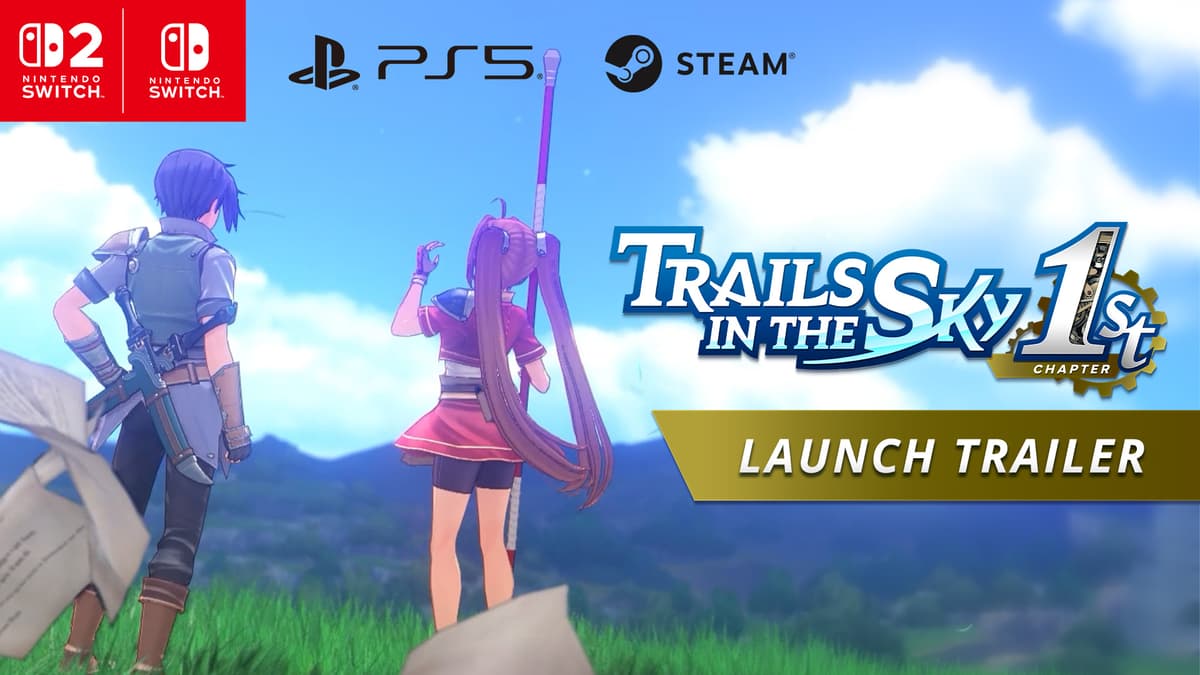
The opening hours felt like greeting old friends in a new apartment. The very first time I rotated the free camera around Rolent’s guild hall and saw Estelle’s facial expressions pop-big anime eyes, exaggerated brow furrows, the little grin when she bags a victory pose—I relaxed. The original’s fixed isometric look was charming but stiff; here, the camera glides, pulls in for dialogue beats, and swings wide during battle to frame those flashy Arts and Crafts. Think “Falcom’s answer to modern anime staging,” not “photoreal reboot.”
Within the first two hours, the remake signaled its priorities: keep the bones of Sky, but make it more immediately tactile. You move around, tag monsters in real-time to stun them, then pivot into the classic timeline-based turn system with your party in formation. It sounds messy on paper, but it works because the field action is light-touch and purposeful. If you’re the “poke everything, read every NPC” type (guilty), those breezier field encounters stop the game from turning into an all-dialogue slog.
The hybrid combat clicked around hour six
The first “aha” was a pack of wolves near the Haken Gate. I’d been button-mashing the field swings for pre-emptive advantages, but the enemies started countering. That’s when I noticed the small stagger ring that fills when you perfect-dodge an enemy’s lunge—land it, and the mob reels, letting you open with a guaranteed turn-order lead and extra CP. Suddenly, the real-time layer wasn’t just fluff; it was tempo control. In Trails terms, it’s all about manipulating the AT bar before the fight truly begins.
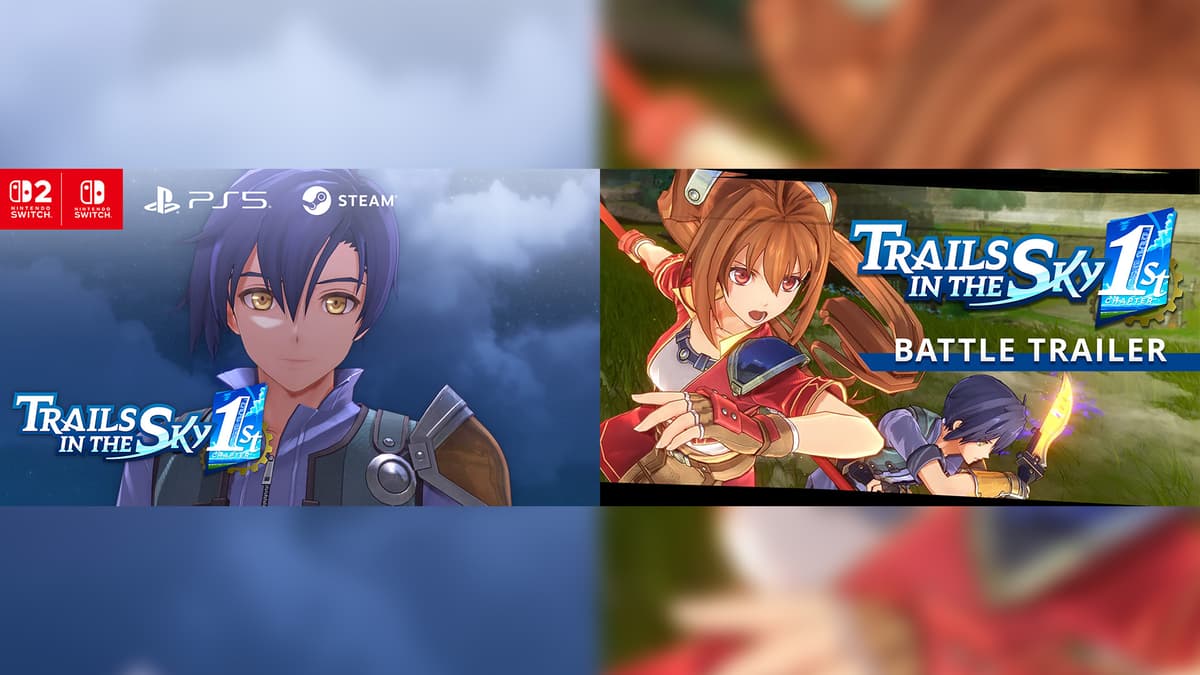
Once you snap into the turn-based phase, all the series comfort food is here. Arts (spells) that chew into EP and care about cast time and area shapes. Crafts that spend CP for quick, satisfying utility—knockbacks, blinds, speed buffs. The sacred S-Break that lets you cut the line and fire an ultimate when the timeline’s about to hand the enemy a crit or heal bonus. In the remake, the telegraphing is clearer: turn-order icons show upcoming bonuses, an Impede tag flashes when a hit will interrupt an Art, and the arena grid highlights line vs. circle AoEs much more legibly than the original.
Best of all, the hybrid doesn’t undermine the turn battles. Real-time gets you advantages, deletes trash, and adds spice, but boss fights and hard elites are still about pathing, crossfire, and smart Quartz builds. If you’ve never spoken “Quartz build” out loud, that’s the orbital magic system where slotting elemental stones (sepith) unlocks Arts lines. I fell back into the same habit I had long ago: slotting Wind and Time early to enable speed control and AoE, then pivoting to Fire for pure damage as the CP battery gets rolling. The UI makes it easier to see “if you equip these, you earn these Arts” without a wiki on the second monitor. Bless.
Bosses, S-Breaks, and the sweet science of turn control
I knew the combat had its hooks in me when I replayed the Ruan district’s mayoral mansion fight just to land a cleaner timeline. The boss had two adds with a nasty group heal on a delayed cast. I opened with Estelle’s field stun for initiative, then on turn one burned Joshua’s Craft to inflict Delay, pushing the heal off the bonus turn. Schera started channeling an AoE Art, the boss angled to punish, and I slammed an S-Break mid-cast to steal the crit bonus. It looked flashy—Falcom’s added impact frames and camera snaps are clean—but more importantly, every flourish communicated function. You always know why a thing exploded.
There’s still that “Trails” softness where you can grind out a win with conservative play, but the remake rewards aggression. The field advantage into turn control loop felt like a rhythm game I wanted to perfect. Late in the chapter at Grancel, I wiped on a boss because I got greedy and chased an AT Delay string instead of purging a poison stack. On the second attempt, I slotted Earth Wall on Kloe, set up a CP funnel on Estelle, and ended it with a surgical S-Break. When the credits rolled, I wasn’t bored of fights; I was looking for the next excuse to swing the staff.
New look, new swagger: anime sheen that finally fits the writing
Falcom went all-in on stylized anime presentation, and it pays off. Estelle’s idle animations have personality (the little bounce on her heels before a swing), Joshua’s sidelong glances sell his whole deal, and Schera’s whip arcs are pure stagecraft. Arts and Crafts pop with punchy VFX, and the S-Crafts land like mini cutscenes without taking forever. I kept thinking of how Final Fantasy VII Remake reframed Midgar—same bones, new vibe. Here, Liberl’s towns retain their geography, but the free camera and lighting give them warmth: Bose’s market stalls look crowded for once; the Kingfisher Inn actually makes me want to sit and hear the water.
The downside is repetition between long stretches of countryside. The roads between cities are lush and finally not just a flat tile set, but they do start to blur: a sea of shrubs, a few enemy patrols, a chest, repeat. That’s faithful, almost to a fault. There’s more ambient life—bird flurries, wind push on tall grass—but they haven’t turned these routes into side-activity playgrounds. You’re here to fight, poke a hidden path or two, and move on.
Localization and voice: strong French text, partial VO quirks
The big accessibility win is a polished French translation on top of the standard languages. I swapped mid-run and was surprised how naturally Estelle reads—casual but not flippant, snarky without losing sincerity. NPC chatter, the real Trails secret sauce, holds up in French too. The fisherman waxing poetic about bait at the Ruan harbor made me smile, twice.
Voice acting is partial. Major scenes are voiced; lots of smaller, bridging lines are text-only. It’s not a deal breaker, but you will encounter the odd moment where a scene starts voiced, drops to silence mid-conversation, then pops back in for the button. It’s a long-running Falcom quirk, and the remake hasn’t fully solved it. On the flip side, the direction during voiced beats is way stronger. A pained pause does more than a paragraph of exposition ever could, and Estelle’s laugh is just… infectious.
Structure and pacing: it’s still Trails, for better and slower
Sky’s first chapter has always been about slow-burn worldbuilding. You work Bracer jobs, meet towns, peel back a conspiracy, and spend time with people who will matter later. The remake doesn’t try to sand that down. If you’re allergic to reading and prefer a constant drip of story fireworks, this will test you. I felt it around hour 10—post-Bose, pre-Ruan—when I realized I’d spent a half-hour chasing a very specific ingredient because an old man’s stew needed a kick. Did I learn something about Liberl? Yes. Did I also wish the quest summary was a hair more explicit? Also yes.
That said, the remake adds just enough modern signposting to bring down the friction without gutting the charm. The Bracer Notebook is clean, time-limited requests are labeled, and scene transitions tend to deposit you facing the next thing. I still missed a hidden request in Bose’s market because I mainlined the story too quickly, but at least the game warned me I was about to advance time when I headed to the next region. It’s a fair nudge, not a handhold.
Music: a battle banger, but town tunes that fade
You get three audio options: original, rearranged, and a standard modern mix. I started with rearranged and loved the new battle theme—punchy drums, crisp strings, the kind of track that makes you pop an S-Break just to hear the stinger. But outside combat, some town themes feel flatter. It’s not bad; it’s just not as memorable as the best of Trails. After swapping to the original tracks in Zeiss, I stuck with them for nostalgia and, honestly, stronger melodies. Audio sliders are granular, so it’s easy to tune voice, SFX, and music levels. I nudged SFX down two ticks to let the strings breathe.
Technical notes: modes, loading, tweaking
On PS5, I used Performance Mode and hovered at a smooth 60 most of the time with snappy load-in—usually 2-3 seconds between screen transitions and instant restarts after a wipe. Quality Mode sharpens edges and pushes lighting, but I preferred the responsiveness for field dodges and camera. On PC, my 1440p desktop chewed through it without complaint, and the settings are what you’d hope: resolution scaler, toggleable motion blur, field-of-view, shadow quality sliders, and a battle speed toggle (I lived at 1.5x outside boss fights). The UI scales cleanly; no squinting to read Quartz effects.
Steam Deck experiment? I played two hours hovering around 50-60 fps with a mix of medium/low, AMD upscaling on, and the framerate cap set to 50. The field layer and exploration felt fine; big Arts spam could dip a hair, but never to slideshow. Battery took a hit with Performance Mode vibes, so I capped to 40 for a calmer commute session.

What bugged me, specifically
• Partial VO whiplash. The voiced-to-silent handoff mid-scene can be jarring during emotional moments. It’s a cost thing, I get it, but I wish the team picked either fully voiced key scenes or committed to silence for those entire beats.
• Dungeons are still simple. The remake pretties them up and adds some nice camera angles, but you’re basically pushing levers, reading chests (yes, the cheeky chest messages are here), and fighting. The combat saves it; the spaces themselves rarely do.
• Route sameness. Liberl’s roads are prettier than ever, just not more interesting. I don’t need map clutter, but occasionally I wanted a side cave with a unique trick instead of another straight shot between towns.
• OST unevenness. Battle slaps; several town tracks don’t. The original option solves it for nostalgics, but if you want the new suite to be an all-timer, it isn’t.
Small delights that kept me grinning
• The way Estelle’s S-Craft animation has two variants depending on your positioning. It’s a tiny flourish, but it sells the effort put into the presentation.
• A dialogue exchange in Ruan where Olivier derails a tense moment with an absurdly theatrical compliment. The camera tilt plus his grin sold it better than the old text-only gag ever did.
• The quest log highlighting time-sensitive Bracer jobs in yellow. I didn’t love missing that market request, but I also appreciated not having to read a guide to avoid a dozen missables.
• Battle speed toggle. Once you taste 1.5x or 2x for trash, you don’t go back. Bosses feel weighty at normal speed; exploring is better with the foot on the gas.
Who this remake is for
- Newcomers curious about Trails who bounced off the old PC version’s look or lack of local language support. This is the welcome mat.
- Veterans who want to re-experience Liberl with snappier combat and modern staging. The story beats are intact; the juice is in the feel.
- Combat tinkers who like mixing speed control, interrupts, and burst windows. If you enjoyed FFVII Remake/Rebirth’s ATB dance, this scratches a similar itch with a Trails flavor.
- Readers. I mean it. Trails is wordy. If you relish chatting with every NPC after each plot beat to see their lives shift, this remains the gold standard.
Lingering moments that sold me
Two stuck with me. Around hour 14, there’s a trek to the lighthouse outside Ruan. In the original, I remember it as a functional stretch. Here, the dusk lighting, wind on the grass, and the way Estelle’s hair catches a last bit of sun made me stop and pan the camera just because it finally felt like a place, not tiles. Later, in Grancel’s endgame, there’s a reveal that depends on a character’s micro-expression landing just right. The partial voice aside, the expression work nailed it. I’d worried the anime sheen would go broad and lose nuance; it didn’t.
Accessibility and options that mattered to me
I flipped battle speed, turned on subtitle background for legibility, and inverted the camera Y-axis. There’s an autosave before bosses, difficulty can be nudged down on retry, and UI scaling prevented eyestrain in long sessions. None of it screams “revolution,” but together it made the run frictionless. If you want map markers for every little thing, this isn’t that game—but it’s also not the 2004 time capsule that expects you to memorize every innkeeper’s schedule.
FinalBoss // Gear
Level up your setup
01Retro consoleson Amazon→028BitDo controllerson Amazon→03Capture cards (Elgato & more)on Amazon→04Discounted game keyson Kinguin→Affiliate links · As an Amazon Associate, FinalBoss earns from qualifying purchases.
Want to Level Up Your Gaming?
Get access to exclusive strategies, hidden tips, and pro-level insights that we don't share publicly.
Ultimate Reviews Strategy Guide + Weekly Pro Tips