
Table of Contents (20)
The short answer for July 2026
Every major flagship refreshed in the last twelve months, so the shortlist looks different from anything written in early 2026. As of now:
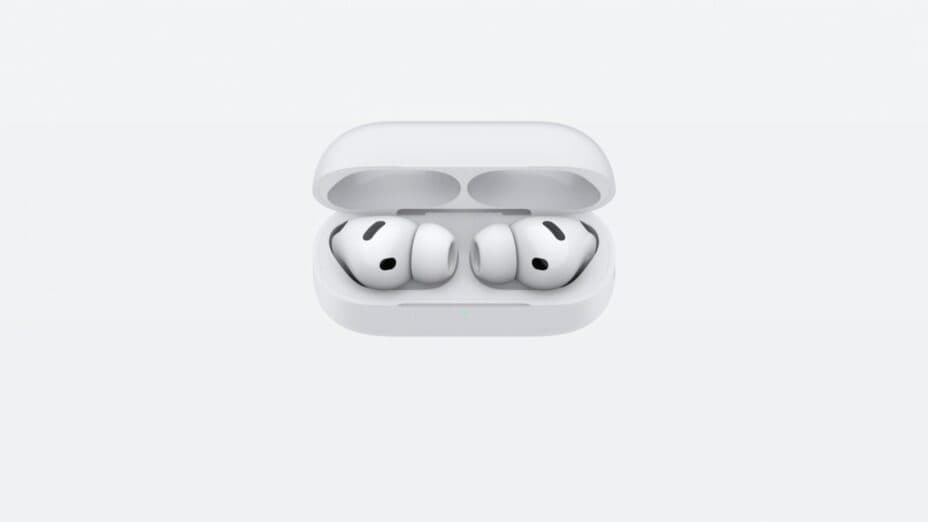
- Apple AirPods Pro 3 — $249, launched 19 September 2025. Still Apple’s current Pro model and the default if you live on iPhone. Regularly discounted; they hit a record-low $169 in June 2026.
- Sony WF-1000XM6 — $329.99, announced 12 February 2026 with broad availability from 23 February. The new ANC benchmark and the best cross-platform pick.
- Samsung Galaxy Buds4 Pro — $249.99 MSRP, on sale from 11 March 2026, already selling around $210 or lower. The obvious answer on a Galaxy phone.
- Nothing Ear (3) — $179 / £179 / €179, launched 18 September 2025. The mid-price value pick now.
- Nothing Ear (a) — around $89 / £69. The genuinely cheap pair that isn’t junk.
- Sennheiser Momentum True Wireless 4 — roughly $230–$260 in 2026, down from $299.95 at launch. Still the sound-quality pick.
- Shokz OpenRun Pro 2 — $179.95, launched 28 August 2024. Still the sport answer, because bone conduction hasn’t been beaten at what it does.
The rest of this guide is how to pick between them without reading six spec sheets — and the honest warning about using any of these for gaming.
Step 1 — Ecosystem first, because it decides more than sound
This is the step I tried to skip and it cost me money. If you use an iPhone, iPad or Mac daily, Apple’s earbuds are simply better integrated: instant pairing, automatic device switching, spatial audio with head tracking, Find My. On Android — or a mixed setup — Sony and Nothing make more sense, and on a Galaxy phone Samsung’s own buds unlock features nobody else can.
Deep in Apple: AirPods Pro 3
Launched 19 September 2025 at $249, and they remain Apple’s current Pro model — there is no AirPods Pro 4. What changed versus the Pro 2 is more substantial than the version number suggests:
- Fit and ANC. The foam-infused tips come in five sizes including XXS. I spent a week thinking the ANC was merely fine before switching to a smaller tip — the seal changed and the noise floor dropped noticeably. If you’ve never got a good seal from stock silicone, this is the generation to retry.
- IP57 — proper dust protection and immersion resistance, well beyond the splash ratings on most rivals.
- Health features. A built-in heart-rate sensor feeding Apple Health, plus step and calorie estimates. Not an Apple Watch replacement, but genuinely useful on days you don’t wear one.
- Roughly 8 hours per charge with ANC on, around 40 hours total with the case.
At $249 list and frequently $169–$220 on sale, they’re the easy answer for iPhone owners. AirPods 4 remain the pick if you can’t tolerate anything inside your ear canal — the ANC version is remarkable for an open design, though it can’t touch the sealed Pro.
On a Galaxy phone: Galaxy Buds4 Pro
Samsung’s current flagship, on sale since 11 March 2026 at $249.99, and already widely discounted to around $210 or below. The argument for them is the same as Apple’s: on a Galaxy handset you get seamless switching, the full feature set, and a Game Mode that shortens the Bluetooth buffer for lower audio delay. Off Samsung hardware, much of that advantage evaporates.
Step 2 — Pick by what you actually do
Sony WF-1000XM6 — the best all-rounder
Sony launched the XM6 on 12 February 2026 at $329.99, with wide availability from the 23rd. It’s the most expensive pair here and the one I’d hand to someone who wants maximum capability regardless of phone.
Noise cancelling is the headline and it earns it — this is the pair I reach for on a plane or in a metro tunnel, and it kills low-end rumble without the pressure sensation some people get from aggressive ANC. Sound is warm out of the box but never muddy, and LDAC on Android gives you real headroom.
What sold me beyond ANC was the boring stuff: multipoint that actually works (pair phone and laptop, forget about it), Auracast support, and roughly 8 hours per charge with ANC on. The companion app is still the best in the category if you like tuning EQ or setting location-based ANC profiles.
Get them if: you want the most capable in-ears available and you’re not price-sensitive. Skip them if: the previous XM5 is on clearance — it’s still excellent and now much cheaper.
Nothing Ear (3) — the value sweet spot
Launched 18 September 2025 at $179 / £179 / €179. This is where the price-to-capability curve is steepest in 2026: real ANC, a proper companion app with EQ, wireless charging, and the transparent design that still looks more expensive than it is. It doesn’t beat Sony or Sennheiser on outright sound or ANC, but the gap is much smaller than the $150 price difference suggests.
Nothing Ear (a) — the cheap pair worth owning
Launched April 2024 and now around $89 / £69. I’ve bought a lot of “bargain” earbuds that ended up in a drawer. These didn’t. You get usable ANC, wireless charging at this price, app-based EQ, and a fit stable enough for light workouts. The sound is flatter than the Ear (3) and the ANC lets more high-frequency noise through, but for podcasts, YouTube and commuting it’s completely fine.
Get them if: your budget is tight, or you don’t want to lose €250 in a taxi.
Sennheiser Momentum True Wireless 4 — the sound pick
Announced at CES 2024 at $299.95 and now typically $230–$260. Still my reference among in-ears when I want to sit down and actually listen. Treble is precise without turning harsh, bass has texture rather than just weight, and the Smart Control app goes deeper than most — including proper hearing-profile setup. Around 7 hours with ANC, roughly 21 with the case.
Get them if: you’re picky about music and willing to pay for it. The ANC is competitive now, but Sony still wins that specific fight.
Shokz OpenRun Pro 2 — the sport pick
Launched 28 August 2024 at $179.95. Bone conduction plus a small air-conduction driver, sitting in front of your ears rather than inside them, so your ear canal stays open and you can hear traffic and other runners. It’s a permanent, genuine transparency mode — no electronics faking it.
- 12 hours rated battery with USB-C fast charging.
- IP55 — sweat and rain are non-issues.
- The DualPitch design (separate drivers for lows and mids/highs) makes them far clearer than older bone-conduction sets.
You don’t get deep bass slam — that’s the trade for an open ear canal — but for podcasts, audiobooks and most music while moving, it’s fine. And the wraparound band genuinely doesn’t shift, which is more than I can say for any in-ear I’ve run in.
Don’t buy these as your only pair if you also want noise isolation. They deliberately have none.
Step 3 — The specs that matter, and the ones that don’t
Worth checking:
- ANC quality — a function of tuning and mic placement, not the “dB reduction” number on the box. Sony XM6 and AirPods Pro 3 are the two I trust for planes.
- Battery with ANC on — 7–8 hours is the realistic target. The XM6, AirPods Pro 3 and MTW4 all land there. Much less than that becomes annoying on long days.
- Fit — foam or foam-infused tips can rescue you if silicone never seals. For sport, stability beats isolation.
- IP rating — IP57 (AirPods Pro 3) is proper protection; IP55 (Shokz) covers sweat and rain. No rating at all means be careful.
- Multipoint — if you switch between phone and laptop all day, this saves more daily friction than any sound upgrade.
Safe to ignore: marketing adjectives with no measurement behind them; “up to” battery figures that don’t say whether ANC is on; and codec bragging — good tuning over AAC still beats bad tuning over LDAC.
The gaming caveat, stated plainly
None of these are gaming earbuds, and no amount of “Game Mode” changes the physics. Standard Bluetooth latency is noticeable in fast shooters even with low-latency modes engaged — you’re generally looking at 80–120 ms, versus roughly 20–40 ms through a dedicated 2.4 GHz dongle. Samsung’s Game Mode on a Galaxy phone and Apple’s tight integration on iOS both help, but neither closes that gap.
If you play competitively, use a wired set or something with a 2.4 GHz dongle. On console specifically the situation is stricter still — the PS5 doesn’t support Bluetooth audio at all, which our PS5 headset connectivity guide explains along with the workarounds that actually function. For open-ear gaming audio at a desk, the open-back headset guide is the better starting point.
Real-world tips
- Test every tip size properly. This is the single biggest free upgrade available. A bad seal turns elite ANC into mediocre ANC.
- Set up multipoint once and forget it. On the XM6 it’s a toggle in the app.
- Don’t max ANC outdoors. On windy days full ANC introduces whooshing; a normal or transparency mode usually sounds better.
- Update firmware before judging them. Apple shipped a Pro 3 firmware update in July 2026 adding iOS 27 features; Sony and Nothing both ship meaningful post-launch tuning changes.
Cheat sheet
- iPhone, want the best overall → AirPods Pro 3 ($249, often less)
- iPhone, hate in-ear tips → AirPods 4 with ANC
- Galaxy phone → Galaxy Buds4 Pro ($249.99, widely discounted)
- Any Android or mixed devices, want the best → Sony WF-1000XM6 ($329.99)
- Best value at mid price → Nothing Ear (3) ($179)
- Cheap and still good → Nothing Ear (a) (~$89)
- Pure sound quality → Sennheiser Momentum True Wireless 4 (~$230–$260)
- Running and cycling → Shokz OpenRun Pro 2 ($179.95)
FAQ
Are the AirPods Pro 3 about to be replaced?
Nothing has launched. They arrived in September 2025 and remain Apple’s current Pro model in July 2026, still receiving feature firmware. If you need them now, buy them now — and watch for the sale pricing, which has reached $169.
Is the WF-1000XM6 worth $329.99 over a discounted XM5?
Only if ANC and features are your priority. The XM5 remains very good and is far cheaper now that the XM6 has replaced it. The XM6 wins on noise cancelling, comfort and connectivity features — but the gap is smaller than the price gap.
Do I need LDAC or hi-res codecs?
Not really. They help on a phone that supports them with well-encoded files, and they’re irrelevant on streaming services at standard quality. Don’t reject a pair that’s a better fit just because it lacks a codec logo.
Which of these is best for gaming?
None of them, honestly. If gaming audio matters to you, buy a dedicated wired or 2.4 GHz headset and keep the earbuds for everything else. That’s the setup I’ve ended up with and it’s the right answer.
Buy now or wait?
Mid-2026 is an unusually good moment. Every major flagship has refreshed within the last twelve months — Apple in September 2025, Nothing the same week, Sony in February 2026, Samsung in March — so nothing on this list is about to be superseded, and the previous generations are all discounted. Start from your actual usage (ecosystem, then commute versus office versus sport), pick from the shortlist, and stop chasing spec sheets. Good earbuds disappear into your routine, which is the entire point.
FinalBoss // Gear
Level up your setup
01Top-rated gaming headsetson Amazon→02High-refresh gaming monitorson Amazon→03Gaming chairson Amazon→04Discounted game keyson Kinguin→
Affiliate links · As an Amazon Associate, FinalBoss earns from qualifying purchases.
Want to Level Up Your Gaming?
Get access to exclusive strategies, hidden tips, and pro-level insights that we don't share publicly.
Ultimate Guide Strategy Guide + Weekly Pro Tips