
Table of Contents (12)
Kirby Air Riders blindsided me in the best way
I went into Kirby Air Riders thinking, “How deep can a racer with two buttons really be?” Thirty minutes later I was white-knuckled, eyes darting, and actually laughing when Rick the hamster ditched his star and sprinted past me like a tiny track god. The speed, the noise, the decisions crammed into each second-this game doesn’t politely introduce itself. It just hurls you into a pink-tinted wind tunnel and dares you to keep up.
For context, I’m a longtime Kirby Air Ride apologist who also sinks seasons into Mario Kart and dabbles in F-Zero whenever my courage regenerates. I spent a hair over 30 hours with Air Riders on my living room setup (dock mode on a 120Hz TV, standard controller, motion blur off), split across Road Trip, a glut of City Trial, some Top Ride snack rounds, and a whole lot of online in the Paddock hub.
Key takeaways after 30 hours
- Two-button scheme hides a brainy, momentum-first racer-timing rules everything.
- Machines are wildly distinct; “mastery” means picking a favorite and accepting its quirks.
- Riders matter more than you’d think, and yes, Rick’s sprint is pure comedy and legit viable.
- City Trial is still the secret sauce: unpredictable, mean, and endlessly replayable.
- Road Trip ties the whole package together with run-based micro-challenges and smart progression.
- Control mapping occasionally fights the pacing; a third input option would be a lifesaver.
My first 30 minutes: Speed, noise, then the “aha” click
Booting into a standard Air Ride race, I did what every Mario Kart brain does: I tried to drift before I understood the track. Air Riders doesn’t really drift in the same way. You charge a boost by holding the brake input (it’s hilarious, but you’ll acclimate), and if you release at the right moment, your machine slingshots through the corner. It’s tactile. There’s a tiny lurch as the star grips, a chime if your landing is clean, and then that chemical rush when you nail three corners in a row and slingshot down a straight with your rival’s exhaust haze in your mouth.
The first race absolutely blew past my eyes. Neon effects, speed lines, a casino’s worth of UI glimmers-overstimulating at first. So I turned off motion blur and bumped the effects intensity down a notch. That’s when my brain finally caught the beat. Air Riders is fast—like, sneakily faster than your hands expect—but the readability is there once you learn the language: purple boost trails, soft-blue landing flashes, and the telltale wobble right before a machine loses grip. You have to lean into it, not fight it.
The two-button myth: It’s simple until it isn’t
Air Riders’s controls boil down to steering, boost-charge, and a Special. There’s also the Quick Spin—flick the stick for a shove that’s equal parts last-ditch defense and petty vengeance. You inhale enemies on track to grab copy abilities, which are either automatic or mapped to the same button as your boost-charge. And here’s the thorn: that shared mapping sometimes undercuts the flow. A few times I went to pop a copy attack and feathered the boost too long, bleeding speed at the worst moment. It’s not a deal-breaker—muscle memory bluntly fixes it—but it’s the one design choice I wish had a toggle for a third input.
The rest of the system is elegance-in-chaos. Clean landings give a burst. Slipstreaming tail smoke gives you a tug of speed. Botch a wall kiss and you’ll feel the shame in your thumbs. It’s a game about momentum, and the difference between first and fourth is a dozen micro-decisions: hold the charge a hair longer? Risk a Quick Spin to nudge a rival into the rail? Inhale now or bait a better enemy up ahead?
Machines with attitude, Riders that nudge your style
If the control scheme is the language, the machines are dialects that twist all your verbs. The default Warp Star is friendly, all-rounder stuff. Then the lineup gets weird in the best ways. Formula Star is a rocket strapped to a shopping cart: almost no turning but obscene top speed. I hated it until I discovered the joy of straightaways and pre-aimed corners. The new Transform Star is my current obsession—it shapeshifts mid-race, trading glide for grip or boosting stability when the track throws verticality at you. A different kind of brain puzzle entirely.
Every machine in my garage has a personality flaw that becomes a strength if you commit. Some machines feather through corners like a whisper; others are hammers that demand you plan your lines ahead of time. I love the moment a new unlock drops and you realize your favorite course suddenly feels foreign again. I’m not kidding: I set a personal best on a track only because the machine I was testing couldn’t turn worth a lick, so I learned to “ping-pong” the charge release points down a chicane without actually steering much. It felt like a glitch in my body, not the game.
Riders matter more than I expected. The Specials are spicy, not busted—timing matters as much as selection. Kirby’s sword whirl is a little orbiting disaster for anyone nearby, and Waddle Dee’s golden zoom is a get-out-of-traffic card if you line it up. Rick, though. Rick is the punchline that keeps landing: drop the machine and run. It’s ridiculous visually, but on compact tracks or in Top Ride’s bite-sized arenas, sprinting at the right moment absolutely steals positions. I never thought a hamster on foot would bully me into learning new lines, but here we are.
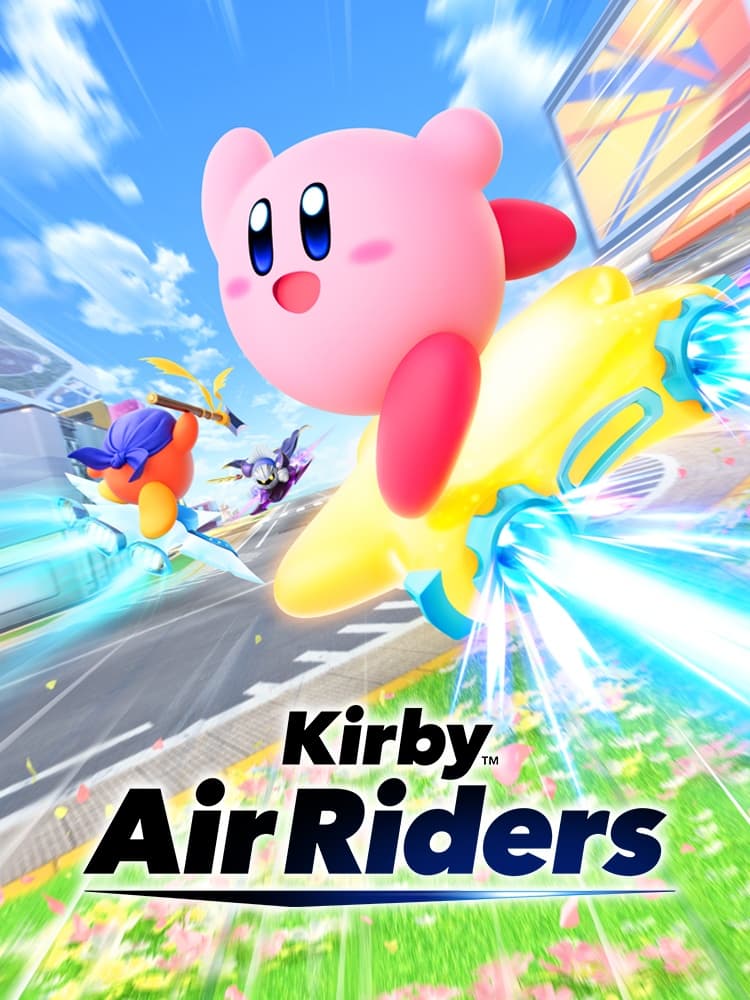
City Trial: My favorite kind of mess
City Trial still feels like it escaped from a game jam—someone’s brilliant bad idea that somehow shipped. You scour a playground city, scout for machines and power-ups, and improv your build for a mystery finale. It’s pure playground logic. The best rounds tell stories you couldn’t script.
One session, I lucked into a half-complete machine hidden behind a construction ramp, only for a sudden “meteor shower” event to turn the streets into loot piñatas. I went from cautious to greedy in seconds, overleveled speed to a stupid degree, and could barely keep the star facing forward by the end. The finale? A precision flight challenge. I overshot the first ring, understeered the second, then threaded the third because I panicked and deliberately cut the boost to stall mid-air. Accidentally clutch. Felt like sports.
Another time I built a tank: max offense, ugly handling, confidence verging on arrogance. Cue: drag race finale. I got smoked by someone who clearly had been sandbagging for this exact outcome. That bit of chaos feels intentional—City Trial is less about perfect control and more about learning to surf randomness. People who hate “unfair” might bounce off. I cackled and queued again.
Boss events and rare drops add just enough spice without stealing the spotlight. Sometimes it’s a dynamic brawl that turns an alley into a survival lane; sometimes it’s a rare part that turns the entire lobby into a convoy. City Trial works because it is barely held together by rules, and the racing language still applies: momentum, reading the field, committing to a plan and then trashing it when the universe intervenes.
Top Ride: Snack tracks with a mean streak
Top Ride shrinks everything and throws an overhead camera on it like you’re looking down at a toy track on your coffee table. It’s the “one more round” mode that turns into ten. The pace is somehow even snappier here, and the Quick Spin is a menace—tiny bumps send rivals into whirling frustration. It’s lighter than the other modes by design, but when four friends pile into a playlist, the grudges get very real very fast.
Road Trip: A run-based mixtape of Air Riders’ best bits
Road Trip is clever glue. You choose a rider and push through a trail of nodes, each node a tiny challenge pulled from Air Ride, Top Ride, or City Trial DNA. Win, and you bank a permanent-for-the-run stat bump—handling, top speed, attack, flight time. It’s roguelite-ish in the same way Spelunky “is about learning” more than meta-grind. The joy is in how fast it iterates. A boss rush here, a food-collecting Gourmet Race there, a sudden “don’t touch the walls” gauntlet just to ruin your confidence—it forces you to speak the game’s language under pressure.
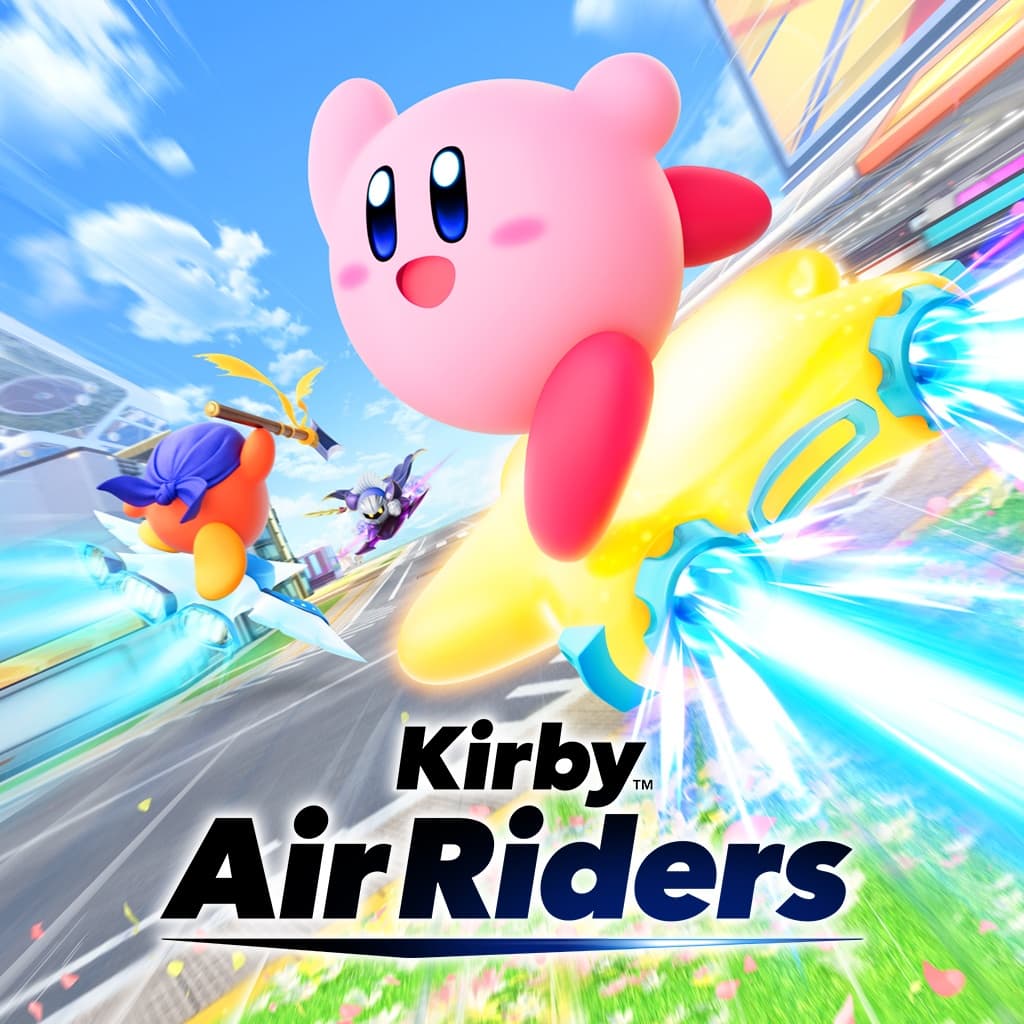
Runs take me between two and three hours. My first run was a formative disaster at 2:47; my fourth was a neat 2:05 with a tuned machine that felt like a purpose-built instrument. The steady drip of stat upgrades turns the arc from “please stop wobbling” to “okay, let’s fly stupid” in a way that’s just plain satisfying. And because each node offers three different challenge choices, I rarely felt railroaded—only occasionally cornered by my own bravado.
But the mode stumbles in exactly two places. First: after certain encounters, there’s a quick window to swap machines. Miss it, and you might stroll into a precision flight trial saddled with your lead-foot bruiser. Failing lets you swap, but on higher difficulties you pay a retry cost that stings. I felt punished for a menu miss more than for playing poorly. Second: you lock your rider at the start of a run. Two hours is a long time to realize you picked the wrong vibe. I did an entire run with a rider I liked less just because I was stubborn and didn’t want to reset. A mid-run rider swap at a cost would solve both issues without breaking balance.
Online: The Paddock is a low-stress hangout with high-speed exits
The Paddock is a neat trick—part lobby, part social zone, part jukebox. Up to 32 people milling around, revving machines, emoting, and queuing multiple events at once. You can drift from a City Trial queue into a Top Ride playlist without feeling like you’re being funnelled through menus. It’s the rare online space that doesn’t feel like a waiting room.
Matchmaking offered me ranked and casual options for Air Ride, Top Ride, and City Trial, and I spent most of my time in casual. Lag on my end was minimal; I had two rubber-band moments where a rival blinked forward and then got promptly bonked by my Quick Spin like time corrected itself. Specials landed with predictable timing, collisions felt consistent, and outside of one freeze during a City Trial machine swap (booted me, rejoined without drama), it was smooth sailing. If this stability holds as more people pile in, Nintendo’s got a surprisingly slick setup here.
Presentation, performance, and that Kirby charm
Air Riders is aggressively readable once you tame the effects. The color design is candy without being cavity-inducing, and the tracks skate between pastel whimsy and neon fury. I toggled off blur and reduced particle intensity, and the game clicked for my eyes. In docked play, I saw a mostly locked 60 frames in races and occasional dips during online chaos. Nothing that broke my rhythm. Load times are short—City Trial rounds flow fast enough that “just one more” became “wait, it’s 2AM?” a few nights in a row.
Audio deserves its own fist bump. Copy ability barks are punchy, the boost-charge hiss builds tension better than a cooldown icon ever could, and the soundtrack is a happy parade of new tracks and remixes I caught myself humming while doing the dishes. Importantly, the game sounds fast: landing pings, dash-sparkles, and the subtle whoosh as you slipstream into position feed your brain information at speed, which keeps you from relying on vision alone.
The stuff that tripped me up
Let me underline the control nitpick because it really is the one place I kept arguing with the design. Mapping inhale/copy ability to the same input as boost-charge occasionally creates those “I lost momentum because the game wanted me to decide faster than my thumb could” moments. After a week, I adapted, but I still think giving players an optional third input mapping would protect the pacing without reducing the elegance of the default scheme.

Road Trip’s missed swap window is the second annoyance. A generous grace period, or the ability to spend some in-run currency to swap after seeing the next challenge, would ease the sting. The rider lock is more subjective—some people thrive on that commitment—but for me, the runs are long enough that I’d rather have a strategic mid-run switch baked in.
Finally, there’s the occasional clash between readability and spectacle. On some tracks at full speed, certain particle-heavy sections flirt with noisy. Turning down the effects helped, as did learning to watch the track edges more than the center. The game gives you the options; it’s worth tinkering.
Who should play this
If you love the feeling of getting better at a racer over raw item roulette, Air Riders sings. The randomness lives in City Trial’s events and your own ability to pivot, not in rubberband miracles that catapult you from last to first for free. If you’re the kind of player who replays a course just to find a cleaner line, you’ll be happy here. If you just want couch chaos with pals, Top Ride and City Trial oblige in five-minute bursts that still feel like real races.
If you’re allergic to speed and noise, or you prefer simulations where tire pressure matters more than momentum timing, this might exhaust you. And if you hate run-based modes that ask for a couple hours per attempt, Road Trip will test your patience.
FinalBoss // Gear
Level up your setup
01Best-selling Switch 2 gameson Amazon→02Switch 2 accessorieson Amazon→038BitDo controllerson Amazon→04Discounted game keyson Kinguin→Affiliate links · As an Amazon Associate, FinalBoss earns from qualifying purchases.
Want to Level Up Your Gaming?
Get access to exclusive strategies, hidden tips, and pro-level insights that we don't share publicly.
Ultimate Reviews Strategy Guide + Weekly Pro Tips