
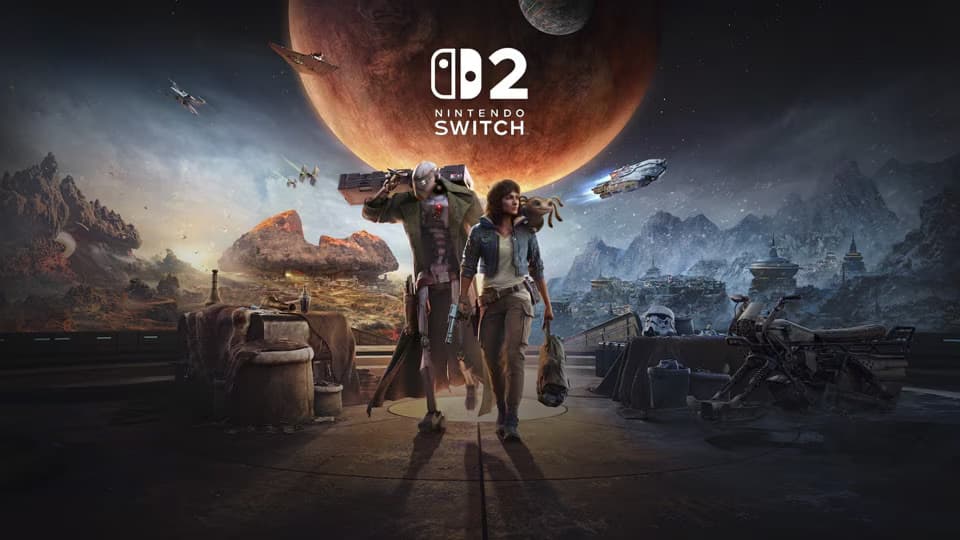
Ubisoft’s Switch 2 “Game Key Card” for Star Wars Outlaws: Smart Performance Move or Bad Precedent?
Game intel
Star Wars Outlaws
Experience the first-ever open world Star Wars game, set between the events of The Empire Strikes Back and Return of the Jedi. Explore distinct planets across…
Outlaws on Switch 2: A clever performance fix with a real trade-off
This caught my attention because Ubisoft didn’t hide behind the usual “cartridges are too expensive” excuse. For Star Wars Outlaws on Nintendo Switch 2, the publisher went with a controversial Game Key Card-essentially a cartridge that contains a download license instead of the actual game-claiming it was about performance, not savings. And given Snowdrop’s open-world streaming demands, that explanation actually tracks… to a point.
- Ubisoft says the choice was driven by I/O performance for streaming, not cartridge cost.
- Installing to internal storage avoids cartridge bandwidth limits and reduces stutter/pop-in.
- The port reportedly runs at a locked 30 fps with minimal slowdowns-surprisingly solid.
- But players eat the downside: huge downloads, storage juggling, and long-term preservation risks.
Breaking down Ubisoft’s claim
Rob Bantin, audio architect on Ubisoft’s Snowdrop engine, put it bluntly: “Snowdrop relies heavily on data streaming for its open environments, and we found that Switch 2 cards simply did not deliver the performance necessary for the quality level we were aiming at. I don’t remember cost ever being mentioned, probably because it was debatable.” That lines up with what we’ve seen on other platforms: Outlaws loads faster and streams cleaner when it’s sitting on a PS5/Series X|S SSD instead of external media.
On Switch 2, the port reportedly holds 30 fps with dense scenes, only minor shimmer on fences and hair, and slightly heavier motion blur. If those results were achieved by skipping cartridge reads and streaming straight from faster internal storage, that’s a practical, player-facing win. The game feels smooth, not compromised.
The technical angle: why carts can be a bottleneck
Snowdrop (The Division, Avatar: Frontiers of Pandora) is built around constant asset streaming—textures, geometry, audio—all flowing in as you sprint through open hubs or hop between planets. That demands sustained throughput and good random access. Internal storage will almost always beat removable media for both. Even if Switch 2 cartridges are faster than the original Switch’s, they’re still not competing with SSD-like speeds for mixed workloads.
That’s why Outlaws likely feels better downloaded. You get fewer hitching moments when the world is streaming, steadier frame pacing during fast traversal, and less pop-in around busy settlements. Ubisoft also noted the Switch 2 version wasn’t developed alongside other platforms, so adapting late in the cycle probably made the “just install it” approach the cleanest path to a stable 30 fps.
But let’s be honest about the cost to players
As someone who cares about game preservation and portability, I’m not thrilled about the Game Key Card trend—even when the performance argument is legit. Here’s what you lose:
- Big downloads: Expect tens of gigabytes. Not every player has fast or uncapped internet.
- Storage juggling: You’ll be nudged toward bigger microSD cards, and you’ll be managing installs constantly.
- Longevity risk: Years down the line, if servers change or licenses lapse, that cartridge is a fancy coaster.
- Resale caveat: The “card” might be eligible for resale, but the next player still has to download everything again and rely on server availability.
And yes, I’m still side-eyeing the “cost wasn’t a factor” line. Publishers always weigh BOM costs. Maybe it wasn’t the deciding factor here, but if performance is the only reason, I’d love to see hard numbers on cartridge vs. internal throughput under Snowdrop’s streaming patterns.
Why this matters beyond Outlaws
We’re hitting the point where Switch-class hardware can run legit open worlds without faceplanting, but only if the I/O pipeline keeps up. If Outlaws is the blueprint—download to internal storage for smooth streaming—expect more third-party open-world ports to follow. That could normalize Game Key Cards for bigger releases, shifting convenience and preservation burdens onto players while keeping performance targets intact.
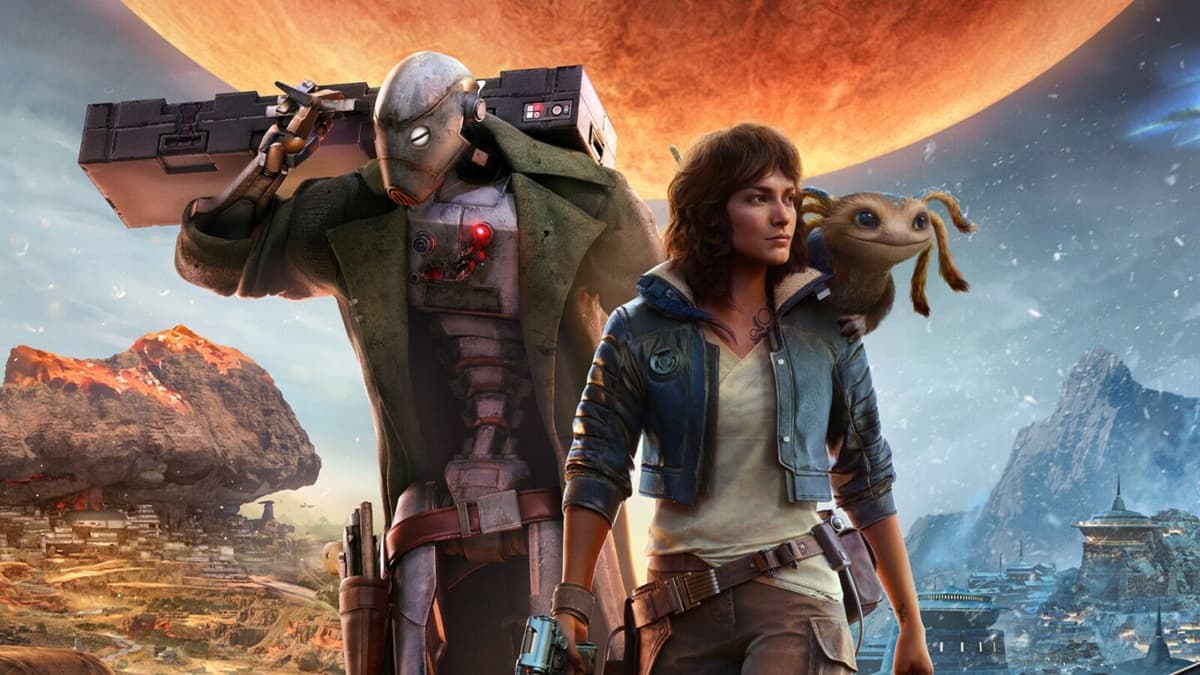
The optimistic read: Ubisoft chose the path that made the game play better, and by most accounts, it paid off. The skeptical read: this sets a precedent that makes boxed copies feel increasingly hollow. Both can be true—and it’s on platform holders to offer faster media and on publishers to be transparent about why a “box” doesn’t actually contain a game.
What I’m watching next
Three things: whether other Snowdrop titles on Switch 2 take the same route, whether Nintendo improves storage options and media performance over time, and whether Ubisoft offers meaningful install size controls (texture packs, language packs) to ease the download pain. If the smooth 30 fps holds across crowded hubs and high-speed traversal, I can live with the trade—begrudgingly. If not, this will feel like players paid the preservation tax for nothing.
TL;DR
Ubisoft used a Game Key Card for Star Wars Outlaws on Switch 2 to avoid cartridge bandwidth bottlenecks and keep streaming smooth. The result is a steady 30 fps port—but players pay with big downloads, storage management, and long-term ownership questions.