
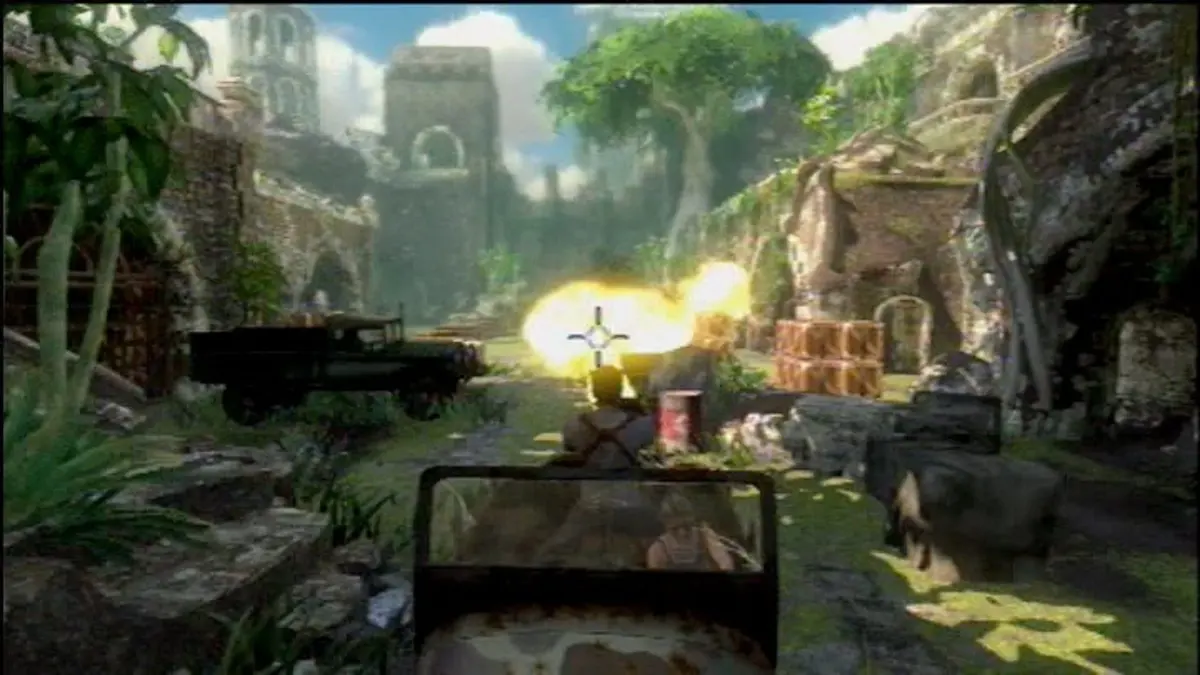
November 19, 2007 gave PlayStation 3 players Uncharted: Drake’s Fortune, a game that helped establish the blockbuster adventure template Naughty Dog would spend years refining. It also gave us a first attempt: a scrappy, charming, occasionally clunky treasure hunt whose rough edges are inseparable from its identity. That history is exactly why I agree with original Uncharted designer Benson Russell: a full remake of Drake’s Fortune would be a waste of Naughty Dog’s time unless it was willing to change so much that it stopped feeling like Drake’s Fortune.
Russell called the idea closer to a “cash grab” than a creative necessity in August 2026, and the bluntness is earned. The game already received the basic modern treatment in Uncharted: The Nathan Drake Collection, released for PlayStation 4 on October 9, 2015. Players can run the first three adventures at 1080p and 60 frames per second, with upgraded lighting, textures, models, controls, trophies, Photo Mode, Speed Run mode, and difficulty options that did not exist in the original release. The collection also works on PlayStation 5 through backwards compatibility.
That means the easy remake pitch — “new players need a way to experience the original” — has already been answered. They have a way. It is clean, accessible, runs smoothly, and contains the full single-player campaign. A PlayStation 5-priced visual facelift would add very little for anyone who can already download the collection and start climbing ruins within minutes.
Table of Contents (5)
The Nathan Drake Collection Already Did the Necessary Work
I do not think people give the 2015 collection enough credit because it arrived during the era when “remaster” became an insult. It did more than sharpen the image. Drake’s Fortune originally asked players to deal with controls that belonged squarely to the PlayStation 3 era, including Sixaxis-style grenade aiming. The collection removed that awkward setup, moved grenade functions to L2 and L1, and let players remap shooting to L2 and R2. Those are practical improvements, not a fake 4K bullet point on the back of a box.
It also added Explorer difficulty, effectively a Very Easy setting, to the first game. That matters. The original can be punishing in places where enemy waves stretch past the point of tension and become repetitive cleanup. Explorer lets someone who came for the adventure, character banter, and treasure-hunting momentum move through those older combat spaces without being trapped by 2007 expectations.
Then there is Brutal difficulty, placed above Crushing for players who want the opposite experience. The collection served both groups: people returning for a comfortable replay and people looking to wring every last challenge out of the trilogy. It even added Speed Run mode and new trophies. A remake cannot pretend those player-facing additions do not exist. It has to clear a much higher bar than “the old game looks old.”
The only major loss in The Nathan Drake Collection is multiplayer, because the package includes single-player campaigns only. But multiplayer is not the reason anyone has been arguing for a Drake’s Fortune remake. The argument is always about whether the first adventure deserves to be rebuilt. On that question, the collection remains a very inconvenient fact for anyone selling a cosmetic redo as an essential preservation project.
A Visual Upgrade Would Be the Least Interesting Possible Remake
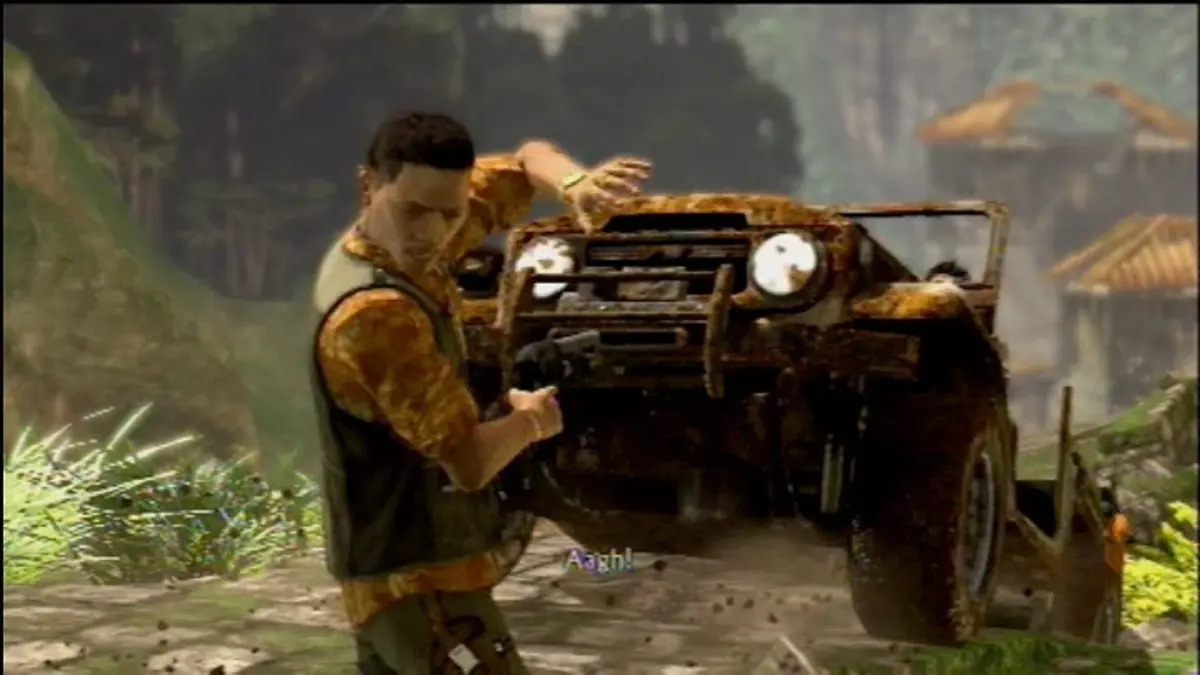
The uncomfortable truth is that Drake’s Fortune has aged in ways higher-resolution character models cannot solve. Its problem is not merely that 2007 textures look like 2007 textures. Its combat pacing is blunt. Encounters can arrive as a sequence of cover positions and repeated enemy waves, dragging against the faster, more cinematic rhythm the series later found. Some traversal moments lack the physical confidence players now expect. The balance between shooting, exploration, puzzle-solving, and story does not always hold.
Those are structural issues. Fixing them means redesigning encounter spaces, altering enemy placement, changing how long firefights last, reconsidering checkpoints, modernizing movement, and reworking the transitions that carry the player from one scene to the next. That could produce a better-playing game. It could also produce a fundamentally different one.
Russell’s objection gets to the heart of it: he believes a remake strong enough to matter would require rewriting the story and changing scenes and tone. I think that is exactly right. A developer cannot “fix” pacing in a game built around its pacing without changing the flow of the entire adventure. It cannot make every dramatic beat land with modern polish while faithfully preserving every beat as it was. There is no magical middle ground where the game receives a total structural rebuild but remains untouched in spirit.
| Version | What players get | What it means |
|---|---|---|
| Original PlayStation 3 release | The 2007 campaign with its original presentation, controls, and Sixaxis-style grenade aiming | Historically important, but plainly built around the limitations and design habits of its era |
| The Nathan Drake Collection on PlayStation 4 and PlayStation 5 | 1080p, 60 fps, better lighting, textures and models, control remapping, Photo Mode, Speed Run, Explorer, Brutal, and trophies | The sensible way to replay Drake’s Fortune today |
| A hypothetical full remake | It would need redesigned encounters, modern movement, meaningful accessibility work, faster pacing, and major level-design changes | A new creative interpretation that must justify why it exists beside the collection |
The “Cash Grab” Test Is Brutally Simple
Here is the test I would apply to any Drake’s Fortune remake. If it offers better assets, ray-traced puddles, haptic feedback, and a few polished animations while preserving the same old encounter structure, it is a cash grab. There is no polite way around it. Sony would be asking players to buy a third version of an adventure that already has a competent modern remaster.
If it transforms the way the game plays — rebuilding combat spaces, reducing the exhausting wave-based shooting, expanding accessibility, rethinking traversal, and reshaping the campaign’s rhythm — then it is at least a legitimate creative project. But that version also proves Russell’s argument. It would be less a restoration of Drake’s Fortune and more a new adaptation of its premise.
There is nothing inherently sinful about adaptation. Games are not museum pieces that must remain frozen forever. I am not interested in treating every old control scheme as sacred simply because it is old. But a remake should exist because it unlocks an experience that players genuinely cannot get otherwise. The collection has already solved presentation, performance, basic accessibility, and control modernization. That leaves only a major redesign as the justification — and that is a far more difficult sales pitch than “Nathan Drake, but shinier.”
Naughty Dog Should Spend That Ambition on a New Adventure
Russell’s preferred alternative is far more exciting: use what Naughty Dog learned from Uncharted 4: A Thief’s End and build a fresh adventure set earlier in Nathan Drake’s life or in another workable space in his history. I would take that deal immediately. A new story can carry the energy of the original without being chained to every old combat arena and story beat.
That approach gives developers room to make better decisions instead of constantly defending old ones. They could create a shorter, focused campaign built around discovery rather than padding. They could build combat encounters that have a clear purpose beyond stopping the player in a room until the next door opens. They could let exploration breathe without treating every quiet stretch as a mandatory prelude to another shooting gallery. Most importantly, they could make something that earns its place in the series rather than borrowing nostalgia from the game that started it.
That is where the real frustration sits for me. Uncharted 4: A Thief’s End released in May 2016. Nearly a decade later, the tempting conversation is whether the franchise should go back to the beginning and sell us the same starting line again. Players deserve more imagination than that. A brand this strong should not be reduced to repeated preservation exercises whenever a platform needs another familiar prestige release.
Play the Remaster, Protect the Original, Demand Something New
There is no announced Uncharted: Drake’s Fortune remake, and that is fine by me. The practical answer for anyone curious about the first game is simple: play it through The Nathan Drake Collection. It remains the best balance between preservation and usability. You get the original campaign, its first-game awkwardness, its sense of momentum, and a set of upgrades that remove the most needless friction.
For Naughty Dog, the better use of a remake-sized budget is equally simple: make a new adventure worth arguing about on its own terms. Leave Drake’s Fortune available, let its 2007 personality survive, and stop mistaking a familiar box art silhouette for a creative plan. A remake that changes nothing would be cynical. A remake that changes everything would erase the very game people claim to love. The answer is to move forward.
FinalBoss // Gear
Level up your setup
01Retro consoleson Amazon→028BitDo controllerson Amazon→03Capture cards (Elgato & more)on Amazon→04Discounted game keyson Kinguin→Affiliate links · As an Amazon Associate, FinalBoss earns from qualifying purchases.
Want to Level Up Your Gaming?
Get access to exclusive strategies, hidden tips, and pro-level insights that we don't share publicly.
Ultimate Gaming Strategy Guide + Weekly Pro Tips