
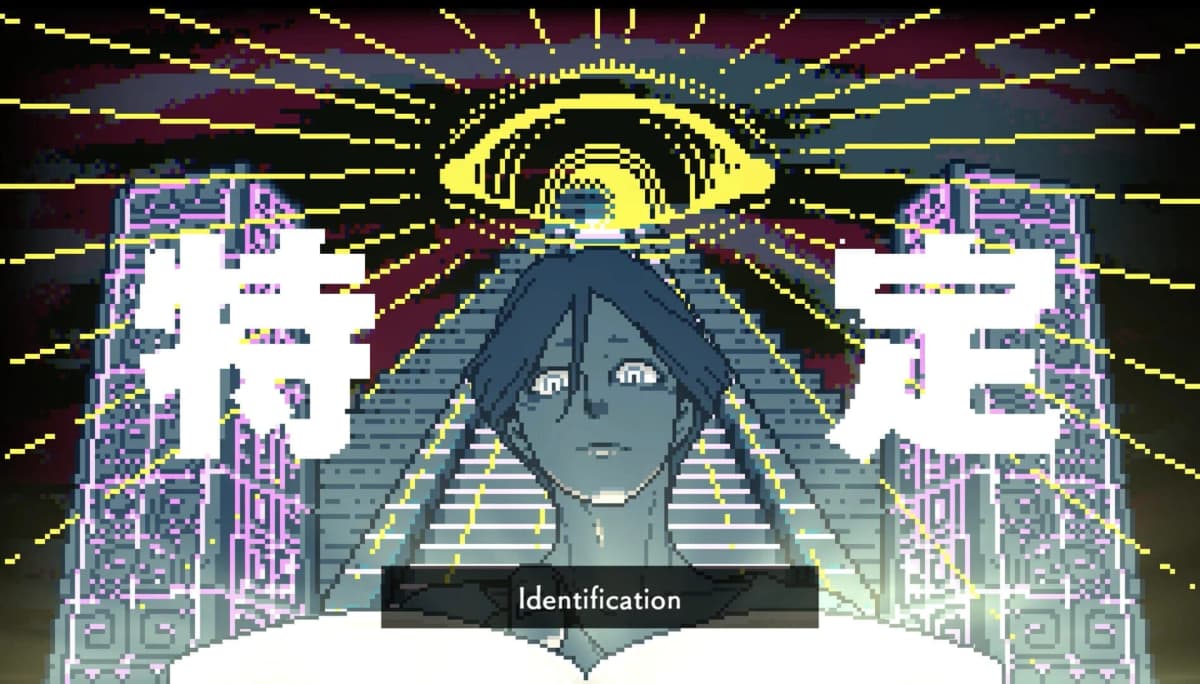
If you searched for a character roster expecting recruitable units, hidden unlocks, or a best-team build, here is the honest answer: Urban Myth Dissolution Center has none of that. It is a visual-novel mystery built around a small fixed cast, and the only thing that behaves like a “meta” is knowing what each Center staffer actually does in the investigation loop — because each one owns a different stage of solving a case.
Table of Contents (14)
The short version
- No recruitment, no gacha, no alternate leads. Characters enter through the story; you only ever control Azami.
- The permanent Center staff is three people: Azami Fukurai (you), Ayumu Meguriya (the director), and Jasmine Tomarigi (the field investigator).
- Azami’s glasses are the whole game. They let her see other people’s intentions and residual thoughts in a scene — that is your core investigative tool, not a stat.
- Structure: a prologue plus six episodes. Each episode runs the same loop: investigate → identify the myth → investigate → dissolve it.
- Everyone else (Mio Sato, Eiko Shimizu, The Man Under the Bed, and others) is tied to a single case, plus two recurring background figures: the mascot Toshikai-kun and an overarching antagonist who threads through the whole game.
How the cast actually works
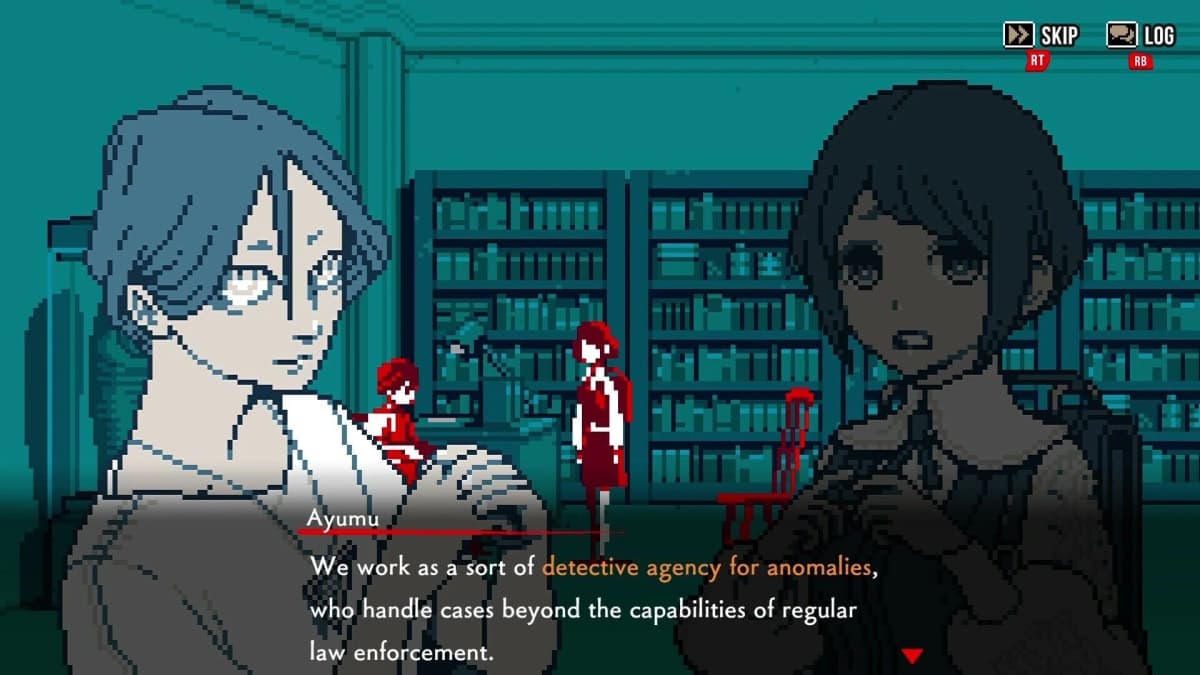
This is a visual novel with point-and-click investigation, so “how do I get a character” is the wrong question. Nobody is unlockable. What matters is which figures are permanent Center staff you rely on every episode, and which ones exist only inside one case. The three permanent staff each own a different part of the deduction loop, and that division of labor is the closest thing the game has to a party composition.
- Permanent Center staff: Azami Fukurai, Ayumu Meguriya, Jasmine Tomarigi
- Case-specific characters: Mio Sato and Eiko Shimizu (both Episode 1), plus the people involved in each later case
- Myth entities: the oddity at the heart of each case, such as The Man Under the Bed in Episode 1
- Recurring background figures: the Center mascot Toshikai-kun, who narrates the in-game urban-myth glossary, and an overarching antagonist tied to the game’s continuing meta-plot
The permanent Center staff
Azami Fukurai — protagonist, the one with the glasses
Azami is the only character you control, a newly hired staffer at the Center. Her defining ability is not flavor text: through her glasses she can see other people’s intentions and the residual thoughts left behind in a scene. That is the mechanic you spend the whole game using — you put the glasses to work to surface what someone really meant, spot a contradiction, or read what happened in a place before you arrived.
- Role: playable protagonist and lead investigator
- Signature ability: her glasses reveal others’ intentions and residual thoughts in a scene
- Available: from the start; the game opens with her arriving at the Center
Because the glasses are your main tool, the practical advice is to slow down. Reread scenes, re-examine objects, and use the glasses on people whose words do not match the situation. Most stuck moments come from skipping a residual-thought reading, not from a missing item.
Ayumu Meguriya — Center director, Level S psychic
Meguriya runs the Urban Myth Dissolution Center and is a Level S psychic — the highest tier in the game’s own ranking. He avoids onsite work because he uses a wheelchair, but his clairvoyant divination lets him identify the true form of an oddity, which is exactly the step a case needs once Azami has gathered enough evidence. He is not a generic “analyst”; his clairvoyance is a concrete in-game function.

- Role: Center director
- Signature ability: Level S psychic; divines an oddity’s true form through clairvoyance
- Note: wheelchair-bound, which is why he stays at the Center while Azami and Jasmine handle fieldwork
Pay attention to his readings. When a case feels unsolvable, his clairvoyant identification of the myth is the pivot that turns scattered clues into a dissolution. Skipping past his dialogue is the fastest way to make an episode feel harder than it is.
Jasmine Tomarigi — field investigator, the muscle
Jasmine (Yasumi Tomarigi) is the Center’s onsite investigator and Azami’s driving partner. Her bored part-timer attitude hides a real skill set: driving, close combat, and surveillance operations. She is the only core staffer with no psychic power, and she compensates by handling the physical, real-world side of casework that Azami and Meguriya cannot.
- Role: onsite field investigator and driver
- Skills: driving, close combat, surveillance ops
- Note: no psychic ability; she is the team’s physical operator
It is easy to underrate Jasmine because she is not part of the deduction puzzle. But the trio only works because each piece is covered: Azami reads, Meguriya identifies, and Jasmine handles the field. She is one third of the intended structure, not background filler.
Case-specific characters and myth entities
Outside the three staff, every named figure belongs to a particular episode. They can be central to one mystery and irrelevant to the next, so treat them as investigation nodes rather than roster additions.
Mio Sato (Episode 1)
Mio Sato is Azami’s friend from university and the person whose case opens the game. The trouble centers on her apartment in the first episode, which is what pulls Azami into the Center’s work in the first place. She is a story character, not a recruitable unit.
Eiko Shimizu (Episode 1)
Eiko Shimizu also appears in the first episode — a university alumna turned entrepreneur and influencer in human-resources consulting, connected to the events at Mio’s apartment. Like Mio, she is a case character encountered through the story, with no unlock or playable role.
The Man Under the Bed (Episode 1)
The Man Under the Bed is the oddity at the heart of Episode One, not a character you recruit or fight in the usual sense. Players combing the cast often hit named myth figures like this and wonder if they are bosses or unlockables. They are the subject of a case — the thing you investigate and dissolve — and they belong under myth entities, not playable characters.
Who recurs across the whole game
The three Center staff — Azami, Meguriya, and Jasmine — are the persistent investigative core. They are not the only figures that carry across chapters, though. The Center mascot Toshikai-kun recurs throughout the game as the in-universe urban-myth encyclopedia, explaining terms as they come up. And an overarching antagonist runs through the episodes as part of the game’s continuing meta-plot. Knowing those two exist saves you from mistaking either for a one-off case character.
Have later releases added new characters?
No. Later platform versions, including the mobile port, run the same mystery adventure with adapted controls rather than an expanded cast. There is no new playable roster or alternate protagonist to chase.
Common mistakes
- Treating it like an RPG. There is no party building, no best comp, and no recruitable characters — only the fixed trio and case figures.
- Underusing Azami’s glasses. Residual-thought readings are the core mechanic; most stuck points are a skipped reading, not a missing item.
- Skipping Meguriya’s dialogue. His clairvoyant identification of the myth is the step that turns clues into a solved case.
- Assuming named figures are recruitable. Characters like Mio, Eiko, and The Man Under the Bed are bound to one episode.
- Dismissing Jasmine because she is not playable. She covers the field side the two psychics can’t — driving, combat, and surveillance.
Practical takeaway
The full roster is small and fixed: Azami Fukurai (your glasses), Ayumu Meguriya (Level S clairvoyant director), and Jasmine Tomarigi (the field operator) are the permanent staff who matter every episode, with Toshikai-kun and a recurring antagonist in the background. Everyone else — Mio Sato, Eiko Shimizu, The Man Under the Bed — belongs to a single case. Stop looking for a team to build and start using the glasses carefully, and the game opens up.
FinalBoss // Gear
Level up your setup
01Top-rated gaming headsetson Amazon→02High-refresh gaming monitorson Amazon→03Gaming chairson Amazon→04Discounted game keyson Kinguin→
Affiliate links · As an Amazon Associate, FinalBoss earns from qualifying purchases.
Want to Level Up Your Gaming?
Get access to exclusive strategies, hidden tips, and pro-level insights that we don't share publicly.
Ultimate Guide Strategy Guide + Weekly Pro Tips