
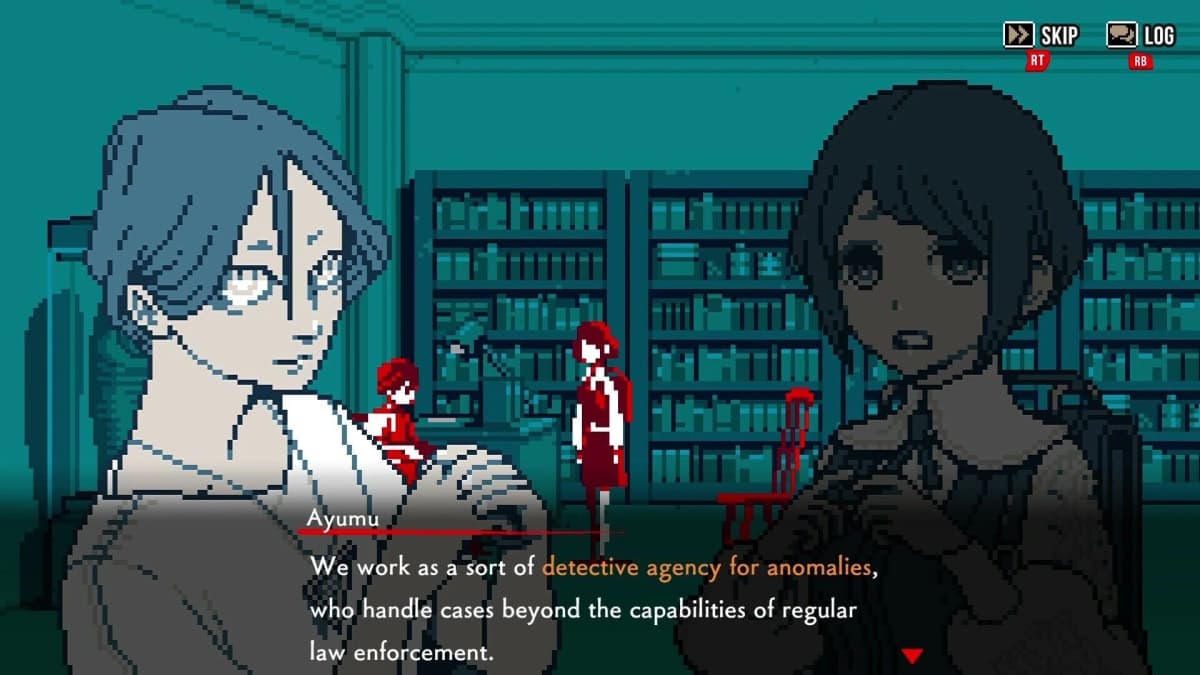
Urban Myth Dissolution Center makes a fantastic first argument for itself without needing to explain very much. Psychic investigator. Urban legends treated like case files. A city soaked in rumor, dread, and weird internet residue. Pixel art that looks like it crawled out of an old CRT and decided to haunt your phone. That pitch is strong enough to make the game sound like a modern cult favorite waiting to happen.
The catch is that the game’s biggest strength and biggest weakness are tangled together. Based on the available release coverage, official descriptions, and the broad critical consensus, this is a story-first mystery adventure with exceptional presentation and a memorable cast, but also a fairly rigid routine. If the premise is what pulls you in, the repetition is what will decide whether you stay enchanted or start checking the clock between revelations.
That leaves Urban Myth Dissolution Center in an interesting place. It seems too distinctive to dismiss, too polished in its mood and writing to call a minor curiosity, and a little too mechanically narrow to rank among the best detective games without hesitation.
Table of Contents (10)
Key takeaways
- Score: 8/10
- Best at: atmosphere, pixel art, music, and character chemistry
- Main risk: the case structure can feel repetitive once the formula becomes obvious
- Best for: visual novel fans, occult mystery lovers, and players who enjoy guided investigations
- Probably not for: anyone hoping for a deep detective sandbox or constantly evolving gameplay systems
A mystery game with a sharper identity than most
The basic setup is easy to like. You play as Azami Fukurai, an investigator whose clairvoyant ability lets her perceive traces of the past. She works with the Urban Myth Dissolution Center, an agency devoted to probing strange cases tied to rumors, curses, suspicious objects, internet folklore, and other phenomena hovering between hoax and horror. Ayumu Meguriya, the agency head and an S-class psychic, gives the whole operation a slightly theatrical edge, while partner Jasmine helps round out the investigative team.
That framework matters because it gives the game a personality before the first mystery even unfolds. Plenty of visual novels promise intrigue. Plenty of point-and-click adventures promise clues. Urban Myth Dissolution Center has a stronger hook than that: it treats urban legends as something you can audit, dissect, and dismantle. It is less “ghost story by candlelight” and more “occult casework in a world where rumors spread faster than facts.” That is a smart lane to occupy, especially now that horror and mystery games increasingly lean on internet culture as part of the setting rather than just background flavor.
The episodic structure also fits the concept beautifully on paper. Separate cases involving cursed relics, unsettling rental properties, and stranger distortions give the game a casebook rhythm. One chapter can lean into folklore, another into social panic, another into something more surreal. That structure should make the whole thing feel like a stack of urban legends passed around the city, each with its own logic and emotional sting.
And by most accounts, it does. Reviewers have been especially warm on how confidently the game sells its world. That confidence counts for a lot in narrative adventures. If a mystery game cannot make you want to linger in its atmosphere, the investigation becomes homework. Urban Myth Dissolution Center seems to understand that the mood is not decoration. The mood is the glue.
The presentation sounds like the easy recommendation
This is where the consensus gets loud. The pixel art is the headline feature, and not in the lazy “retro equals charm” sense. Store descriptions call it psychedelic pixel art, and that tracks with how critics describe the game’s look and feel. The visuals are not merely nostalgic. They sound deliberately uneasy, vivid in the right places, and tailored to the game’s mixture of supernatural menace and urban alienation.
That kind of art direction can carry an enormous amount of weight in a visual novel and adventure hybrid. When your play loop involves dialogue, clue gathering, witness interviews, and social-media research, you need every scene to have some tension in the air. You need the room, the color palette, the faces, the way screens glow, the sense that a rumor might become real if enough people stare at it long enough. From the reviews, Urban Myth Dissolution Center gets that part right.
The music has also been repeatedly praised, which is not a small detail in a game like this. Strong audio can turn routine interactions into ritual. It can make a simple menu transition feel ominous. It can make a clue feel heavier than the text alone would suggest. For a mystery game built around pacing and suspense rather than twitchy action, soundtrack quality is not a bonus feature. It is structural support. Everything written about the game suggests that the soundscape helps hold the experience together whenever the moment-to-moment interactivity thins out.
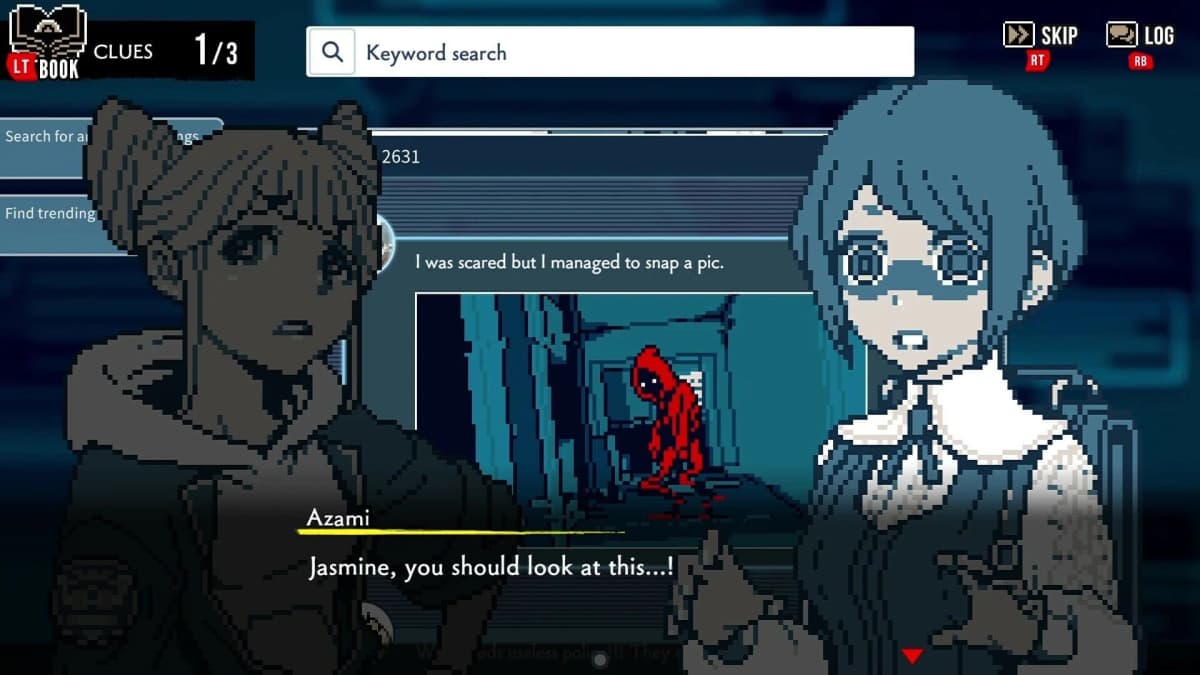
If you care about games that look and sound like they know exactly what they want to be, this is the cleanest argument in Urban Myth Dissolution Center’s favor. Even people who seem cooler on parts of the design still tend to respect the craft.
Its version of detective work sounds satisfying, but not especially free
The main investigation loop is clear enough. You question witnesses, gather evidence, sift through social-network posts, and piece together the truth behind a rumor or anomaly. Azami’s clairvoyance adds flavor because it lets the game literalize the idea that the past leaves residue. In the right hands, that is a terrific mechanic for a supernatural mystery. It gives exposition a tactile form. It also gives the writers an excuse to keep every case tied to human consequence rather than pure monster-of-the-week spectacle.
What the game does not seem to be, at least from the available material, is a deep simulation of detective reasoning. This is not Return of the Obra Dinn, where the whole pleasure comes from freeform deduction and the risk of being wildly wrong. It also does not sound like a sandbox investigation game where systems collide in unexpected ways. The structure appears more curated than that. You are progressing through authored cases, guided through interviews and discoveries, and moving toward a designed reveal rather than generating your own theory web from scratch.
That is not a flaw by itself. Plenty of great mystery games are heavily guided. Ace Attorney, for example, is rigid in all kinds of ways, but it compensates with huge personality, escalation, and dramatic timing. The concern with Urban Myth Dissolution Center is not that it is guided. The concern is that the guidance may start to feel formulaic. One review summarized the weakness as “the same recurring routines,” and that phrase gets to the heart of it. If every case asks you to walk a very similar path toward the answer, the occult framing has to work overtime to stop the design from feeling repetitive.
That is where player taste becomes the deciding factor. Some people love the comfort of ritual in case-based games. Talk to the witnesses. Check the evidence. Search the posts. Connect the dots. Reveal the truth. There is pleasure in that rhythm, especially when the writing is good. Others want the mechanics themselves to mutate over time. They want new types of puzzle logic, stranger systems, or more room to reach a conclusion their own way. Urban Myth Dissolution Center seems far more likely to satisfy the first group than the second.
The cast may be the reason the formula holds together
One of the strongest points of agreement across coverage is that the characters work. Azami, Ayumu, and Jasmine are not just names attached to roles. They are one of the central reasons people seem to stick with the game. That matters because in a story-led adventure, character chemistry is often what smooths over the stretches where the player is not doing anything especially complex.
Azami is a solid lead for this kind of story because her psychic ability is specific enough to matter and broad enough to keep feeding new situations. Ayumu sounds like the kind of occult-agency director who can add mystique without sinking into parody, and Jasmine’s presence gives the team someone to bounce against the more supernatural elements. A lot of games in this lane have a good premise and then forget to give the player anyone fun, sharp, or emotionally readable to spend time with. Urban Myth Dissolution Center does not seem to have that problem.
That chemistry is probably why the episodic format has been landing as well as it has. In a weaker story, chapter-based structure can make a game feel fragmented. Here, it sounds more like returning to a favorite weird little office, then seeing what nightmare file got dropped on the desk this week. That is a very different energy, and a much more welcoming one.
Where the game seems most vulnerable
The main warning label is repetition, but there is another layer under that: pacing. In a game built this heavily around writing and case construction, every chapter has to pull its weight. When a case is strong, the guided structure probably feels focused and elegant. When a case is merely decent, that same structure can feel narrow because there is less mechanical variety to compensate for the dip.
That is the tension at the center of the whole package. The urban-legend concept makes the game sound wilder than it actually is. The clairvoyance hook makes it sound more system-heavy than it probably is. The reality, based on current evidence, appears to be a polished narrative adventure that uses investigation as framing and flavor more than as a playground for open-ended problem solving.
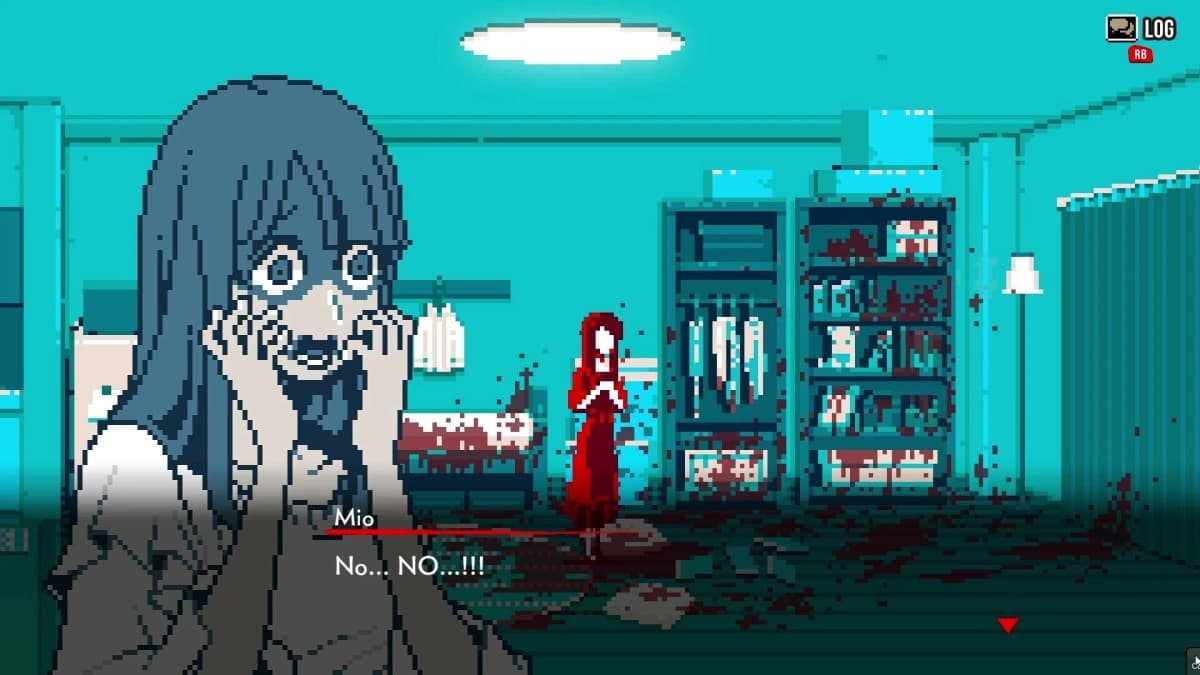
None of this makes it shallow. It does mean expectations matter. Go in wanting a stylish supernatural visual novel with point-and-click investigation beats, and the game seems easy to appreciate. Go in wanting a detective sim where you are constantly improvising, doubting yourself, and bending the case around your own reasoning, and the seams will show much faster.
Platform notes and practical buying advice
Urban Myth Dissolution Center launched on Switch, PlayStation 5, and Steam in February 2025, with iOS and Android versions arriving later. That broad availability helps a lot because this kind of chapter-based mystery tends to fit different play habits well. It is easy to imagine on a handheld, easy to imagine on a laptop, and probably easy to chip away at in evening-sized sessions.
There is one small caveat here. Coverage citing aggregate reception suggests the Switch and PC versions were received a bit more warmly than the PS5 release. That does not automatically mean the PS5 version has serious problems, only that the critical response was less consistent there. Without direct technical testing in this brief, the safest advice is simple: if you have the option, PC or Switch looks like the least complicated bet.
It is also worth mentioning language support, because dialogue-heavy mysteries live or die on readability. Official material lists a broad range of supported languages, which is good news for a game where the text is not background dressing but the main event.
Who should play it, and who should stay away
You should have this on your radar if you like visual novels with a strong sense of place, mystery games that care about mood, or detective stories where the pleasure comes from unraveling authored cases rather than mastering difficult mechanics. If your soft spot includes occult fiction, urban folklore, and casts with enough chemistry to make an office feel alive, this looks like a very safe recommendation.
You should be more cautious if repetition drains your enthusiasm quickly, or if you buy detective games mainly for system depth. Players who want branching chaos, dramatic mechanical escalation, or a lot of freedom in how they solve cases may find this too locked-in. The premise sounds huge; the structure, by most reports, is much tighter.
Bottom line
Urban Myth Dissolution Center looks like one of those games that earns affection the moment you see it and then asks for patience once you understand its rhythm. The mood seems impeccable. The cast seems strong. The premise is far more interesting than the average mystery pitch. The downside is that its actual investigative routine may not keep evolving enough to match the imagination of its setting.
That still leaves it in a good place. Not a flawless one, and not one that suits every mystery fan equally, but a good one. For players who want a curated occult casebook with style to spare, this is an easy recommendation. For players chasing the next great detective sandbox, it is probably the wrong kind of smart.
Verdict: 8/10. A stylish, eerie, character-driven mystery adventure that seems consistently compelling even when its structure gets too repetitive for its own good.
TL;DR
- Urban Myth Dissolution Center stands out because its premise, pixel art, music, and cast all sound genuinely memorable.
- The core investigation loop is appealing, but it also appears fairly fixed from case to case.
- This is best approached as a visual novel and point-and-click hybrid, not a deep detective simulation.
- Play it for the atmosphere, occult casework, and character chemistry.
- Skip it if you need major mechanical variety or freeform deduction to stay invested.
FinalBoss // Gear
Level up your setup
01Top-rated gaming headsetson Amazon→02High-refresh gaming monitorson Amazon→03Gaming chairson Amazon→04Discounted game keyson Kinguin→
Affiliate links · As an Amazon Associate, FinalBoss earns from qualifying purchases.
Want to Level Up Your Gaming?
Get access to exclusive strategies, hidden tips, and pro-level insights that we don't share publicly.
Ultimate Reviews Strategy Guide + Weekly Pro Tips