
Table of Contents (11)
The moment Valheim finally lost me
When Valheim dropped in 2021, it felt like lightning in a bottle. I did what a lot of us did: grabbed a few friends, set up a janky dedicated server, and promptly lost entire weekends planting carrots and getting obliterated by trolls. It was cheap, it was “early access,” and it felt like being part of something that was about to grow into a legendary co-op survival game.
Fast-forward to 2026. Valheim quietly rolls over into its fifth year of early access. Five. Years. Iron Gate marks the anniversary with patch 0.221.10: some welcome performance optimizations, some jokey extras like new “early axes,” and-once again-none of the long-promised final content, no Deep North biome, no Mistlands-scale expansion. Then they wink at us with a line about how “2026 is going to be a great year,” while still refusing to put a real date on 1.0.
That’s when something in my brain snapped. I looked at the “Early Access” tag on the store page and it finally hit me: this label has become a shield. A way to dodge expectations indefinitely while still operating like a live game. And Valheim, a game I actually love, is the one that finally made me call bullshit on how normalized this has become for MMOs and multiplayer titles.
My history with early access: from hopeful to burned out
I’m not coming at this as someone who hates early access on principle. I’ve bought in since the DayZ mod era. I was there for the original Rust chaos, the weird experimental builds of Subnautica, the “is this ever going to reach 1.0?” days of Project Zomboid. I’ve put hundreds of hours into games that technically weren’t “finished” but felt meaty and worth the price anyway.
Early access, at its best, is a simple, honest deal: here’s a rough but playable game at a fair price; your feedback and money help us finish it. In return, you expect visible progress, clear communication, and eventually a 1.0 that either justifies the long road or at least gives the project a sense of closure. Not perfection, not infinite content-just a finished spine.
But over the last few years, that deal has quietly morphed—especially for online, social games. Now early access is less “buy into our scrappy build” and more “welcome to live service, but with all the accountability stripped out.” The game runs seasonal events, crossplay, and merch, but still hides behind “it’s just early access” whenever anyone asks when core features or missing zones are arriving.
Valheim hitting five years in this limbo is the moment I stopped giving that a free pass.
What early access was supposed to be, and what it’s turned into
Originally, early access was brutal in its honesty: ugly UI, placeholder art, missing saves, systems breaking every patch. You paid less, you knew what you were getting into, and the store pages made it very clear what was missing. You were buying potential as much as playtime.
Now? We’ve got “early access” MMOs and survival sandboxes that have:
- Full-price or near-full-price tags
- Paid cosmetics and battle passes
- Console ports and crossplay
- Marketing campaigns and trailers that scream “launch trailer” in everything but name
And yet, whenever criticism shows up, the same shield gets raised: it’s early access, we’re still working on it.
Valheim isn’t the worst offender by a long shot, but it’s become the most emblematic. This is a game that hit like a meteor, sold millions, built a massive community, and absolutely proved there’s a market for cozy-but-brutal Viking survival. And half a decade later, we’re still waiting for the last biomes and the fabled 1.0 while anniversary patches mostly tinker under the hood.
I’ve seen people on YouTube and forums react to the 5-year patch with comments like, “Optimization can only mean 1.0 soon,” trying to read tea leaves in performance notes. Others are just tired, calling the development “glacial,” saying they’ve put 200+ hours in and need a reason to come back that isn’t just rerolling the same progress on the same content. You can feel the optimism curdling into resignation.
Valheim specifically: incredible game, maddening timeline
To be crystal clear: Valheim, in its current state, is already better than a lot of fully released co-op games. The core loop of exploring, building, and boss progression is tight. The vibe is unmatched. If someone buys it today and plays through the content that exists, they’re getting their money’s worth.
But that’s exactly why the eternal “early access” tag feels like a cop-out now. When a game is this playable and this beloved for this long, the “unfinished” label stops meaning “warning, rough edges ahead” and starts meaning “we don’t want to admit where the finish line actually is.”
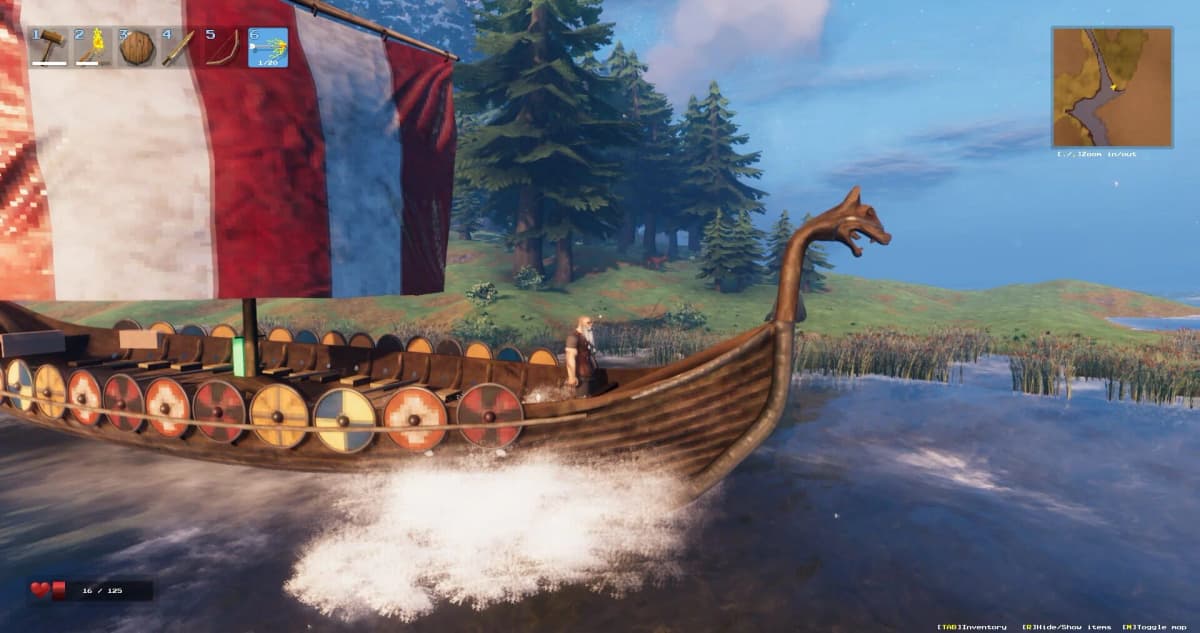
Iron Gate has said the right things on paper. They’ve talked about a 2026 1.0 release, a PS5 launch with crossplay, and they keep repeating that they’re dedicated to Valheim every day. When news broke that the creative director was working on a small side project, Begraved, the line was “we love making games so much that we want to make more.” Fair enough. Devs are allowed to have side passions.
But set that against the reality: five years in early access, a missing final biome, and anniversary patches that are mostly tweaks plus jokes. At some point, the vibes don’t match the output. Fans see that side project announcement and, even if it’s done on evenings and weekends, it feels like someone redecorating the guest room while the roof is still half-finished.
I don’t think Valheim is a scam. I don’t think Iron Gate is evil. I do think they’re flirting dangerously close with turning “early access” from a phase into a permanent business model. And if a game as beloved and successful as Valheim can slide into that, it tells you how warped the standard has become.
When long early access actually makes sense
Here’s the twist: long early access isn’t automatically bad. Project Zomboid is the classic example everyone drags into this discussion, and for good reason. It’s been in early access since 2013—thirteen years—and the devs have outright described it as “sufficiently complete.”
Normally that phrase would make my eyes roll back into my skull, but Zomboid actually walks the walk. The systems are absurdly deep, the mod scene is huge, and there are people with 5,000+ hours in it who honestly don’t care whether it’s called 0.1, 0.42, or 42.0. They feel like they already have a fully realized simulation toybox. 1.0 is more of a ceremonial milestone than a prerequisite to enjoy the game.
Same story with Slay the Spire II’s early access launch. Mega Crit comes out, drops a polished, tightly scoped EA build, is up-front that this will probably be a 1-2 year process, and openly says the price will go up at 1.0. Then the game absolutely explodes to over half a million concurrent players.
That’s early access done right: clearly framed as a work in progress, but already cohesive, with a roadmap and a plan that respects both the devs’ time and the players’ wallets. If it takes another two years, nobody feels tricked because they knew the deal going in.
That’s early access done right: clearly framed as a work in progress, but already cohesive, with a roadmap and a plan that respects both the devs’ time and the players’ wallets. If it takes another two years, nobody feels tricked because they knew the deal going in.
🎮 Get This Game at the Best Price
Compare prices instantly and save up to 80% on Steam keys with Kinguin — trusted by 15+ million gamers worldwide.
*Affiliate link — supports our independent coverage at no extra cost to you
When long early access becomes a red flag
On the other side, there are the horror stories that prove this isn’t just about patience, it’s about risk.
Gloria Victis spent six years in early access as a medieval MMO, finally pushed a full release, and then shut down in under a year. The devs cited financial pressure and burnout. Years of limbo, endless iteration, and then not even twelve months of being “finished” before the servers went dark. Now there’s talk of a revival, but the damage is done. For players who stuck it out the whole way, that’s brutal.
Ashes of Creation is another cautionary tale from the other angle. Eight years of development, then a surprise early access launch on Steam in late 2025 that clearly arrived too soon for a mainstream audience. The game was ambitious, sure, but it hit with performance issues, mixed reviews hovering around the low 60% mark, and a sense that the studio had banked on the early access tag to excuse a rushed public debut. By February 2026, the studio was collapsing under layoffs and unpaid wages.
That’s the nightmare: a game stuck somewhere between “too early to charge full expectations” and “too far along to backtrack,” with early access serving as a kind of limbo where both devs and players slowly burn out.
And it’s not just indies. Look at something like World of Warcraft: Midnight rolling out as paid early access. This is one of the most resourced franchises in the world, and yet the build that people paid extra to access was called “sloppy” by a lot of players—glitchy, uneven, obviously not ready for prime time. The expectation was that the early access label would buy forgiveness. That’s not a scrappy dev in a garage; that’s a giant publisher double-dipping.
Across all of these, a pattern shows up: early access is no longer inherently a safeguard or a humble admission of “we’re not done.” It can just as easily be a trap that leads to glacial development, community fatigue, and “sad stuff” like mass player drop-off long before 1.0 ever arrives—if it arrives at all.
So how long is too long for an MMO or survival game to stay in early access?
Here’s my personal answer, after watching this mess for years: for online, progression-heavy games—MMOs, survival sandboxes, live-service-adjacent co-op titles—five years of early access is my hard psychological ceiling. Not “if it hits five it’s bad,” but “if it hits five without a clear, credible finish line, I’m out.”
Single-player roguelikes or sandbox sims? They can coast a bit longer if the core toybox is already overflowing with stuff to do. But as soon as you’re dealing with progression wipes, server populations, or the promise of “your character will matter long-term,” the clock starts ticking way faster. Players aren’t just investing money; they’re investing social groups, guilds, and entire routines into these worlds.
Length, by itself, isn’t the real sin. It’s length without:
- Concrete milestones – Not vague “big things coming” posts, but actual biomes, systems, and features landing on a predictable rhythm.
- Honest scope management – Saying “we bit off too much; here’s what we’re cutting so we can actually finish” instead of silently letting roadmaps fossilize.
- Transparent timelines – Not hard dates that crunch the team to death, but year-level targets with check-ins when they slip.
- Respectful monetization – No premium cosmetics stores and deluxe editions built on top of a foundation that’s still being poured.
Valheim is hovering uncomfortably right on that edge. It’s not imploding like Ashes of Creation. It’s not collapsing like Gloria Victis. But it is five years deep, with core promises still unfulfilled and communication that leans more on vibes than specifics. And for me, that’s enough to stop treating it as my main co-op obsession and start treating it like what it actually is: a great, but incomplete, game I’ll revisit if and when it finally commits to being done.
Where I draw the line with early access from now on
This is the part that actually changes my behavior. After Valheim’s five-year mark, I’m done using early access for MMOs and survival games as anything more than a brief test drive. If a multiplayer title is still in early access after a couple of years with no hard evidence of approaching 1.0—new zones, final systems, serious optimization—I’m not keeping my main save there. I’ll poke around, see where it’s at, and then walk away until launch.
I’m also done excusing janky launches from massive studios just because they slapped “early access” on the preorder upsell. When a behemoth publisher charges extra for “beta” or “early access” and hands over a sloppy, buggy build, that’s not scrappy iteration—that’s a paid QA program dressed up as a privilege.
There are still early access projects I’ll happily support. Stuff like Slay the Spire II, where the pitch is honest and the scope matches the team size. Experimental single-player curiosities that might never be mainstream but are clearly passion projects first, revenue machines second. Smaller co-op games where the expectation isn’t “live service forever” but “let’s build something cool together, then move on.”
What I won’t do anymore is buy into the fantasy that a long-running online world living under an early access banner for half a decade is just normal now. It’s not. That’s a design and production problem being dumped on the player base.
Why Valheim still matters in this conversation
The reason I’m picking on Valheim so hard is because it’s not some cynical cash grab. It’s a genuinely brilliant game that proved how powerful this genre can be when it isn’t built around battle passes and FOMO. The building system, the environmental storytelling, the co-op rhythm of gearing up and sailing into the unknown—it’s exactly the kind of thing I want to see more of.
That’s what makes the five-year early access milestone sting. If this is what happens to one of the “good ones”—a breakout indie hit with millions of sales and a passionate community—what hope do smaller teams have of resisting the gravitational pull of endless, undefined development? How many more games are going to sit in this weird half-launched state until the community quietly drifts away and the devs are left wondering where the spark went?
When I see players on Steam threads trying to normalize these timelines—saying stuff like “two to six years is average for early access, eight or more is normal for complex 3D games”—I get why they’re saying it. It’s a coping mechanism. But it’s also lowering the bar in real time. If the community shrugs and accepts 8–10 year early access runs as standard, guess what? That’s exactly what we’re going to get.
The bottom line: early access isn’t a lifetime pass
Valheim hitting five years in early access with a jokey anniversary patch was the moment I stopped pretending this is fine. It’s not the worst case scenario, and I hope Iron Gate sticks the landing in 2026 with a killer Deep North and a solid 1.0. If they do, I’ll be the first one to reinstall, drag my friends back in, and build another doomed wooden mead hall on a swamp’s edge.
But whether Valheim nails it or not, my patience for endless early access—especially for online, progression-heavy games—is done. If a studio wants me to treat their world as a long-term home, I need them to treat “finished” as something more than a checkbox they’ll get around to someday. Not perfect. Not feature-complete down to the tiniest rock. Just finished enough that if they walked away tomorrow, the game would still feel like a whole, intentional experience.
Early access was never supposed to be a permanent address. It was supposed to be a road. Valheim just reminded me that I’m tired of living on the highway, waiting for exits that never quite get built.
FinalBoss // Gear
Level up your setup
01Top-rated gaming headsetson Amazon→02High-refresh gaming monitorson Amazon→03Gaming chairson Amazon→04Discounted game keyson Kinguin→Affiliate links · As an Amazon Associate, FinalBoss earns from qualifying purchases.
Want to Level Up Your Gaming?
Get access to exclusive strategies, hidden tips, and pro-level insights that we don't share publicly.
Ultimate Gaming Strategy Guide + Weekly Pro Tips