
Spin-offs usually tell on themselves fast. You get the familiar name, the familiar monsters, a sideways genre hop, and about 20 minutes later it becomes obvious the whole thing exists because someone in a meeting said “the brand can stretch.” That’s why Vampire Crawlers: The Turbo Wildcard from Vampire Survivors got my attention: this one is making the dumbest-sounding pitch on paper – turn Vampire Survivors into a first-person, turn-based, grid-and-card dungeon crawler – and somehow not collapsing under the weight of that sentence.
It launched on April 21 across PC, PS5, Xbox Series X|S, and Nintendo Switch, with day-one availability on Xbox Game Pass. On Xbox and PC, it also supports Play Anywhere, which matters more than the press-release version of that fact because this is exactly the kind of “one more run, one more busted build” game people bounce between devices. The bigger story, though, is that Poncle and Nosebleed Interactive didn’t just slap Vampire Survivors art on a generic deckbuilder. They rebuilt the loop around combo sequencing, mana order, and long-chain turns that try to preserve the same power-trip arc in a totally different genre.
Table of Contents (7)
Key takeaways
- This is a real genre pivot, not a cosmetic one. Vampire Crawlers swaps real-time bullet heaven chaos for first-person dungeon crawling and turn-based card combat.
- The Turbo Turn system is the entire bet. Playing cards in ascending mana order to stack effects is what stops this from feeling like “brand skin over deckbuilder template.”
- Game Pass gives it its best possible launch lane. A weird spin-off lives or dies on how easily players can sample it, and this is a textbook case for subscription discovery.
- The risk is obvious: once the novelty wears off, the game has to prove its combo engine has real staying power rather than just “hey, remember Garlic?” recognition.
This works because it understands what Vampire Survivors actually is
Most surface-level coverage is going to say the game “keeps the soul” of Vampire Survivors, which sounds like marketing fluff until you get specific about what that soul really was. It was never just auto-attacks and screen-filling nonsense. It was the escalation curve. Start scrappy, stack interactions, break the run open, and eventually become an unholy machine made of synergies and bad decisions that somehow work.
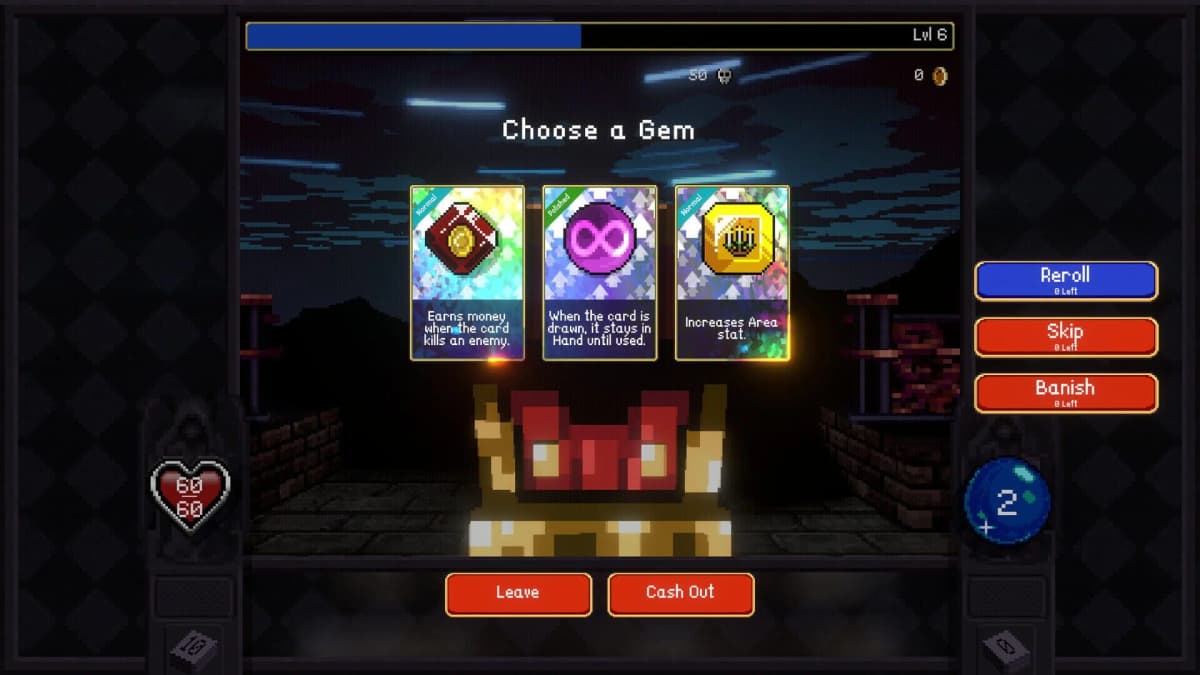
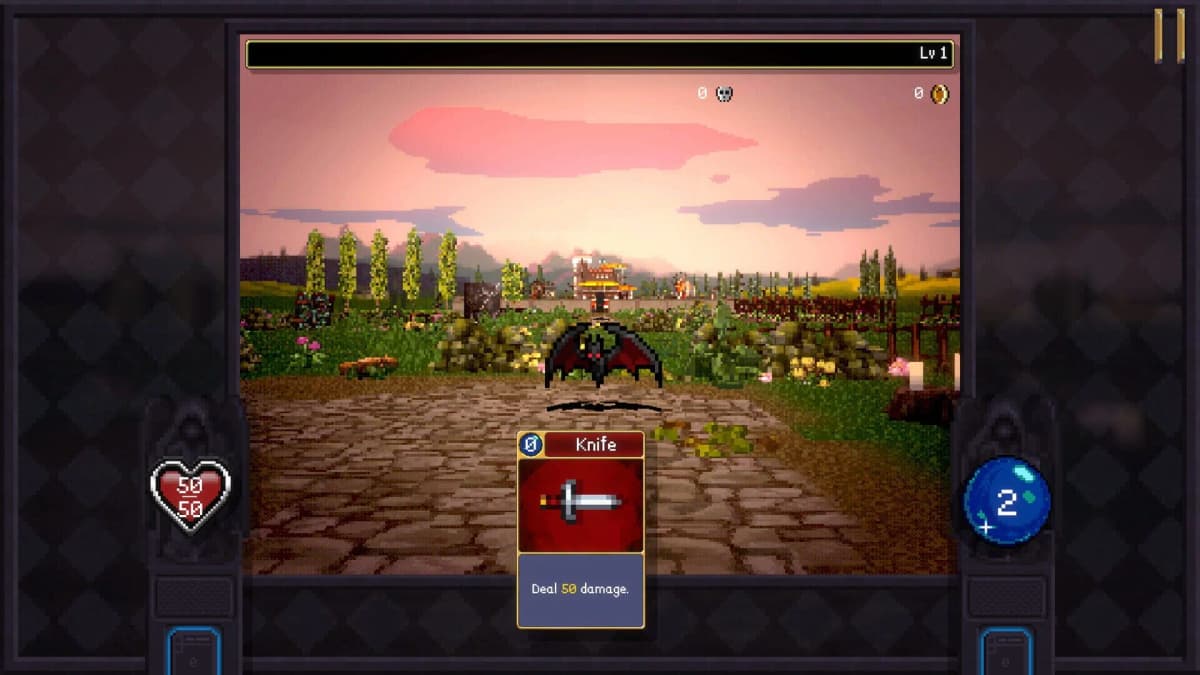
Vampire Crawlers keeps that structure, just translated into a different language. Instead of weaving through mobs in real time, you’re navigating dungeons in a retro first-person format and building turns through cards, relics, upgrades, and evolutions. Familiar weapons, enemies, and items are still here, but they’ve been recontextualized rather than copied over intact. That’s the key distinction. A lazy spin-off uses nostalgia as camouflage. A smart one asks what the original was doing to your brain and rebuilds that feedback loop elsewhere.
That’s also why the Wizardry-style framing some early reviewers have pointed to matters. The dungeon-crawling shell slows the pace, but it doesn’t necessarily lower the intensity. It just moves the tension from twitch survival to sequencing and route efficiency. Different pressure. Same obsession.
The Turbo Turn hook is strong – and it needs to be
Here’s the uncomfortable observation the PR copy would rather glide past: “turn-based deckbuilder roguelite” is one of the most overcrowded phrases in modern indie games. There are good ones, great ones, and a mountain of perfectly competent time sinks that vanish from memory the second the next Steam Next Fest rolls around. If Vampire Crawlers was entering that arena with nothing but brand recognition, I’d be a lot harsher.
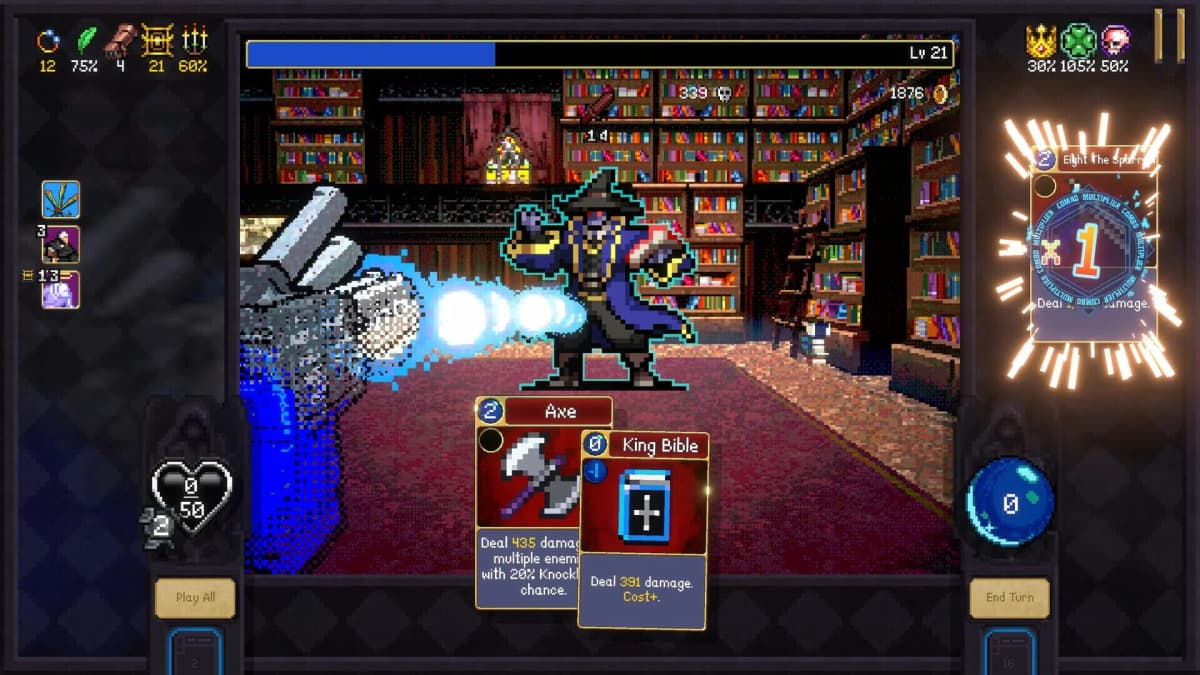
The reason it has a shot is the Turbo Turn system. Cards chain in ascending mana order, multiplying effects and encouraging deliberate sequencing, while Wild cards can extend those chains even further. In practice, that means turns can be played methodically or at near button-mashing speed once you know your deck, but the underlying logic stays the same. That’s a smart design trick. It gives strategy players a puzzle and speed freaks a rhythm game hiding inside the puzzle.
Several early impressions and reviews have highlighted the same thing: once builds mature, turns can snowball into absurd combo states and even verge on semi-autoplay dominance after enough progression. That’s either the point or a warning sign, depending on how tightly the balance holds in later runs. My instinct is that the excess is intentional. Vampire Survivors was never about elegant restraint. It was about earning the right to become ridiculous. The trick is making sure the path to ridiculous stays interesting.
If I were in the room with the PR rep, the question would be simple: how many hours until players have seen the real depth of this system, and how many until they’ve solved it? Those are not the same number, and too many roguelites pretend they are.
Game Pass is not a side note here — it’s the whole launch strategy
This is exactly the kind of game that benefits from day-one Game Pass in a way blockbuster releases honestly don’t. Big franchises use subscription services as marketing amplification. Weird mid-budget or indie-adjacent experiments use them as permission. Permission to be sampled. Permission to be misunderstood for ten minutes and then retried later. Permission to win over players who would never have paid upfront for “first-person Vampire Survivors deckbuilder” without a demo or a trusted recommendation.
That matters because this is a hard sell in one sentence and a much easier sell after one solid run. The friction between the brand and the mechanics is real. A lot of people hear Vampire Survivors spin-off and expect another action-forward dopamine hose. Instead, they’re getting ordered mana combos, dungeon steps, village-style meta progression, and a much more deliberate pace. That mismatch could have been a commercial problem. Game Pass turns it into a discovery advantage.
There’s a broader industry pattern here too. We’ve spent years watching indies either clone their own breakout hit until the audience gets bored, or run as far from it as possible and lose the identity that made people care in the first place. Vampire Crawlers threads a narrower gap: keep the aesthetic language and progression fantasy, but don’t pretend every good idea has to stay in the same combat model forever. More studios should try this. Fewer will, because it’s harder than it looks.
The real risk is replay value after the novelty tax expires
The honeymoon phase for a game like this is easy to predict. Players enjoy seeing familiar weapons and enemies remixed, the combo engine feels fresh, the first broken deck lands, and everyone posts clips of absurd chains. Fine. That gets you through launch week. What matters after that is whether the run variety, card pool, progression pacing, and encounter design keep producing interesting decisions instead of just louder effects.
Background coverage suggests there’s a decent amount of meat here: multiple crawlers, card evolutions, relic synergies, permanent upgrades, and dungeons built to support slower, more tactical exploration. That’s encouraging. But roguelites don’t earn longevity on bullet-point density. They earn it on how often they make you improvise. If the optimal mana-order lines become too obvious too quickly, the Turbo Turn gimmick could flatten into routine. If the card evolution system keeps forcing new sequencing problems, this thing could stick around far longer than the spin-off label suggests.
What to watch next
- Player retention beyond the first week: not just launch chatter, but whether people are still talking about builds and discoveries after the initial “weird spin-off” curiosity wave.
- Balance patches: if early dominant combo lines get adjusted quickly, that tells you the developers want depth, not just spectacle.
- Platform-specific reception on Switch and Game Pass: this feels built for portable sessions and subscription sampling, so those ecosystems should tell the clearest story.
- Post-launch content plans: new crawlers, relics, or dungeon variants would matter more here than cosmetic fluff because the whole game lives or dies on systemic variety.
TL;DR
Vampire Crawlers launched April 21 on PC, PS5, Xbox Series X|S, and Switch, with day-one Game Pass support, and it turns Vampire Survivors into a first-person turn-based deckbuilder. The important part is that it seems to understand the original game’s escalation fantasy well enough to translate it instead of just borrowing the name. My verdict: this looks like one of the smarter spin-offs in recent memory, but the next real test is whether the Turbo Turn combo system keeps creating meaningful runs after the novelty burns off.
FinalBoss // Gear
Level up your setup
01Best-selling Xbox Series X|S gameson Amazon→02Xbox controllerson Amazon→03Top-rated gaming headsetson Amazon→04Discounted game keyson Kinguin→Affiliate links · As an Amazon Associate, FinalBoss earns from qualifying purchases.
Want to Level Up Your Gaming?
Get access to exclusive strategies, hidden tips, and pro-level insights that we don't share publicly.
Ultimate Editor's Pick Strategy Guide + Weekly Pro Tips