
Victoria 3’s ‘Kaffee’ 1.10 Patch Puts Identity Politics Front and Center
Game intel
Victoria 3
Paradox Development Studio invites you to build your ideal society in the tumult of the exciting and transformative 19th century. Balance the competing interes…
Identity, Empire, and the Late-Game Grind: Why ‘Kaffee’ Caught My Eye
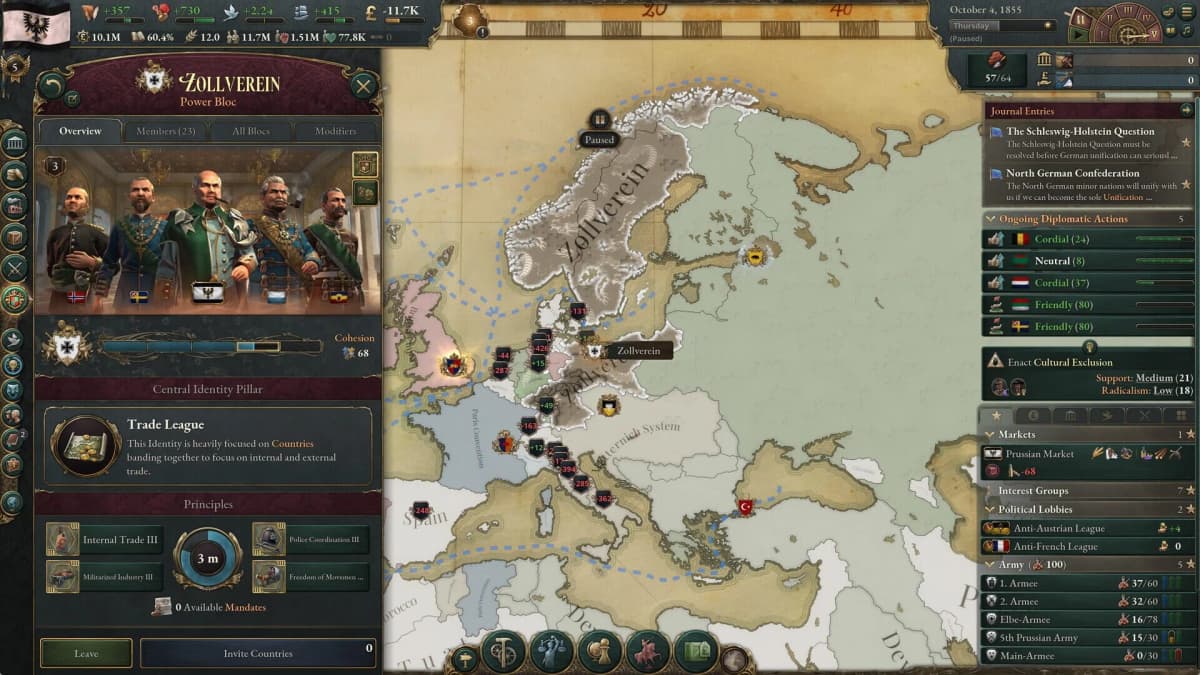
Victoria 3 has been inching back from its rocky 2022 launch, and patch 1.10-dubbed ‘Kaffee’-looks like the most meaningful step yet. The headline is simple: Paradox is rebuilding how culture and religion actually drive politics, not just sit as tooltips. With cultural fervor, obstinance, and a new Support Separatism action, identity isn’t just flavor text anymore-it’s leverage. And crucially, the patch is free, landing September 23 alongside the National Awakening immersion pack focused on Central Europe and the Balkans. That combo screams “back to the core of Vicky”: nationhood, unification, and the messy birth of modern states.
Key Takeaways
- Culture and religion matter more: cultural fervor and obstinance create real political friction.
- New tools for meddling: Support Separatism lets you stoke minority activism in rival nations.
- Smarter AI and clearer calculus: fewer pointless civil wars, sharper unification logic for Italy/Germany.
- Performance and QoL: pop consolidation reduces late-game slog; UI warns before you nuke alliances.
Breaking Down the Announcement
The big swing is the identity rework. Cultural fervor tracks how intensely a culture leans into its national identity—think Hungarians in the Habsburg sphere or Serbs as the Ottoman grip loosens. High fervor should translate to stronger resistance to assimilation and more political bite, which is exactly the emergent tension Victoria’s been missing. Obstinance adds teeth on the domestic side: if movements refuse to cooperate with your government, expect penalties and political paralysis. That’s the kind of friction that creates stories, not just spreadsheets.
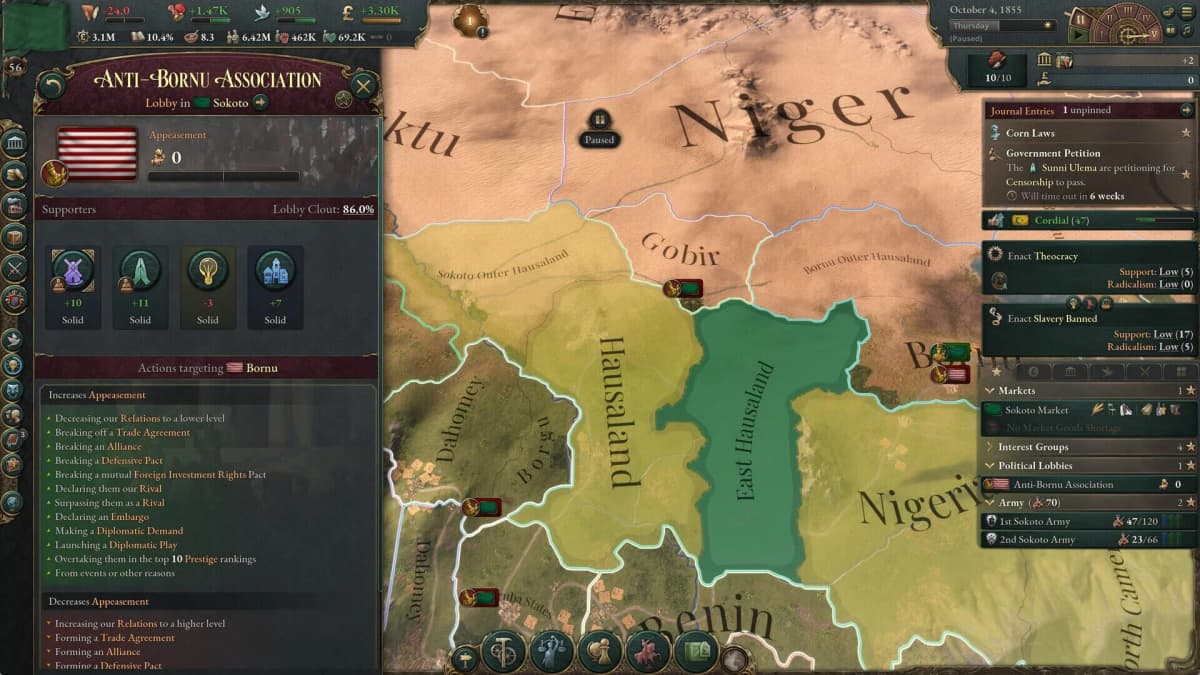
I’m also intrigued by the Support Separatism action. In theory, you can funnel diplomatic and political pressure to encourage minority groups in a target country to agitate. It’s the perfect tool for carving up rivals or accelerating history in the Balkans powder keg. The question is whether it’s a scalpel or a sledgehammer: can a mid-tier power quietly stoke a secession, or is this destined to be Great Power griefing in multiplayer? Paradox says only one revolution can pop at a time, but multiple secession movements can spark simultaneously—that’s fertile chaos if tuned well.
What This Changes Day-to-Day
Under the hood, ‘Kaffee’ goes surprisingly wide. Companies are now sorted into categories that shift employment structures—expect different mixes of capitalists, engineers, and laborers depending on what you fund. Pops keeping their professions when unemployed is a small but smart fix; your economy shouldn’t forget a machinist is a machinist just because the factory shut down.
On the control front, you can downsize buildings and disband units in regions that aren’t in active insurrection. That’s a welcome quality-of-life tweak when your empire is juggling localized unrest. And fleets can be borrowed for naval battles—finally making allied naval cooperation more than a coin flip. If you’ve ever tried to project power as Prussia without a coastline, you know why this matters.
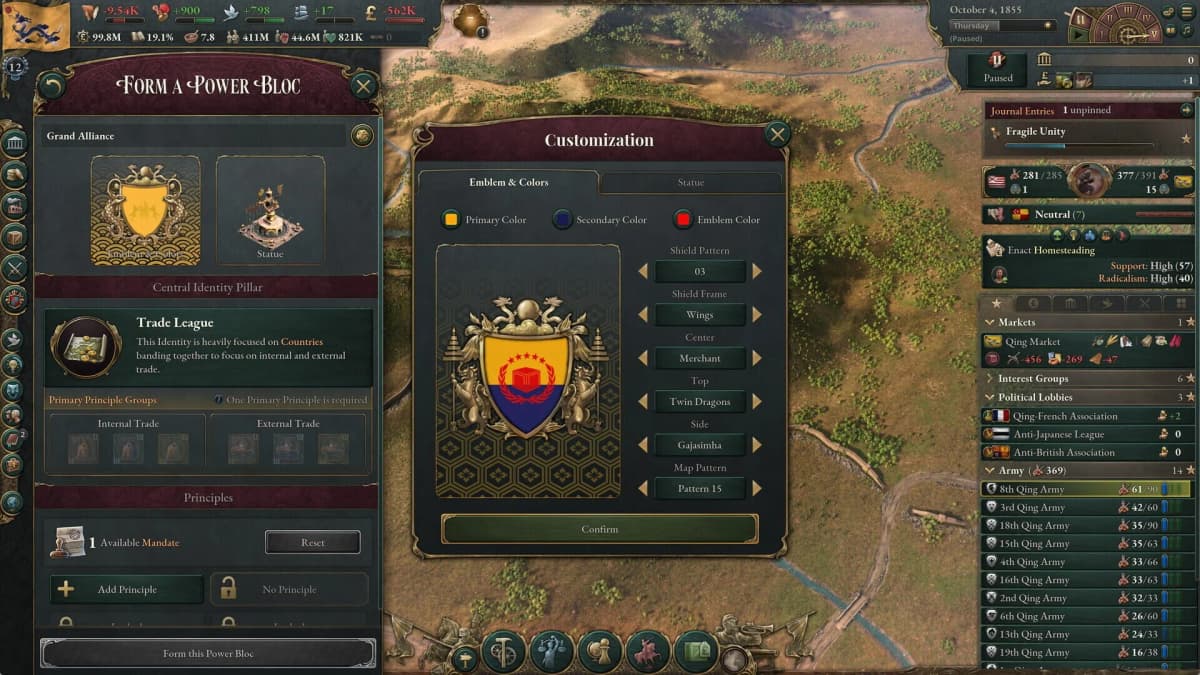
Performance-wise, pop consolidation should reduce the late-game crawl without shrinking your actual population. This has been the genre’s Achilles’ heel for years; if Paradox has found a way to keep the simulation dense but less CPU-hungry, that’s a W. Add a dynamic UI theme that adapts to your nation and new warning prompts before you accidentally tear up a treaty, and the whole experience starts feeling more intentional and less admin heavy.
AI That Finally Reads the Room
Paradox is promising better lawmaking evaluations to avoid “unnecessary civil wars,” and an AI that will attack when it has the advantage—even with low organization. That last bit matters: players have long abused hesitant AI to bank free wars. If leaders now press an edge, expect more dynamic power shifts and fewer snoozefest front lines.
The changes around Italian and German unification are the quiet MVP. Baking in interest group pressure and government composition to determine support should stop those immersion-breaking moments where an obviously nationalist Prussia shrugs at unification because of a weird calculus. It’s the right kind of historical plausibility: not railroading, but nudging the simulation toward believable outcomes.
National Awakening and the DLC Question
The paid National Awakening pack zeros in on Austria, Hungary, and the Balkans—Serbia, Montenegro, Bulgaria, Yugoslavia, Illyria—right where the identity mechanics should sing. This is Paradox at its best when it works: tie a meaningful systemic rework to a region that benefits most from it. The important part is that the core identity and AI upgrades sit in the free patch. If you’ve been burned by DLC gating, ‘Kaffee’ looks respectful: mechanics for everyone, extra flavor for those who want the spotlight region.
The Gamer’s Perspective
Victoria 3 has steadily moved from “promising but thin” to “quietly compelling,” especially after Sphere of Influence and Charters of Commerce. What was missing was heat—the sense that culture and religion weren’t just stats, but forces that could derail your perfect five-year plan. ‘Kaffee’ aims right at that gap. If cultural fervor and obstinance generate believable pushback, if separatism can be manipulated without becoming grief-fuel, and if the AI finally stops self-owning into rebellions, this patch could be the moment Vicky 3 earns a second look—even from die-hard Vicky 2 nostalgics.
TL;DR
‘Kaffee’ makes identity politics the beating heart of Victoria 3 and delivers practical fixes for AI and performance. The free patch lands Sept 23 alongside the National Awakening immersion pack—this one feels like a genuine step forward, not busywork.