
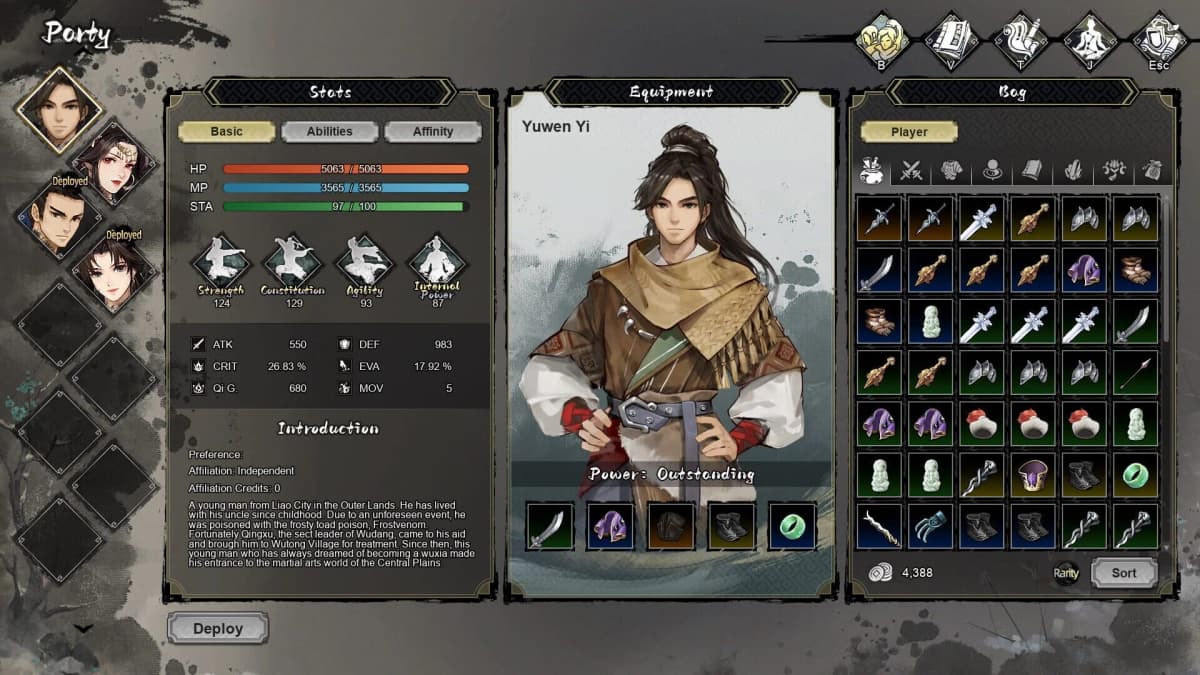
If you want the cleanest Wandering Sword run, do not sprint the main quest and ignore everything else. The safest walkthrough is to clear the opening through Incident at Valley of Dragons’ Slumber, finish the Wutong Village detox chain, then treat every new city or region as a sweep for side quests, recruitment triggers, and crafting upgrades before you move on. Public guides are fragmented rather than canonical, but they agree on the big things: side quests matter far more than they first appear, companion events are easy to miss, and power growth comes more from manuals, blueprints, Forging, and Tailoring than from hoping enemies drop better gear.
This walkthrough is organized by the main story beats that public route guides consistently reference, then adds the detours that players most often need for smoother progression. It is aimed at a practical first run: story completion with fewer missed companions, fewer dead-end objectives, and better preparation for the game’s ending branches.
Table of Contents (9)
Before you leave the opening stretch
Two early habits make the rest of the game much easier. First, commit to one weapon line at the start instead of spreading resources too thin. Community advice often favors swords for a smoother opening, not because other weapons are invalid, but because early weapon strength and consistent technique progression matter a lot. Second, start treating side quests as progression, not cleanup. One widely used resource guide flat-out describes side quests as the “meat of the game” and notes that most recruitable characters are locked behind them.
- Check the
Quest Logwhenever a cutscene ends and whenever you enter a new town. - Talk to named NPCs inside inns, central plazas, and major buildings before leaving the map.
- Keep basic healing and detox supplies on hand.
- Invest in
ForgingandTailoringearly, because crafting outpaces random drops. - Use multiple save slots, especially before major region changes and late-game story decisions.
Chapter 1: Incident at Valley of Dragons’ Slumber
The opening is more guided than the rest of the game, so the correct move here is simply to follow the tutorial path and advance the story. Players sometimes lose time because they assume the map is already fully open and start grinding or wandering, but the first objective chain is mostly there to establish the core systems and send you toward the first real settlement.
If progress seems frozen, the usual fix is simple: return to the marked NPC, re-enter the current area, or finish the last combat and dialogue prompt instead of looking for hidden side content that does not matter yet.
Chapter 2: Entering Wutong Village and the detox chain
Wutong Village is the first point where Wandering Sword starts acting like itself. You get a proper hub, NPC loops, and the kind of objective layering that later defines the whole game. Public storyline indexes consistently place Entering Wutong Village right before a series of detoxifying-item branches, and this is where many first runs start to slow down.
Your job in Wutong is to talk more than you fight. Go through the main village spaces, enter key buildings, and only leave after you are sure you have triggered the next story conversation. If the objective involves detoxifying items, pay close attention to the exact request. This is where the game can punish sloppy inventory assumptions. If a quest wants a specific herb or a specific liquor such as Gaoling Liquor, a vaguely similar item may not count.
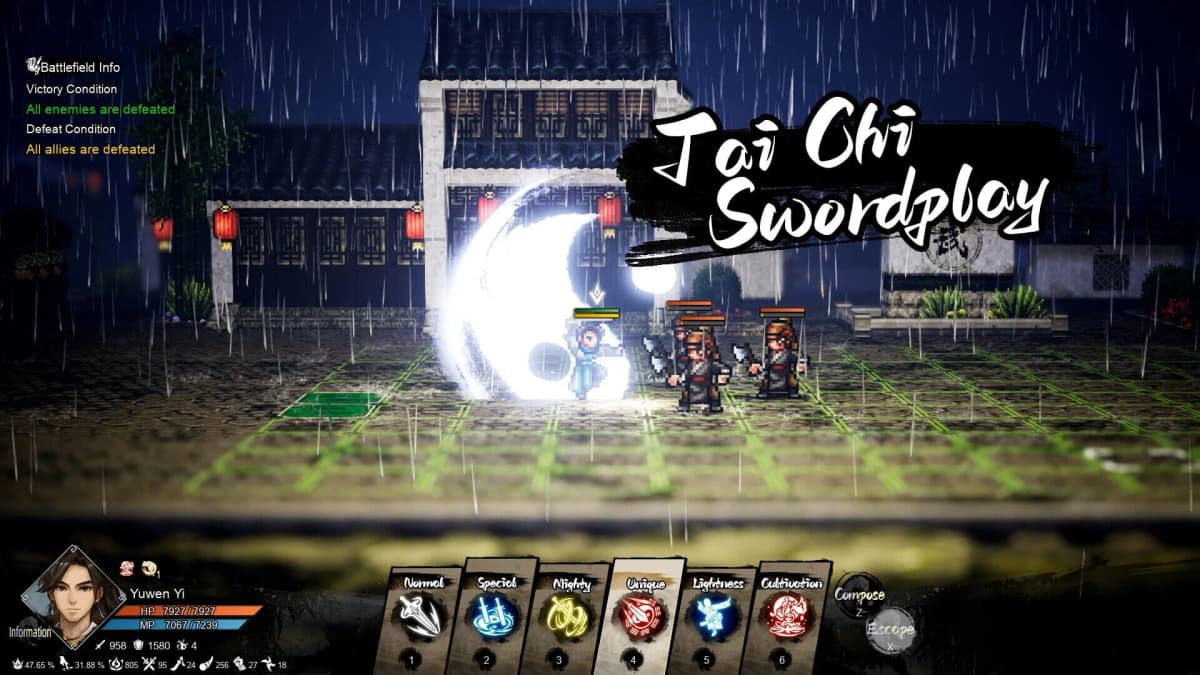
- Finish the named village conversations before exploring far outside the hub.
- Collect the required detox materials and return immediately to confirm the hand-in.
- If the quest does not update, re-open the objective text and verify that you have the right item, not just the right category.
Chapter 3: Tianshui City and the first major backtracking loop
After the early village arc, the game starts teaching one of its least obvious rules: leaving an area does not always mean that area is finished. Companion and follower guides repeatedly point to Tianshui City as an early example. You may leave the city, then need to return through the inn district to trigger the next scene, including the Granny Mu event that some players miss.
This is the first point where the “walkthrough” really splits depending on what you want. A credits-only route can push ahead faster, but an optimal progression route should slow down here. Walk the inn area again after major dialogue, revisit the city after a story update, and check whether a new companion trigger has appeared before you commit to the next map.
From there, community routing commonly points west toward Skyline Mont and the Gray Condor fight. Treat that as a signal that the game expects exploration and follow-up triggers, not one clean forward arrow.
Chapter 4: Longmen Canyon, Camelbell Hill, and Canglan Village
Midgame progression gets much easier if you assume every region has two jobs: clear the obvious story objective, then sweep for the side trigger that prevents a later headache. Longmen Canyon is a good example because public companion routes tie it to General Tuoba and pieces of the Bone-Forging Method. If you miss one part and a guide mentions Camelbell Hill for the other, do not assume the game will combine them automatically later.
Once you reach Canglan Village, check the map edges rather than only the center. Community routes specifically flag the top of the map as the place to help Di Zui. That sounds minor, but it reflects a broader pattern: Wandering Sword likes to hide important progression or recruitment moments at the edge of a region instead of along the middle road.
- Search Longmen Canyon thoroughly before leaving.
- If a manual or method is described in separate parts, treat each part as a real objective.
- In villages, always check the top edge, far corners, and outskirts before assuming nothing is happening there.
Chapter 5: Sweetsprings Village, Mount Autumnscape, and route-sensitive detours
This is one of the messier stretches because some public recruitment routes explicitly warn you not to take the most obvious destination at a specific moment. The usual sequence here runs back through Sweetsprings Village, includes talking to Ouyang Hai and following the frosty condor-related event, and then branches through a prisoner-related path instead of heading straight to Skyline Mont when the route says not to.
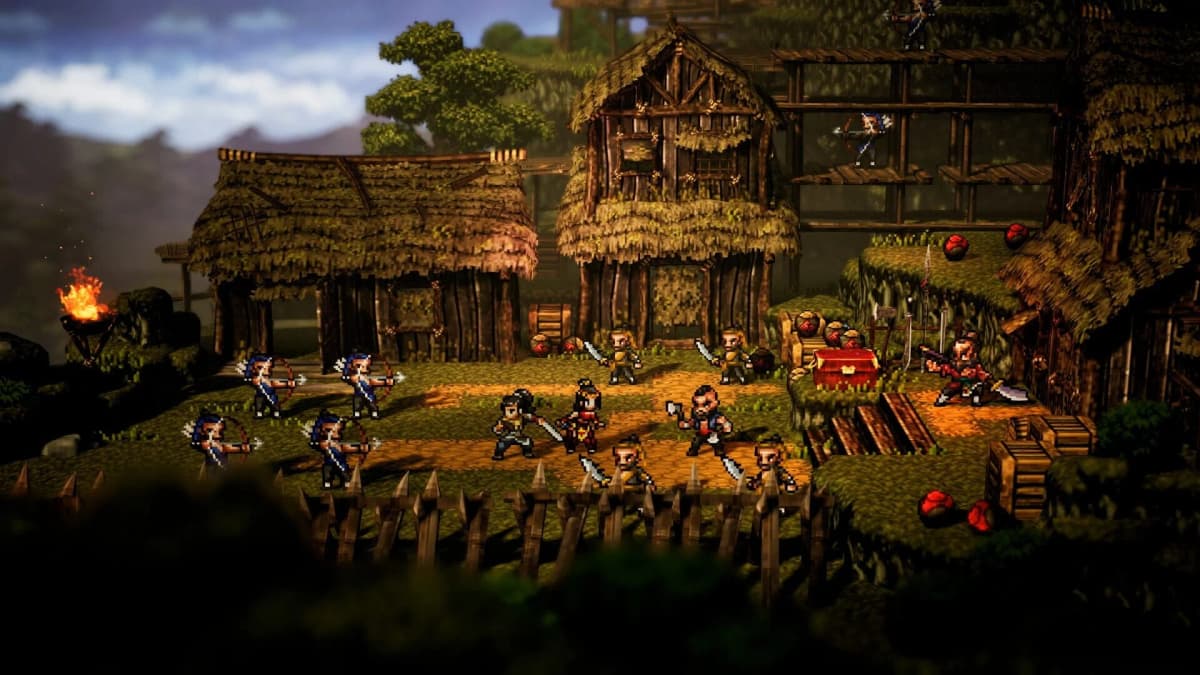
That can feel counterintuitive, but it matches how the game handles state-based triggers. If the walkthrough you are following tells you to delay a map, the reason is usually that another cutscene or rescue event needs to fire first. Mount Autumnscape is another classic example. Public guides point to the far left end of the area for a prisoner rescue, which means the “important” part of the map is easy to miss if you only follow the center trail and leave as soon as combat stops.
Chapter 6: Bamboo Sea, Revisit Pili School, and late traversal checks
Bamboo Sea is one of the clearer examples of how story, recruitment, and combat triggers overlap. Community routes place Lianxin toward the northeast end of the zone, with Shang Tingzhu tied to the lead-in and a duel with Lianxin acting as the real progression gate. If that duel does not appear, the most likely causes are either missing the correct edge of the map or arriving before the previous story flag has been set.
Later, the route through Solitary Cloud Marsh into a revisit of Pili School keeps the same design logic. The game starts asking you to read the terrain instead of relying on a marker. One public route even calls out a sequence where you find Whispering Centipede on the west side, then travel east or southeast and jump across alligators to continue. When players say the game is being vague, this is usually the kind of segment they mean.
Common sticking points that waste the most time
- Leaving a city too early. If a quest has not updated, walk the inn district, central square, and main buildings again before moving on.
- Ignoring side quests. This is the fastest way to miss recruits, manuals, blueprints, recipes, and other growth tools.
- Farming drops instead of crafting. Public new-player and resource guides both point toward crafting systems as the real power source.
- Not backtracking when the game expects it. A lot of progression is built around “leave, advance a flag, return, trigger cutscene.”
- Not checking map extremes. Top edges, far left boundaries, and northeast corners repeatedly matter more than the center path.
Wandering Sword endings: how to protect your route
For endings, the most important thing to know is that Wandering Sword is a branching game, and public release materials for newer versions describe it as having many possible endings. You do not need a perfect spreadsheet on a first run, but you do need to stop playing as if there is only one irreversible route. The game’s companion, side-quest, and story-state design strongly suggests that late outcomes depend on more than just the final choice prompt.
The safest approach is to create permanent save files at three points: before a major late-game story lock, before finishing important companion arcs, and before the final sequence once the game starts signaling that events are accelerating. If you care about seeing more than one ending, finish outstanding side content before obvious endgame pushes, revisit major hubs one last time for delayed events, and do not overwrite your pre-branch save after the credits.
- Keep one save before late companion resolutions.
- Keep one save before the final story commitment.
- Clear side quests you care about before entering what feels like a point of no return.
- If an ending guide seems to conflict with a recruitment guide, trust the possibility of route sensitivity and preserve an extra save.
That will not guarantee every ending on one blind route, but it will prevent the most common problem: reaching the end, realizing a companion or story branch was decided hours earlier, and having no clean save to go back to.
FinalBoss // Gear
Level up your setup
01Top-rated gaming headsetson Amazon→02High-refresh gaming monitorson Amazon→03Gaming chairson Amazon→04Discounted game keyson Kinguin→
Affiliate links · As an Amazon Associate, FinalBoss earns from qualifying purchases.
Want to Level Up Your Gaming?
Get access to exclusive strategies, hidden tips, and pro-level insights that we don't share publicly.
Ultimate Guide Strategy Guide + Weekly Pro Tips