
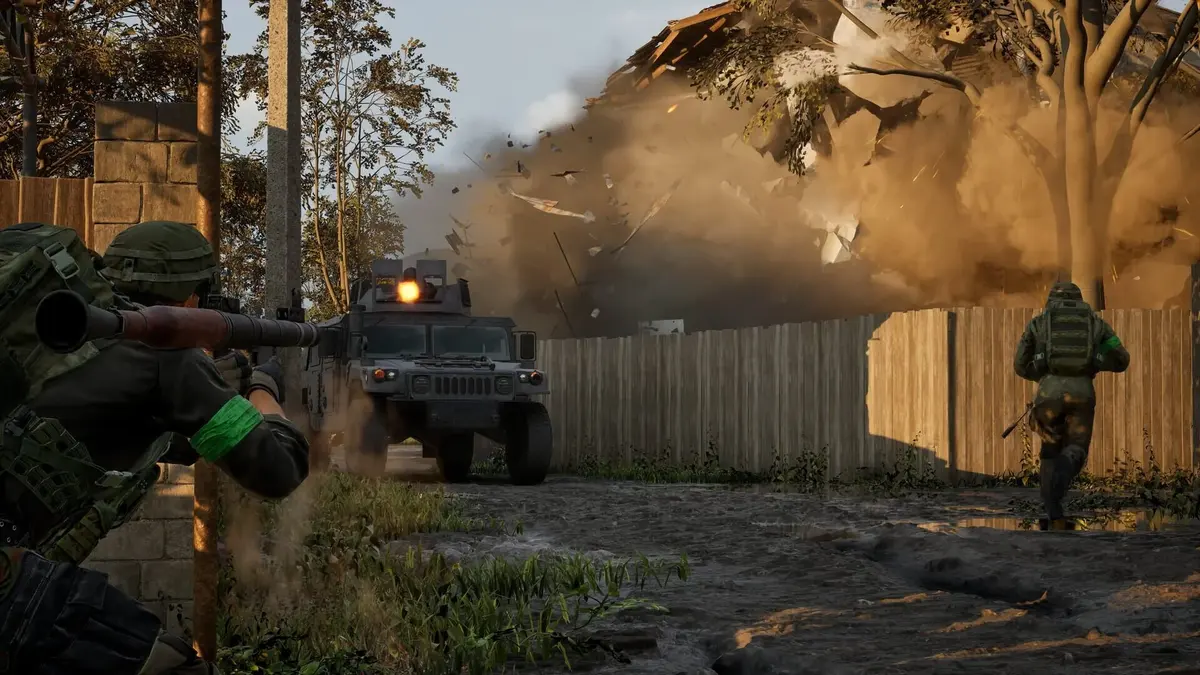
Every 30 seconds, the team controlling WARDOGS’ central zone earns one point. Reach 100 points first, and the match is over. That familiar objective is buried beneath a far less familiar demand: somebody has to deliver the supplies, repair the vehicles, build the defenses, revive the casualties, and absorb the economic damage when a plan collapses.
WARDOGS is ambitious because it treats combat as only one part of warfare. BULKHEAD and Team17 have built an up-to-100-player FPS where a player hauling supplies or moving a squad across the map can create more value than another player chasing kills. That is a stronger foundation than the usual large-scale shooter promise of louder guns and larger maps. It is also exactly why WARDOGS should remain niche. The game’s best systems depend on players accepting responsibility for outcomes beyond their personal kill count.
The danger is not that WARDOGS asks too much. The danger is that Early Access friction can make a demanding design feel broken rather than deliberate. Manual server browsing, launch-day authentication trouble, queues, and server collapse under high demand are not meaningful tactical hardships. They are obstacles standing between players and the actual game.
Table of Contents (6)
Death Has a Cost, Which Gives Every Decision Weight
WARDOGS starts players with 10,000 in match currency, then asks them to keep that money moving through a persistent battlefield economy. Players earn cash for occupying the zone, chasing the hot zone, killing enemies, healing and reviving teammates, repairing vehicles, delivering supplies, transporting players, spotting enemies, and constructing at base. That list matters. It establishes that a round has several useful jobs, and shooting somebody is only one of them.
The penalty is equally direct. If a player dies and nobody revives them, their equipment is gone and must be purchased again. That system gives medics a real function, makes extraction valuable, and turns reckless loadouts into a liability. A heavily armed player charging alone into a contested tower is not merely wasting their own time. They are draining resources that could have funded transport, construction, ammunition, or a more coordinated assault.
This is the part of WARDOGS that deserves the word “tactical.” Plenty of shooters use the label while handing out endless equipment and respawns until victory becomes a matter of brute-force repetition. WARDOGS forces players to account for what a death removes from the team. The intended result is caution with purpose, rather than the passive corner-holding that tactical shooters sometimes mistake for discipline.
Gear weight reinforces that pressure across five movement tiers. The lightest loadout carries no penalty. Light and medium setups slow a player to varying degrees, with medium presented as the sensible balance. Heavy equipment prevents sprinting while in tactical movement, while superheavy gear removes sprinting entirely. That is a clean trade-off: protection and destructive potential come with a mobility bill. WARDOGS does not let every player pretend to be a medic, scout, tank hunter, and assault trooper at once.
The Logistics Layer Gives Non-Combat Players a Real Role
The strongest idea in WARDOGS is that it gives players a reason to contribute while spending limited time in direct gunfights. A support-minded player can earn by delivering supplies, transporting teammates, repairing damaged vehicles, constructing defenses, and keeping a forward base operational. That is a legitimate match identity, not a consolation prize for somebody with poor aim.
The class progression structure supports that division of labour. Assault advances through assault rifles, pistols, and grenades. Support progresses through shotguns, machine guns, rockets, repairs, and building. Medics gain progression through healing, reviving, and submachine-gun kills. Recon progresses through sniper and designated-marksman-rifle kills. The split is blunt, but it works because it tells players what the game values from each role.
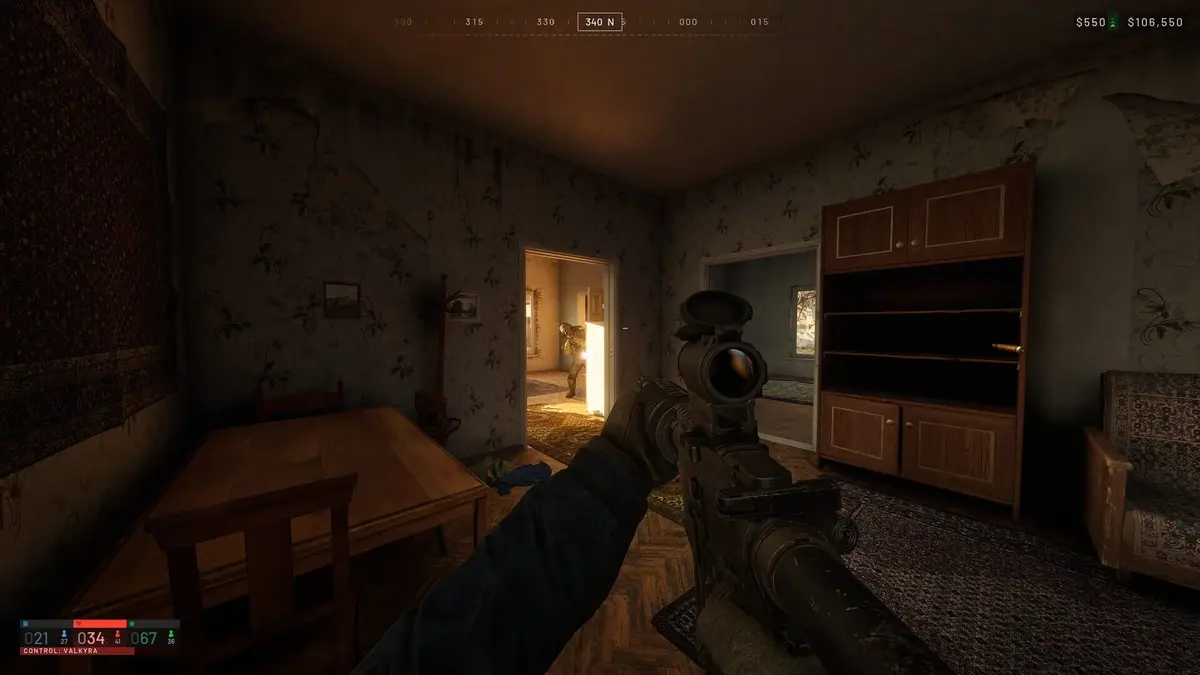
Support players sit at the centre of WARDOGS’ larger battlefield ambitions. A forward operating base requires a Support player to purchase and place the FOB box, then spend supplies and use a hammer to build fortifications, mortars, anti-air defenses, and drills. Those drills can draw the hot zone toward a position, though doing so consumes substantial fuel. That is the kind of mechanic large-scale shooters frequently advertise and rarely make consequential. In WARDOGS, the team that can build, fuel, defend, and reinforce its position has a route to victory that does not begin with winning every firefight.
The central zone is designed around the same principle. It contains between two and five towers. Each tower has a console on its second floor, and capturing one provides a digit of a code. Collect every digit, enter the code, and the team can pull the hot zone toward a chosen tower. WARDOGS so makes information, movement, construction, and supply lines part of the objective game. A squad can win ground through planning instead of simply arriving first with the largest pile of explosives.
With 37 weapons, 27 vehicles, and three maps at Early Access launch, WARDOGS has enough material to support that structure. The important distinction is that vehicles are not scenery. A transport helicopter, a supply truck, or an armoured vehicle becomes part of the economy because it helps put people and equipment where the team needs them. Losing one carelessly should hurt. That is the intended point.
WARDOGS Has to Separate Difficulty From Friction
There is a hard line between a punishing system and a dysfunctional one. Losing a purchased weapon after an unrecovered death is a system. Being stuck in an authentication failure before reaching the battlefield is not. Having to decide whether a vehicle is worth risking is a system. Having a server collapse because demand overwhelms the launch infrastructure is not.
WARDOGS launched into Steam Early Access on September 10, 2026, and sold 1.25 million copies within 24 hours. That scale of demand exposed the game’s infrastructure immediately. The result was queues, authentication problems, and game servers buckling under the rush. Those failures matter more here than they would in a small-session shooter because WARDOGS requires a functioning population for its design to breathe. A three-team, 100-player battlefield cannot demonstrate the value of coordination if players cannot reliably enter it.
Manual server browsing is another pressure point. WARDOGS has no automatic matchmaking, leaving players to locate servers themselves. That can fit a game built around communities, familiar squads, and organised groups. It also creates a barrier for the solo player who wants a stable match without studying server names, population counts, or map rotations. The browser needs to communicate useful information cleanly: player count, queue state, ping, active map, team balance, and whether a match is already beyond recovery.
That interface burden is where “hardcore” design often becomes lazy design. A player should need to learn when to revive, when to resupply, when to abandon a vehicle, and when to defend a tower. They should not need to fight unclear menus and unstable server access before they can make those decisions. Tactical depth belongs inside the match.
The Seasonal Economy Risks Making the Grind Feel More Important Than the War
WARDOGS also resets progression monthly. At the end of a season, money converts into a separate currency and advancement returns to zero. A periodic reset can keep the economy from calcifying around veterans with unlimited resources, and it gives new players a chance to enter without facing permanent financial irrelevance. The problem is that WARDOGS already asks players to learn a large number of linked systems. Resetting advancement too aggressively can turn that learning process into repeated administrative work.
Season 1’s progression changes sharpen that concern. BULKHEAD increased the experience required from level 10 to level 20 to roughly twice the previous amount, cut experience gained from air vehicle kills, and sharply reduced rewards from selling supply-crate items valued below $75. It also moved the Artillery unlock from career level 55 to level 90, while the Heavy Tank now requires Driver level 35 instead of overall career level 35.
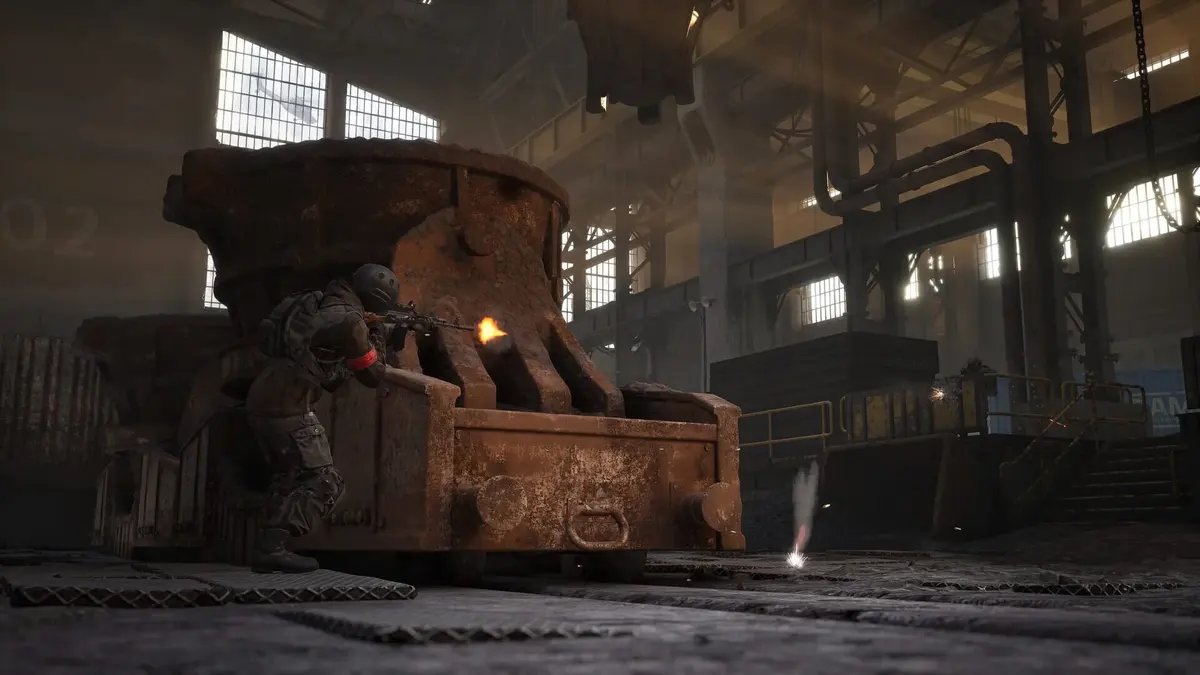
Those changes make class commitment more important. They also make the game less forgiving for players who want to experiment across roles before selecting a specialty. The under-level-9 equipment discount helps, including reduced helicopter costs during early hours, but it does not fully resolve the issue. WARDOGS is asking new players to understand weight, money, revives, towers, hot-zone manipulation, fuel, bases, vehicles, class progression, and equipment loss. Slower progression must be matched by exceptionally clear feedback about why a player is earning, losing, and unlocking what they are.
The reporting changes in Season 1 are more encouraging. Publicly announced cheater bans and weighted player reports designed to reduce the impact of repeat bad-faith reporters are practical measures for a game where one exploitative player can ruin a large match. A penalty economy only works when players trust that its losses are being distributed through legitimate competition rather than abuse.
The Price Makes the Early Access Promise More Demanding
WARDOGS entered Steam Early Access at $39.99, with a $49.99 Supporter Edition available at launch. The standard price is planned to rise to $49.99 and eventually $59.99 by version 1.0. That pricing places a clear obligation on the Early Access build. Players are not entering a frictionless free download to see whether the concept appeals to them. They are paying for a game whose most important systems are still being balanced in public.
The platform situation makes the audience narrower still. WARDOGS is available on Windows PC through Steam at launch. Xbox and PlayStation 5 versions are planned for 2028. Until then, the game’s ability to sustain healthy server populations, organised squads, and balanced three-team battles rests entirely on the PC community.
That is not a flaw by itself. A game this committed to large-scale coordination does not need to appeal to every player who wants a quick match after work. It needs a stable audience that wants to learn the systems and accept that a productive round may involve driving, building, repairing, or carrying supplies more often than firing a weapon.
Its Niche Is the Point, but Its Friction Cannot Be
WARDOGS should not dilute its economy to make every death painless, every vehicle disposable, and every support role optional. That would erase the reason the game exists. The value of its 100-player warfare comes from dependence: a medic needs wounded players worth saving, a Support player needs builders and drivers worth protecting, and an assault squad needs a supply line that survives long enough to matter.
The game’s narrow audience is therefore a design consequence worth defending. Players who want instant gratification will find WARDOGS slow, punitive, and overcomplicated. Players who want a battlefield where delivery work, recovery, construction, and restraint influence the score will find a more substantial proposition than another kill-driven FPS.
BULKHEAD’s job is to remove the accidental pain: unstable access, opaque browsing, unclear UI feedback, and progression that obscures the reward for intelligent teamwork. The tactical economy should remain demanding. Everything preventing players from engaging with it should be fixed.
FinalBoss // Gear
Level up your setup
01Top-rated gaming headsetson Amazon→02High-refresh gaming monitorson Amazon→03Gaming chairson Amazon→04Discounted game keyson Kinguin→Affiliate links · As an Amazon Associate, FinalBoss earns from qualifying purchases.
Want to Level Up Your Gaming?
Get access to exclusive strategies, hidden tips, and pro-level insights that we don't share publicly.
Ultimate Gaming Strategy Guide + Weekly Pro Tips