
Table of Contents (9)
The Night Warframe Forgot I Was Supposed To Be Powerful
The moment Follie’s Hunt “clicked” for me wasn’t some triumphant escape or clutch save. It was me, stuck in a dim hallway of Vesper Relay, sprinting in circles with no idea where the hell the paint was, watching an invincible killer aura float toward me while my squad’s health bars evaporated. No enemies to shoot, no meaningful tools to use, no sense of where to go next. Just confusion, then a blinding flash, then – mission failed.
I’ve put a stupid amount of hours into Warframe over the years. I was there when bullet jumping made the game finally feel like the anime parkour fever dream it always wanted to be. I’ve survived the days of mandatory grind walls, janky events, and experimental updates that didn’t land. I’m not scared of Digital Extremes trying weird stuff. I actually want them to take risks.
But Follie’s Hunt isn’t just a weird experiment. It’s an experiment that feels like it fundamentally misunderstands why Warframe works in the first place. And this latest patch, with its “we’re listening” tweaks and damage number band-aids, doesn’t convince me they actually fixed the core problem. If anything, it highlights how far they missed the mark.
On Paper, Flipping The Predator Fantasy Is Brilliant
Let me be clear: I love the idea behind Follie’s Hunt. Warframe has always been about being the apex predator. You are the horror. You drop into a Grineer ship and you’re the thing that makes them scream over the intercom. So the pitch – “what if, just once, you were the one being hunted?” – is fantastic. It’s the kind of inversion that can wake a stale live service up.
Digital Extremes even talked about how this started life as a kind of goofy Prop Hunt concept and then morphed into a survival horror mode. They wanted slower pacing, creeping dread, and a relentless pursuer instead of another loot blender. That’s actually smart. After more than a decade of bullet jumping through tile sets, of course the team is looking for new tonal angles.
And on a pure theorycraft level, Warframe is perfect for this. We already have absurd mobility, verticality, parkour tech, and a deep modding system. Trading raw damage for survival, movement, and information-gathering could be a tense, satisfying twist. Follie’s Hunt should be the mode where your movement skills and game knowledge finally matter more than having a room-deleting nuke frame.
Instead, the mode strips away your power fantasy, then strips away your tools, then strips away your clarity, and finally asks you to grind it for a 5-6% blueprint drop. That’s not horror. That’s bad design wearing a spooky mask.
Being Prey Is Fine. Being Helpless, Blind, And Confused Isn’t.
Follie’s Hunt’s first sin is obvious as soon as you realize all your usual safety nets are gone. Frames and builds that live and die by interacting with enemies – leeching, crowd control, lifesteal, constant energy orbs – suddenly exist in a vacuum. There are barely any enemies around, and the one thing you do see is an invincible death clown that shrugs off your kit.
Take Oraxia for example. On paper, she’s got great tools for surviving spikes of damage. In a normal mission, you play around that, rotate abilities, bounce between targets, and stabilize. In Follie’s Hunt? If Follie catches you, your energy is drained, your health is shredded, and there are not enough viable targets around to rebuild before you’re just… cooked. The whole kit feels like it’s been thrown into a mode designed specifically to invalidate it.
And it’s not just Oraxia. A ton of frames are built around doing things – chaining kills, controlling space, leveraging density. Follie’s Hunt replaces density with absence. Where Warframe usually rewards aggression and engagement, this mode punishes you for even being nearby. You’re pushed toward lame, hyper-defensive builds whose only real fantasy is “maybe I’ll die slower this time.”
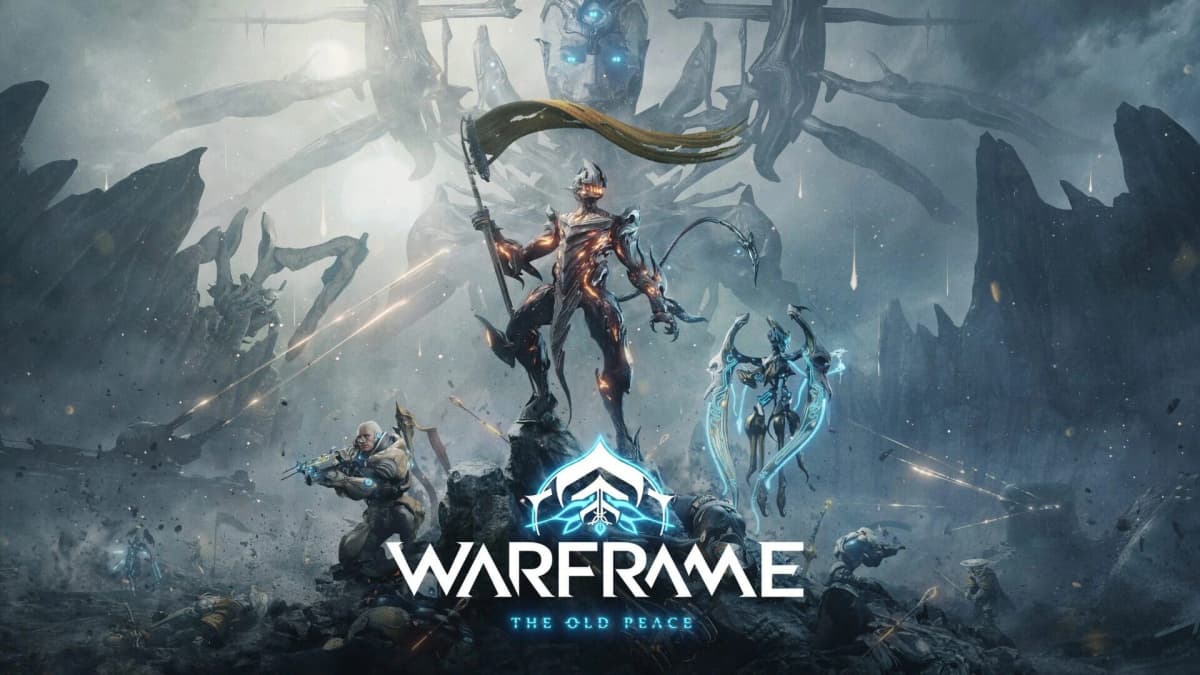
Yes, you can always say “just build for survival.” But in literally every other mode in the game, that’s a choice, a flavor. Bring Gauss to Defense? Suboptimal, but fun. Mesa to mobile missions? Clunky, but doable. The game rarely hard-locks you out of a playstyle. Follie’s Hunt feels like the first time the game looked me dead in the eye and said, “No, actually, you’re wrong for liking that frame here.” The viable window for builds is razor-thin – and not in a clever, puzzle-box way, just in a “we didn’t think through the implications” way.
The Map Feels Like A Horror Maze Designed By A Committee
If the builds are the first problem, the Vesper Relay itself is the second – and honestly, it might be worse. Horror works when you feel lost but still believe the world is legible. You don’t know what’s around the next corner, but you understand how corners work. Follie’s Hunt throws you into a half-ruined social hub with lighting so bad it feels like an out-of-date RTX showcase gone wrong.
Critical paths are underlit. Some routes read as geometry you can climb, some just look like texture noise. You spend way too much time asking, “Is that a corridor, or just decor?” The one thing you can reliably see? Follie herself, glowing like a beacon of “you’re about to lose another attempt.” That’s not tension, that’s visual trolling.
And then there’s the waypoint situation. One icon. Same marker for currency, balloons, and paint spawns – the literal central objective of the mode. In a mission that already yanks away half your usual information, the UI basically shrugs and says “eh, you’ll figure it out.” I didn’t feel like a desperate survivor scraping by; I felt like a QA tester trying to guess what the designer intended.
The devs say the lighting and waypoints are “being collected and discussed internally,” and the patch does promise brighter sightlines and smaller auras. That’s good, but these are first-pass problems. This is the kind of stuff that should have been painfully obvious after a week of wide testing, not after the entire playerbase collectively faceplanted into the same wall.
The Core Loop Is Obscure, Then It Punishes You For Figuring It Out
Here’s the supposed loop: explore, spawn paint, collect it, charge up progress, survive as Follie escalates. The idea is that as you get closer to escaping, the stakes go up. Classic horror escalation. Except in practice, it feels like the game is saving a special “screw you” for the moment you finally understand what you’re doing.
You push your luck, you juggle modifiers, you start mapping routes in your head. Then a new curse stacks on, visibility gets worse, waypoints stay vague, and you’re forced into increasingly random-feeling laps around the relay praying for paint spawns. Since enemy density is low and your gear is neutered, you don’t have much to actively do except bunny-hop and stare into the dark. Then Follie rounds the corner, your screen explodes, and that’s your run.

One of the developers apparently described this as an “intentional” attempt to induce stress – you’re supposed to feel hunted, squeezed, cornered. I get the intention. But there’s a big gap between “I got greedy and paid the price” and “the game hid the ball and then threw me into a woodchipper.” Follie’s Hunt spends most of its time on the wrong side of that line.
And because this is Warframe, of course there’s a grind component stapled to it. With blueprint drop rates floating around 5% on normal and 6% on Steel Path per run, the game is effectively saying: “Hey, you know that mode that feels like stumbling around in the dark waiting to be deleted? Do it twenty times.” No horror experience in the world survives that kind of repetition. It just becomes resentment with extra steps.
When Your Horror Villain Hits For 3500, You’d Better Be Damn Sure The Mode Works
The numbers tell their own story. At launch, Follie was apparently dealing something like 3500 damage per hit, with an aura that might as well have read “don’t bother.” Within about 24 hours, Digital Extremes had already pushed a hotfix dialing that back by roughly a third on normal and giving players at least some theoretical way to fight back – chipping her until she retreats.
We also know from dev comments that this mode went from concept to live in something like three to four months. For a gimmick alert in a seasonal event? Fine. For a cornerstone horror mode attached to a new Warframe and a massive marketing beat? That’s tight. Uncomfortably tight. And it absolutely feels like it.
When a studio is calling its own release a “generational fumble,” that isn’t just being humble. That’s an admission that something went very wrong between the initial pitch and shipping build. Follie’s Hunt doesn’t feel like a bold, confident swing that barely missed. It feels like a design that never had enough time to properly reconcile its fantasy, its mechanics, and Warframe’s identity, then was shoved out the door with the promise that patches could fix whatever the playerbase screamed about first.
And that’s the worst part: the fixes we’re seeing now are clearly reactive. Shrink the aura, brighten the map, loosen some numbers – those are fair adjustments, but they don’t touch the foundation. You can’t patch your way out of “this mode wants me to play like prey but won’t let me use prey-style tools, directions, or information.” You cannot hotfix your way into flow.
This Is What Happens When You Fight Your Own Game’s DNA
I’ve played other games that flipped their own formulas and actually landed the pivot. Resident Evil’s mercenary modes twist survival horror combat into score-chasing chaos without losing the identity. Soulslikes that add roguelike delves or time trials keep the core feel intact even while messing with structure. They all share one thing: they respect what the game already is.
Warframe is built on speed, flow, and expression. Follie’s Hunt intentionally attacks all three. It slows you down, removes key movement (no Void Sling, get back in the box), narrows viable builds, then obscures the actual objective. The only thing it keeps from core Warframe is the grind.
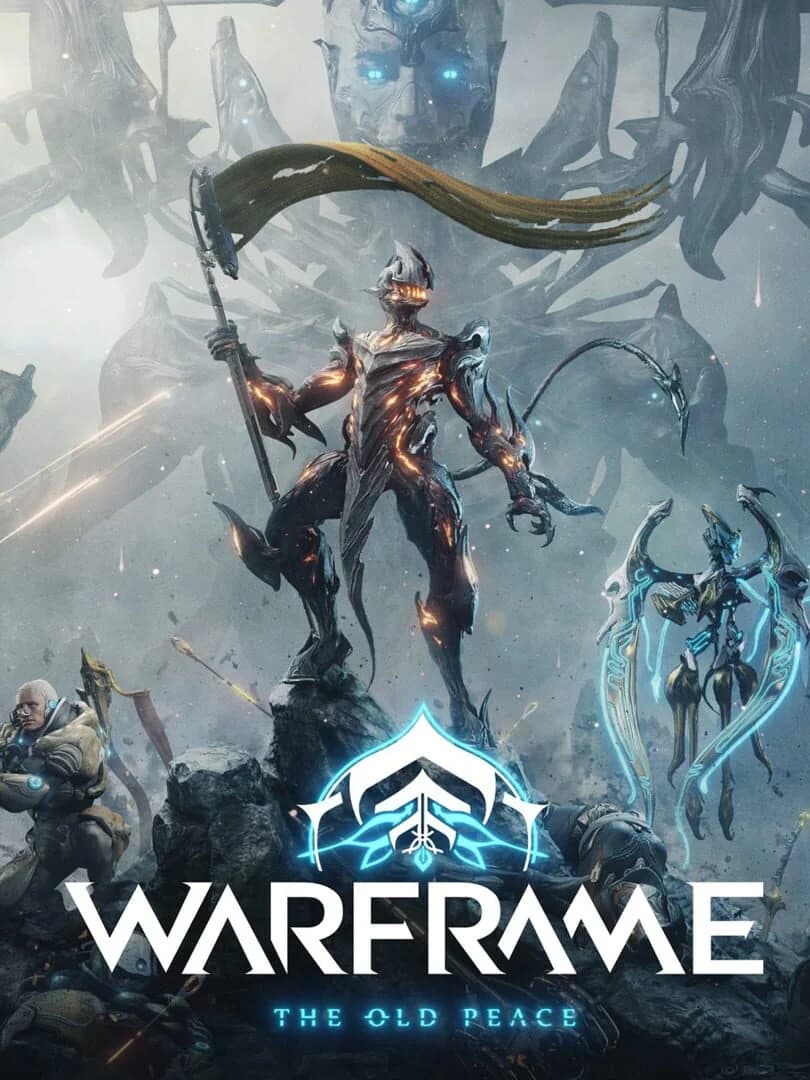
If you want horror in a game like this, you need to bend the rules, not snap them. Let players use their parkour to perform daring escapes, not bump into invisible walls. Let our frames function, but make firing your gun an informed risk because it reveals your location or accelerates the hunter. Let the map be scary, not unreadable. There are so many ways to build tension without just ripping pages out of the rulebook and hoping fear will fill the gap.
Instead, Follie’s Hunt ends up feeling almost embarrassed of Warframe’s usual strengths. It’s like the mode is terrified that if it lets you play the game you actually installed, the horror will evaporate. So it clamps down on everything, and in doing so, it suffocates itself.
Band-Aids Won’t Fix A Mode That Feels Bad To Replay
The current patch notes read like a team scrambling to stop the bleeding rather than a team steering toward a clear vision. Smaller aura, better lighting, some tweaks to how she reacts to damage, broader squad-wide pickups – all good, all welcome. None of them answer the bigger question: why would I want to keep playing this?
Live-service games live or die on repeatability. You can get away with a clumsy one-and-done story mission if the vibes are good. But if you build a mode around low-drop-rate blueprints and expect players to live in that space, the experience has to feel fair, readable, and satisfying to master. Right now, Follie’s Hunt feels like a bad roguelike with a broken minimap and a DM who hates you.
Even if every single promised tweak lands perfectly, we’re still left with a cramped map, a low-enemy sandbox that invalidates half the roster, and an inverted fantasy that doesn’t give you enough interesting decisions to justify the stress. That’s not something you solve by nudging some sliders. That’s a “go back to first principles and ask what this mode is actually supposed to be” problem.
Where I Draw The Line – And What I’ll Actually Play Instead
After a handful of Follie’s Hunt runs pre- and post-patch, I’ve hit my line. I’m not grinding a 5%-6% blueprint out of a mode that actively fights my instincts as a Warframe player. I’m not respec’ing half my arsenal into boring bunker builds to tolerate a horror experience that’s more about UI confusion than dread. I’ve got too many other things in this game that respect my time, my knowledge, and my loadouts.
So here’s my practical takeaway:
- If you’re curious, run Follie’s Hunt a couple of times to see the spectacle, laugh (or groan) at the killer clown, and then walk away until we see a real rework, not just tuning passes.
- If you’re chasing progression, ask yourself whether that drop is genuinely worth dozens of frustrating attempts in a mode the studio itself has called a “generational fumble.” For me, it isn’t.
- And if you’re at Digital Extremes, take this as a hard lesson: you can flip Warframe’s fantasy, but not by shackling the player and hoping confusion will carry the mood. Build horror modes that trust the existing movement, trust the frames, and scare us by how you use our power, not how you delete it.
Warframe is still one of the best-feeling games on the market when it remembers what it is: a hyper-kinetic, expressive power trip with just enough friction to make mastery satisfying. Follie’s Hunt, even with its first round of patches, feels like a detour into a version of Warframe that doesn’t actually like being Warframe.
Until that changes, I’ll be back where the game shines – chaining bullet jumps through open worlds, nuking steel path mobs with frames that finally feel earned, and playing modes that treat me like a space ninja, not a blindfolded lab rat in a haunted relay.
FinalBoss // Gear
Level up your setup
01Top-rated gaming headsetson Amazon→02High-refresh gaming monitorson Amazon→03Gaming chairson Amazon→04Discounted game keyson Kinguin→Affiliate links · As an Amazon Associate, FinalBoss earns from qualifying purchases.
Want to Level Up Your Gaming?
Get access to exclusive strategies, hidden tips, and pro-level insights that we don't share publicly.
Ultimate Gaming Strategy Guide + Weekly Pro Tips