
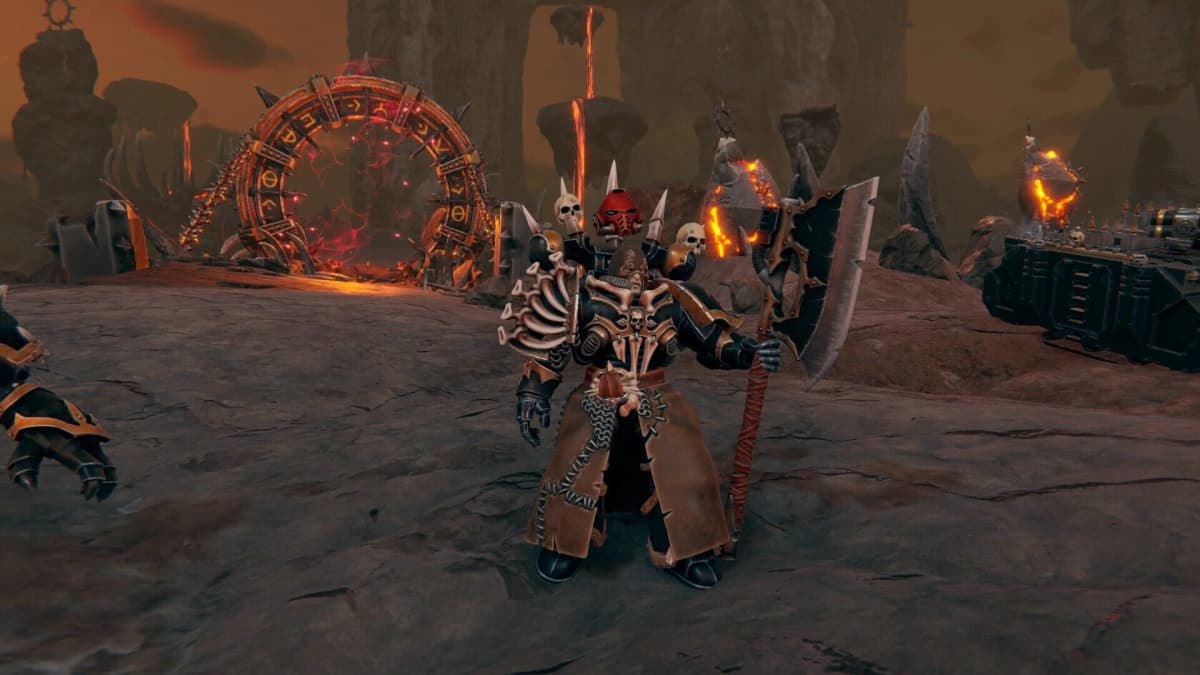
“Strongest Space Marine Order” is one of those Warhammer 40,000 arguments that becomes useless the moment somebody treats strength as a single statistic. A warrior who can win a duel, a force that can sustain a crusade, and a specialist unit built to erase a supernatural threat are not doing the same job. Ranking them as though they are leads to the usual loud, circular nonsense.
Warhammer 40,000: Battlesector – Black Legion puts the central pressure of this debate in plain view. Space Marines are impressive because they are concentrated force: heavily armed, highly trained, culturally engineered for war, and equipped to make a small number of bodies matter. The question is what happens after that initial impact. Can the Order keep fighting? Can it adapt? Can it face threats that do not care how heroic its champions look?
My answer is that the Dark Angels take the top spot overall. Grey Knights are the most frightening specialists on this list, and there are battlefields where they would be the only rational choice. Space Wolves have elite combatants capable of absurd individual feats. Black Templars understand the value of momentum and commitment. Ultramarines remain the cleanest expression of Space Marine doctrine. None of that makes them equally strong across the same criteria.
Table of Contents (7)
Strength needs a definition before it gets a ranking
I am using “Orders” as practical shorthand here for five major Space Marine forces that regularly dominate this debate: Grey Knights, Space Wolves, Black Templars, Dark Angels, and Ultramarines. The exact terminology matters less than the comparison. Each force is built around a different answer to the same problem: how does a small elite military force impose itself on a hostile galaxy?
The ranking uses four tests. A force has to do more than produce a famous warrior or a dramatic charge. It has to show a usable doctrine, a credible level of operational endurance, flexibility when the enemy refuses to cooperate, and a form of power that matters beyond a single cinematic moment.
- Combat doctrine: How clear and effective is the force’s preferred method of war?
- Resources and continuity: Can it keep operating after the first decisive engagement?
- Scale of threat: Does its strength hold up against mass warfare, specialist threats, and prolonged campaigns?
- Exceptional edge: Does the Order possess something that changes the terms of a fight?
That framework immediately hurts any ranking built around fan-favorite heroes. A force can have a warrior capable of dueling a Primarch and still be a poor answer to a war fought across multiple fronts. It can also be excellent at commanding conventional warfare and completely out of its depth when the battlefield turns psychic, daemonic, or otherwise impossible.
5. Ultramarines: the benchmark, not the trump card
The Ultramarines sit fifth because their greatest strength is reliability, and reliability rarely wins internet power-scaling arguments. That is a mistake on the part of the argument, not a weakness in the Chapter’s identity. They represent the most disciplined version of Space Marine warfare: structured doctrine, operational clarity, and an instinct to make a battlefield legible before trying to dominate it.
There is value in that. A military force that can organize itself, retain its purpose, and avoid turning every campaign into a personal saga is stronger than fans give it credit for. In any extended conflict, the ability to coordinate force, maintain priorities, and avoid being baited into a glorious disaster carries enormous weight.
The problem is that the Ultramarines’ strength feels like the standard every Space Marine force should aspire to meet. It is an excellent baseline. A ranking of the strongest Orders needs something more destabilizing than a baseline. The Chapters above them either bring a sharper specialty, a harder operational identity, or a more dangerous answer to the kinds of threats that break conventional military logic.
4. Space Wolves: extraordinary fighters with a narrow advantage
Space Wolves earn fourth because they have the best argument for raw martial credibility. Their strength is concentrated in elite units and exceptional individuals rather than in the bland comfort of a universal playbook. The Wolf Guard sit at the heart of that reputation, while Bjorn the Fell-Handed remains the sort of Dreadnought presence that can stand in a fight with figures on the scale of Primarchs.
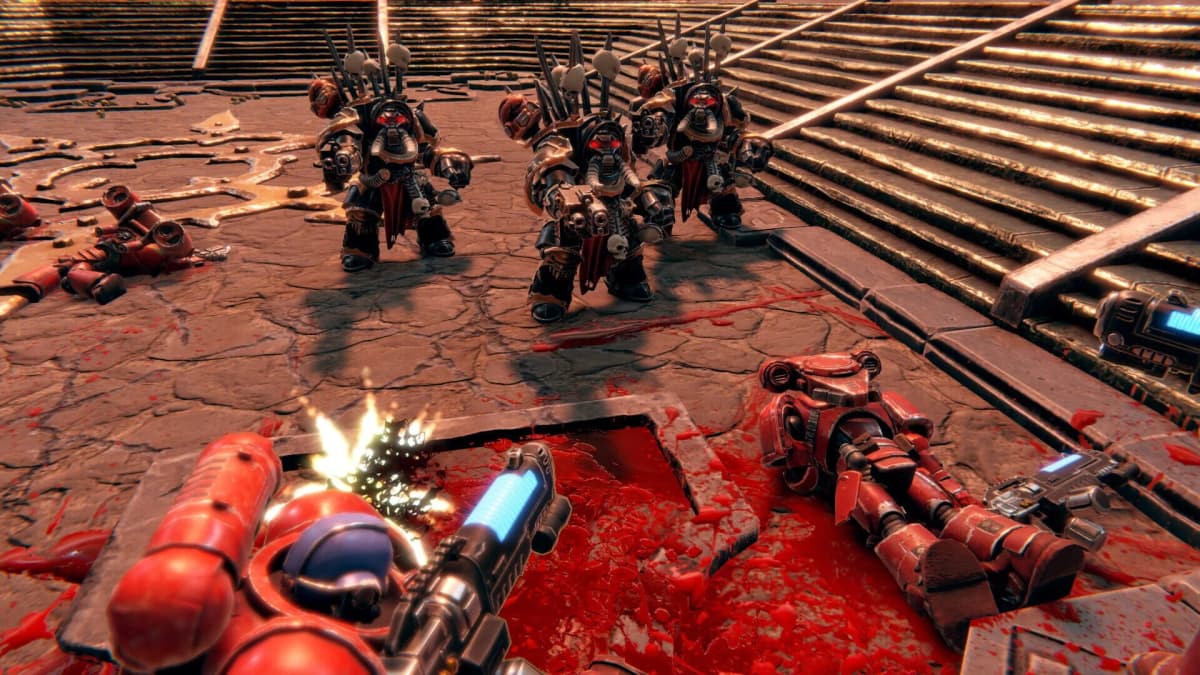
That matters. Warhammer 40,000 frequently turns on the point where one impossible combatant reaches the wrong part of a battlefield and begins breaking the enemy’s plan apart. The Space Wolves have the personnel and culture to make those moments count. They are built for forceful intervention, close-range pressure, and elite violence delivered with conviction rather than hesitation.
Yet their own strength defines their ceiling. Space Wolves are most convincing as a small, elite formation that can strike wherever the battle becomes critical. Their best units are not a substitute for large-scale conventional warfare. A Chapter optimized around exceptional warriors can still find itself buried under a conflict where numbers, logistics, and repeated engagements matter more than one legendary duel.
That distinction is why Bjorn’s ability to face a Primarch does not automatically propel the Space Wolves into first place. A duel is a test of individual supremacy. A war is a test of whether the whole machine survives contact with disaster.
3. Black Templars: commitment becomes a battlefield weapon
The Black Templars take third because they understand something many Space Marine rankings flatten into a slogan: aggression has value when it is organized. Their identity is built around the crusade as a continuing act of war. That gives them a strength that goes beyond a single mission profile. They are committed to forward pressure, sustained purpose, and a military culture that does not require a fresh excuse to keep fighting.
That sustained pressure is terrifying for the same reason it is difficult to measure. A force that treats the campaign itself as an extension of its faith and identity can absorb setbacks without losing its direction. The Black Templars do not need the neatest plan in the galaxy to be dangerous. They need a target, a route to it, and enough momentum to make every defensive line feel temporary.
Their limitation is also obvious. Total commitment can become predictable. A crusading force can be directed toward a grinding war that eats time, bodies, and opportunity. The Black Templars are stronger than the Ultramarines when a conflict rewards momentum and relentless pursuit. They are weaker than the top two because the hardest problems in Warhammer 40,000 often demand either supernatural specialization or a deeper reserve of strategic options.
2. Grey Knights: the strongest specialists in the setting
Grey Knights are the faction most likely to win this debate when the definition of strength is allowed to drift toward supernatural force. Every Grey Knight is a trained Psyker. That alone separates them from every other Order here. Their combat capability includes psychic powers such as Smite, Doom of Malanai, and Psychic Barrage, giving even a single squad access to a level of battlefield influence that conventional Space Marines cannot casually replicate.
They can operate as a compact strike unit or as a larger coordinated force, and that flexibility is their real advantage. A Grey Knights deployment can be tailored to a threat level rather than padded out for appearances. When the enemy is built around psychic terror, supernatural corruption, or a target that must be removed immediately, the Grey Knights are the strongest Order on this list. Their power is direct, rare, and uniquely suited to breaking threats that normal doctrine cannot neatly contain.
Second place is not a slight. It is a recognition that specialist power has a boundary. Grey Knights are not designed for large-scale conventional warfare. A Tyranid hive fleet can overwhelm them through sheer numbers. Psychic strength does not create unlimited bodies, limitless ammunition, or the ability to occupy every battlefield at once. Their superiority is absolute inside their lane and less useful outside it.
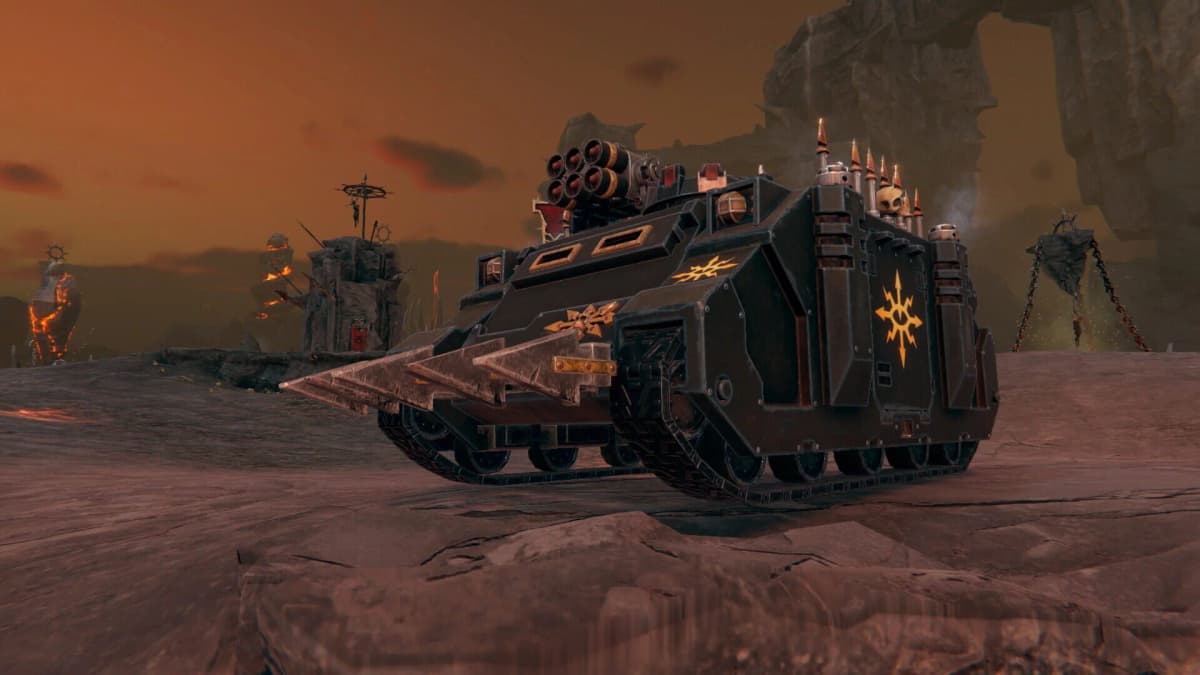
That is the part of the Grey Knights argument that gets ignored whenever somebody claims they automatically beat everyone. They are the best answer to a specific class of nightmare. The galaxy produces more than one class of nightmare.
1. Dark Angels: the best overall answer to an unstable war
The Dark Angels finish first because they offer the broadest and least fragile definition of Space Marine strength. They have the ability to operate through changing conditions without surrendering their identity. That is the quality the other four forces lack in different ways. The Ultramarines are methodical. The Space Wolves are concentrated. The Black Templars are committed. The Grey Knights are specialized. The Dark Angels are built to keep options available.
That distinction matters more than a single heroic edge. A war can demand speed, discipline, elite assault, defensive patience, secrecy, or ruthless escalation. The strongest Order overall is the one most capable of treating those conditions as variables rather than as violations of its preferred style. The Dark Angels have the most convincing case for that kind of strength.
They are the force I would put into the broadest range of impossible situations because their power does not rely on the opponent accepting a particular type of battle. They do not need a clean duel, a pure psychic crisis, or an endlessly expanding crusade to justify their deployment. Their authority comes from breadth, discipline, and the ability to turn uncertainty into a controlled problem.
That does not make them automatically superior in every encounter. Grey Knights remain the obvious choice against threats that demand psychic intervention. Space Wolves can produce the more dangerous individual fighters. Black Templars can make a conventional front collapse through sheer offensive will. The Dark Angels win the overall ranking because they are the force least likely to become irrelevant when the war changes shape.
The lore debate has an accessibility problem
This kind of ranking is also where Warhammer 40,000 can make itself needlessly hostile to new players. A newcomer hears “Grey Knights,” “Combat Patrol,” “Space Marines,” “Primarchs,” “psychic warfare,” and “crusade” in the same conversation, then gets told there is an obvious correct answer. There is not. There are only different definitions of power, and veteran players often skip the explanation because the vocabulary has become invisible to them.
Games Workshop’s Warhammer 40,000 Starter Set provides a much more useful entry point. It is designed for two players, includes what both players need to start Combat Patrol games, and uses push-fit Space Marines and Orks to lower the practical barrier to getting models on the table. Step-by-step onboarding and distinct sculpts do more for the health of the hobby than another thousand-word argument about whether one Chapter’s favorite champion beats another in ideal conditions.
That accessibility still has limits. A stripped-back introduction does not include every useful extra, such as additional paints or clippers, and Games Workshop’s recurring use of tactical rocks can make command models feel more posed than natural. Those small rubble bases are designed to give a miniature height and visual drama. They also reveal how often Warhammer presentation assumes that every player already understands its visual language.
The strongest Space Marine Order depends on the war being fought. The Dark Angels are the best overall force because adaptability carries farther than any one specialty. Grey Knights own the supernatural battlefield. Space Wolves own the argument for elite martial violence. Black Templars own commitment at campaign scale. Ultramarines own the disciplined foundation that makes Space Marine warfare function. That framework gives the lore debate a usable answer instead of another pile of chapter slogans.
FinalBoss // Gear
Level up your setup
01Top-rated gaming headsetson Amazon→02High-refresh gaming monitorson Amazon→03Gaming chairson Amazon→04Discounted game keyson Kinguin→
Affiliate links · As an Amazon Associate, FinalBoss earns from qualifying purchases.
Want to Level Up Your Gaming?
Get access to exclusive strategies, hidden tips, and pro-level insights that we don't share publicly.
Ultimate Gaming Strategy Guide + Weekly Pro Tips