
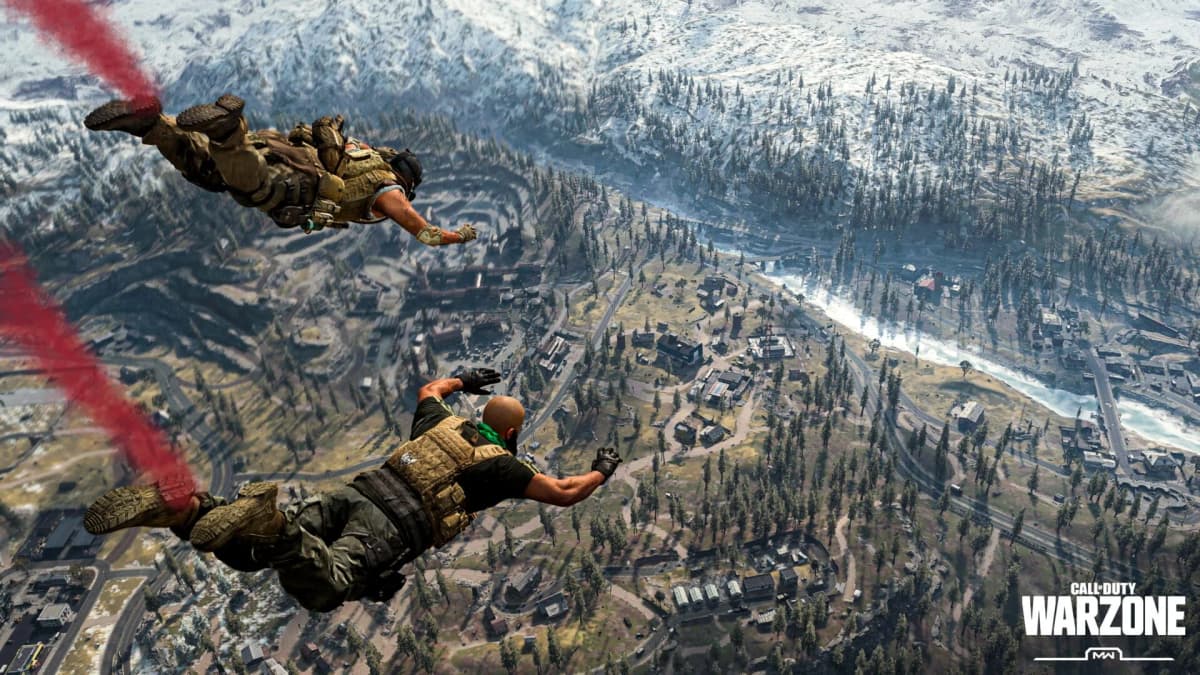
There was a moment in 2020 when dropping into Verdansk felt like the future of multiplayer gaming. Call of Duty: Warzone took the battle royale template, bolted it onto the best gunplay in the industry, and added the Gulag-a mechanic so spitefully brilliant it made getting eliminated feel like a second chance rather than a death sentence. For months, it dominated every corner of gaming culture. Streamers built careers on it. Discord servers exploded with callouts. My own crew rearranged work schedules to make sure we were online for the nightly session. The buy stations, the loadout drops, the ping system-it all felt like a revelation. We weren’t just playing a battle royale; we were playing the battle royale that finally understood what Call of Duty was supposed to feel like at scale.
But that was half a decade ago, and the ground has shifted beneath Warzone’s feet while Activision kept rearranging the furniture. The integrations kept coming-Black Ops Cold War, Vanguard, Modern Warfare II, Modern Warfare III—each one promising to refresh the experience and restore that launch-day magic. What we got instead was a case study in whiplash. The UI changed, then changed back. The backpack system arrived, then was gutted. Caldera replaced Verdansk and was universally loathed. Warzone 2.0 launched with a DMZ mode nobody asked for and a looting system that felt like it was designed to waste your time. Every course correction seemed to ignore the actual rot at the center: the core loop was still a survival-first battle royale that treated engagement as a risk and passive play as the optimal strategy. I’ve watched the energy drain from my friends list. The lobbies feel thinner. The hype cycles, once thunderous, now land with a whimper. Warzone isn’t dead, but it’s on life support, and Activision keeps prescribing nostalgia instead of surgery.
Table of Contents (7)
The Battle Royale Loop Is the Problem, Not the Players
Here is the uncomfortable truth that Warzone’s design team needs to internalize: the open-field, survival-first battle royale format is fundamentally incompatible with sustainable retention in the modern live-service era. When your primary design philosophy prizes not dying over actually playing the game, you create an experience where the optimal strategy is often to avoid the game entirely. I’ve had matches where I looted three buildings, rotated twice, held a power position for two circle collapses, and then got beamed by a single headshot from a rooftop two hundred meters away. Twenty minutes of careful decision-making erased in 0.3 seconds. Did I learn anything from that death? Not really. Did I feel compelled to queue up again? Absolutely not. I felt like the game had wasted my evening, and that is the single most dangerous emotion a live-service game can inspire.
This is the high-variance, low-feedback trap that Warzone has never escaped, and it’s exactly why the title is losing ground to competitors that understand player psychology. Apex Legends forces confrontation through hero abilities, tight map design, and a blistering pace that makes third-partying a skill rather than an accident. Fortnite has building, yes, but more importantly it has relentless mobility and a weekly content calendar that reshapes the map and keeps the sandbox feeling alive. Even PUBG, Warzone’s grittier cousin, has leaned into ranked structures and esports pacing to give its audience a sense of progression. Warzone has none of these safety nets. What it has is the best shooting mechanics in the genre—gunfeel that puts every other battle royale to shame—and it buries them under a format that asks you to spend the majority of your match not shooting.
Today’s live-service audiences, particularly on PC and console, have been trained by the dominant esports ecosystems to expect accumulation and clarity. In Counter-Strike 2 or Valorant, every round is a micro-narrative. You buy, you execute, you win or you lose, and then you immediately get another chance to apply what you learned. Your time is chunked into discrete, meaningful packets. Even in defeat, you can point to a specific decision: I should have checked that angle, I should have saved my utility, I should have rotated earlier. In Warzone’s standard BR, the feedback is binary and often random. You either win or you don’t, and the path to either outcome is so cluttered with third-party squads, zone RNG, audio inconsistencies, and vehicle meta nonsense that individual agency feels diluted into nothingness. No wonder players are migrating to modes that let them actually play the game instead of merely surviving it.
Resurgence Is the Real Warzone
If you want to know where Warzone’s soul actually lives right now, look at Resurgence. Not the standard BR. Not the seasonal event playlists that get abandoned after two weeks like broken toys. Resurgence. The mode where respawns are on a timer, the maps are smaller, the action is relentless, and you spend your time shooting instead of hiking across a postcard. It’s the only part of Warzone that still generates organic clips, still creates those chaotic squad-wipe moments where everyone’s talking over each other on voice comms, still feels like Call of Duty instead of a hiking simulator with gun parts awkwardly glued to it.
And yet, Activision treats Resurgence like a side dish. It’s the appetizer they bring out while you’re waiting for the “real” battle royale experience, as if 150 players slowly suffocating inside a circle is the authentic vision and Resurgence is just a distraction. That hierarchy is completely backwards. Resurgence isn’t a deviation from Warzone’s identity; it is Warzone’s identity in 2026. It’s the mode that keeps the daily player count from collapsing entirely. It’s where the mechanical skill ceiling actually matters, where aggressive plays are punished less harshly, and where squads can recover from a bad fight without restarting the client and requeueing for another twenty-minute looting session. The respawn mechanic doesn’t just keep players in the match—it keeps them engaged emotionally. You can get revenge on the squad that downed you. You can clutch up for the team while the timer ticks. You can experiment, die, learn, and re-deploy with that knowledge still warm in your head. That is retention. That is the loop that builds habits.
I have watched players who refuse to touch standard BR spend hundreds of hours in Resurgence on maps like Rebirth Island and Ashika Island. They aren’t there because the cosmetics are better or the battle pass progression is faster. They’re there because Resurgence respects the fundamental contract of a first-person shooter: you shoot, you learn, you respawn, you adapt. The current standard BR mode breaks that contract every time a sniper erases you from a window you didn’t know existed. If Activision were actually serious about retention, they would stop treating Resurgence as a spinoff and start treating it as the foundation.
Steal From Counter-Strike: The Match Point Solution
So here’s the radical proposal, and I mean radical in the sense that it would require Activision to actually take a creative risk instead of reheating last year’s content and selling it as a throwback: Warzone needs to abandon the 150-player survival gauntlet as its primary format and rebuild around a competitive, round-based structure anchored in Resurgence mechanics. Think Counter-Strike. Think Valorant. Think a series of identity-defining rounds where your squad accumulates advantages through gunplay, strategy, and teamwork, culminating in earned match-point moments that actually mean something beyond the arbitrary survival of a shrinking circle.
Imagine a format where four-man squads compete across a compressed, purpose-built map over a series of discrete rounds. You drop with a basic kit, but you earn cash or upgrades through objective play and eliminations. If you die early in the round, you respawn on a Resurgence-style timer—keeping the chaos high and the downtime low—until the round enters its final phase, at which point elimination becomes permanent and the remaining players fight for the round win. First squad to six round wins takes the match. Every round offers a clean slate and a clear opportunity. There’s no fifteen-minute loot phase where you pray for a decent ground weapon. There’s no getting third-partied by a truck full of players who haven’t fired their weapons all game. There’s no circle RNG deciding your fate. There’s just the core Warzone fantasy: tactical positioning, lethal gunfights, and high-stakes clutch plays where the best squad wins because they earned it, not because they found a better hiding spot.
This would transform Warzone from a game of attrition into a game of accumulation. Your squad builds an identity within the match. Maybe you’re the aggressive team that wins early rounds through sheer mechanical dominance. Maybe you’re the strategic squad that saves resources, reads the map, and clutches the final rounds with superior positioning. Maybe you’re the comeback kids who were down 1-4 and rattled off five straight wins because you adapted your loadouts and punished the enemy’s predictability. These are stories. These are the narratives that keep players talking in Discord, that keep streamers streaming, and that build the kind of emotional investment no battle pass skin can manufacture.
What This Means for Ranked Play and Lobby Health
The immediate beneficiary of this structural shift would be Warzone’s ranked mode, which currently suffers from a perverse incentive structure that rewards cowardice. Because standard BR awards placement points above all else, ranked lobbies inevitably devolve into campfests where the “smart” play is to avoid fighting until the final circle forces confrontation. It’s boring to play and excruciating to watch. A round-based, match-point system would flip that script entirely. Strategic dominance—winning your gunfights, controlling space, executing retakes, managing your squad’s economy—would become the only reliable path to victory. You cannot camp your way to six round wins. You have to engage, adapt, and outperform.
This change would stabilize ranked lobbies almost overnight. Right now, players quit matches early because the cost of a bad drop is catastrophically high. Die in the first two minutes and you’ve wasted your time with nothing to show for it. In a round-based format, the cost is one round. You reset. You talk it over with your squad. You try a different approach. That resilience is exactly what keeps players in CS2 and Valorant for thousands of hours. The rank system could award or deduct ELO based on round differentials and individual performance metrics, creating a sense of granular progress even in losing efforts. Warzone has the gunplay to support that same competitive addiction; it just lacks the structural skeleton to hang it on.
Beyond ranked, the general lobby health would improve because players would have a reason to stay connected. One of the most demoralizing aspects of current Warzone is watching your squad disintegrate after one rough match. Someone gets sniped early, tilts, and logs off. The social fabric tears. In a match-point format, the squad stays together because the next round is thirty seconds away, not another ten minutes of matchmaking and parachuting. The game becomes a social ritual again instead of a series of isolated disappointments.
Spectator Value and the Content Ecosystem
There is a secondary benefit here that Activision’s monetization and marketing teams should care about deeply: spectator-friendly narratives. Right now, Warzone is a production nightmare to broadcast. Tournament streams spend half their time watching teams loot, rotate, or drive across empty farmland. The camera cuts are chaotic because there are fifty squads spread across a map the size of a small country. The viewer has no idea who to root for until the final five minutes, by which point most of the story has already happened off-screen. It’s why Warzone esports has never broken through in the way Activision clearly hoped it would when they launched the World Series of Warzone. The format is inherently anti-dramatic because the drama is backloaded into a single, chaotic finale that the broadcast probably missed.
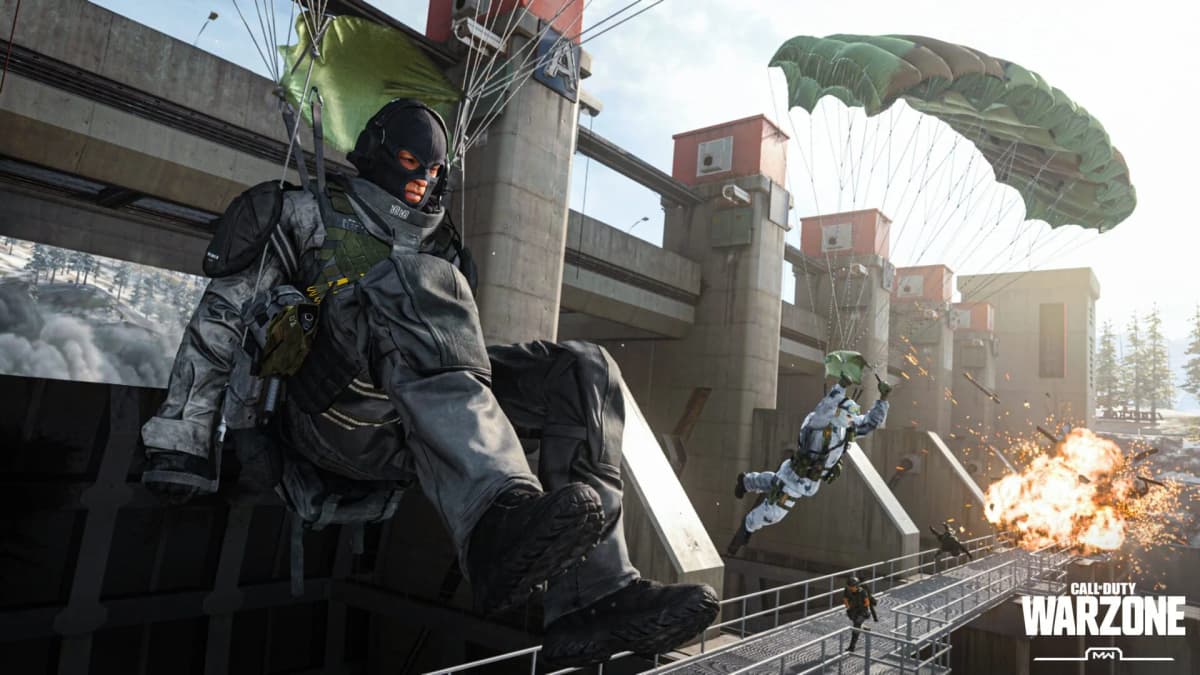
A match-point system would change the content economy entirely. Every round becomes a story with a beginning, middle, and end. The 1v3 clutch to force overtime. The squad that comes back from a 2-5 deficit by switching from long-range camping to aggressive Resurgence-style pushes. The superstar player who drops fourteen eliminations in a single round and carries a shorthanded squad to match point. These are moments that generate TikTok clips, drive Twitch viewership, and sell battle passes. They create player identity. When fans talk about CS2, they talk about specific rounds, specific plays, specific genius decisions under pressure. Warzone fans, when they talk about the BR, mostly talk about loadout metas and whether the audio worked. That’s a marketing problem disguised as a community problem. A competitive redesign would fix it by giving players—and viewers—something worth remembering other than the skin they were wearing when the circle closed.
What Would Actually Have to Be True
I am not naive enough to think this pivot would be simple, nor that it comes without risk. You cannot simply paste Search and Destroy onto a battle royale map and call it a competitive revolution. For a round-based, Resurgence-first Warzone to actually function, the map design philosophy would need to contract dramatically. The current obsession with sprawling, multi-level complexes designed to hold 150 players would need to give way to tighter, more deliberate arenas that support multiple strategic approaches without devolving into pure, unplayable chaos. Think Rebirth Island, but designed from the ground up for structured rounds rather than simple respawn chaos. Verticality would need to be carefully managed. Sightlines would need to be intentional. The spaces would need to facilitate gunfights, not hide from them.
Loadout and economy systems would also need to be reimagined for round-based accumulation rather than open-world scavenging. Perhaps each round starts with a basic kit, and eliminations or objective completions earn your squad cash for upgrades, killstreaks, or tactical respawns in subsequent rounds. The Gulag, as much as I love it as a conceptual piece of psychological warfare, might need to retire in favor of pure Resurgence timers or a squad buy-back system integrated cleanly into the round flow. Weapon balance, too, would face new scrutiny. In a round-based format, time-to-kill becomes a teachable metric rather than a source of frustration. You die, you learn the TTK of the meta weapon, and you adapt for the next round. The feedback loop tightens. The skill gap becomes visible and rewarding instead of feeling like random death.
Most importantly, Activision would need to resist the urge to monetize the competitive structure itself. The battle pass and cosmetic economy can absolutely thrive in a round-based format—CS2 and Valorant have proven that weapon skins and character cosmetics can generate billions—but only if the core experience feels fair and unambiguously skill-based. If the round-based mode becomes a vehicle for pay-to-win blueprints, gacha-adjacent mechanics, or economy advantages tied to store bundles, the entire exercise collapses on day one. The trust rebuild would need to be genuine, visible, and sustained. And the studio would need to commit publicly and permanently, not launch this as a limited-time mode that gets vaulted when the quarterly engagement numbers wobble. Players need to know the format is here to stay before they’ll invest the hundreds of hours required to master it.
There is also the temptation to frame this as a “return” to some imagined golden age. We don’t need a return. Verdansk nostalgia is a trap, a warm memory of a time when the battle royale genre itself was fresh and new. Bringing the map back for the third time isn’t a content strategy; it’s a coping mechanism for a creative team that has run out of ideas. The players who left aren’t coming back for a reskin or a weather effect. They need a reason to believe that Warzone respects their time again, that their deaths will teach them something, and that their next queue isn’t a coin flip disguised as a tactical experience.
Build for Accumulation, Not Attrition
Warzone stands at the same crossroads that eventually claims every live-service game that confuses player count with player passion. The choice is between incremental decay—tweaking a dying format while the audience slowly erodes into apathy—and structural reinvention that risks alienating the old guard in order to build something sustainable. I’ve put enough hours into this series across Modern Warfare, Black Ops, and every iterative stopgap in between to know what its gunplay is capable of. The feel of a perfectly tuned assault rifle snapping to target, the vertigo of a Resurgence firefight spilling across multiple floors, the teamwork of a well-coordinated push—these are assets no other battle royale on the market possesses. But they are utterly wasted in a loop that punishes engagement, rewards passivity, and treats your time like an inexhaustible resource.
Activision needs to stop patching the battle royale and start replacing it. Anchor the game in Resurgence’s high-octane chaos. Borrow the round-based clarity and match-point tension of esports titans. Create moments that give every session a narrative arc, where squads accumulate advantages and earn their victories through strategic dominance rather than mere survival. If Warzone becomes a game of accumulation—of earned rounds, clear feedback, and mastery that actually matters—retention will follow. Not because of a new map reveal. Not because of a celebrity crossover skin. But because players will finally have a format worthy of the mechanics underneath it. That is the only kind of nostalgia worth building, and it’s the only thing that will keep Warzone from becoming a footnote in the history of a genre it helped define.
FinalBoss // Gear
Level up your setup
01Graphics cardson Amazon→02Gaming laptopson Amazon→03High-refresh gaming monitorson Amazon→04Discounted game keyson Kinguin→
Affiliate links · As an Amazon Associate, FinalBoss earns from qualifying purchases.
Want to Level Up Your Gaming?
Get access to exclusive strategies, hidden tips, and pro-level insights that we don't share publicly.
Ultimate Gaming Strategy Guide + Weekly Pro Tips