
Table of Contents (6)
Old-School Action-Adventure Didn’t Die, It Got Misdiagnosed
Old-school action-adventure never “went away”. It just got buried under bad genre takes, superhero bloat, and people pretending nostalgia is a personality trait.
That’s why “What Replaced” – this big sweeping take on how action-adventure evolved across games and movies – got under my skin. Not because it’s totally wrong. In a lot of places it actually nails the history. But it also slips into this tidy, academic story about the genre that just doesn’t line up with how it actually felt to grow up with this stuff.
I cut my teeth bouncing between Shenmue’s sleepy streets, the Spencer Mansion’s fixed-camera nightmares, and VHS copies of Indiana Jones and The Goonies that were so worn out they looked like found footage. Action-adventure wasn’t just a “blend of action and puzzles” to me; it was that feeling of stepping into danger you weren’t really built for, improvising with whatever the game or movie threw at you.
So when I see someone trying to write the neat obituary for that entire vibe – or worse, claim it’s been “replaced” wholesale by modern hybrids – I’m going to push back. Hard.
Where “What Replaced” Absolutely Nails It
Let’s give it credit first, because there are points where “What Replaced” feels like it was written by someone who actually remembers loading games off floppy disks and rewinding taped TV movies.
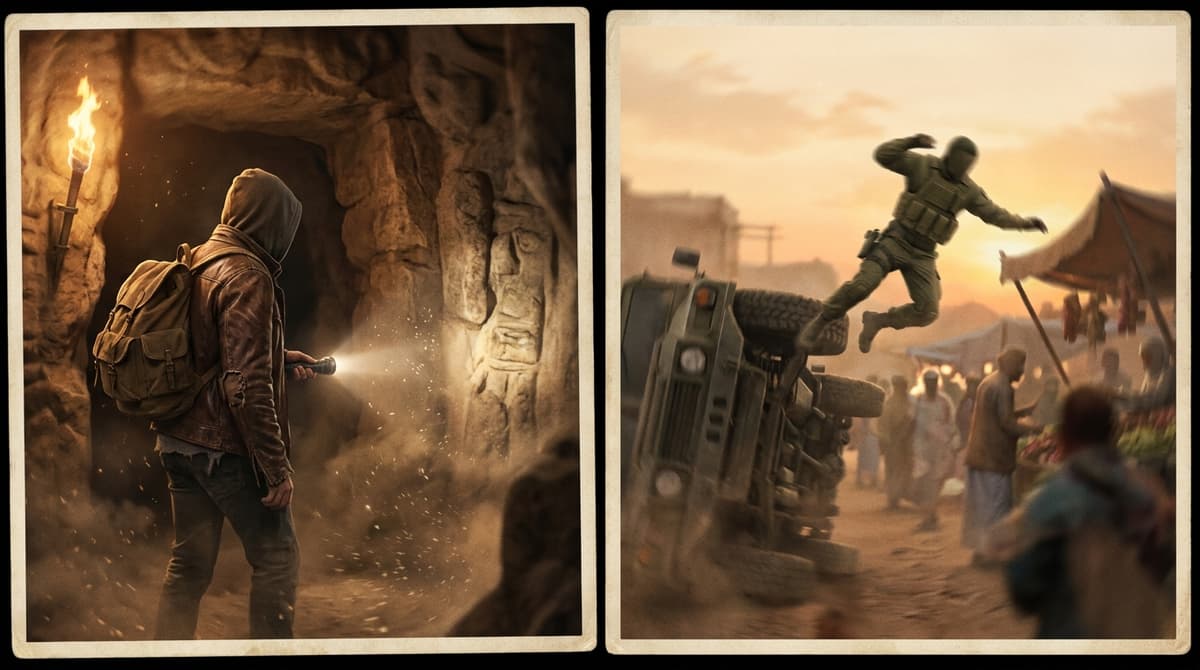
The sharpest idea it has is the split between “adventure” protagonists and “action” heroes. That distinction matters more than people realize. Adventure leads are usually regular people or reluctant explorers who get dragged into peril – kids in The Goonies, Indy as a nerdy professor first and puncher second, random schmoes stumbling into haunted mansions. They don’t seek out danger; they trip over it and have to adapt.
Action heroes are a different species: soldiers, cops, assassins – people who are professionally dangerous. Think John McClane, not Alan Wake. When you throw those characters into the same bucket, you obliterate the tension that makes “adventure” feel like an adventure: that sense that you shouldn’t be here, you’re in over your head, and you’re surviving on wit, luck, and maybe a rusty shotgun with two shells.
“What Replaced” also gets the weirdness of early adventure games right. Before “open world” became a marketing bullet point, we had room-swapping layouts, limited movement, and static camera angles that forced designers to get clever. You didn’t have the horsepower to build sprawling 3D playgrounds, so you leaned on:
- Sprites that visibly changed as you progressed
- Little cutscenes to sell big moments
- Situational humor and jump scares instead of endless exposition
That’s why games like early survival horror – the original Resident Evil, Alone in the Dark, all those janky PS1-era oddities – are still replayable. The Spencer Mansion isn’t “immersive” by modern open-world standards, but it’s a perfectly tuned haunted house built out of locked doors, ominous camera angles, and your own growing map in your head.
On the film side, “What Replaced” is bang-on when it points to the late ’80s and ’90s as the peak of pure action-adventure. Raiders of the Lost Ark. The Mummy. Jumanji. That entire era ran on momentum – practical stunts, physical sets, and heroes who were smart enough to solve problems but dumb enough to keep running into them. These weren’t superhero movies with infinite CG safety nets; when Indy was dangling off that truck, it felt like someone could actually break a rib.
And yeah, modern cinema has mostly traded that in for cape flicks and action-sci-fi mashups. Jungle Cruise is a perfect example: it raids that ’90s adventure toolkit, slaps a Disney sheen on it, but never really risks anything. It’s cosplay, not lineage.
So far, “What Replaced” sounds like the friend at the bar you want to keep buying drinks for, just to keep the conversation going. But then it starts talking out of both sides of its mouth.
And Where It Starts Talking Out Of Its Ass
The first place it stumbles is this smug claim that old-school sequels were just better. As if every “2” or “3” was some brilliant refinement of the formula, and we only lost that magic once we got obsessed with tech and graphics.
Some sequels absolutely did reshape their series – Resident Evil 2 is practically a masterclass in how you iterate without dulling the edge, and remakes like Resident Evil (2002) rebuilt the same mansion into something nastier and smarter. But let’s not pretend the old days were some flawless run of bangers. Plenty of follow-ups were clunky, padded, or downright confused about what people liked in the first place.
There’s also this rose-tinted nonsense about how classic games being impossible to finish in one sitting was somehow “part of the adventure”. No. That was usually technical limitation and design philosophy colliding in the worst way. Saves didn’t “clash with immersion” because they violated some sacred adventure code – they were a belated fix for the fact that a lot of those games were hostile as hell to anyone who didn’t have the entire weekend free.
Ask anyone who grew up with Sierra adventures and they’ll tell you: being soft-locked three hours in because you didn’t pick up a seemingly useless object 20 screens ago isn’t “pure adventure”. It’s just bad UX with good music.
The other big miss is this idea that action-adventure as a genre basically got replaced by more sophisticated hybrids – like it was a stepping stone we’ve now outgrown. That take ignores the stuff that never went away, it just stopped trending on magazine covers.
The Outcast series is a textbook counterexample. The 1999 original was already mixing open environments, exploration, and story-driven quests in a way that felt ahead of its time. It got a remake. It got a 2024 follow-up in Outcast: A New Beginning. It’s still doing its thing – a niche, yeah, but a consistent one. If this genre was truly dead or “replaced,” games like that wouldn’t keep clawing their way back, decade after decade.
The Fantasy And Sci‑Fi Adventures “What Replaced” Treats Like Side Quests
My biggest gripe, though, is how lightly “What Replaced” skates over fantasy and sci‑fi’s role in old-school adventure. As if once you add magic or aliens, you’ve somehow left the genre behind.
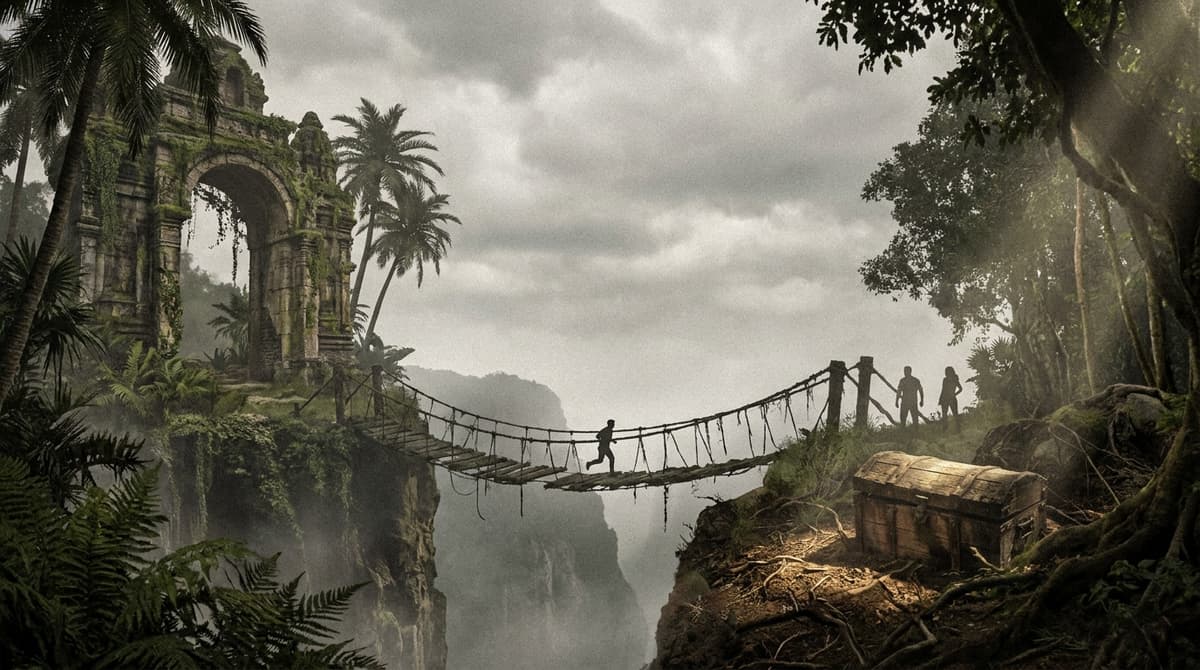
The Goonies, Labyrinth, Willow – these weren’t just side dishes to the “real” grounded adventure movies. They expanded who got to be a hero and what an adventure could look like. You had younger protagonists, stranger worlds, and stakes that weren’t just “get the artifact” but “survive this total surreal meltdown of reality.”

Gaming followed the same path. Once you fold in fantasy and sci‑fi, you open the door for stuff like Outcast, Legacy of Kain, and even the weirder corners of the Zelda series. The core template – exploration, danger you’re not entirely prepared for, solving problems with your brain and your reflexes – stays intact. The window dressing changes; the heart doesn’t.
“What Replaced” hints at this evolution but treats it like a side branch instead of the main line. That’s not just historically off; it’s why people keep misunderstanding where today’s “adventure feelings” are actually hiding.
What Retro Games Actually Felt Like To Play
The piece also wobbles when it talks about puzzle reliance and “situational play” in older games. There’s this half-baked implication that non-Sierra/LucasArts titles were more about emergent situations than strict puzzle chains, but then it leans into the usual nostalgia about how clever everything was.
Here’s the reality from someone who actually lived it: a lot of those puzzles sucked. Some were brilliant “a-ha!” moments, sure, but plenty were just trial-and-error exercises in rubbing every verb on every noun until the game let you progress. The difference is that the good ones were wrapped in strong atmosphere and pacing, so you wanted to keep beating your head against them.
Look at something like the original Resident Evil. That mansion is basically a lock-and-key obstacle course: emblems, crests, crank handles, weird jewelry – it’s all gating. But because the layout is tight and the threats are constant, every solved puzzle feels like prying open a new artery of the house. The level design makes busywork feel like exploration.
Modern throwbacks like Ground Zero get this. It’s a love letter to classic survival horror – pre-rendered style cameras, tight inventories, environmental puzzles – but it uses branching paths, combat that actually has skill expression (parries, dodges), and variable puzzle setups to keep that old-school structure from calcifying into pure tedium. It understands why those games worked, not just how they looked.
When “What Replaced” swipes at puzzle reliance without really grappling with the difference between good friction and bad friction, it feels like it’s chasing forum talking points instead of digging into the player experience. Some classics are revered; some are “classic” only in the sense that they’re old and people remember the box art.
So What Replaced Action-Adventure… Really?
Here’s where I really split from the article’s whole thesis: I don’t buy that action-adventure was neatly “replaced” by other genres. It’s more like it dissolved into them and quietly rewired the whole medium.
Survival horror? That’s just action-adventure with tighter resources and a meaner attitude. The mansion in Resident Evil, the city streets in Silent Hill – they’re adventure spaces first, combat arenas second. Modern throwbacks like Ground Zero prove you can strip away the open-world bloat and still feel more “adventurous” than half the blockbusters out there.
Action RPGs? A ton of them are just stat-heavy action-adventure at heart. Swap XP bars for more involved puzzles and you’re halfway back to ’90s design. Even something like Hades II, which is a roguelike on paper, is leaning hard on adventure DNA: a hub that evolves as you progress, characters who react to your failures, a story that unfolds through repeated forays into hostile territory. The adventure isn’t in the cutscenes; it’s in the loop.
Then there are cinematic platformers like Replaced. It’s sold on its dystopian worldbuilding, sleek 2.5D animation, and synthwave vibes – and from all accounts, it mostly delivers on that. But when you strip away the aesthetics, you’ve got relatively simple platforming and combat. It wears the adventure jacket visually – neon rain, corporate conspiracies, an AI trapped in a human body – but mechanically it’s closer to a guided tour than a genuine “I might be in over my head” adventure.
That, to me, is the real shift: not that action-adventure got replaced, but that the look of adventure got separated from the feel of it. Modern games know how to cosplay old-school adventure – CRT filters, fixed cameras, synth soundtracks, VHS fonts – but they don’t always understand the structural risk that made those experiences stick.
FinalBoss // Gear
Level up your setup
01Top-rated gaming headsetson Amazon→02High-refresh gaming monitorson Amazon→03Gaming chairson Amazon→04Discounted game keyson Kinguin→Affiliate links · As an Amazon Associate, FinalBoss earns from qualifying purchases.
Want to Level Up Your Gaming?
Get access to exclusive strategies, hidden tips, and pro-level insights that we don't share publicly.
Ultimate Gaming Strategy Guide + Weekly Pro Tips