
Table of Contents (8)
The moment I realised my PlayStation didn’t feel like a PlayStation anymore
I remember the exact moment the magic snapped. I was sitting at my PC, of all places, watching a trailer for a former PlayStation “exclusive” coming to Steam. Same splashy logo, same orchestral swell, same controller prompts swapped out for keyboard icons. And my first thought wasn’t “Cool, more people get to play this.” It was: “So… what exactly did I buy this PS5 for?”
I’ve owned every PlayStation since the grey tank with the boot-up chime that could raise the dead. I bought a Dreamcast for Shenmue. I imported games. I’ve stood in midnight launch lines in the rain. I care, probably more than is sensible, about consoles as places – as weird, self-contained universes with their own rules, aesthetics, and vibes.
Over the last few years, that feeling has been systematically sanded down in the name of “platform strategy,” PC ports, and “play anywhere” talking points. And the more I watch this generation limp along, the more convinced I am that IGN’s basic argument is right: if PlayStation and Xbox don’t reclaim a distinct, ritualized identity built around actual exclusives, they’re done as anything but glorified Steam Machines.
The “exclusive-less future” was supposed to be smart. It mostly sucked.
On paper, the logic was simple. Big AAA games cost absurd money. The console install base is finite. So publishers and platform holders chase extra revenue on PC. Xbox pushes “no gamer left behind” and Game Pass everywhere. Sony slowly trickles its crown jewels onto Steam and Epic. Everyone claps themselves on the back for being “platform-agnostic.”
Reality has been a lot messier. Reporting over the last year has painted a pretty blunt picture: off-console revenue for Sony is a nice side dish, not the main course. Analyses of financials have suggested PC ports aren’t transforming the bottom line the way execs hoped, especially once porting costs, marketing, and ongoing support are factored in. A recent video breakdown even argued that planned PC releases for some majors – things like Ghost of Yotei or Insomniac’s Wolverine – are being quietly shelved because the returns just don’t justify the brand damage.
At the same time, reports out of Xbox-land describe Project Helix – a high-end, PC-adjacent box – that, according to one widely-circulated quote, will have “absolutely not” its own exclusives and will share a library with PS6. Whether every detail in those leaks is spot-on or not, the message has been depressingly clear: the long Microsoft flirtation with “Xbox as just a logo on whatever device happens to run it” still isn’t over.
And here’s the kicker: despite all this “everywhere for everyone” rhetoric, consoles aren’t exactly thriving. Multiple industry write-ups have flagged that traditional console business is stagnant, maybe even shrinking. Xbox’s hardware sales are struggling. Sony’s PS5 has sold well on paper, but the buzz feels anaemic compared to PS2 or PS4 days. This generation never properly found second gear.
Meanwhile, Nintendo just keeps doing the supposedly “outdated” thing: underpowered custom hardware, unapologetic exclusives, a strong identity, and games that just live on that box. Conveniently, they’re also the one console maker visibly not in existential crisis.
When everything is everywhere, nothing feels special
Here’s the part the spreadsheets never capture: prestige and ritual. The feeling of sliding a disc into a tray or tapping “Start Game” on a machine that exists primarily to run that one thing, in that one way. That’s what’s been gutted by this platform-agnostic obsession.
For me, a “PlayStation game” used to mean more than “a game that boots through a Sony logo for six seconds before the Unreal splash screen.” It meant an ecosystem: a visual language in the UI, a certain kind of cinematic single-player focus, a controller feel, a startup sound that immediately put my brain in “I’m about to vanish for three hours” mode. A vibe.
Now, half the time, it means “a game that will launch slightly earlier on PS5 until the inevitable PC port shows up with better performance and mod support.” That’s terrible positioning for a premium console. It’s like buying vinyl because the label promises a special pressing, then discovering the same mix is already on Spotify in higher fidelity.
And I’m not speaking as some physical-only dinosaur. I own a ridiculous digital library. But I also watch what younger people actually spend money on. My teenage relatives buy K-pop albums on CD – with photo books, random inserts, elaborate packaging – despite streaming everything anyway. They hunt for film cameras. They meme about “dumbphones” and actually buy flip phones to take a break from being constantly online.
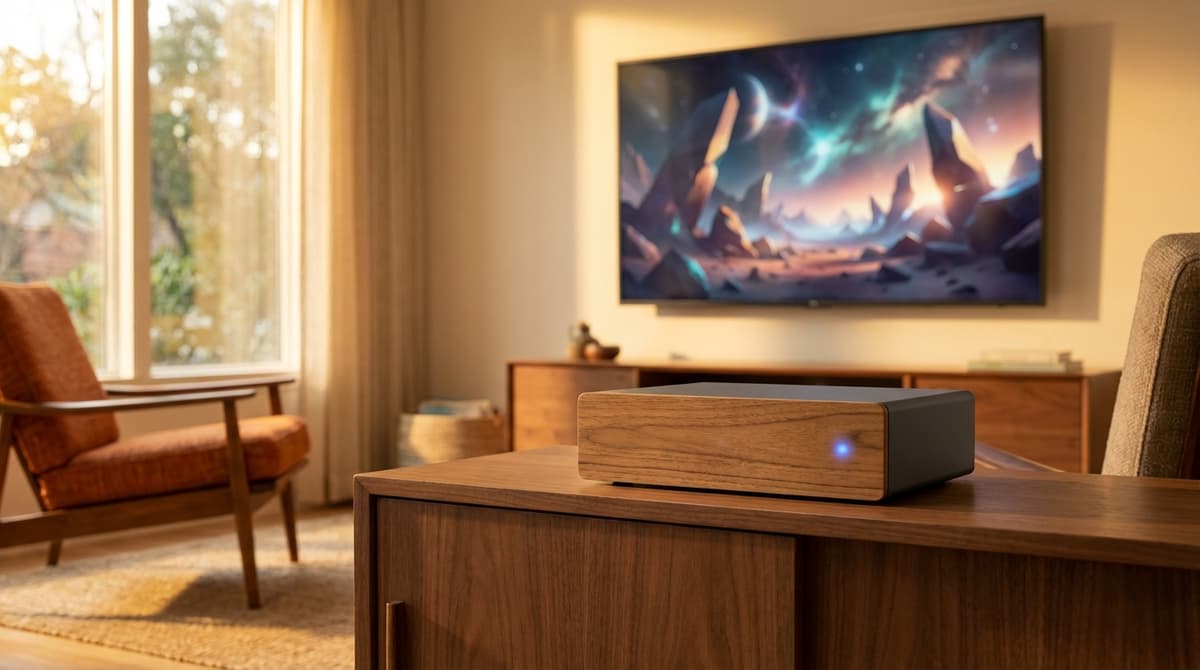
There’s a through-line here: in a world where any screen can do everything, single-purpose devices and tactile experiences become aspirational again. They signal intention. Focus. A ritual.
Consoles could own that space. Instead, they spent a decade trying to be media hubs, half-baked PCs, and content distribution nodes in some amorphous cloud strategy slide deck.
Gen Z loves “retro” for the same reason consoles used to work
The irony is brutal: the very generations that analysts love to write off as “phone-only” also drive a huge chunk of the retro and single-function revival. Cartridges, CRTs, Walkmans, instant cameras, vinyl, even wired headphones – that stuff isn’t just nostalgia bait for elder millennials. Teenagers are legitimately into it.
When a person’s entire digital life has lived inside one rectangle since childhood, the idea of a device that does one thing extremely well – and demands a little ceremony to use – becomes weirdly exotic. Putting a cartridge into a handheld. Loading a disc. Hitting the big chunky power button on a console beneath a TV dedicated to games instead of twenty streaming apps and endless notifications.
Retro gaming capitalises on this instinct perfectly. Fire up a SNES or a PS2, and there are no hotfixes, DLC roadmaps, or battle passes. A console from that era existed for one purpose: run the game that’s inside it. That conceptual simplicity now feels almost rebellious.
Modern PlayStation and Xbox hardware, on the other hand, have spent years drifting toward PC territory – not just in architecture (which makes sense) but in identity. Lots of games, few that truly belong to the box. An OS that feels ever more like an app launcher. Cloud integration jammed everywhere. A “Play” button that increasingly means “launch another windowed process in a sea of other distractions.”
And the really maddening part? Young players are exactly the group that would respond to a strong, tactile, prestige console pitch. A machine that says: this isn’t another feed to scroll, this is a space you step into. This is where our games live.
PC ports, Xbox’s identity crisis, and Sony’s half-step backwards
Recent reporting suggests platform holders might finally be waking up. Multiple outlets have highlighted that console exclusives are creeping back into fashion. For Sony, that’s apparently meant rethinking the “everything to PC within a couple of years” roadmap. Several sources have indicated that future ports of big-ticket titles are being delayed, paused, or outright cancelled, and Sony’s experiment with forcing PSN account integration on PC has backfired badly from a PR perspective.
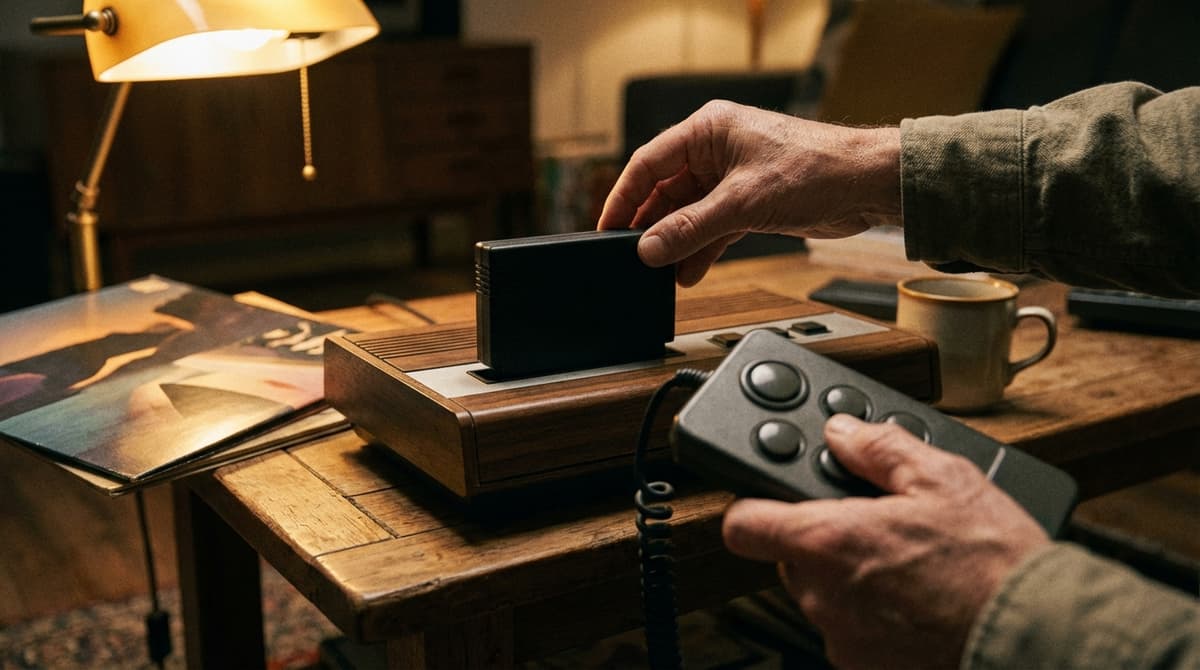
On the Microsoft side, leadership changes and mixed messaging have only intensified the identity crisis. When executives openly flirt with putting more and more Xbox games on rival consoles, and rumours swirl that the fancy next device won’t have its own true exclusives, the signal to the market is simple: Xbox is a service brand, not a place.
I don’t doubt that Game Pass on every screen looks compelling on an internal dashboard. As a player, though, the end result has been brutal to watch. The hardware proposition has hollowed out. Why invest in a dedicated Xbox when the most interesting games will also run beautifully on a mid-range PC or even, in some cases, on competing consoles?
Contrast that with Nintendo, whose strategy is boringly consistent: if a game says “Nintendo” on the box, that hardware is the only legitimate way to experience it for years, maybe forever. It’s not always consumer-friendly in the immediate sense, but it builds a fiercely loyal base that understands the deal. The Switch doesn’t need cutting-edge specs because it compensates with identity and irreplaceable software.
Exclusivity isn’t evil. It’s how consoles justify existing.
There’s a knee-jerk argument that pops up any time this topic comes up: “Exclusives are anti-consumer.” It’s a clean, righteous-sounding line, especially from a PC perspective. Why lock games to boxes when everything could, in theory, run on a standard platform?
I love PC gaming. I want preservation, modding, and wide access. But there’s a hard truth here: if consoles stop protecting a meaningful slice of software as their own, they run out of reasons to exist. Then the “consumer-friendly” future becomes a duopoly between a few storefronts and whatever subscription service has the most leverage – and hardware choice collapses into a question of “Which generic box runs Steam and Netflix fastest?”
Exclusivity, used intelligently, is not about spite. It’s about making the hardware choice matter. A console that asks hundreds of dollars for entry (and increasingly obscene prices for optional upgrades) has to offer something irreplaceable in return. Otherwise it’s just a badly specced PC with nicer industrial design.
Timed exclusives and eventual PC ports can absolutely be part of a healthy strategy. I’m not arguing that games should be locked in a vault forever. But day-one platform parity kills the emotional argument for buying into a console ecosystem. So does the knowledge that every “exclusive” is really just “exclusive for 18 months until the inevitable Steam release with a DLSS update and ultrawide support.”
AAA gaming shouldn’t feel like Spotify: an endless slurry of content surfaced by an algorithm, accessible anywhere, interchangeable and disposable. It should feel closer to putting on a carefully chosen album or a favourite film on a big screen – a deliberate act. Consoles are perfectly positioned to be that, if they stop pretending their ultimate destiny is to become little cloud PCs.
What I actually want from PS6 and the next Xbox
So what does this look like in practice? When I think about PS6, or whatever the next Xbox ends up being, I don’t want a spec sheet with “almost as good as a mid-range PC” bragging rights. I want a clear, almost old-school statement of purpose.
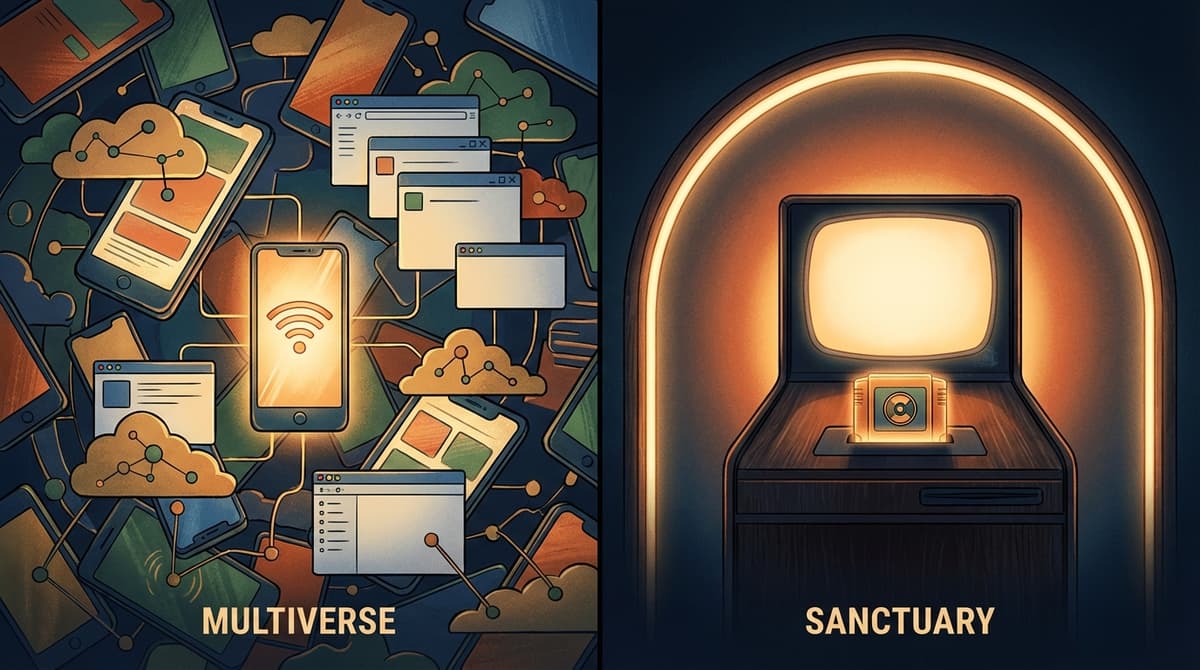
- A slate of true first-party and second-party exclusives that live on that console first, for years, not months.
- Hardware and UI design that feels bespoke and unmistakably “PlayStation” or “Xbox,” not generic PC OS with controller icons.
- A focus on tactile, ritualised ownership – whether that’s physical editions, unique start-up sequences, or even a companion handheld that makes playing on that ecosystem feel like a specific, chosen act.
- Transparent communication about PC strategy: if ports are coming, say when and how, instead of pretending everything is “only on…” until a Steam page suddenly appears.
The handheld point matters more than executives probably realise. The runaway success of devices like the Switch and even the Steam Deck shows there’s a huge appetite for focused, in-hand experiences. Sony’s weird, half-measure PlayStation Portal proved that even a limited streaming device can generate interest if it feels dedicated and tactile.
Imagine a PS6 paired with a proper portable that’s not just a remote-play afterthought, but a real, soulful extension of the brand – something built around the idea that “PlayStation time” is an intentional mode, separate from the avalanche of other apps and feeds. That’s exactly the kind of “single-purpose prestige” younger players are already chasing with flip phones and film cameras, except with blockbuster games attached.
On the software side, Sony in particular needs to stop chasing the mirage of being “just another content platform” and lean fully back into being a console company. Recent rumblings about pulling back some PC ports are a step in the right direction, but half-committing is almost worse than picking a side. If PS6 really is the future of the brand, then own that. Treat PC as a long-tail library and archival platform, not as a co-equal launch target.
Where I draw the line as a player
Personally, I’m at the point where my day-one console purchases are on probation. I’m not dropping hundreds on another black slab just so it can act as a slower, more restricted way to run games that hit PC the same week. I need a reason to treat that box as something more than a redundant node in the content grid.
If PS6 launches with a strong identity – if it feels like a place again, with games that actually belong to it, even if only for a meaningful window – I’m in. If Xbox’s next move is to become a premium “Helix” PC box with no real exclusives, then the equation becomes brutally simple: my existing PC wins, and the brand I sank so many hours of Halo 2 and Lost Odyssey into becomes just another app icon.
That’s the stakes here. This isn’t about console war scoreboard nonsense. It’s about whether consoles remain culturally and emotionally distinct, or dissolve into indistinguishable hardware that only accountants can love. When I look back at my own gaming history – Shenmue on Dreamcast, Metal Gear Solid on PS1, the first time booting up a PS2 and loading into a massive JRPG – those memories are hardwired to the boxes they lived on.
I want future generations to have their own versions of that. Not just another Steam library entry they forget about during the next sale, but a console-era story: the time they saved up for a PS6, brought it home, heard that new startup chime for the first time, and realised that some experiences really do live in one place first, by design.
If the industry is serious about consoles surviving as more than legacy habits, then it has to stop apologising for exclusivity and stop pretending that being a worse PC is a viable endgame. Let PCs be PCs. Let phones be digital slot machines. Let consoles be weird, proud, single-purpose prestige machines again – machines with drawbridges worth raising.
Otherwise, the next generation won’t just be the end of the console war. It’ll be the moment the whole idea of “PlayStation” and “Xbox” as places quietly disappears, replaced by yet another launcher fighting for attention. And honestly, that’s a future I have zero interest in buying into.
FinalBoss // Gear
Level up your setup
01Best-selling PS5 gameson Amazon→02DualSense controllerson Amazon→03PS5 SSD upgrades (M.2 NVMe)on Amazon→04Discounted game keyson Kinguin→Affiliate links · As an Amazon Associate, FinalBoss earns from qualifying purchases.
Want to Level Up Your Gaming?
Get access to exclusive strategies, hidden tips, and pro-level insights that we don't share publicly.
Ultimate Editor's Pick Strategy Guide + Weekly Pro Tips