
Table of Contents (16)
My First Dead Game Still Haunts How I Play
I remember the first time I watched a game die in real time. Not “support is winding down,” not “we’re moving on to the sequel”-I mean the moment the server list went blank, the chat froze, and the music looped over an empty login screen. I sat there, controller still warm in my hands, staring at a world I’d spent hundreds of hours in that now existed only as pretty but useless data on my hard drive.
That sick feeling has never really left me. Every time a publisher trots out “nothing is eternal” to justify shutting a game down, I flash back to that dead client on my desktop. Because here’s the thing: yes, nothing is eternal-but the way we let games die is a choice.
We’ve just watched Anthem disappear. The Crew didn’t just lose support; it yanked licenses and left even single-player owners with nothing. Meanwhile, games like Splatoon 3 and Mortal Kombat 1 show a different tension: what happens when a game “ends” but remains technically playable? When is that acceptable-and when is it a betrayal?
For me, the answer is blunt: a video game is only “allowed” to die once players can still play it—offline, or on community-run servers, without begging a dead login server for permission. Anything less is killing a game, not letting it die.
A Game Is Only “Allowed to Die” When We Can Still Play It
- “Forever games” are marketing fiction. Every live-service game should ship with an explicit end-of-life plan.
- A game is only truly dead when owners can’t play it at all. If player-owned copies become unplayable due to DRM or server shutdowns, that’s not nature—it’s negligence.
- Finite support windows work. Splatoon 3-style honesty about support length is healthier than pretending a game will last forever.
- Preservation is a design requirement, not a bonus. Offline modes, private servers, and DRM removal should be baked in from day one.
Why I’m This Worked Up About End-of-Life
I’ve been orbiting live-service and online games for most of my life. MMOs, co-op looter shooters, weird little experimental multiplayer things that had 500 players at peak—I gravitate to them like a moth to a flame. I love the feeling of shared worlds evolving over time. But I’ve also watched those worlds be erased, over and over.
I’ve sat in “last night” events. I’ve screenshot final leaderboards. I’ve backed up installers, hunted down patches, and joined preservation Discords that exist solely to keep pieces of history from vanishing. I’ve watched communities keep games like classic-style World of Warcraft alive via projects such as Turtle WoW, peaking at around 20,000 nightly players in 2025—long after the official servers moved on.
So when I hear Ubisoft’s Yves Guillemot say, “Nothing is eternal,” in response to the Stop Killing Games movement, I don’t disagree with the words. I disagree with the framing. “Nothing is eternal” is being used as a shield to dodge a harder truth: we are choosing whether games die gracefully or get shot in the back of the head while their owners are still playing.
And I’m tired of pretending those are the same thing.
The “Forever Game” Myth Is Hurting Everyone
Publishers sell us a fantasy: that their game could be the “forever game” we play for years—maybe decades—like Fortnite or Destiny 2. Internally, everyone knows this is nonsense. Externally, nobody dares admit it while the marketing machine is running.
Look at the bodies piling up trying to chase the “next Fortnite” dream: Concord, MultiVersus’s first life, XDefiant, Anthem, the list keeps growing. These games launched like they were going to be evergreen platforms, then quietly withered or were abruptly put down when the charts didn’t light up fast enough.
This is where Guillemot’s comment—“Support for all games cannot last forever”—is both true and completely misses the point. No one realistically expects support forever. What players are pushing back against (loudly, via things like the Stop Killing Games movement, which has grown to around 50,000 subreddit subscribers) is this:
Why does “support can’t last forever” somehow justify making already-purchased games unplayable?
That’s the line I care about. Not “How long will this get updates?” but “What’s left when you stop updating it?”
Defining the Line: When Is a Game Actually “Dead”?
I draw a hard line that a lot of publishers won’t like:
- A game is not truly dead if owners can still play it in a meaningful way—offline or via community servers—without mandatory online authentication.
- A game is truly dead when player-owned copies become unplayable due to DRM, server shutdowns, or revoked access—even in single-player.
End-of-life becomes acceptable only on one condition: the bits people bought still produce a game. Not a menu. Not an error message. A playable game.
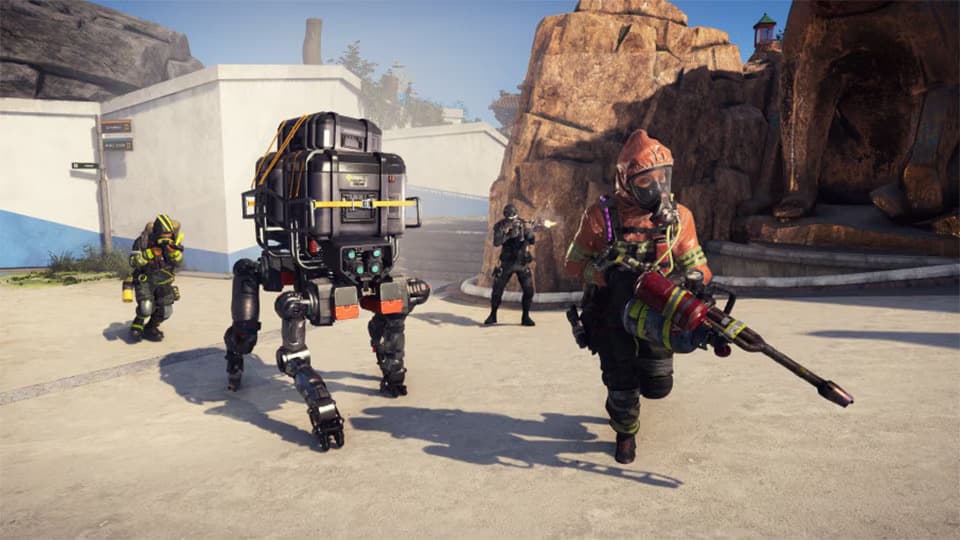
Using that lens, let’s look at some recent examples.
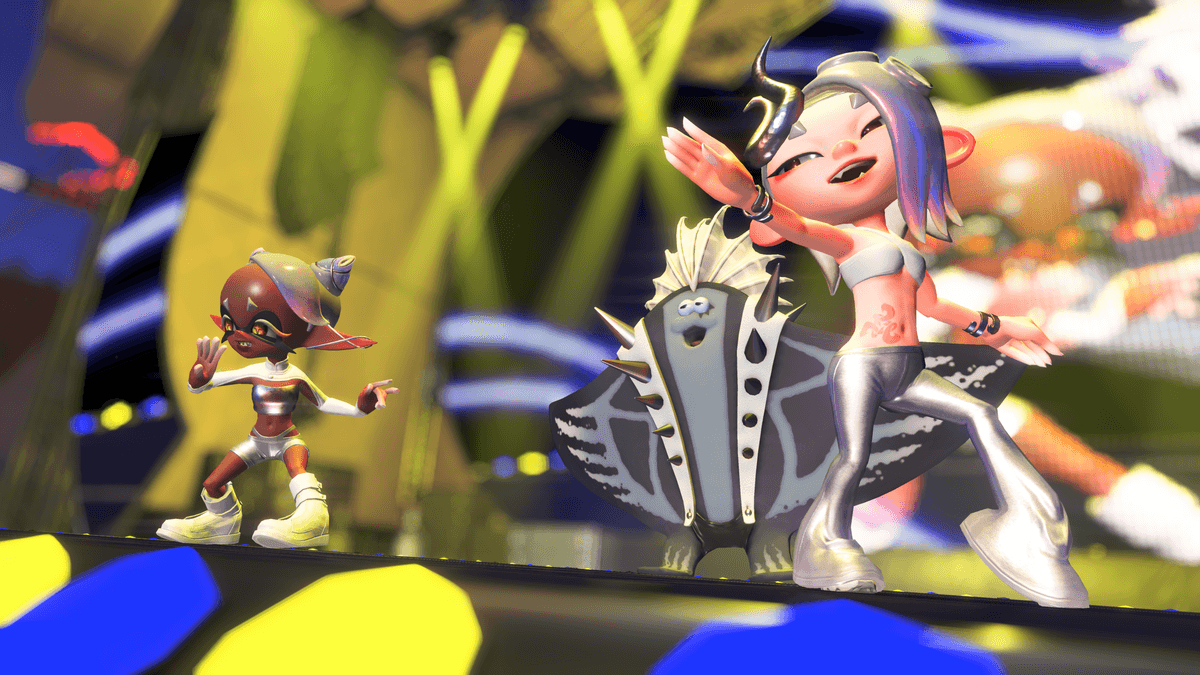
Splatoon 3: Finite, Honest, and Weirdly Liberating
Before Splatoon 3 even launched, Nintendo did something shockingly adult for this industry: it put an expiration date on new content. Two years of seasonal updates, maps, and gear. After that, balance tweaks and occasional extras, but the big “live-service” push would be over.
When I first read that, I hated it. It felt like I was signing up for a game Nintendo had already decided to abandon—especially after seeing how Animal Crossing: New Horizons and Super Mario Maker 2 just stopped. But as I played, something surprising happened. That fixed window made my time feel sharper. I knew this specific era of Splatoon was finite, so I squeezed it harder.
And crucially: Splatoon 3 remains playable. Its core experience doesn’t evaporate when the content stops. Nintendo even went beyond the original plan with a Switch 2 update and new weapons, which landed more like a gift than a promise fulfilled.
Is that game “dead” now? No. It’s complete. The difference is massive.
Mortal Kombat 1: The Gray Area of “Years of Content”
Mortal Kombat 1 landed in a more confusing spot. Director Ed Boon talked early about “years of content,” which primed fans to expect a long tail. When the so-called “Definitive Edition” dropped with under two years of support and fewer added characters than Mortal Kombat 11, players were furious. It felt like a rug pull.
From a preservation standpoint, though, MK1 is still infinitely healthier than a lot of live-service games. You can still boot it, play locally, dive into story mode, lab combos forever. The “death” here is content cadence, not product existence.
This is where the relationship between transparency and expectation matters. NetherRealm probably oversold the tail; players probably over-indexed on the “years” promise. But at least the game they bought still runs. It’s a frustrating sunset, not a scorched earth.
Anthem and The Crew: When Death Becomes Erasure
Now contrast that with games like Anthem and Ubisoft’s The Crew.
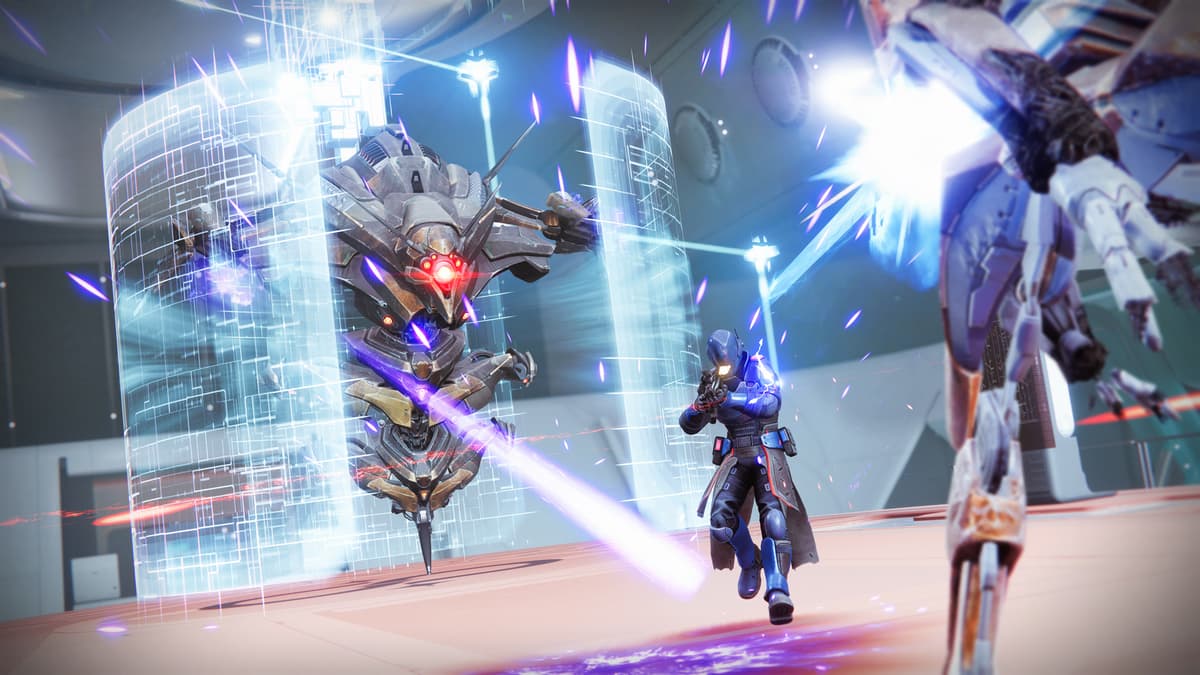
Anthem had a messy life, sure. But beneath the rubble was a gorgeous world and a flight system that felt incredible. When its servers shut down, there was no offline mode. No “explore the world solo, just without other players.” Nothing. Years from now, we’ll be talking about Anthem from memory and YouTube clips, not from actually playing it.
The Crew is somehow worse. Ubisoft didn’t just stop support; it pulled the game from sale, and then existing owners discovered that even solo play no longer functioned. Player-owned copies became unplayable due to DRM. That’s not a natural death. That’s flipping the off-switch on something people paid for, and then shrugging about entropy.
This is exactly why Stop Killing Games exploded. It’s not a fringe tantrum; it’s organized, with tens of thousands rallying, petitions sent to European regulators, and a clear ask: stop selling digital products as if they’re owned, then treating them like rented services you can delete whenever you feel like it.
The Preservation Threshold: My Rule for a “Good Death”
Here’s the standard I wish we’d adopt as an industry:
- A game is allowed to “die” only when:
- Owners can still access its core experience offline, with all purchased content available; or
- The publisher provides a supported path for community-hosted servers (server binaries, protocol docs, or an explicit green light for private servers); and
- Mandatory online authentication and DRM checks are removed or disabled in a final patch.
I’m not demanding that matchmaking runs forever or that servers operate at a loss until the sun burns out. I’m saying: don’t turn what people bought into digital rubble when you’re ready to move on.
The wild part? We know this is possible, because we’re already seeing versions of it work.
Proof It Works: Community Resurrections and Quiet Success Stories
Look around and you’ll see two parallel worlds: the official one where games vanish, and the community one where they refuse to stay dead.
- Turtle WoW keeps a classic-style World of Warcraft experience alive with peaks of about 20,000 nightly players in 2025—long after Blizzard moved the official game in a very different direction.
- A Destiny 2 community peer-to-peer mod has managed around 10,000 daily users as of early 2026, proving there’s demand for player-hosted experiences even when the official servers exist.
- Paragon: The Overprime, built from Epic’s released Paragon assets, hit peak concurrent counts of around 50,000 players on PC platforms, showing how much value there is in letting communities reuse “dead” game DNA.
- Preservation-focused communities—like the preservation.gg Discord with roughly 10,000 members—spend their free time keeping old builds running, documenting patches, and writing server emulators for games that publishers have already written off.
On the official side, we’ve also seen glimmers of responsibility:
- Knockout City shipped a way for players to run private servers before it shut down, instead of just vanishing.
- Suicide Squad: Kill the Justice League committed to an offline mode for its heavily online-focused design, at least acknowledging that one day its servers won’t be there.
- Stores like GOG have built their whole brand around DRM-free, offline-playable builds that don’t blink out because a login server does.
None of this is perfect. Legal gray areas around private servers are real. But these projects prove something publishers love to pretend is impossible: if you give players the tools (or at least get out of their way), your game can outlive your business model.
A 2026 Toolkit for Not Killing Games
If you make games, here’s what “we care about preservation” should actually look like in practice—not in PR statements.
For Developers and Publishers
- 1. Design for death on day one.
When you architect your game, ask: “What will this look like on the day we shut down servers?” Separate online services from core gameplay as much as possible. Keep your single-player or local multiplayer logic client-side, not tethered to live authentication. - 2. Bake in offline modes.
Even for deeply online games, build robust offline or LAN-capable modes. Ship bots. Provide training arenas. Store progression in a way that can be migrated or unlocked for offline use with a final patch. - 3. Add a sunset switch to your tech.
Build a configuration path where, at EOL, you can:- Turn off microtransactions and live events;
- Disable mandatory login checks;
- Switch matchmaking to peer-to-peer or LAN where possible.
If this isn’t specced early, it becomes “too hard” later—and we all know how that story ends.
- 4. Fix your licensing contracts now.
Too many games die because of music licenses, third-party tech, or IP restrictions. Start insisting on clauses that let you:- Release a final, offline-capable build;
- Provide server binaries or documentation to trusted community groups;
- Remove DRM when support ends.
If hardware makers and app stores can adapt to new regulation, you can adapt your boilerplate too.
- 5. Be brutally honest about support windows.
Follow the Splatoon 3 model: “We will support this game with new content for X years.” Stick to it, don’t oversell it. If you surpass it, great—you look like heroes. If you hit it and stop, people at least got what they were told. - 6. Ship an EOL patch, not a press release.
When it’s time to go:- Push an update that removes online-only DRM;
- Unlock all non-competitive cosmetics and content that doesn’t break the game;
- Publish technical information so community-hosted servers are feasible without reverse-engineering the entire protocol.
For Players and Preservationists
- 1. Treat some games as rentals—on purpose.
If a game is always-online with no offline mode, no LAN, and heavy DRM, assume you are renting it, not owning it. Adjust how much money and emotional investment you’re willing to sink. - 2. Test offline play early.
When you buy a game, try launching it with your internet disconnected. Does it boot? Can you access core modes? If not, remember that feeling the next time it’s on sale with a flashy skin pack. - 3. Back up what you can, while you can.
Where legal and possible, keep local copies of installers and patches. Favor platforms that allow this. One day, that backup might be the only difference between “forgotten” and “playable.” - 4. Organize, don’t just complain.
Communities like the Stop Killing Games movement and preservation-focused Discords have shown that coordinated, polite pressure works. Petitions to regulators, open letters, and mass feedback can nudge studios to add offline modes or private server tools before it’s too late. - 5. Support legal community revivals.
When studios release assets (like Epic did with Paragon) or explicitly allow private servers, show up. Play those games. Talk about them. Make the business case that there’s value in letting old code find new life.
Why Regulators Suddenly Matter Here
The fight over dead games isn’t just a niche gamer tantrum anymore; it’s starting to brush up against real policy.
In Europe, digital rights debates and broad regulations like the Digital Markets Act have opened the door to questions that, a decade ago, would’ve sounded absurd: If a company can be forced to make phone chargers interoperable, could it one day be forced to offer an offline mode—or remove DRM—when it sunsets a paid digital game?
Consumer groups are drawing parallels between game preservation and “right to repair.” If you buy a tractor or a phone, we’re increasingly saying you should be able to fix it when the manufacturer moves on. Why should a $70 game be different, especially when no physical alternative exists?
Movements like Stop Killing Games, with its tens of thousands of supporters and direct outreach to European governments, are pushing exactly on that boundary. Their core argument is simple: if you’ve sold something as a product, you shouldn’t be allowed to retroactively turn it into a subscription that ends on your schedule alone.
Publishers can either get ahead of this and normalize responsible end-of-life practices—or wait until laws force their hand.
How This Has Changed the Way I Play
All of this has fundamentally rewired my relationship with games.
I still love live-service titles. I still pour time into evolving worlds. But that love is no longer blind. When a game launches with no offline mode, always-on DRM, and fuzzy promises of “years of content,” I mentally file it under “temporary experience.” I might enjoy it, but I don’t pretend it will be there in ten years.
On the flip side, when I see studios commit to finite support windows, or ship real offline modes, or promise private-server tools at EOL, I pay attention. They’re telling me, “We respect your time enough not to vanish your purchase.” That matters as much to me as a battle pass roadmap.
The older I get, the more I care about being able to revisit the games that shaped me. Not just through retrospectives, but through play. That only happens if we stop treating game preservation as a niche hobby and start treating it as a core part of how games are built and sold.
TL;DR: When Is a Video Game Allowed to Die?
If you strip away all the corporate euphemisms and PR about “sunsetting services,” my answer is simple:
- A video game is only allowed to die when its owners can still play it.
Not watch trailers. Not open a dead launcher. Play it—offline or on community servers, without a dead DRM server holding the keys.
- Finite support windows like Splatoon 3’s are fine—even healthy—if they’re honest and the game remains playable.
- Content sunsets like Mortal Kombat 1’s sting when miscommunicated, but they’re not the same as killing a game outright.
- Total shutdowns like The Crew and Anthem, where player-owned copies become unplayable due to DRM or server dependence, are unacceptable.
- Preservation paths—offline modes, private servers, DRM removal—are not nice-to-haves. They’re the moral cost of selling digital games as “owned.”
“Nothing is eternal” is true. But erasing paid games from existence is not destiny—it’s a design decision, a legal choice, and a moral failure. The tech, the communities, and even the early policy winds are all pointing toward a better way.
Games will die. They should. But if we really love this medium, we have to start deciding—and demanding—how they’re allowed to die, and what remains for the people who kept them alive in the first place.
FinalBoss // Gear
Level up your setup
01Top-rated gaming headsetson Amazon→02High-refresh gaming monitorson Amazon→03Gaming chairson Amazon→04Discounted game keyson Kinguin→Affiliate links · As an Amazon Associate, FinalBoss earns from qualifying purchases.
Want to Level Up Your Gaming?
Get access to exclusive strategies, hidden tips, and pro-level insights that we don't share publicly.
Ultimate Gaming Strategy Guide + Weekly Pro Tips