
Table of Contents (11)
Nintendo Laughed—and Console History Took a Hard Turn
As someone who bought an original Xbox for Halo and a GameCube for Smash Melee, I can say Microsoft’s attempt to buy Nintendo in 1999–2000 isn’t just trivia—it’s a pivotal fork in the road that shaped how we play today. Microsoft strolled into the room with deep pockets and bold ambition. Nintendo listened, then—as former Xbox exec Kevin Bachus told IGN in 2018—“laughed their asses off.” That laugh echoes through two decades of console wars, exclusivity battles, and wildly different hardware philosophies.
Key Takeaways
- In 1999–2000, Microsoft discussed buying Nintendo and separately approached EA, Square, and Midway. Every target politely declined.
- Nintendo’s response was more than a refusal: it was a cultural and strategic rejection of outside control and “software-first” thinking.
- That “no” forced Microsoft to build the Xbox from scratch, acquire Bungie, and launch Halo: Combat Evolved in 2001.
- Gamers won in diversity: Nintendo doubled down on quirky hardware, while Xbox pioneered online ecosystems and services.
1. A Detailed Timeline of Talks and Decisions
Late 1999: With Windows ruling PCs, Microsoft eyed next growth engines. Hardware was the frontier. Rather than start from zero, Microsoft’s leadership—CEO Steve Ballmer at the helm—greenlit outreach to established players. Tasked with execution were Kevin Bachus, director of what became Xbox, and hardware lead Rick Thompson.
Early 2000: Microsoft sent a formal letter to Nintendo president Hiroshi Yamauchi, expressing interest in a strategic partnership or outright acquisition. Rick Thompson’s note to Jacqualee Story, EVP of business affairs at Nintendo of America, requested a face-to-face meeting. Internally, Microsoft circulated a memo outlining how PC-like architecture plus Microsoft’s online tech could merge with Nintendo’s first-party franchises.
Spring 2000: In Tokyo, Bachus, Thompson, and Microsoft’s legal team met Yamauchi and legendary hardware architect Genyo Takeda. The deck pitched “Dolphin”—Nintendo’s codename for GameCube—with a beefed-up CPU, built-in hard drive, and Xbox Live-style services. According to Bachus, Yamauchi cracked up and literally laughed them out of the room (IGN, 2018).

Mid-2000: Microsoft followed up with phone calls and more detailed financial proposals. Nintendo politely declined each overture, stressing its long-term strategy and desire to remain independent. By late 2000, it was clear the deal was dead. Microsoft pivoted toward building a standalone console, and Nintendo stayed the course on its next hardware cycle.
2. Why It Was Always a Long Shot
Nintendo’s refusal wasn’t a matter of price; it was principle. Yamauchi’s Nintendo had honed an identity around hardware-as-gameplay innovations—from the SNES Mouse to the N64 Expansion Pak—and tight first-party control. A “we’ll supply the tech, you supply the games” pitch struck at Nintendo’s core DNA. The regulatory scrutiny alone—an American giant absorbing one of Japan’s cultural icons—would have been brutal.
3. The Technical and Philosophical Showdown
Underneath the boardroom theatrics lay two starkly different engineering philosophies:
GameCube: Custom Creativity
- CPU: IBM PowerPC “Gekko” core clocked at 485 MHz, tuned for Nintendo’s graphics APIs.
- GPU: ATI “Flipper” chipset optimized for efficient frame rates on mini-DVD media.
- Memory: 43 MB unified RAM, bespoke dev tools, proprietary SDK emphasizing hardware control.
- Philosophy: Hardware-as-innovator—motion, form factor, and gameplay experiments over raw power.
Xbox: PC-Powered and Online-Ready
- CPU: Custom Intel Pentium III-derived processor at 733 MHz, familiar to PC developers.
- GPU: Nvidia NV2A GPU, full DirectX 8 support and early shader pipelines.
- Storage: 8 GB internal hard drive for installs, caching, and persistent profiles.
- Philosophy: Software-first with emphasis on online ecosystems (Xbox Live launched in 2002), third-party ease, and backward compatibility.
These technical choices reveal deeper values. Nintendo’s closed, highly tuned ecosystem prioritized first-party exclusives and hardware quirks that spurred unique game design. Microsoft’s approach mirrored PC development: open tools, standardized APIs, an eye toward scalable services and cross-platform libraries.
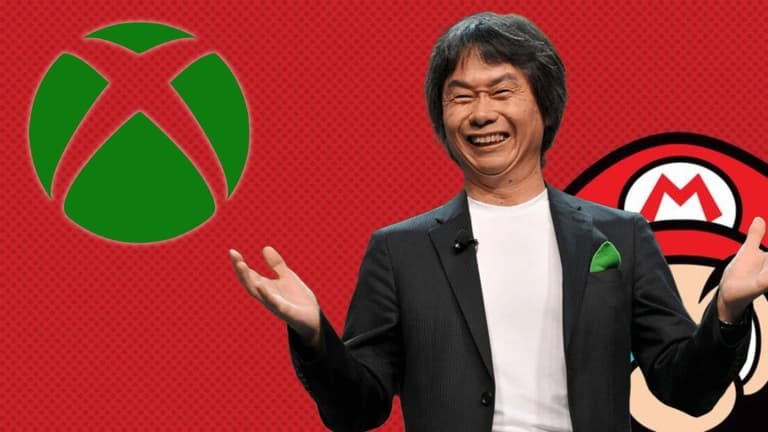
4. The Domino Effect: Xbox, Halo, and Diverging Paths
Rebuffed, Microsoft resolved to build rather than buy. Xbox launched in November 2001 in North America, boasting a built-in Ethernet port, a hard drive, and key studios under its wing. The acquisition of Halo-maker Bungie closed in June 2000, resulting in Halo: Combat Evolved becoming the console’s killer app at launch (Bungie press release, 2000). In November 2002, Xbox Live arrived, rewiring how consoles handled multiplayer and paving the way for subscription services like Game Pass two decades later.
Meanwhile, Nintendo pushed GameCube in 2001, then doubled down on first-party flair. The Wii’s motion-control revolution in 2006 and the Switch’s hybrid design in 2017 both trace back to the principle Yamauchi defended: hardware innovations that serve gameplay, not just spec-sheet arms races.
5. What If Microsoft Had Succeeded?
It’s a captivating thought experiment with far-reaching implications:
- IP Exclusivity: Iconic franchises like Mario, Zelda, and Pokémon could have become Microsoft exclusives—depriving Sony and Nintendo of their biggest system sellers.
- Hardware Homogenization: Microsoft might have steered Nintendo toward PC-style iterations, killing off the Wii and metamorphic consoles like the Switch. Motion controls, dual screens, and cartridges might never have existed.
- Online First-Party Rollouts: Nintendo classics on broadband earlier—but at the expense of the “contrarian charm” that made them feel like Nintendo games.
- Consolidation Curve: The industry might have converged on two or even one platform sooner, reducing risk and diversity for indie developers and niche genres.
As a gamer, I’m relieved we never had to find out. That decisive “no” preserved a landscape of creative tension between hardware innovation and service-driven ecosystems.
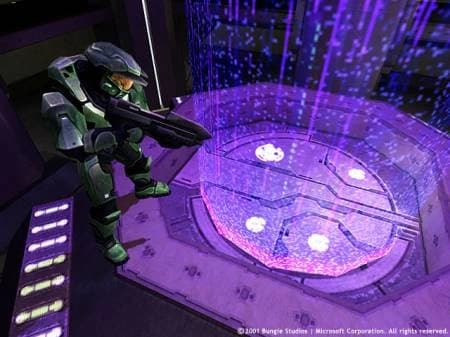
6. Long-Term Consequences and Today’s Takeaways
Fast-forward to today’s headlines: Microsoft owns Bethesda and Activision Blizzard; Sony continues to acquire studios like Bungie; Nintendo remains fiercely independent. Every debate about console wars, exclusivity, and subscription models finds its origin in that fateful meeting two decades ago. If Nintendo had sold, we’d see faster consolidation, more subscription lock-in, and fewer surprisingly brilliant hardware experiments.
This history is a cautionary tale for modern consolidation. When giants swallow one another, they often streamline risks but also sacrifice serendipity. Diverse competitors foster innovation and choice—in game mechanics, business models, and hardware forms.
Conclusion: The Power of a Laugh
Nintendo’s legendary laughter at Microsoft’s 2000 bid was more than a punchline. It was a declaration of independence that preserved an essential tension in gaming: between hardware daring and service scope. That moment helped birth two of the industry’s most distinctive philosophies—Nintendo’s playful hardware-first approach and Xbox’s software-and-services-first ecosystem. Gamers won because we got both. And today’s ongoing debates over exclusivity, platform fees, and subscriptions still echo that single, unforgettable reaction: Nintendo laughed—and we’re all the richer for it.
FinalBoss // Gear
Level up your setup
01Best-selling Switch 2 gameson Amazon→02Switch 2 accessorieson Amazon→038BitDo controllerson Amazon→04Discounted game keyson Kinguin→Affiliate links · As an Amazon Associate, FinalBoss earns from qualifying purchases.
Want to Level Up Your Gaming?
Get access to exclusive strategies, hidden tips, and pro-level insights that we don't share publicly.
Ultimate Gaming Strategy Guide + Weekly Pro Tips