
Table of Contents (9)
Where Winds Meet bored me senseless… until it suddenly didn’t
Where Winds Meet spent several hours convincing me it was gorgeous wallpaper with cool swords and no pulse. Free-to-play open-world wuxia, sprawling map, Soulslike-ish combat, thousands of icons to chase – I’ve seen this song and dance since the PS3 era. I was poking at side quests, fumbling through badly explained systems, doing stealth delves that felt like rejected Assassin’s Creed missions, and quietly wondering whether to uninstall.
Then a witch showed up, turned my peaceful little starting region into a murder carousel, and absolutely folded me. And for the first time, Where Winds Meet actually clicked.
This is the part that annoys me: the game had this in it the whole time. The brutal, exhilarating boss fights. The cinematic wuxia melodrama that feels ripped straight out of Crouching Tiger, Hidden Dragon. The build decisions that suddenly matter because you’re not just mashing through trash mobs anymore. It just hides that version of itself behind hours of half-baked stealth gimmicks and messy onboarding.
I’m neck-deep in a “choose my adventure” style run right now – spear, dual blades, and now a busted healing umbrella strapped to my hip – and I’m more invested than I expected to be. But it took a ninja-and-witch siege, a dozen humiliating deaths, and an overgeared AI ally hard-carrying my corpse for this game to stop feeling like a chore.
The early game is all vibes, no teeth
On paper, Where Winds Meet should’ve had me from minute one. It’s a wuxia action RPG set in China’s Five Dynasties and Ten Kingdoms period: wild political turmoil, roving martial artists, secret sects, all that good “sword saint on the run” energy. The world is huge – 20+ regions, dynamic weather, rooftops to sprint across, gliding, side stories tucked into corners. Combat borrows from Soulslikes: lock-on, stamina/Qi management, stagger breaks, vicious world bosses, co-op summons. It’s basically “what if someone threw FromSoftware and classic wuxia films in a blender.”
But the opening hours don’t feel like that. They feel like I booted into a beautiful, empty MMO someone forgot to populate with stakes.
I was bouncing between wandering tales, errand-style side quests, and a main story that seemed allergic to urgency. NPCs mumbled exposition through mediocre translation, systems kept popping up with barely any explanation (by design – the devs have talked about preferring “exploration over tutorials”), and the combat rarely demanded more than basic swings and the occasional panic dodge.
So I made my own fun: I started messing with weapons. The spear became my comfort pick. It plays the “tank-y” role here – good reach, solid damage, a taunt skill, and defensive tools that made me <emthink< em> I was better than I was. I could deflect things that really should’ve flattened me, and that false sense of security was absolutely going to get me killed later.
Still, spear felt right. I wanted a high-aggression secondary to pair with it, so I set my sights on dual blades. That’s when the game shunted me into its big toy box of “skill theft” delves… and my patience almost snapped.
Skill theft delves: cool idea, clunky reality
The concept of skill theft is actually brilliant on paper. Instead of just buying abilities from a menu, you infiltrate enemy strongholds, observe masters practicing their arts, and literally “steal” the technique by studying them. It’s pure wuxia fantasy: the wandering rogue watching through the rafters, learning a forbidden strike in secret.
In practice? It’s forced stealth with janky AI and a QTE minigame bolted on.
My first attempt at nabbing dual blade tech had me creeping through a compound where getting spotted booted me back to checkpoints. I’m already not a fan of mandatory stealth in games that are fundamentally about combat expression; here, it felt like being dragged away from the thing Where Winds Meet actually does well.
Worse, the route I was taking hit a wall of enemies that seemed physically impossible to sneak past with the tools I had. The solution? The game quietly nudged me toward a whole other skill theft delve to learn a touch-of-death assassination move so I could backstab people in that first delve. That second one, of course, was its own stealth puzzle, with its own trial-and-error, capped with another “watch and time button prompts” sequence to actually unlock the move.
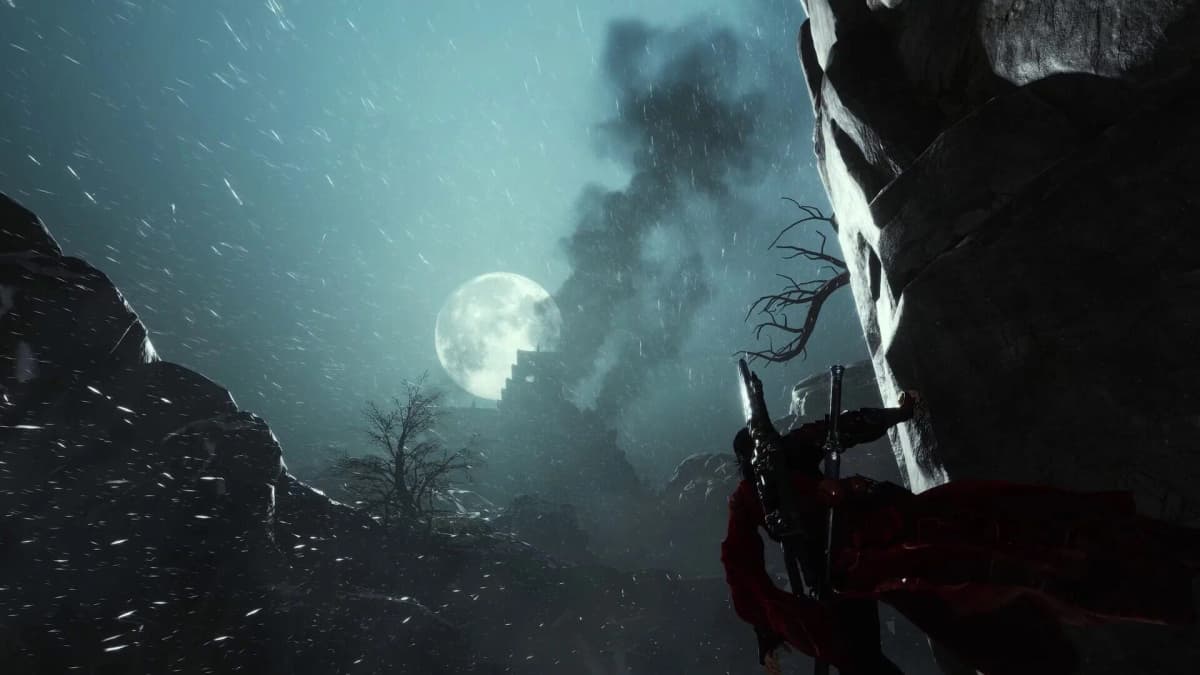
It’s a classic example of this game getting in its own way. The underlying fantasy – learning techniques by observation, building a library of stolen arts – rules. The execution, with rigid stealth fail states and slow, canned observation QTEs, feels like padding between you and the combat.
Did I feel rewarded when I finally walked away with dual blades and a handful of new tricks? Yeah, somewhat. Dual blades are fast, flashy, and pair nicely with the spear’s slower reach. But I also walked away thinking, “If most people are going to bounce, it’ll be here.” You’re not failing these delves because you misread an attack or built a bad loadout; you’re failing because the AI decided three guards staring at a wall suddenly grew a brain cell.
Then the ninjas and the witch crashed the party
So there I was: spear main, dual blades secondary, some goofy stolen techniques like bear throws and attack birds under my belt, trudging through another underground supply run that felt more like a box-ticking exercise than a quest. I hit the story beat where my character formally steps into the wider jianghu, the roaming martial world. I was expecting another round of exposition and half-engaged brawling.
Instead, the game slammed its foot on the gas.
My home region – the sleepy little starting area I’d been treating like a wuxia tourist brochure – suddenly erupted into chaos. Ninjas descended, a mind-twisting witch started wrecking people, and my supposedly grounded storyline rocketed straight into “mysterious sects and nightmare sorcery” territory with the subtlety of a flying guillotine.
Plot-wise, it was barely foreshadowed. It felt abrupt, even incoherent in the moment. But kinetically? It ruled. The choreography of the cutscenes, the way fights were framed, the sheer style of it finally matched the promise of the premise. This wasn’t an MMO escort quest; this was a martial arts film that just happened to let me drive between scenes.
Then it let me fight. And suddenly, Where Winds Meet stopped being polite and started getting real.
The difficulty didn’t just nudge up; it spiked. Waves of enemies, limited healing (which I hadn’t really had to care about before), inconsistent blocks, and more of those Soulslike delayed swing patterns I despise. You know the ones: long wind-up, weird pause, final snap. It’s a valid way to challenge parry timing, but it always feels like the dev is yanking the rug out from under your muscle memory for the sake of it.
The difficulty didn’t just nudge up; it spiked. Waves of enemies, limited healing (which I hadn’t really had to care about before), inconsistent blocks, and more of those Soulslike delayed swing patterns I despise. You know the ones: long wind-up, weird pause, final snap. It’s a valid way to challenge parry timing, but it always feels like the dev is yanking the rug out from under your muscle memory for the sake of it.
🎮 Get This Game at the Best Price
Compare prices instantly and save up to 80% on Steam keys with Kinguin — trusted by 15+ million gamers worldwide.
*Affiliate link — supports our independent coverage at no extra cost to you
It was rough, but it was a good kind of rough – the kind where failure teaches you something. Until I hit the boss.
Soulslike cruelty, wuxia flair
The witch boss was the first time Where Winds Meet stopped pretending it was for everyone. Multiple phases. Arena hazards. Long, tricksy attack strings. Classic Qi/stamina management pressure. It even throws in a “the ground itself is killing you” DPS check phase where the only way to not melt is to shred a phantom clone that loves to dodge and waste your precious seconds.
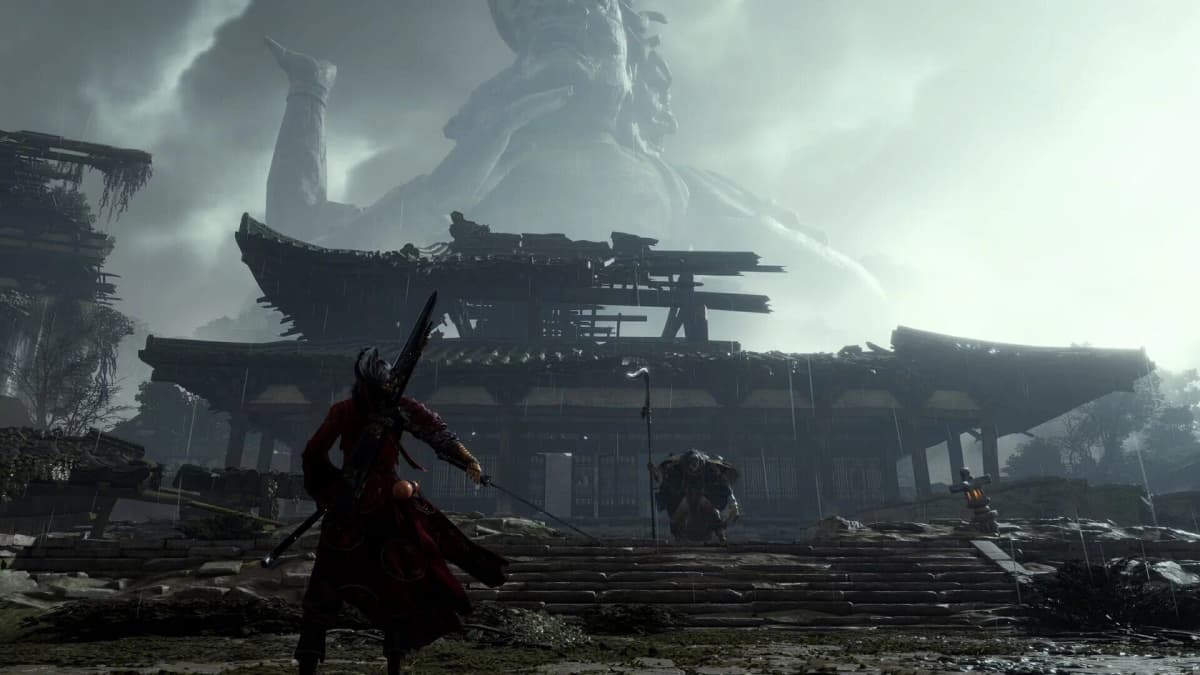
All of this while the game is stingy with heals, and you restart from the first phase every time you die. If you burned your limited recovery items or took a stray hit before that poisonous arena phase? Tough. Back to the start.
This is where my frustration boiled over. I’m no stranger to punishing games – my fighting game background and Souls obsession mean I live for hard bosses – but if you’re going to hit me with multi-phase attrition fights, you’d better make the reset loop snappy and the telegraphs clean. Where Winds Meet half-succeeds: the combat itself is responsive and flashy, and when you nail a parry string into a big execution, it feels phenomenal. But the combination of slightly awkward tells, translation jank on some prompts, and the long runback-from-phase-one repetition pushes it from “tough but fair” into “please respect my time.”
After a string of deaths, I did the thing my pride didn’t want me to do: I summoned an AI-controlled “ghost” of another player – basically their build, piloted by the game – and let them carry the heavy load. This wasn’t co-op as equal partnership; this was “this stranger is ridiculously overgeared and I’m happy to be the emotional support spear user in the corner.”
Here’s the twist: I don’t regret it. At all.
I’ve come to terms with the fact that modern Soulslikes are often designed around the existence of summons, spirit ashes, co-op phantoms, you name it. Where Winds Meet clearly expects you to lean on these systems when the screws tighten. It’s not “cheesing” in the way purists like to whine about; it’s using the tools the devs gave you. If anything, the mistake is how late the game waits before really showing you why those tools matter.
Because once that boss finally went down, courtesy of my overpowered partner, I was rewarded with some of the best cutscenes the game’s thrown at me so far. The choreography was jaw-dropping, the emotional beat actually landed, and my character stepped into that wandering martial artist archetype with a spooky mask and a new identity. This was the moment the story finally earned my attention.
The umbrella that changed how I play
Post-witch, the game unlocks Kaifeng – a bustling imperial capital that acts as a major hub – and with it, one of the strangest and most powerful-feeling gadgets I’ve seen in an action RPG lately: the healing umbrella.
When I first heard about it, I assumed it’d be some goofy glide-mechanic-meets-weapon fashion piece. Instead, it’s basically a mobile support turret. You can plant the umbrella, let it auto-swing with its hidden blade, and bask in a constant healing aura while you swap to your spear or dual blades and go nuts. It’s not “I win” easy – positioning and timing still matter, and you can absolutely outrun your own safety zone – but on paper, it’s disgustingly strong.
This is the moment the buildcraft side of Where Winds Meet opened up for me. Suddenly, my loadout wasn’t just “big stick, fast blades.” It was about how those weapons, my stolen skills, and my umbrella gadget all interlocked.
Do I use the spear to control space and draw aggro while the umbrella keeps me topped off? Do I pair dual blades with the healbot to lean into hyper-aggression, trusting sustain to cover my mistakes? Do I save the umbrella for boss phases where the arena itself is out to get me? The game’s combat system finally started asking interesting questions, instead of “do you want to press light attack or heavy attack on this bandit?”
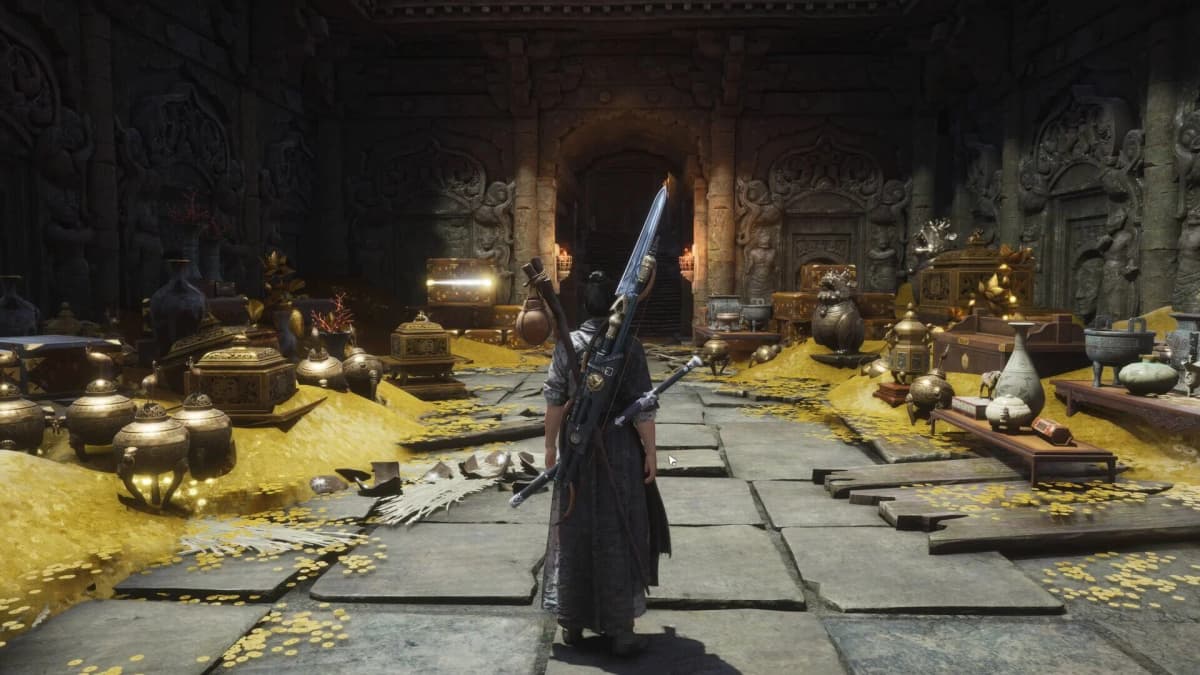
In my current run, I’ve essentially thrown the decision to a reader poll – spear main vs. dual blade focus, umbrella crutch or raw damage, boss rush vs. exploration. The mere fact that I care what the answer is, that I’m actually curious which direction will make Kaifeng and beyond more interesting, is proof that the game dug its hooks in… eventually.
Where Winds Meet hides its best self behind a wall of jank
Here’s where I land on this game after that witch fight and the Kaifeng shift: Where Winds Meet is at its best when it stops pretending to be a chilled-out tourism sim and fully commits to being a mean, stylish wuxia Soulslike. The boss fights, when they’re not sabotaged by pacing issues, are tense and expressive. The weapon swapping and Qi management reward aggressive experimentation. The main story, at least so far, can absolutely deliver when it’s not buried under errand quests and awkward translations.
But the road to that version of the game is littered with friction that doesn’t feel earned: forced stealth delves for key skills, clunky observation QTEs, progression gates that ask you to wait real-time days between level breakthroughs, and a tutorial philosophy that mistakes “figure it out yourself” for “hope you read some random tooltip three hours ago.”
I get what Everstone is going for. They’ve talked about wanting you to discover mechanics organically in the world, to let exploration teach you instead of walls of text. That’s noble. But when that design impulse collides with systems as dense as parry-centric combat, multi-weapon loadouts, real-time progression locks, guild and co-op structures, and side-activities stacked to the ceiling, the result isn’t mystery; it’s noise.
It doesn’t help that the game is free-to-play, either. To its credit, I haven’t hit a hard paywall or nasty monetization hook, but the grindiness of some systems and the sheer volume of passes, events, and reward tracks the UI vomits at you doesn’t exactly soothe the paranoia. When Steam reviews call it “great but rough around the edges,” this is what they mean: none of its sharp corners are individually dealbreakers, but the accumulation is heavy.
Accidental brilliance or sharp-edged design?
After that pivotal witch fight, I’m in this weird limbo with Where Winds Meet. I’m genuinely excited to dive deeper into Kaifeng, to see if the story can keep escalating, to find out whether my healing umbrella plus whatever weapon loadout wins my internal war will actually let me stand toe-to-toe with the next nightmare boss without needing another AI savior.
At the same time, I can’t shake the feeling that I only got here out of stubbornness and professional obligation. A lot of players would’ve bounced somewhere between the fourth failed stealth attempt in a skill theft delve and the tenth death to an arena that eats your HP for breakfast. And I don’t blame them.
So I’m left with this unresolved tension: is Where Winds Meet secretly smart – deliberately using frustration and sudden difficulty spikes to push you toward creative builds, summons, and deeper engagement – or is it just accidentally brilliant, stumbling into greatness whenever its better instincts overpower the jank?
All I know is this: I went from half-asleep in a pretty open world to swearing at delayed attack swings while clinging to life under a healing umbrella I treat like a sacred relic. For a game I was ready to write off, that’s one hell of a turnaround, even if I’m still not convinced it knows exactly why it worked.
FinalBoss // Gear
Level up your setup
01Top-rated gaming headsetson Amazon→02High-refresh gaming monitorson Amazon→03Gaming chairson Amazon→04Discounted game keyson Kinguin→
Affiliate links · As an Amazon Associate, FinalBoss earns from qualifying purchases.
Want to Level Up Your Gaming?
Get access to exclusive strategies, hidden tips, and pro-level insights that we don't share publicly.
Ultimate Gaming Strategy Guide + Weekly Pro Tips