
Table of Contents (6)
Why this update actually changes Where Winds Meet
When a Wuxia open-world game adds a system that lets you bolt propellers, wheels and mystery hubs onto planks and call it a flying machine, that’s worth paying attention to. Where Winds Meet’s latest Chinese patch introduces “Ink Structure” (Inkcraft) – a vehicle-building sandbox not unlike Besiege or Zelda: Tears of the Kingdom’s Zonai devices – and it looks like Everstone Studio is trying to turn its already pretty playground into a player-driven toybox.
- Freeform vehicle building with modular parts, including a Celestial Hub “engine”
- Blueprints and a shareable library so players can swap designs
- Integrated tutorial via a Mohist Hill quest that hands you the preset “Flying Chicken”
- Potential for massive player creativity – and the usual sandbox headaches
Breaking down the Ink Structure feature
The Ink Structure system drops you into a build mode where you fly the camera around, snap parts together and test the result in-world. Early previews show straightforward things — a four-wheeled plank car with steering controls — but also wilder stuff: winged flyers with rotor blades and a twin-prop watercraft. The Mohist Hill quest hands you the “Flying Chicken” preset as a tutorial and proof of concept, so you don’t start from absolute zero.
Key mechanical parts got names that sound like wuxia tech fiction: the Celestial Hub is the heavy-lifting centerpiece capable of supporting huge loads, and the Square-Round Rod links parts together while transmitting directional control — basically your engine and drive shafts. Everstone’s translation claims the system “integrates the strengths of various crafts,” which reads as an attempt to cover both land, sea and air machines under one modular roof.
Why this matters for players
This caught my attention because Where Winds Meet was already one of the more ambitious open-world Wuxia games on the market. Adding a proper construction sandbox changes the game’s DNA: it makes the world less about scripted traversal and more about player-engineered solutions. Need to cross a lake? Build a boat. Need to scale a cliff? Maybe a lightweight rotor platform will do. It turns traversal problems into engineering puzzles, and gives creators a practical canvas.
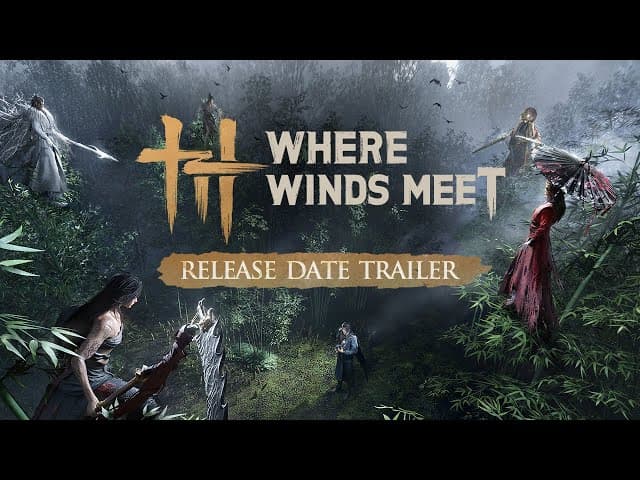
Blueprint saving and a shareable library are the quiet superpower here. If players can upload functioning designs, expect a library of travel conveniences, stunts and grief tools to appear fast. Good creators will build optimized transport; trolls will build traps. Either way, the sandbox becomes a social layer — trading useful machines will feel a lot like trading houses or recipes, but with mechanical complexity.
What I’m excited about — and what I’m wary of
I’m excited because emergent gameplay like this can extend a game’s life massively. The best builders in any community turn sandbox tools into showcases: races, obstacle courses, and hilarious Rube-Goldberg siege machines can all emerge organically. Everstone’s house-building blueprints already formed a creative ecosystem; putting functioning machines into that toolbox is a multiplier.
But I’m skeptical about polish and consequences. Physics-based construction systems live or die by how predictable and performant their simulation is. If parts jitter, memory leaks crop up, or networked shared instances lag when a library of propeller-planes starts flying, the fun will drain fast. There’s also the question of resource gating: will these blueprints be cheap to replicate or require long grinds? Finally, blueprint sharing invites exploits — exploiters could publish zero-cost mounts or movement tricks that break progression.
Industry context and why Everstone is taking this risk
Sandbox building has become a go-to retention tool because it hands players tools rather than content. Besiege turned physics grief and creativity into a whole genre; Tears of the Kingdom made device crafting a primary interaction and kept Zelda fresh. Everstone seems to be borrowing that lesson to add player-authored content to Where Winds Meet instead of relying solely on developer-made expansions.
That also answers “why now”: with open-world standards rising, studios need systems that produce community content without hiring devs to write every new gadget. Ink Structure does that — if it works well.
TL;DR
Where Winds Meet’s Ink Structure is a bold, smart add that could turn traversal into a creative playground. It brings the fun of Besiege-style construction and Tears of the Kingdom ingenuity into a Wuxia world, complete with blueprints and a preset “Flying Chicken.” The upside is massive player creativity and replay value; the downsides are physics polish, performance and potential exploits. No global release date yet, but this is the kind of update that could make the game feel very different — in a good way — if Everstone nails the execution.
FinalBoss // Gear
Level up your setup
01Top-rated gaming headsetson Amazon→02High-refresh gaming monitorson Amazon→03Gaming chairson Amazon→04Discounted game keyson Kinguin→Affiliate links · As an Amazon Associate, FinalBoss earns from qualifying purchases.
Want to Level Up Your Gaming?
Get access to exclusive strategies, hidden tips, and pro-level insights that we don't share publicly.
Ultimate Gaming Strategy Guide + Weekly Pro Tips